Saved
Topic

Ecology

How living things fit together, and what happens when a piece is removed.

7
in film
13:00
average
91 min
in total
337
across the network
Ecology across the network →
All briefs7
13:00

All That Breathes

Shaunak Sen · 2022

All That Breathes follows brothers Mohammad Saud and Nadeem Shehzad as they treat injured black kites in a makeshift clinic in Delhi. Shot over several years with minimal intervention, the film observes their daily labour — cleaning wounds, administering medicine, releasing recovered birds — against the backdrop of a city thick with pollution and political tension. It avoids exposition, relying instead on texture, repetition, and sound to convey interdependence: between species, faith and pragmatism, decay and devotion.
13:00

Dreams

Akira Kurosawa, Ishirō Honda · 1990

Akira Kurosawa’s 1990 anthology film Dreams comprises eight vignettes drawn from his own recurring dreams. Shot in Japan with assistance from Steven Spielberg and George Lucas, it deploys rigorous formalism — saturated colour, symmetrical framing, long takes — to render emotional states rather than narratives. Starring Akira Terao, Martin Scorsese as Van Gogh, and Chishū Ryū, it explores childhood, mortality, ecology, and ritual without exposition or irony. Though structurally loose and uneven in impact, its best sequences achieve a rare fusion of painterly control and moral gravity.

13:00

Evil Does Not Exist

Ryusuke Hamaguchi · 2023

Ryusuke Hamaguchi’s 2023 drama follows Takumi, a widower living with his daughter in a remote Japanese mountain village, as residents confront a proposed glamping development. Shot on natural light with grainy texture and scored sparingly by Eiko Ishibashi, the film builds tension through procedural realism—community meetings, hydrological concerns, quiet labour—before pivoting to an ambiguous, visceral climax. It won the Grand Jury Prize and FIPRESCI Award at Venice and Best Film at the BFI London Film Festival.

13:00

Godzilla vs. Hedorah

Yoshimitsu Banno · 1971

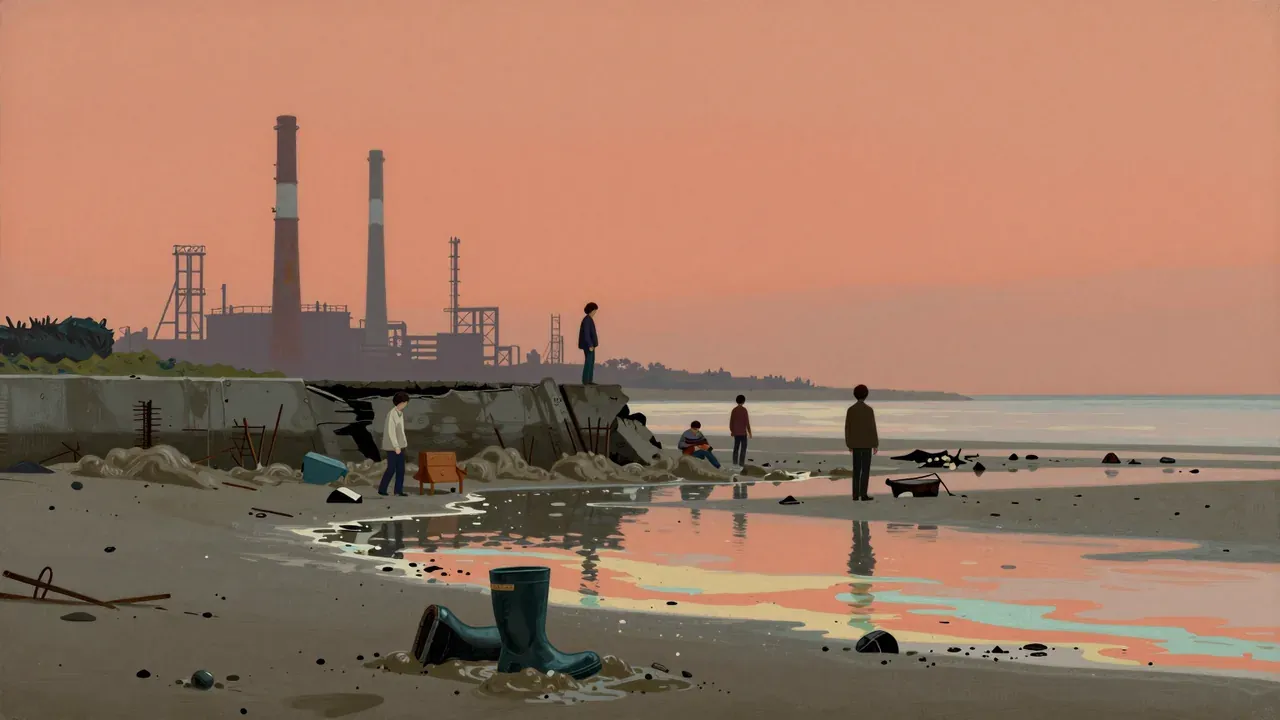
Godzilla vs. Hedorah (1971), directed by Yoshimitsu Banno, recasts Godzilla as an ecological corrector confronting Hedorah — a monster born from industrial pollution. Shot in 35 days on a tight budget, it blends live action, animation, and stop-motion to deliver a blunt, child-facing warning about smog, acid rain, and systemic toxicity. Though criticised on release for tonal inconsistency and the infamous flying-Godzilla sequence, it has since gained stature as a singular, ideologically committed entry in the franchise — less entertainment than intervention.

13:00

Paddle to the Sea

Bill Mason · 1966

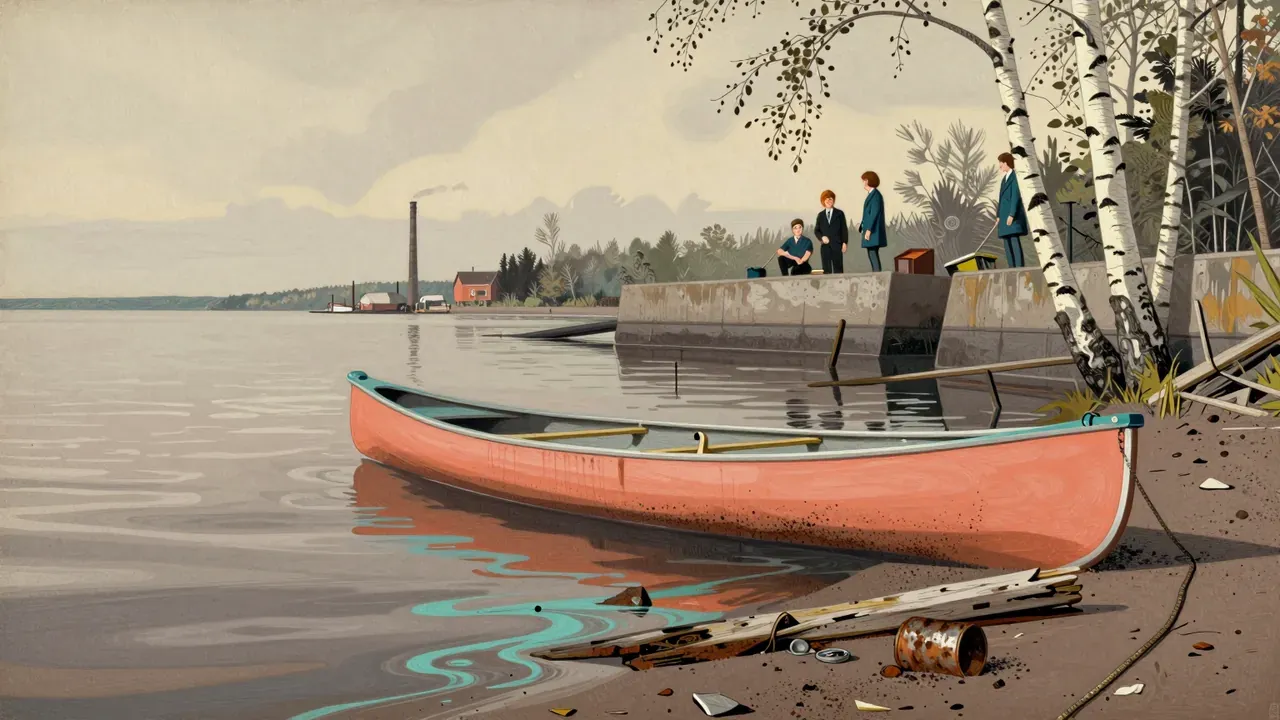
Bill Mason’s 1966 NFB short follows a hand-carved wooden canoe from Lake Nipigon to the Atlantic, using real locations, minimal narration and patient observation. Based on Holling C. Holling’s book but expanded with a quiet critique of water pollution, it is a documentary-fiction hybrid that treats geography as ethics and time as texture.

13:00

WALL-E

Andrew Stanton · 2008

WALL-E is a 2008 Pixar animated science-fiction romance set in a depopulated future, following a waste-collecting robot who discovers love and purpose after encountering an exploratory probe. Directed by Andrew Stanton, it uses minimal dialogue, expressive sound design, and layered visual storytelling to explore ecological neglect, automation, and human atrophy. Its first act unfolds on a ruined Earth; its second aboard the sterile starship Axiom; its third in the fragile, hopeful return to ground. It won the Academy Award for Best Animated Feature and was added to the US National Film Registry in 2021.

13:00

Mother!

Darren Aronofsky · 2017

Darren Aronofsky’s Mother! is a psychological horror film structured as a closed-loop parable: a woman’s domestic peace unravels under successive invasions, culminating in annihilation and cyclical rebirth. Shot in tight proximity to Jennifer Lawrence’s performance, scored with near-total silence, and driven by escalating symbolic violation, it functions less as story than as sustained sensory provocation. Its themes—ecological violation, artistic narcissism, theological recursion—are delivered without irony or ambiguity. Critical reception was divided: many admired its formal rigour and intensity; others found its allegory reductive and its relentlessness exhausting. It grossed $44.5m on a $30m budget.