The title is literal
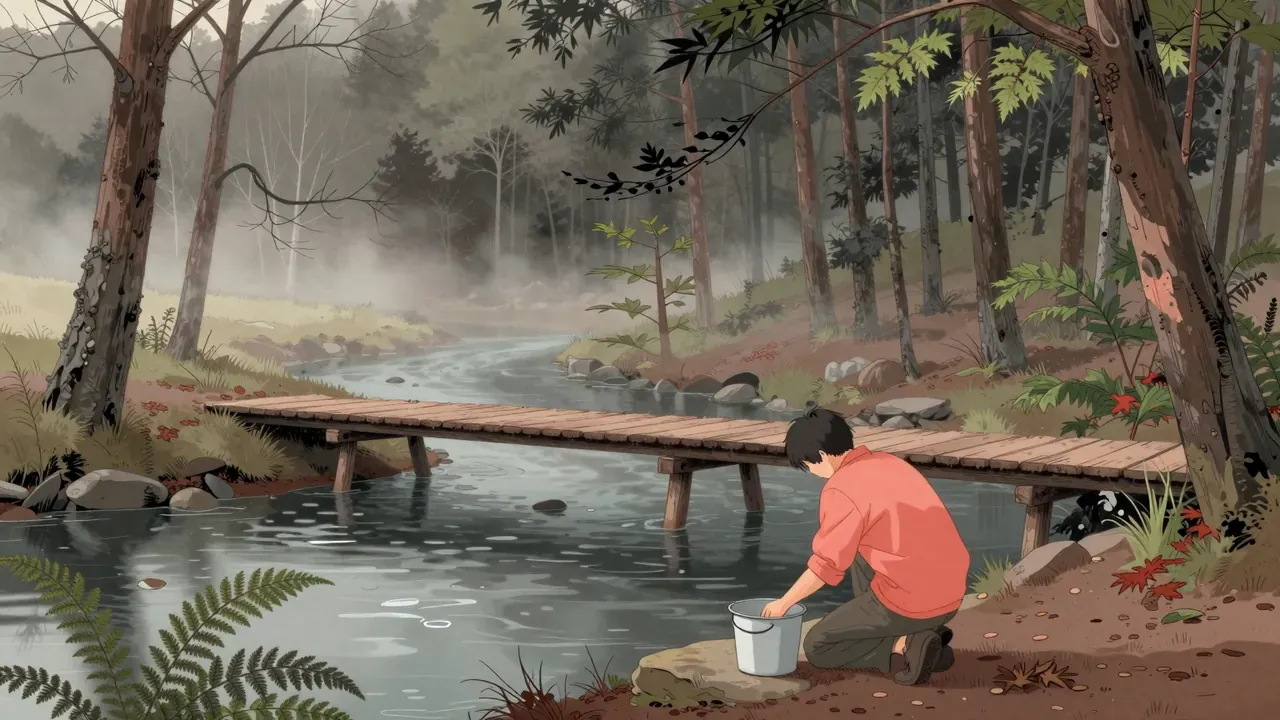
Evil Does Not Exist is a Japanese drama set in a mountain village where a single father and his daughter live in quiet routine, their lives unsettled by a proposed glamping development. Ryusuke Hamaguchi wrote and directed it as a deliberate, unhurried inquiry into how ecological fragility meets bureaucratic indifference—not through polemic, but through the accumulation of small, observed actions: water drawn from a stream, a septic tank’s inadequate capacity, a deer’s gut wound. It does not argue for preservation so much as register the weight of what is already present—the forest’s silence, the villagers’ shared knowledge, the way light falls on snow at dawn. The film avoids exposition, moral framing or character backstories; its aim is to hold space for consequence without naming it ‘evil’. That title is not ironic nor rhetorical, but grammatical: a statement of absence, not negation. It treats harm as systemic, ambient, unpersonified—less an act than a condition emerging from misaligned priorities, poorly calibrated tools, and the quiet erosion of communal care.
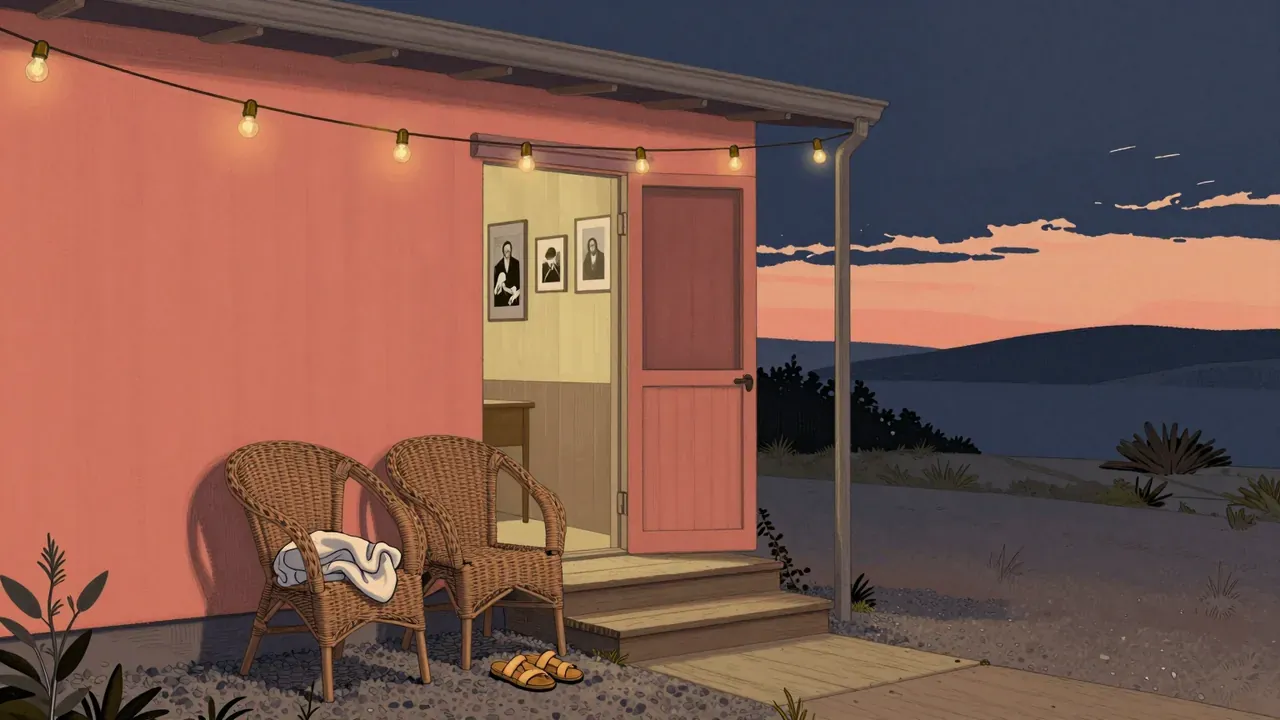
The rhythm of the village
The story unfolds across three phases: the villagers’ collective resistance at a meeting, the developers’ uneasy recalibration, and the abrupt rupture of Hana’s disappearance. Performances are restrained and non-professional, with Hitoshi Omika’s Takumi moving through scenes with minimal inflection, his physicality doing most of the work—chopping wood, kneeling beside a stream, gripping a child’s hand. Ryō Nishikawa, as eight-year-old Hana, acts without affectation, her stillness more expressive than dialogue. Yoshio Kitagawa’s cinematography uses natural light and older Nikon lenses to produce a grainy, tactile texture reminiscent of Kodak Portra 400, while Eiko Ishibashi’s score—recorded with Jim O’Rourke—is sparse, often absent, letting wind, footsteps and distant gunshots carry narrative weight. Editing is patient: shots hold past comfort, transitions are unmarked, and sound design privileges diegetic realism over emphasis. There are no close-ups for revelation, no music swells for climax—only duration, repetition, and the slow accrual of unease.
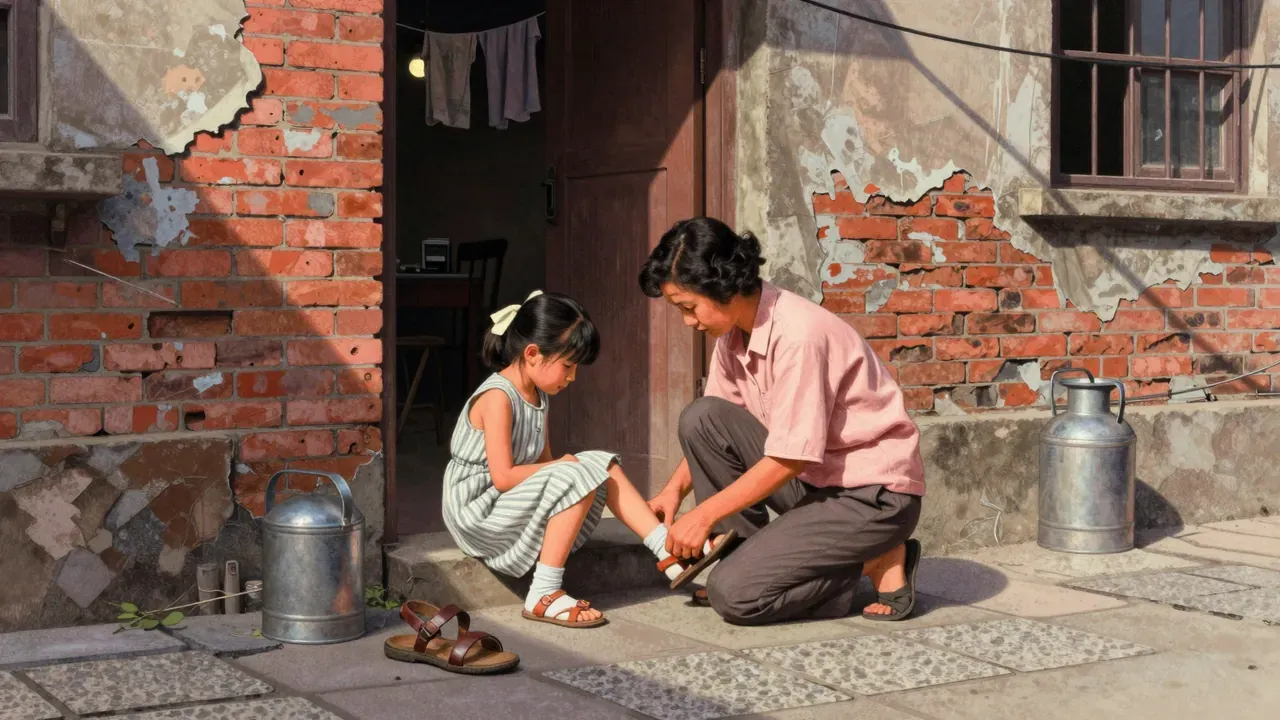
How people move in the world
What lands is the film’s fidelity to place and procedure. The village meeting feels lived-in, not staged: overlapping speech, hesitant pauses, the rustle of paper, the way Takumi’s objection about groundwater is delivered not as protest but as fact—a statement made because it must be. The developers’ shift—from corporate script to awkward camaraderie—is credible precisely because it lacks conversion; they remain outsiders who mimic intimacy without mastering it. The winter forest is never picturesque; it is cold, damp, physically demanding, its beauty inseparable from its indifference. When Takahashi stays behind to chop wood, the gesture reads as both sincere and futile, a human attempt to absorb rhythm without understanding root. The final sequence—Hana approaching the wounded deer, Takumi’s violent intervention, the abrupt cut to darkness—lands not as shock but as inevitability, the logical terminus of a system that treats life as infrastructure to be managed. Its power lies in withholding interpretation, trusting the viewer to sit with discomfort rather than resolve it.
The look of it
What does not land is the film’s structural pivot from social realism to near-mythic rupture. The first two-thirds establish a precise, grounded world governed by hydrology, seasonal labour and municipal process; the final twenty minutes abandon those terms without transition. Takumi’s chokehold on Takahashi arrives without psychological preparation—neither man has been shown to possess the capacity for such violence, nor has the film built sufficient tension to make it legible as catharsis or breakdown. The deer’s gut-shot calf appears as deus ex machina, its presence unforeshadowed, its symbolism unearned by earlier imagery. Some viewers will find this rupture resonant; others will experience it as a narrative retreat—replacing argument with allegory, cause with portent. The film’s refusal to explain leaves room for ambiguity, but also for vacancy: when the screen fades to black on laboured breathing, it feels less like conclusion than suspension, and not all suspensions compel. The Godardian typography and sound-image preoccupations cited in production notes do not cohere into a formal logic within the film itself—they remain references, not methods.
The breaking point
The themes that matter are not environmentalism as policy or activism, but ecology as ontology—the idea that human life is not imposed upon nature but metabolically entwined with it. Water systems here are not metaphors but actors: they dictate where houses stand, how waste is processed, whether children can drink safely. The film treats bureaucracy not as villainy but as a kind of blindness—Takahashi and Mayuzumi are not corrupt, but trained to optimise for metrics that exclude soil permeability or deer migration patterns. Time is another theme: the village operates on seasonal and diurnal rhythms; the developers speak in deadlines and subsidies. Their dissonance is not ideological but temporal—two incompatible clocks striking at once. Also present is the quiet dignity of maintenance: Takumi’s work is not heroic but necessary, unglamorous, repetitive. The film values continuity over change, not out of conservatism, but because continuity is the condition under which certain kinds of knowledge—how to read a stream, when a deer is cornered, why a septic tank fails—survive.
What remains after the credits
This film is for viewers who tolerate long takes, resist narrative payoff, and find resonance in silence, texture and procedural detail. It suits those accustomed to Hamaguchi’s earlier work, or to the films of Hirokazu Kore-eda, Naomi Kawase or the later works of Tsai Ming-liang—where meaning accrues slowly, through repetition and omission. It is not for viewers who require clear causality, character motivation or resolution; those who expect the developers’ arc to culminate in redemption or reckoning will be left adrift. Nor is it for those who read ecological crisis as a call to action—it offers no solutions, no heroes, no villains, only the steady pressure of interdependence. A viewer who finds the final sequence emotionally unsatisfying may well have engaged deeply with everything before it; disagreement here is not failure of attention, but divergence in what constitutes coherence. Change the ending’s abruptness, or deepen the groundwork for Takumi’s violence, and the verdict shifts—but not towards convention.
The last thing you hear
Yes, it is worth your evening—if you approach it as a sustained sensory and ethical proposition, not a story to be followed. Its 106 minutes ask for attention without rewarding it with clarity, and that demand is its central virtue. You will not leave with answers, but with a recalibrated sense of scale: how a single gunshot echoes differently in a valley than in a city, how a child’s nosebleed carries more weight than a boardroom decision, how water moves underground unseen until it surfaces where it shouldn’t. Those who value craft over plot, patience over pace, and implication over explanation will find it richly absorbing. Those who need narrative propulsion or emotional release will likely feel estranged. It is not a film to consume, but one to inhabit—briefly, coldly, attentively—and then carry the chill of its forest air home with you. Word count: 158.