filmbriefs
Topic

The Victorian era

Confidence, coal and an enormous amount of repression.

9
in film
13:00
average
117 min
in total
37
across the network
The Victorian era across the network →
All briefs9
13:00

Corridors of Blood

Robert Day · 1958

Corridors of Blood (1958) is a British horror-drama starring Boris Karloff as Dr. Thomas Bolton, an 1840s surgeon whose pioneering work with anaesthetic gases leads to professional ruin, addiction, and entanglement with criminals. Directed by Robert Day and shot by Geoffrey Faithfull, it trades gothic excess for moral austerity, using tight framing, chiaroscuro lighting, and Karloff’s restrained performance to trace a downward spiral rooted in cause and effect. Though hampered by repetitive plotting and thin characterisation in places, it remains a coherent, atmospheric study of scientific vocation undone by human frailty.
13:00

Hobson's Choice

David Lean · 1954

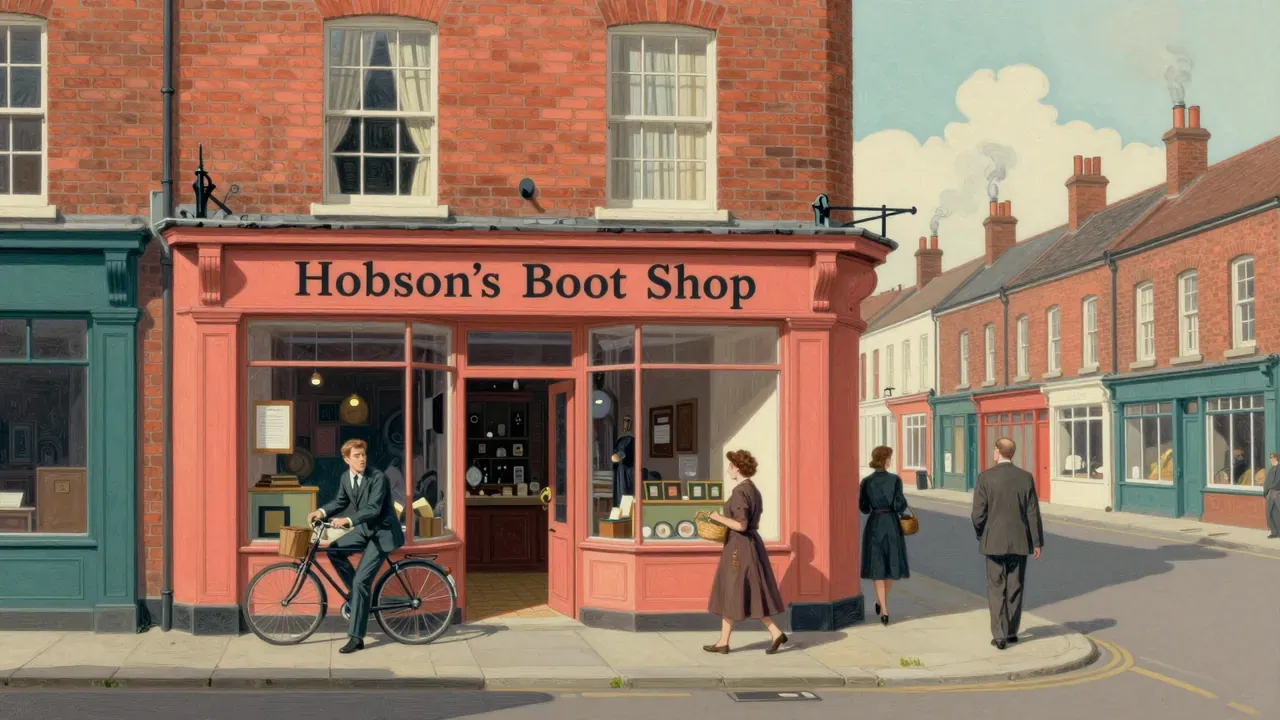
David Lean’s 1954 adaptation of Harold Brighouse’s play follows Maggie Hobson as she marries bootmaker Will Mossop to escape her tyrannical father’s household, then builds a rival business with him in 1880 Salford. Grounded in precise performance and restrained craft, it treats class, literacy, and domestic labour as material forces — not metaphors — and locates dignity in incremental, negotiated change.

13:00

Invention for Destruction

Karel Zeman · 1958

Invention for Destruction (1958) is a Czechoslovak science fiction film directed by Karel Zeman, adapting Jules Verne not literally but visually — recreating the line-engraved aesthetic of nineteenth-century editions through hand-textured sets, stop-motion, matte paintings and stylised performance. Starring Lubor Tokoš and Miloslav Holub, it follows an inventor’s quest to prevent a weapon of mass destruction, using Verne’s submarines, airships and volcanic islands as stages for a unified graphic vision. Scored by Zdeněk Liška and shot by Jiří Tarantík, it remains a landmark of animated integration and period-specific worldbuilding.

13:00

The Elephant Man

David Lynch · 1980

David Lynch’s 1980 film tells the story of John Merrick, a severely deformed man in Victorian London, not as tragedy or curiosity but as a sustained inquiry into perception, care, and the quiet violence of being perpetually seen. Shot in stark black-and-white by Freddie Francis, with John Hurt delivering a performance of extraordinary stillness and vocal control, the film resists sentimentality, avoids exposition, and trusts the audience to sit with ambiguity. Its power lies in restraint: in what it shows, how long it holds it, and what it refuses to explain.

13:00

The Four Feathers

Zoltan Korda · 1939

Zoltan Korda’s 1939 Technicolor adaptation of A. E. W. Mason’s novel follows a disgraced British officer who journeys to Sudan to redeem himself through acts of courage during the Mahdist War. Shot on location with meticulous craft, it balances physical spectacle with psychological restraint — though its treatment of Sudanese characters remains strictly functional and its imperial framework unquestioned.

13:00

The French Lieutenant's Woman

Karel Reisz · 1981

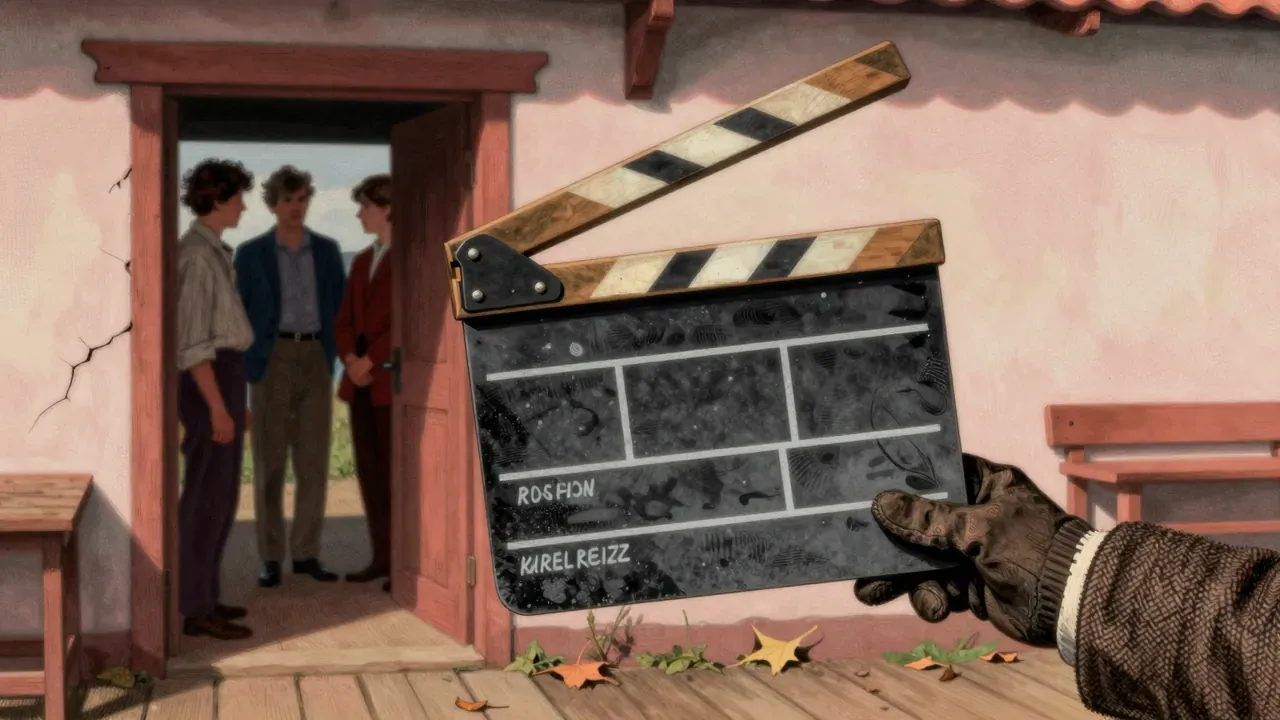
Karel Reisz’s 1981 adaptation of John Fowles’s novel intercuts a Victorian romance between palaeontologist Charles Smithson and enigmatic Sarah Woodruff with the modern affair between actors Mike and Anna, who play them. Written by Harold Pinter, it uses formal devices — visible crew, clapperboards, contrasting cinematography — to sustain tension between historical constraint and contemporary freedom. Freddie Francis’s photography, Assheton Gorton’s production design and Carl Davis’s score anchor both timelines in tangible detail, while Jeremy Irons and Meryl Streep deliver layered, restrained performances. It is a film about how desire is shaped by context, not character.

13:00

The Importance of Being Earnest

Anthony Asquith · 1952

Anthony Asquith’s 1952 adaptation of The Importance of Being Earnest is a faithful, studio-bound rendering of Wilde’s comedy, anchored by Edith Evans’s legendary Lady Bracknell and performed with linguistic rigour. It privileges dialogue, timing and textual fidelity over cinematic expansion, making it a benchmark for literary adaptation — austere, intelligent, and increasingly rewarding on repeat viewings.

13:00

Topsy-Turvy

Mike Leigh · 1999

Mike Leigh’s Topsy-Turvy (1999) follows W. S. Gilbert and Arthur Sullivan through the 15-month creation of The Mikado, foregrounding rehearsal, costume design, salary negotiation, and backstage friction over biographical revelation. Shot by Dick Pope, scored by Carl Davis, and performed live by the cast, it treats Victorian theatre as a site of material, social, and artistic labour — yielding an arthouse drama that values process, texture, and ensemble over plot or polish.

13:00

Great Expectations

David Lean · 1946

David Lean’s 1946 adaptation of Great Expectations condenses Dickens’s novel into a tightly composed black-and-white drama. Shot by Guy Green and designed by John Bryan and Wilfred Shingleton, it uses setting, light and restraint to convey Pip’s moral education and the corrosive legacy of class and abandonment. Though some psychological nuance is lost in compression, its formal discipline and emotional precision have secured its status as a landmark of British cinema.