Saved
Topic

Punishment

What is done to the guilty, and what it is meant to achieve.

8
in film
13:00
average
104 min
in total
16
across the network
Punishment across the network →
All briefs8
13:00

A Clockwork Orange

Stanley Kubrick · 1971

Stanley Kubrick’s 1971 adaptation of Anthony Burgess’s novel follows Alex DeLarge, a charismatic teenage delinquent subjected to state-mandated aversion therapy. Stylised, unsettling, and formally exacting, it interrogates free will, coercion, and the aestheticisation of power through John Alcott’s cinematography, Wendy Carlos’s electronic score, and Malcolm McDowell’s indelible performance.
13:00

Brute Force

Jules Dassin · 1947

Brute Force (1947) is a tightly wound crime drama set inside Westgate Prison, where Capt. Munsey’s sadistic enforcement and Warden Barnes’ passivity create a powder keg. When Joe Collins organises an escape, the system responds not with reform but with annihilation. Directed by Jules Dassin and written by Richard Brooks, it uses noir’s visual austerity and moral severity to mount a sustained critique of punitive justice — not as aberration, but as design.

13:00

Hunger

Steve McQueen · 2008

Steve McQueen’s 2008 debut dramatises the 1981 IRA hunger strike in Maze Prison, focusing on Bobby Sands’s final weeks. Shot in stark, immersive style by Sean Bobbitt and edited by Joe Walker, it privileges physical detail over exposition, using long takes, minimal dialogue, and unflinching attention to the body’s decay and resilience. Michael Fassbender lost significant weight for the role. The film premiered at Cannes, winning the Caméra d’Or, and received widespread critical acclaim for its formal rigour and moral gravity.

13:00

Jigoku

Nobuo Nakagawa · 1960

Nobuo Nakagawa’s 1960 Jigoku is Shintōh’s final film: a stark, morally absolute horror that charts the descent of student Shirō Shimizu from hit-and-run guilt to eternal punishment in Hell. Rejecting folklore and ambiguity, it stages damnation as literal, repetitive, and socially contagious — sins committed in a retirement home ripple outward until every character is damned. Crude in execution but relentless in argument, it uses wide shots, sparse music, and a single dirt-covered soundstage to build a vision of consequence that admits no escape, no grace, and no pause.

13:00

Riot in Cell Block 11

Don Siegel · 1954

Don Siegel’s 1954 drama, shot on location at Folsom State Prison, follows a meticulously planned inmate uprising against inhumane conditions. With Neville Brand and Emile Meyer leading a cast that includes real ex-convict Leo Gordon, the film sustains tension through procedural realism—not action, but negotiation, delay, and bureaucratic betrayal. Its downbeat ending refuses catharsis, insisting instead on the fragility of reform within entrenched systems.

13:00

The Crucified Lovers

Kenji Mizoguchi · 1954

Kenji Mizoguchi’s 1954 drama adapts Chikamatsu’s 1715 play into a precise, unsentimental study of love and law in feudal Kyoto. Mohei, an apprentice scroll-maker, and Osan, his employer’s wife, flee after a forgery and alleged adultery, pursued not by passion but by property, debt and collective punishment. Shot by Kazuo Miyagawa in long, unbroken takes, the film treats morality as infrastructure — not belief, but rent, reputation and ritual.

13:00

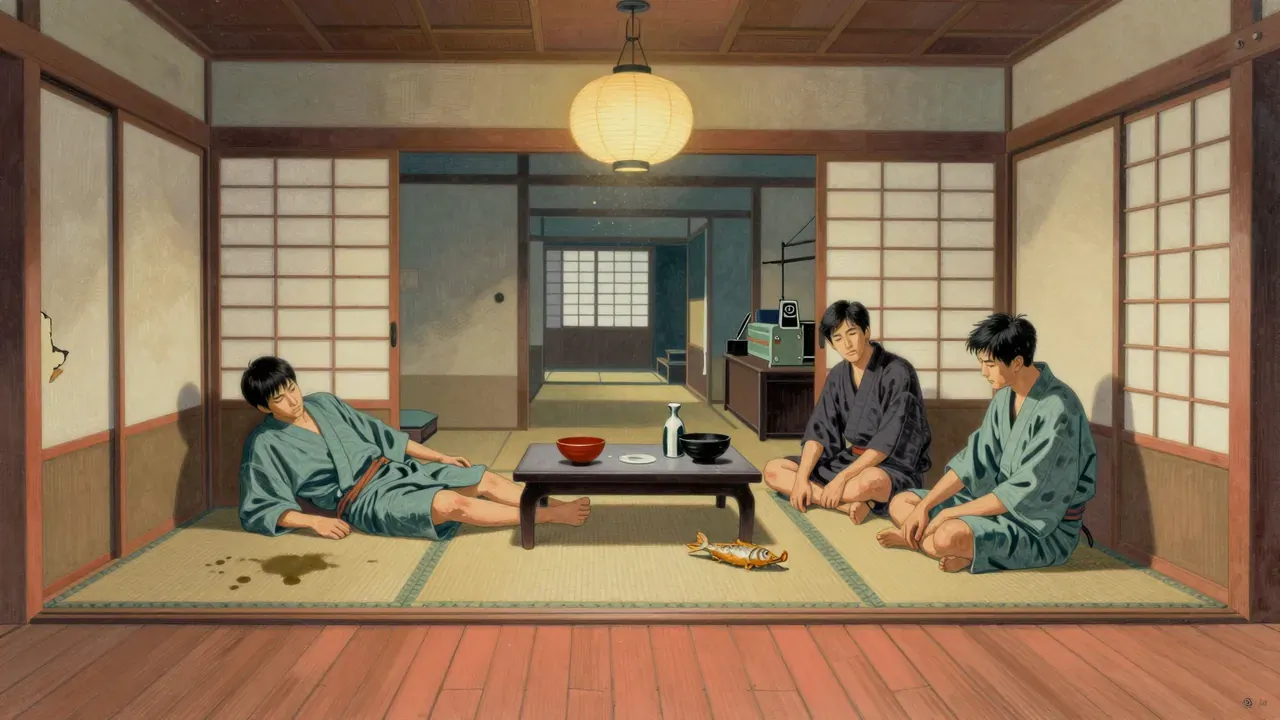
The Thick-Walled Room

Masaki Kobayashi · 1956

Masaki Kobayashi’s 1956 debut feature, completed in 1953 but delayed for three years due to its controversial subject, follows Japanese soldiers imprisoned in Sugamo Prison as Class B and C war criminals. Adapted by Kōbō Abe from real diaries, it avoids polemic in favour of quiet, cumulative scrutiny — of how coercion shapes action, how memory frays under confinement, and how justice functions when administered by the victor. With restrained performances, Kazuo Miyagawa’s unemphatic cinematography, and no musical score, it builds its argument through silence, repetition, and moral ambiguity.

13:00

I Saw the Devil

Kim Ji-woon · 2010

Kim Ji-woon’s 2010 South Korean psychological thriller follows an NIS agent who hunts his fiancée’s murderer not to kill him, but to prolong his suffering. With surgical precision in writing, performance, and cinematography, it charts a descent where revenge becomes indistinguishable from dependency. Its power lies in restraint, not excess—and its conclusion offers no absolution, only exhaustion.