filmbriefs
Topic

Globalisation

The world assembled into one supply chain, now being partly unassembled.

3
in film
13:00
average
39 min
in total
74
across the network
Globalisation across the network →
All briefs3
13:00

Gomorrah

Matteo Garrone · 2008

Matteo Garrone’s 2008 film adapts Roberto Saviano’s non-fiction book into a five-thread portrait of the Camorra’s reach across Naples and Caserta. It follows a timid middleman, a teenage recruit, a waste-management graduate, a tailor, and two deluded wannabes — none heroic, none redeemed. Shot with documentary restraint by Marco Onorato and edited without flourish by Marco Spoletini, it treats crime as infrastructure: logistical, banal, and woven into fashion, toxic dumping, and housing estates. It won the Cannes Grand Prix and seven David di Donatello awards.
13:00

Powaqqatsi

Godfrey Reggio · 1988

A 1988 non-narrative documentary directed by Godfrey Reggio, Powaqqatsi observes labour, ritual and urban flux across Africa, Asia and Latin America, scored by Philip Glass. With no dialogue or exposition, it builds meaning through rhythm, scale and repetition — proposing transition, not progress or decay, as its central condition.

13:00

Taipei Story

Edward Yang · 1984

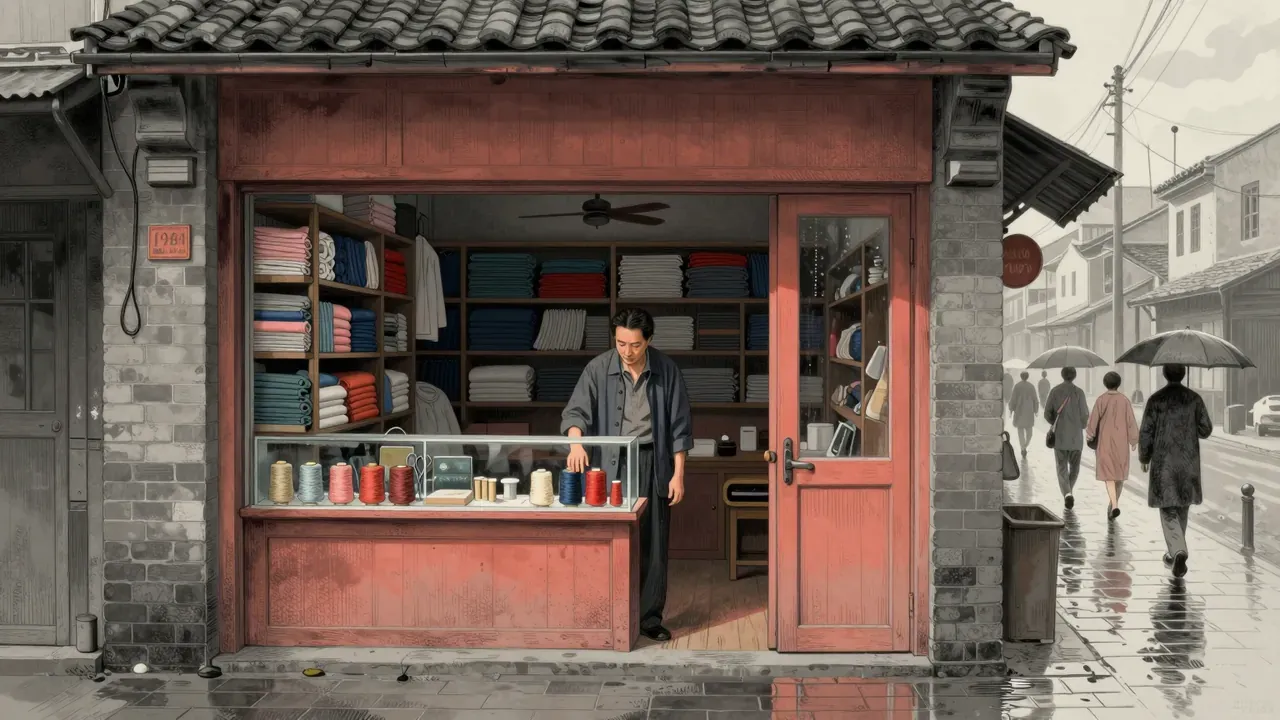
Edward Yang’s 1984 Taipei Story observes the quiet dissolution of a childhood bond between Ah-chen, an office worker planning emigration, and Ah-lung, a cloth-shop owner rooted in memory and habit. Set against Taipei’s rapid modernisation, the film uses duration, restraint, and precise framing to trace how structural change fractures intimacy. Co-written with Hou Hsiao-hsien — who stars — it avoids melodrama in favour of accumulated detail: a withheld glance, an unlit cigarette, an empty mountain road. Restored in 4K in 2017, it remains a cornerstone of New Taiwanese Cinema.

More from film

All briefs →
13:00

20th Century Women

Mike Mills · 2016

Set in 1979 Santa Barbara, Mike Mills’ 20th Century Women follows 15-year-old Jamie as his single mother Dorothea enlists two younger women — photographer Abbie and teenage friend Julie — to help raise him. Anchored by Annette Bening’s restrained performance, the film observes their overlapping lives with warmth and precision, treating feminism, illness, ageing and adolescence as lived conditions rather than themes. Shot by Sean Porter and edited by Leslie Jones, it moves at the pace of real conversation, building meaning through accumulation rather than climax.

13:00

24 Frames

Abbas Kiarostami · 2017

Abbas Kiarostami’s final film, 24 Frames, comprises twenty-four uncut, static shots — each ninety seconds long — observing nature, animals, and thresholds between interior and exterior. Beginning with animated movement superimposed on Bruegel’s Hunters in the Snow, it proceeds into real-world stillness, testing how much meaning resides in time, attention, and unmediated presence. Released posthumously at Cannes 2017, it is a rigorous, unsentimental essay on perception and impermanence.

13:00

3:10 to Yuma

Delmer Daves · 1957

Delmer Daves’ 1957 Western 3:10 to Yuma adapts Elmore Leonard’s taut short story into a study of obligation under pressure. Rancher Dan Evans agrees to escort outlaw Ben Wade to the 3:10 train for Yuma, facing ambush, betrayal, and his own wavering resolve. Shot by Charles Lawton Jr. with sun-bleached realism and scored sparingly by George Duning, the film builds suspense through pacing, performance, and moral granularity — not spectacle. It was preserved by the Library of Congress in 2012 for its cultural and aesthetic significance.

13:00

3 Women

Robert Altman · 1977

Robert Altman’s 1977 film 3 Women follows the uncanny merging of identities among a timid young woman, her garrulous roommate and a silent, pregnant artist in a sun-scorched California town. Built from a dream and shot with deliberate, unhurried precision, it uses repetition, reflection and improvisation to explore how selves are borrowed, performed and abandoned.