filmbriefs
Topic

Gambling

An industry built on a maths error people enjoy making.

7
in film
13:00
average
91 min
in total
13
across the network
Gambling across the network →
All briefs7
13:00

Bay of Angels

Jacques Demy · 1963

Jacques Demy’s 1963 black-and-white drama follows a young bank clerk and a compulsive gambler through the casinos of Nice and Monte Carlo. Built around Jeanne Moreau’s tightly coiled performance and Michel Legrand’s percussive score, it studies addiction as rhythm, not pathology — where money is incidental, and the real stakes are time, attention, and the diminishing space between decisions.
13:00

Bob le flambeur

Jean-Pierre Melville · 1956

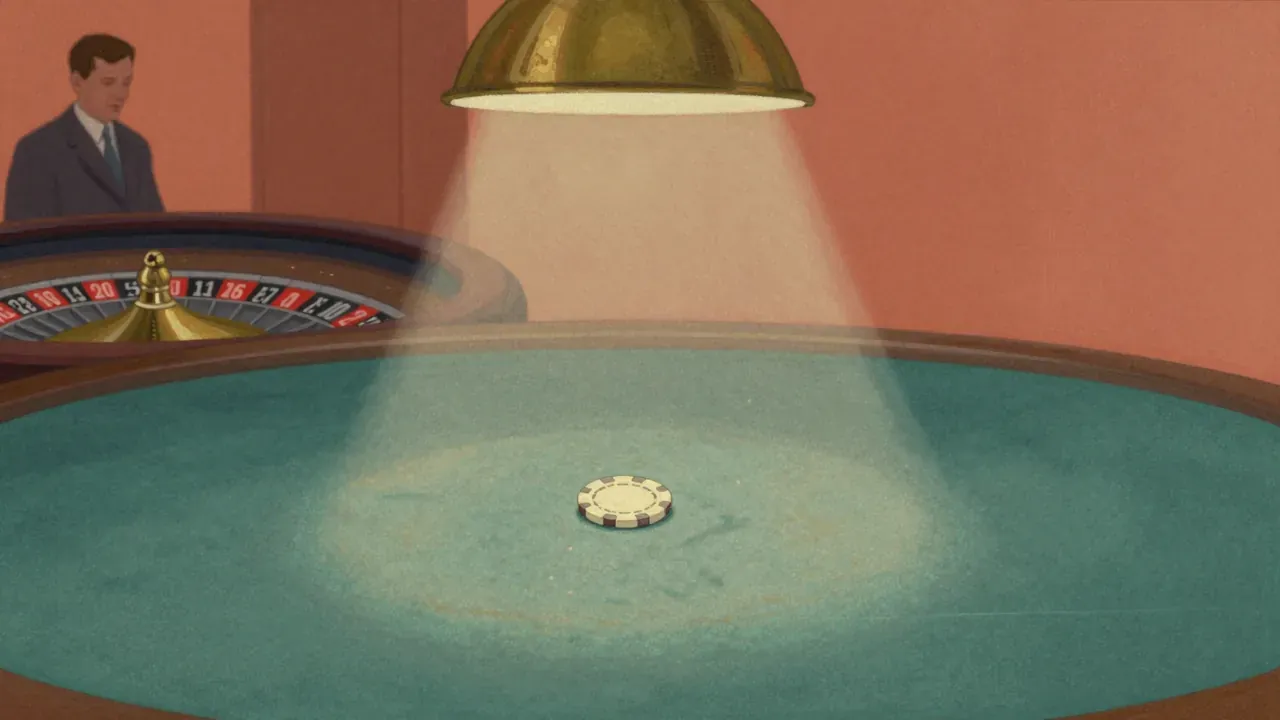
Jean-Pierre Melville’s 1956 heist film follows ageing gambler Bob as he plans a raid on a Deauville casino. Shot on location in Paris and Deauville by Henri Decaë, it moves with unhurried precision, treating criminality as habit rather than transgression. Its influence on the French New Wave stems less from innovation than from its disciplined use of space, silence, and repetition. Roger Duchesne anchors the film with quiet authority; the heist fails not through chaos but through Bob’s fatal, human lapse — losing track of time at the roulette table. A film of tone over twist, form over function.

13:00

Dollar

Gustaf Molander · 1938

Dollar is a tightly constructed 1938 Swedish comedy directed by Gustaf Molander, starring Ingrid Bergman as Julia Balzar. When compulsive gambler Louis Brenner incurs a large debt, a cheque is written to cover it — but its true origin sparks misunderstandings among three affluent couples holidaying at a ski resort. Misattributed generosity, psychosomatic paralysis, and a high-stakes psychoanalytic wager unfold with quiet precision, culminating in a late revelation about whose money was really spent. Shot by Åke Dahlqvist and edited by Oscar Rosander, it prioritises structural clarity over emotional exposition.

13:00

Uncut Gems

Benny Safdie, Josh Safdie · 2019

A 2019 crime thriller set in New York’s Diamond District, Uncut Gems follows Howard Ratner, a jeweller and compulsive gambler, over a few chaotic days in 2012. When a rare Ethiopian opal arrives at his store, he leverages it across multiple high-stakes bets while evading loan sharks and managing fractured personal relationships. Directed by Benny and Josh Safdie, the film uses aggressive editing, claustrophobic cinematography, and a pulsing electronic score to simulate the physiology of addiction. Adam Sandler delivers a career-defining performance as a man whose intelligence and energy are indistinguishable from his self-destruction.

13:00

Zatoichi and the Doomed Man

Kazuo Mori · 1965

The eleventh Zatoichi film, released in 1965 and directed by Kazuo Mori, follows Shintarō Katsu’s blind masseur as he pledges to clear a wrongly jailed man’s name. Built on procedural restraint and moral economy, it delivers quiet intensity in its best moments but stumbles in narrative follow-through and character depth. Its strengths are cumulative, not climactic.

13:00

Zatoichi the Outlaw

Satsuo Yamamoto · 1967

Zatoichi the Outlaw (1967), directed by Satsuo Yamamoto and starring Shintarō Katsu, is the sixteenth film in the Zatoichi series and the first produced by Katsu’s own company. Set in a rural village, it pits the blind swordsman against a sword-less rōnin leading a peasant movement for moral reform. With Kazuo Miyagawa’s restrained cinematography and Sei Ikeno’s contemplative score, the film foregrounds ideological tension over action—but stumbles in its handling of secondary characters and pacing. It is a thoughtful, uneven entry that rewards patience and familiarity with Edo-period social thought.

13:00

Zatoichi's Revenge

Akira Inoue · 1965

Zatoichi’s Revenge (1965), directed by Akira Inoue, is the tenth film in Daiei’s chambara series starring Shintarō Katsu. Returning to his master’s village, Zatoichi uncovers a web of debt and coercion run by local officials and merchants. With minimal score by Akira Ifukube and unshowy cinematography by Fujio Morita, the film builds tension through stillness and precise action, culminating in two duels and a quiet redistribution of power. It is a study in procedural justice, not catharsis.