filmbriefs
Topic

Club culture

The dancefloor as a social institution.

7
in film
13:00
average
91 min
in total
76
across the network
Club culture across the network →
All briefs7
13:00

Cold Water

Olivier Assayas · 1994

Olivier Assayas’s 1994 drama Cold Water follows two French teenagers—Christine and Gilles—as they flee unstable homes and converge at an all-night party in an abandoned country house. Set in the early 1970s and scored entirely with period American rock, the film immerses itself in the physicality of youth: smoke, sweat, vinyl crackle, and unspoken understanding. Shot by Denis Lenoir and edited by Luc Barnier, it favours duration and texture over exposition. Though its ending falters in abstraction, its middle section remains a masterclass in atmospheric storytelling—quietly political, deeply sensory, and resolutely unsentimental.

13:00

French Cancan

Jean Renoir · 1955

Jean Renoir’s 1955 French Cancan follows nightclub owner Henri Danglard as he transforms a Montmartre dance hall into the Moulin Rouge, betting everything on the revival of the cancan. Starring Jean Gabin and Françoise Arnoul, it is a musical comedy-drama less concerned with plot than with the textures of creation: rehearsal, construction, rivalry, and collective euphoria. Shot in colour at Joinville Studios with art direction by Max Douy and cinematography by Michel Kelber, it evokes Impressionist painting without imitation. Though uneven in emotional payoff, it remains a singular testament to Renoir’s belief in cinema as a space for presence, not just meaning.

13:00

House Party

Reginald Hudlin · 1990

House Party (1990) is a low-budget teen comedy directed by Reginald Hudlin, following Kid and Play as they throw a house party in South Central Los Angeles. Built around a single chaotic night, it uses hip hop aesthetics — scratching, freestyling, dance-offs — as structural devices rather than decoration. With naturalistic cinematography by Peter Deming and a jazz-funk-hip hop score by Lenny White, it prioritises physicality, vernacular rhythm and communal joy over plot mechanics. Though some subplots falter and caricature occasionally intrudes, its consistency, specificity and warmth have secured its status as a culturally significant cult classic.

13:00

Quadrophenia

Franc Roddam · 1979

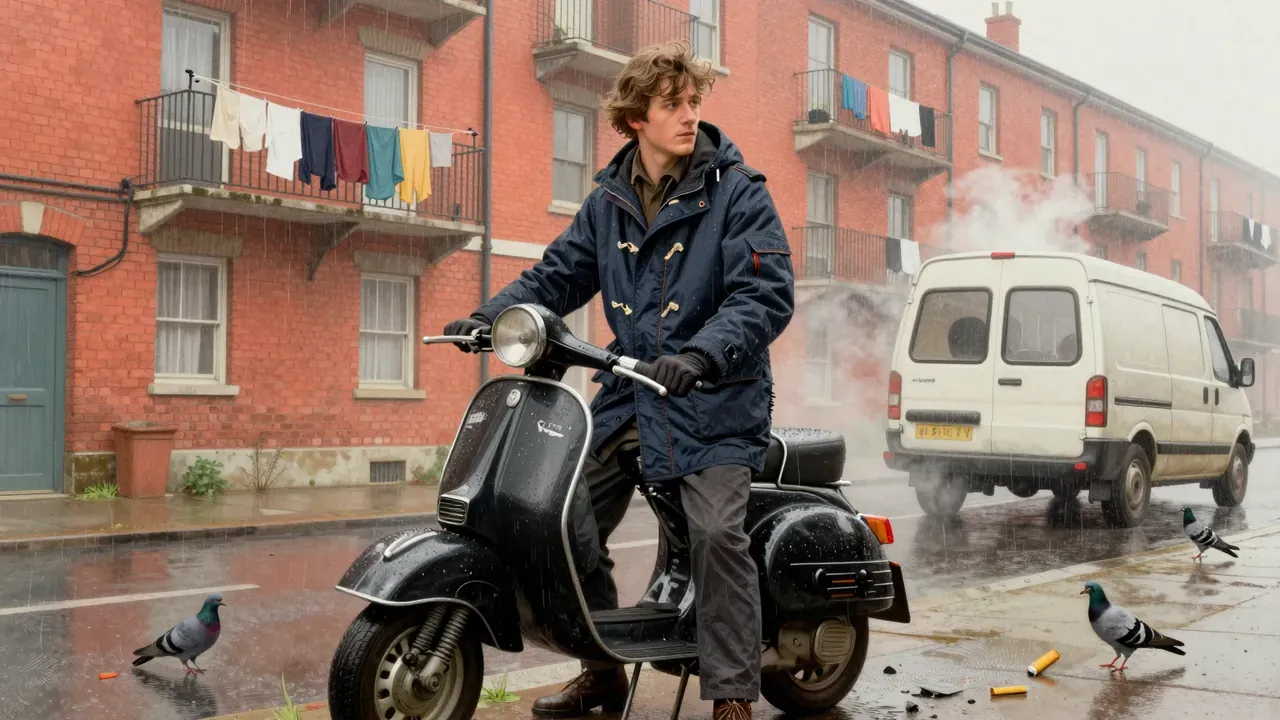
Quadrophenia (1979), directed by Franc Roddam, adapts The Who’s 1973 rock opera into a naturalistic British teen drama set in 1964–65. Starring Phil Daniels as Jimmy Cooper, a disillusioned London mod, it traces his descent through amphetamine use, scooter culture, dance-hall rivalry, and violent clashes with rockers — culminating in the Brighton bank holiday riots. Shot entirely on location except for one studio scene, it relies on physical performance, Brian Tufano’s unvarnished cinematography, and Pete Townshend’s sparingly used score. Not a musical, not nostalgic, it renders subculture as lived infrastructure — transport, stimulants, dress, and dance — all underpinned by class constraint and adolescent uncertainty.

13:00

The Last Days of Disco

Whit Stillman · 1998

Whit Stillman’s 1998 drama follows a group of Ivy League graduates navigating Manhattan’s early-1980s club scene. Built on extended dialogue rather than plot, it examines how class, ideology, and self-presentation shape relationships in a world where moral certainty masks uncertainty. With flat lighting, restrained editing, and performances tuned to verbal nuance, it offers a dry, observant portrait of privilege in transition — one that rewards attention to subtext over spectacle.

13:00

The Lure

Agnieszka Smoczyńska · 2015

Agnieszka Smoczyńska’s 2015 debut is a Polish musical horror film set in a 1980s Warsaw nightclub, following two sirens who perform, love, and devour. Blending gothic metal, bodily realism, and Andersen’s fable, it literalises female adolescence, immigration, and assimilation — with tails removed, voices lost, and hearts consumed. Produced by Warsaw Documentary Film Studio, scored by Ballady i Romanse, and shot by Jakub Kijowski.

13:00

Víctimas del Pecado

Emilio Fernández · 1951

Emilio Fernández’s 1951 Víctimas del Pecado stars Ninón Sevilla as Violeta, a Cuban dancer who adopts an abandoned infant in Mexico City’s red-light district. Set in Churubusco Studios, the film blends mambo numbers by Pérez Prado and Pedro Vargas with a tightly wound melodrama of love, betrayal, and imprisonment. Gabriel Figueroa’s cinematography carves space into zones of glamour, austerity, and quiet domesticity. Though structurally uneven and reliant on genre convention, its physical expressiveness, moral clarity, and studio craft make it a defining work of post-war Mexican cinema.