filmbriefs
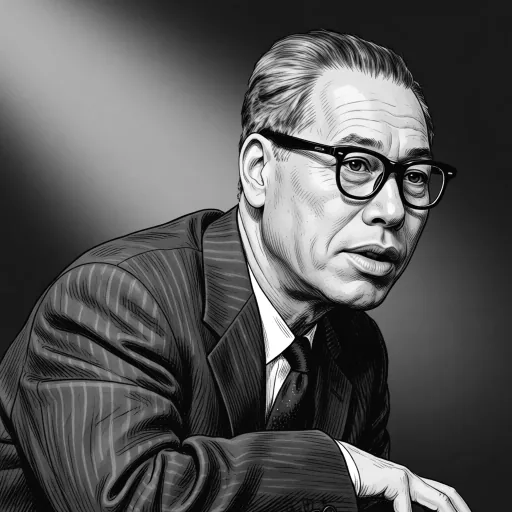
Actor · 1905–1982

Takashi Shimura

28
briefs
13:00
average
364 min
in total
On film.briefs28
13:00

Ghidorah, the Three-Headed Monster

Ishirō Honda · 1964

Ghidorah, the Three-Headed Monster (1964) is Toho’s fifth Godzilla film and the first to stage a three-monster alliance against an extraterrestrial threat. Directed by Ishirō Honda with special effects by Eiji Tsuburaya, it follows a Venusian prophetess who warns Earth of King Ghidorah’s arrival, prompting Godzilla, Rodan, and Mothra to set aside rivalry. Built on recycled suits, hand-crafted miniatures, and Akira Ifukube’s score, it privileges ritual over exposition and collective stance over individual heroism. Though human subplots are thin and Ghidorah’s suit proved technically taxing, its vision of reluctant solidarity remains singular in the franchise.
13:00

Godzilla

Ishirō Honda · 1954

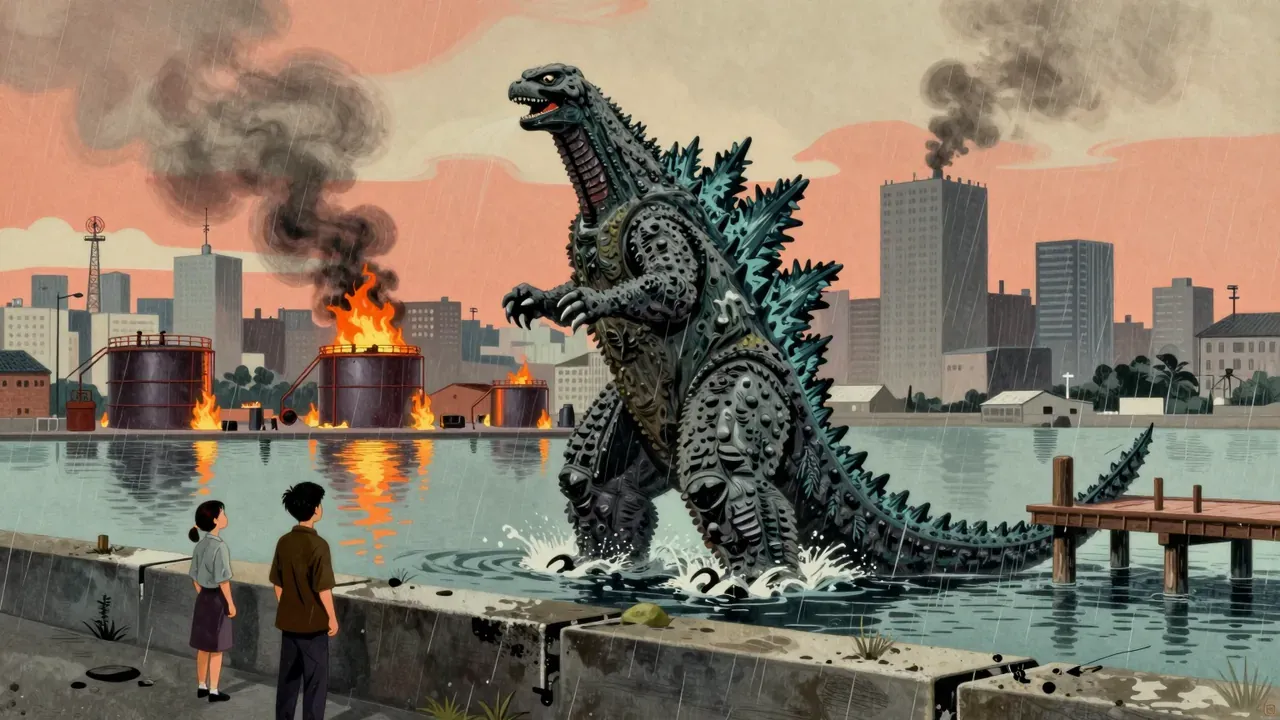
Godzilla (1954) is Toho’s foundational kaiju film, directed by Ishirō Honda and conceived after the Daigo Fukuryū Maru incident. It follows scientists and officials responding to a prehistoric creature mutated by hydrogen bomb tests. Shot in black-and-white with pioneering suitmation effects, its tone is sober, almost documentary-like. The film avoids monster-movie tropes in favour of bureaucratic realism, scientific debate, and quiet devastation. Though its pacing and formal restraint challenge modern expectations, its thematic urgency — on nuclear consequence, institutional failure, and irreversible change — remains undimmed.

13:00

Godzilla Raids Again

Motoyoshi Oda · 1955

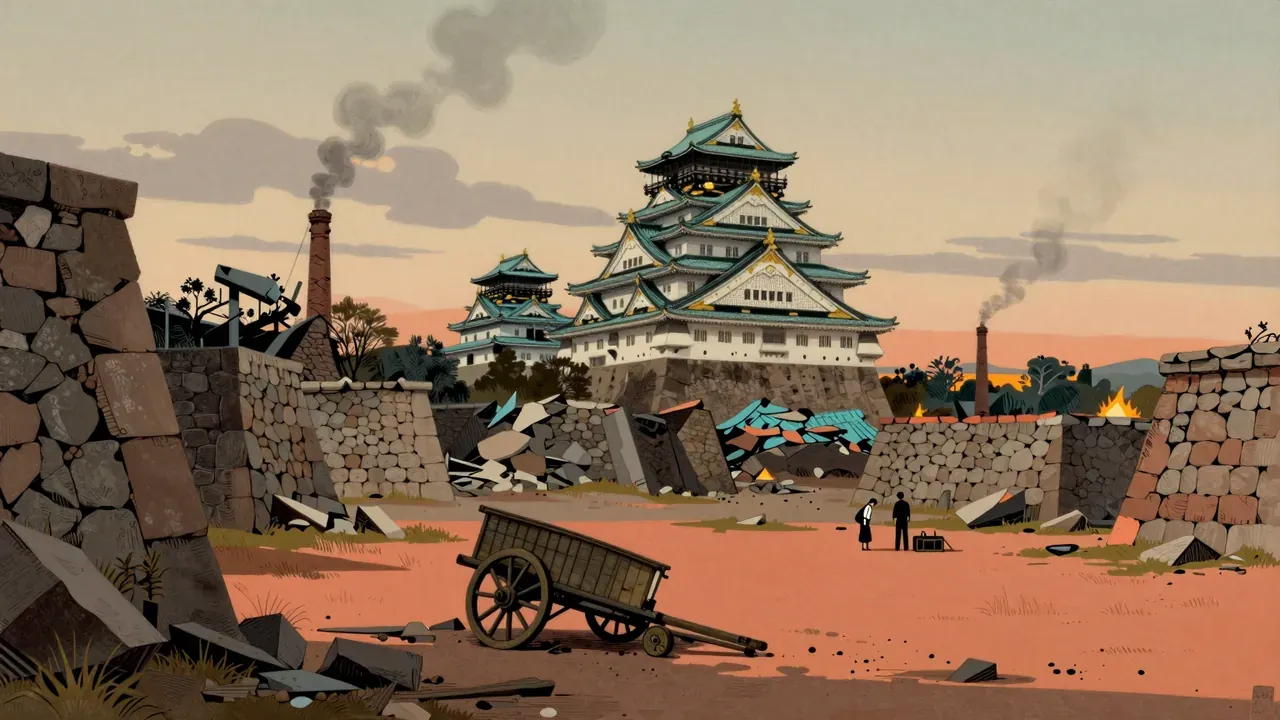
Toho’s 1955 follow-up to Godzilla is a lean, effects-driven kaiju film directed by Motoyoshi Oda under tight deadlines. It introduces Anguirus in a destructive Osaka showdown, prioritising spectacle and procedural urgency over the moral weight of its predecessor. With Haruo Nakajima in the Godzilla suit and Eiji Tsuburaya refining his special-effects techniques — including variable camera speeds and outdoor ice sets — the film functions as both a commercial necessity and a technical bridge to the franchise’s expansive future.

13:00

I Live in Fear

Akira Kurosawa · 1955

Akira Kurosawa’s 1955 drama follows Kiichi Nakajima (Toshirō Mifune), an ageing foundry owner convinced that nuclear war is inevitable, and his desperate, legally contested plan to move his family to Brazil. Framed by a family arbitration and ending in psychiatric confinement, the film avoids sensationalism, using restrained performances, precise black-and-white cinematography by Asakazu Nakai, and Masaru Sato’s austere score to examine fear, competence, and the social cost of foresight in postwar Japan.

13:00

Ikiru

Akira Kurosawa · 1952

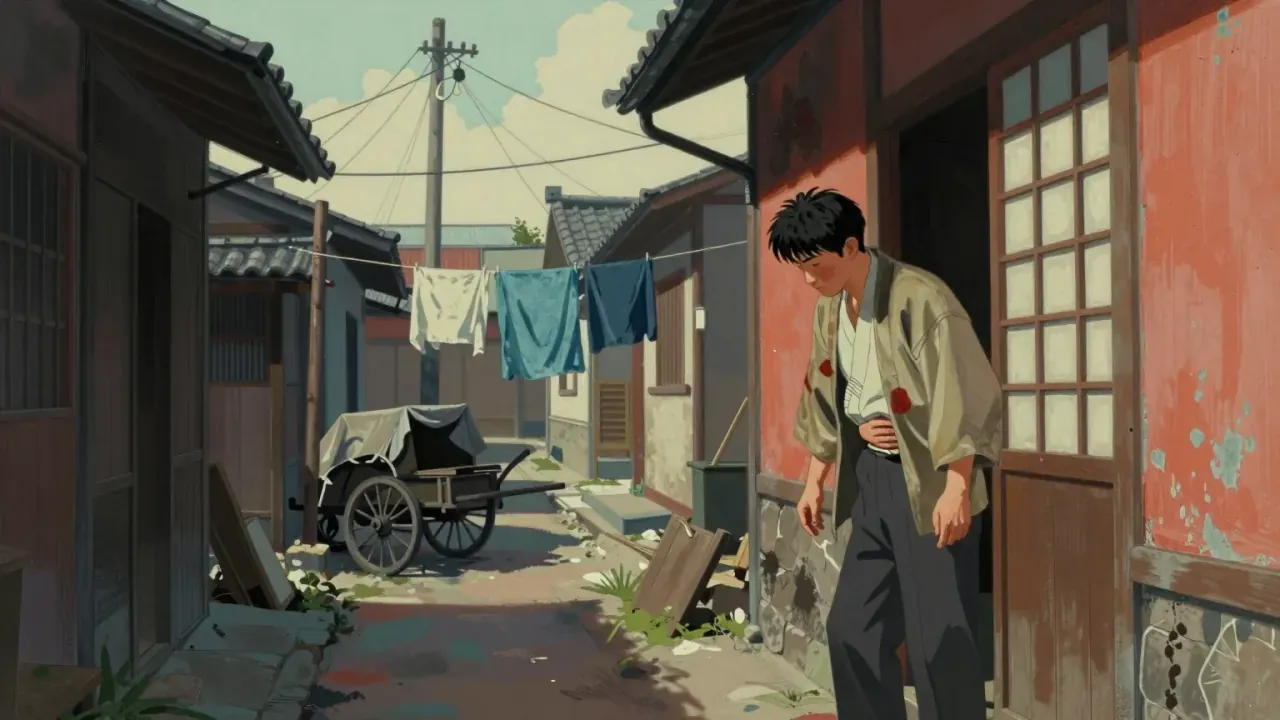
Ikiru (1952), directed by Akira Kurosawa, follows Kanji Watanabe, a Tokyo civil servant diagnosed with terminal cancer, as he seeks purpose in his final months. Rejecting hedonism and spiritual cliché, he devotes himself to realising a children’s playground stalled by bureaucratic inertia. Anchored by Takashi Shimura’s restrained performance and Asakazu Nakai’s unadorned cinematography, the film builds meaning through repetition, silence, and the quiet dignity of incremental action. Its structure—split by Watanabe’s death—shifts focus from his life to the puzzle of his final intent, resolved only in the tangible outcome of his labour.

13:00

Kwaidan

Masaki Kobayashi · 1964

Masaki Kobayashi’s 1964 Kwaidan is a four-part Japanese horror anthology adapted from Lafcadio Hearn’s folktales. Shot on vast, artificially lit soundstages, it replaces narrative drive with painterly control of colour, silence, and surface. Yoshio Miyajima’s cinematography flattens space; Tōru Takemitsu’s score uses prepared piano and charged silence; Yōko Mizuki’s script preserves Hearn’s archaic cadence. The film treats spirits not as agents of vengeance but as forces of immutable consequence — indifferent, inevitable, aesthetic. Though commercially unsuccessful and financially ruinous for its production company, it won the Special Jury Prize at Cannes and is now regarded as a landmark of stylised cinema.

13:00

Osaka Elegy

Kenji Mizoguchi · 1936

A 1936 Japanese drama directed by Kenji Mizoguchi, following telephone operator Ayako Murai as she navigates debt, exploitation and social censure in Osaka. With Isuzu Yamada in a defining early role, the film traces how family, workplace and law converge to strip her of autonomy — not through violence, but through quiet, systemic pressure. Shot by Minoru Miki and written by Mizoguchi and Yoshikata Yoda, it is a tightly controlled, unsentimental study of gendered constraint.

13:00

Samurai III: Duel at Ganryu Island

Hiroshi Inagaki · 1956

Hiroshi Inagaki’s 1956 Samurai III: Duel at Ganryu Island concludes his trilogy with deliberate slowness, following Miyamoto Musashi’s year-long retreat before his fateful duel with Sasaki Kojirō. Shot in Eastmancolor by Kazuo Yamada and starring Toshirō Mifune, it privileges stillness over action, moral weight over spectacle, and quiet mourning over triumph. Its strength is structural and tonal: every performance, cut, and musical phrase serves a single, unwavering register of gravity and restraint.

13:00

Sanshiro Sugata

Akira Kurosawa · 1943

Akira Kurosawa’s 1943 debut adapts Tsuneo Tomita’s novel about a young judo student’s moral and physical education in Meiji-era Tokyo. Made under wartime censorship, it foregrounds cinematic control — wipes, weather, slow motion — over didacticism. Its power lies in quiet accumulation: the pond vigil, the measured matches, the unspoken parting. Though some characters remain schematic and its politics underdeveloped, its focus on discipline as self-erasure remains potent. Restored footage has deepened, but not altered, its austere coherence.

13:00

Scandal

Akira Kurosawa · 1950

A painter and a singer sue a tabloid for fabricating their romance, but the case becomes secondary to their lawyer’s moral collapse under financial pressure. Set in postwar Tokyo, Scandal pivots from social critique to intimate tragedy, anchored by Takashi Shimura’s performance as a man whose conscience frays in silence. Kurosawa’s direction is plain and precise; Fumio Hayasaka’s score uses irony to deepen unease. The film’s power lies not in its courtroom climax, but in the weight of unspoken guilt, a sick child’s breath, and torn posters fading on a city wall.

13:00

The Bad Sleep Well

Akira Kurosawa · 1960

Akira Kurosawa’s 1960 drama follows a man who marries into a corrupt Japanese corporation to expose the men responsible for his father’s suicide. Built on Hamlet’s spine but rooted in postwar Tokyo’s bureaucracy, it uses meticulous staging, restrained performances and a deliberate pace to dissect how power evades accountability. Though its opening sequences are masterful, its conclusion trades catharsis for quiet despair — a choice that clarifies its theme but tests the viewer’s stamina.

13:00

The Hidden Fortress

Akira Kurosawa · 1958

Akira Kurosawa’s 1958 adventure follows two self-interested peasants who agree to smuggle a mysterious man and woman across hostile territory for gold, unaware the man is a famed general and the woman a deposed princess. Shot in Tohoscope widescreen, with Ichio Yamazaki’s naturalistic cinematography and Masaru Sato’s taut score, the film grounds epic stakes in petty motives, using the peasants’ limited perspective to explore class, loyalty and survival. Toshirō Mifune delivers restrained authority as General Rokurōta; Minoru Chiaki and Kamatari Fujiwara embody craven humanity as Tahei and Matashichi. Though structurally inventive and morally precise, the princess’s interiority remains deliberately obscured — a choice that sharpens some tensions and blunts others.

13:00

The Idiot

Akira Kurosawa · 1951

Akira Kurosawa’s 1951 The Idiot transposes Dostoevsky’s novel to post-war Hokkaido, following Kameda — a gentle, epileptic man returning home — as he becomes entangled with Taeko, a woman discarded by her wealthy patron, and Akama, a volatile heir. Shot in stark black-and-white and severely cut by Shochiku from its original 265-minute form, the film relies on restraint: minimal music, extended silences, performances built on micro-gestures. Its moral force lies in what it refuses — explanation, catharsis, resolution — making it a demanding but deeply resonant portrait of integrity in a compromised world.

13:00

The Life of Oharu

Kenji Mizoguchi · 1952

Kenji Mizoguchi’s 1952 film follows Oharu, a noblewoman whose life disintegrates after a forbidden romance, forcing her through successive roles — concubine, courtesan, servant, wife, nun, prostitute — each ending in expulsion. Adapted from Ihara Saikaku, it uses long takes, restrained performance, and sparse design to trace how Edo-period Japan’s hierarchies erase women not with violence but with quiet, repeated exclusion.

13:00

The Men Who Tread on the Tiger's Tail

Akira Kurosawa · 1945

Akira Kurosawa’s 1945 film adapts a classical Japanese tale of disguise and deception at a border checkpoint. Made under severe wartime constraints — one set, minimal lighting, a script written overnight — it pits the solemnity of Noh theatre against the irreverent commentary of a low-status porter. Denjirō Ōkōchi’s Benkei anchors the ritual; Ken’ichi Enomoto’s porter destabilises it. The film is a study in economy, tension, and the performative nature of authority — austere, precise, and deeply intentional.

13:00

The Most Beautiful

Akira Kurosawa · 1944

Akira Kurosawa’s 1944 film The Most Beautiful follows young women working at a Japanese optics factory during the Second World War. Shot on location with a semidocumentary approach, it depicts their collective effort to meet production targets, their dormitory life, and the personal costs of unwavering dedication. Though commissioned as propaganda, its austerity and focus on physical and emotional strain lend it an unexpected gravity — less a celebration of sacrifice than a quiet record of its weight.

13:00

Throne of Blood

Akira Kurosawa · 1957

Akira Kurosawa’s 1957 Throne of Blood transposes Macbeth to feudal Japan, using Noh aesthetics, volcanic landscapes, and deliberate stillness to trace the physical and psychological narrowing of a man who kills to become lord — and finds only enclosure. Toshirō Mifune and Isuzu Yamada anchor a film where fog obscures but never excuses, and silence carries more threat than speech.

13:00

Yojimbo

Akira Kurosawa · 1961

Akira Kurosawa’s 1961 jidaigeki follows a nameless rōnin who manipulates two warring yakuza factions into mutual ruin. Starring Toshirō Mifune, it uses stark composition, rhythmic editing and Masaru Sato’s jaunty, dissonant score to deliver a dry, structural satire of authority and competence. Made for Toho, it was Japan’s fourth-highest-grossing film of 1961 and later inspired Sergio Leone’s A Fistful of Dollars.

13:00

Zatoichi and the Fugitives

Kimiyoshi Yasuda · 1968

The eighteenth Zatoichi film finds Shintarō Katsu’s blind swordsman confronting a silk-weaving magnate who enforces debt bondage and shelters vicious fugitives. Directed by Kimiyoshi Yasuda with stark cinematography by Kazuo Miyagawa, it strips away mythic flourishes to focus on procedural cruelty and physical consequence — Zatoichi is wounded, outmatched, and morally unrelieved. The film’s rigour lies in its refusal to flinch, to explain, or to console.

13:00

Zatoichi's Conspiracy

Kimiyoshi Yasuda · 1973

Zatoichi’s Conspiracy (1973), directed by Kimiyoshi Yasuda, is the twenty-third entry in the long-running Japanese series. Shintarō Katsu reprises his iconic role as the blind swordsman drawn into a local conspiracy involving corrupt officials and seized land. With a lean 88-minute runtime, functional cinematography, and Akira Ifukube’s percussive score, the film relies on character consistency and physical storytelling rather than narrative innovation or psychological depth. It works best as a refinement — not a reinvention — of the series’ enduring ethics.

13:00

Drunken Angel

Akira Kurosawa · 1948

Drunken Angel (1948), Akira Kurosawa’s first major work, follows an alcoholic doctor and a tubercular yakuza enforcer locked in a tense, unsentimental relationship amid the black-market ruins of postwar Osaka. Shot in stark black-and-white by Takeo Itō, scored with ironic waltzes by Fumio Hayasaka, and anchored by Takashi Shimura and Toshirō Mifune’s tightly coiled performances, the film locates moral urgency not in grand gestures but in recurring details — a sump, a cough, a trembling hand. It is a foundational work of Japanese cinema: unsparing, unadorned, and deeply concerned with what happens when systems fail and only broken people remain to tend the wounds.

13:00

High and Low

Akira Kurosawa · 1963

Akira Kurosawa’s 1963 film High and Low adapts Evan Hunter’s King’s Ransom into a stark, vertically structured drama about a businessman’s moral crisis after a kidnapping goes wrong. Shot in black and white by Asakazu Nakai and Takao Saito, it divides cleanly between Gondō’s elevated Yokohama home and the city’s slums, using space, lens, and editing to interrogate inequality, policing, and accountability. With Toshirō Mifune and Tsutomu Yamazaki in career-defining roles, it remains a benchmark of socially engaged genre filmmaking.

13:00

Kagemusha

Akira Kurosawa · 1980

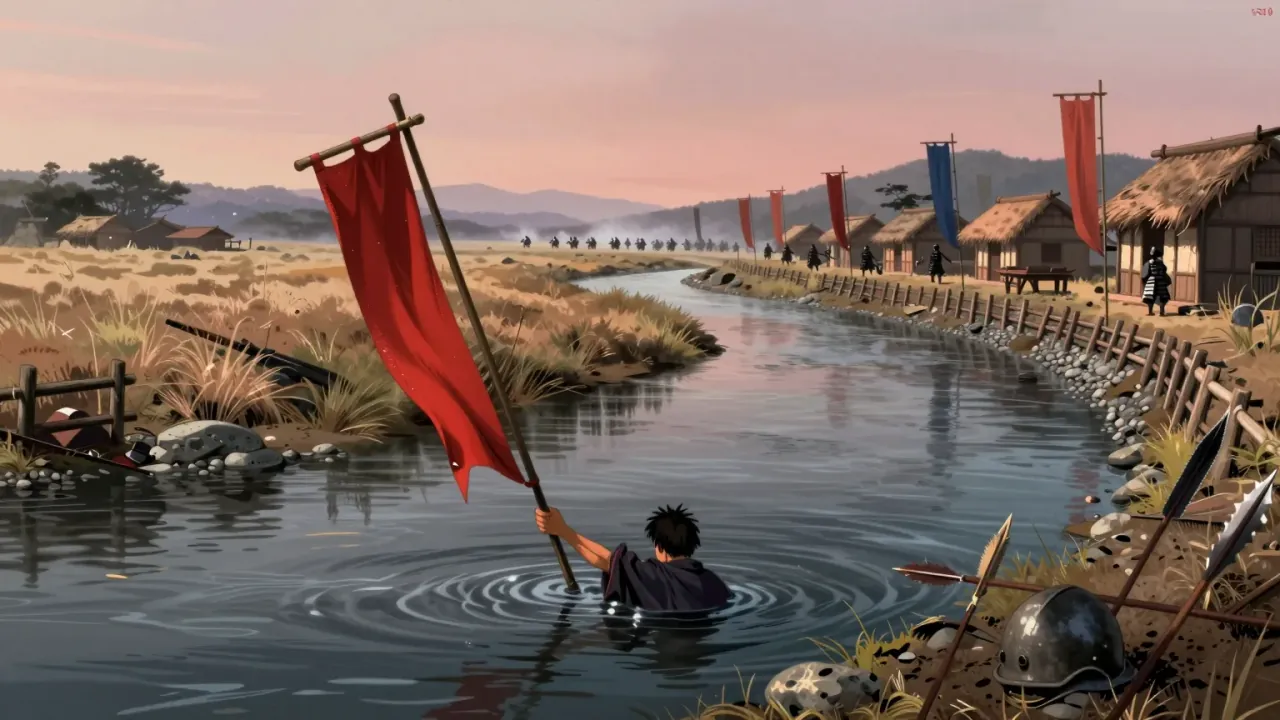
Akira Kurosawa’s 1980 epic follows a thief forced to impersonate the dying warlord Takeda Shingen to preserve clan stability. Shot in vivid colour and composed with rigorous symmetry, it traces the slow, fragile construction — and inevitable collapse — of political belief through gesture, silence, and shared illusion. Tatsuya Nakadai plays both men, distinguishing them not by voice or mannerism but by weight, stillness, and the space he occupies. The film ends at the Battle of Nagashino, where symbolism gives way to slaughter, and the kagemusha dies trying to retrieve a fallen banner.

13:00

No Regrets for Our Youth

Akira Kurosawa · 1946

Akira Kurosawa’s 1946 drama follows Yukie Yagihara from Kyoto university protests through Tokyo survival to rural rice-field labour after her husband’s execution for anti-militarist activity. Made under Occupation guidelines, it avoids polemic in favour of embodied consequence: conviction is measured in calloused hands, not declarations. Setsuko Hara’s restrained performance, Asakazu Nakai’s flat naturalistic lighting, and Kurosawa’s unhurried editing build weight through duration. Though some early scenes feel schematic and its politics simplify historical fractures, its power lies in treating democracy as daily practice — silence, stamina, shared meals — not doctrine.

13:00

Sanjuro

Akira Kurosawa · 1962

Akira Kurosawa’s 1962 jidaigeki Sanjuro reunites Toshirō Mifune’s ronin in a tightly coiled feudal intrigue, where tactical wit outweighs swordplay and social comedy emerges from the chasm between idealism and perception. Less violent and more structurally austere than its predecessor Yojimbo, it traces a masterless samurai’s reluctant intervention among nine inept young retainers, culminating not in triumph but in a disillusioned walk away. Shot by Takao Saitō, edited by Kurosawa, and scored by Masaru Sato, it is a film of precision, restraint, and dry, cumulative irony.

13:00

Stray Dog

Akira Kurosawa · 1949

A young Tokyo detective loses his service pistol in a crowded trolley in the summer of 1949. With the help of a veteran colleague, he traces it through the city’s black markets, yakuza networks, and dance halls — not to deliver vengeance, but to understand how postwar desperation reshapes morality, authority, and the very idea of justice.

13:00

Rashomon

Akira Kurosawa · 1950

Akira Kurosawa's 1950 film gathers a woodcutter, a priest and a passer-by under the ruined Rashomon gate during a rainstorm as the first two recount a trial testimony about a samurai's death in a forest, told in turn by a captured bandit, the samurai's wife, the dead man himself through a medium, and finally the woodcutter who found the body. Shot by Kazuo Miyagawa, who pointed a camera directly into sunlight through forest canopy for the first time in Japanese studio film, and made for around $140,000, it won the Golden Lion at Venice and an honorary Academy Award, introducing much of the West to Japanese cinema in the process.

13:00

Seven Samurai

Akira Kurosawa · 1954

Akira Kurosawa's 1954 film follows a poor farming village that recruits seven masterless samurai, offering only food and shelter, to defend it against a bandit gang planning to return once the barley ripens. Shot by Asakazu Nakai across a punishing production that ran well over schedule, scored by Fumio Hayasaka and led by Toshiro Mifune and Takashi Shimura, the film ran to 207 minutes and cost 210 million yen, a large outlay for the period, before shaping the template that countless action and heist films have followed since.