filmbriefs
Studio

Shochiku

31
briefs
13:00
average
403 min
in total
On film.briefs31
13:00

A Story of Floating Weeds

Yasujirō Ozu · 1934

A Story of Floating Weeds (1934) is Yasujirō Ozu’s silent drama about an ageing kabuki actor who revisits a provincial town to see the son he abandoned years earlier. With minimal intertitles and a restrained visual style, the film traces quiet tensions between duty and desire, permanence and transience, across a travelling troupe and a rooted family. Shot by Hideo Shigehara and edited by him, it relies on composition, rhythm, and understated performance rather than exposition or climax.
13:00

An Autumn Afternoon

Yasujirō Ozu · 1962

Yasujirō Ozu’s 1962 An Autumn Afternoon follows widower Shūhei Hirayama as he arranges his daughter Michiko’s marriage — not as a triumph of paternal love, but as an act of belated self-reckoning. Set in Tokyo, the film moves through school reunions, bar visits and domestic routines, using precise framing, muted colour and deliberate pacing to trace how time, duty and silence shape family life. With Chishū Ryū, Shima Iwashita and Mariko Okada, it is a restrained, deeply humane portrait of ageing, obligation and the quiet cost of staying put.

13:00

Army

Keisuke Kinoshita · 1944

Keisuke Kinoshita’s 1944 Army follows three generations of a Japanese family as militarism seeps into domestic life. Chishū Ryū and Kinuyo Tanaka play parents shaping their son for service, culminating in a wordless, censored final scene where Tanaka’s character runs alongside her departing son — an act of love deemed unpatriotic. Made under strict wartime oversight at Shochiku, the film’s power lies in what it omits, delays, or shows without commentary.

13:00

Cruel Story of Youth

Nagisa Ōshima · 1960

Nagisa Ōshima’s 1960 debut Cruel Story of Youth follows two Tokyo teenagers whose relationship unravels through coercion, petty crime, and illegal abortion. Shot on location with hand-held cameras and stark, uninflected performances, it rejects moral framing in favour of structural realism — showing how class, gender, and political neglect shape intimacy. Though controversial on release, it helped define Japan’s New Wave and remains a rigorous, unsentimental study of youth as condition rather than stage.

13:00

Dragnet Girl

Yasujirō Ozu · 1933

Yasujirō Ozu’s 1933 silent crime film Dragnet Girl follows Tokiko, girlfriend of a small-time gangster, as she slowly withdraws from complicity and steers both herself and him toward surrender. With restrained performances, unemphatic pacing, and Hideo Shigehara’s naturalistic cinematography, it treats moral change as incremental, not dramatic — a film less about breaking the law than about noticing the weight of a choice, a glance, a pause.

13:00

Every-Night Dreams

Mikio Naruse · 1933

Mikio Naruse’s 1933 silent drama follows Omitsu, a bar hostess in depression-era Yokohama, as she navigates poverty, abandonment, and moral compromise to protect her young son. With Sumiko Kurishima in a performance of extraordinary restraint, the film traces how economic precarity reshapes love, duty, and selfhood — not through grand tragedy, but through accumulated, quiet concessions.

13:00

Genocide

Kazui Nihonmatsu · 1968

Genocide (1968), directed by Kazui Nihonmatsu for Shochiku, is a science fiction horror film set on a fictional Japanese archipelago where weaponised insects emerge in the wake of a crashed H-bomb. Blending Cold War paranoia, post-nuclear trauma, and ecological unease, it follows biologist Dr. Nagumo, islander Yukari, and American soldiers as they confront biological invasion, espionage, and the looming threat of nuclear cover-up. Shot by Shizuo Hirase with a sparse score by Shunsuke Kikuchi, it is austere in execution and ambitious in theme — Shochiku’s final horror release, and a singularly uneasy artefact of its time.

13:00

Good Morning

Yasujirō Ozu · 1959

Yasujirō Ozu’s 1959 colour comedy follows two brothers who stop speaking to protest their parents’ refusal to buy a television. Set in a Tokyo suburb, the film traces how their silence ripples through the neighbourhood, exposing the fragility of gossip, the labour of politeness, and the quiet absurdity of adult consensus — all observed with Ozu’s characteristic stillness and dry precision.

13:00

Harakiri

Masaki Kobayashi · 1962

Masaki Kobayashi’s 1962 jidaigeki follows rōnin Tsugumo Hanshirō as he requests seppuku at the Iyi clan’s estate — not to die, but to force a reckoning with their hypocrisy. Through precise framing, restrained performance, and a narrative structured like a legal deposition, the film exposes how bushido functions as bureaucratic cover for cruelty. Tatsuya Nakadai anchors the film with implacable gravity; Yoshio Miyajima’s cinematography and Tōru Takemitsu’s score deepen its moral austerity. It remains a landmark of ethical cinema, less concerned with honour than with who bears the cost when honour becomes theatre.

13:00

I Was Born, But...

Yasujirō Ozu · 1932

Yasujirō Ozu’s 1932 silent comedy follows two brothers whose faith in their father collapses when they see him humiliate himself before his boss on home film. With still camerawork, sparse intertitles, and performances rooted in physical truth, the film traces the quiet transmission of social submission across generations — not as satire or tragedy, but as observed fact.

13:00

Late Autumn

Yasujirō Ozu · 1960

Yasujirō Ozu’s 1960 drama follows a widow and her daughter in Tokyo as three friends attempt to arrange marriages for both. With quiet precision, the film traces the unspoken tensions of filial duty, ageing, and companionship — not through crisis but through accumulation: of glances, silences, and small, repeated gestures. Setsuko Hara and Yōko Tsukasa anchor a cast that treats emotion as behaviour, not exposition. Shot by Yūharu Atsuta and edited by Yoshiyasu Hamamura, it is a masterclass in compositional restraint.

13:00

Late Spring

Yasujirō Ozu · 1949

Yasujirō Ozu’s 1949 drama follows Noriko and her father in the weeks before her arranged marriage. Set in occupied Japan, it unfolds through quiet rituals — tea ceremonies, temple visits, train rides — with minimal dialogue and fixed, low-angle compositions. Chishū Ryū and Setsuko Hara perform with restrained precision; Yūharu Atsuta’s cinematography treats space as emotional architecture. The film’s power lies in accumulation, not climax: in repetition, omission, and the weight of what remains unsaid.

13:00

Pale Flower

Masahiro Shinoda · 1964

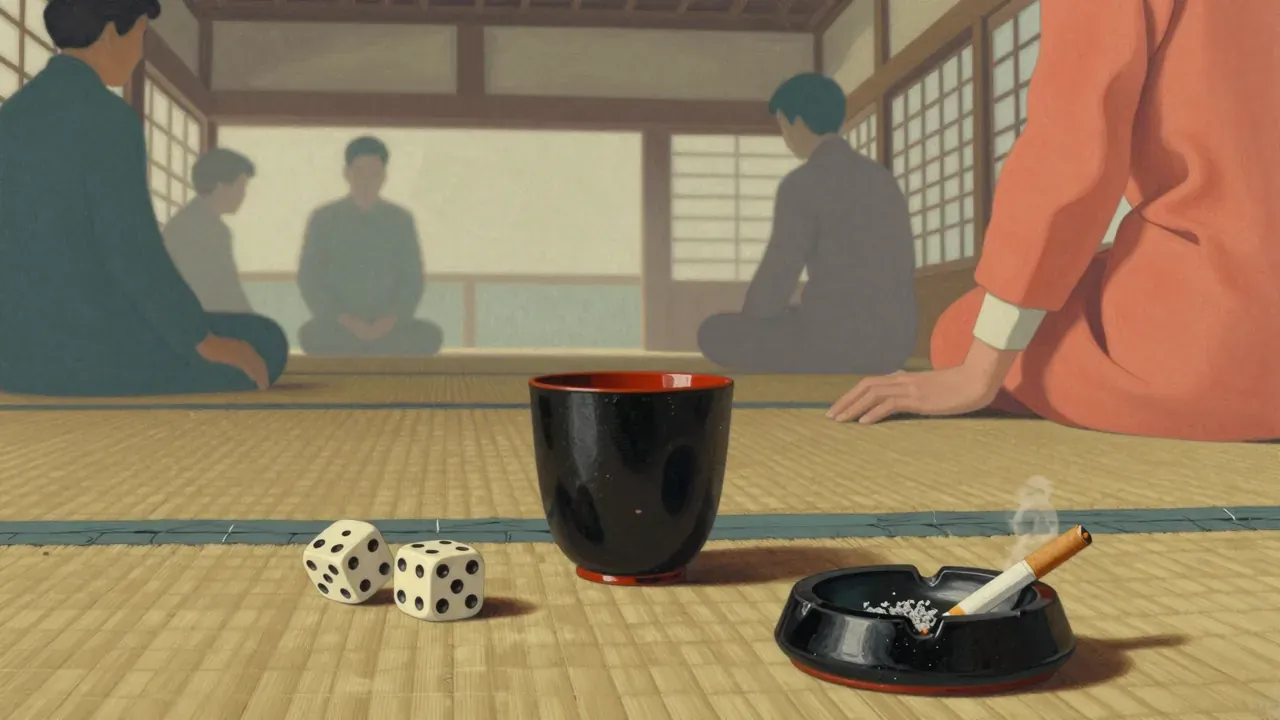
Masahiro Shinoda’s 1964 yakuza drama follows Muraki, a hitman released from prison, drawn into a fatal attraction with Saeko, a thrill-seeking gambler. Set against Tokyo’s underground gambling dens and nocturnal streets, the film replaces plot with rhythm, silence with tension, and character psychology with physical precision. Tōru Takemitsu’s dissonant score and Shinsaku Himeda’s restrained cinematography deepen its mood of existential exhaustion. It is a foundational Japanese New Wave work — austere, hypnotic, and unrelenting in its formal control.

13:00

Passing Fancy

Yasujirō Ozu · 1933

A 1933 Japanese silent film directed by Yasujirō Ozu, Passing Fancy follows Kihachi, a widowed brewery worker in Tokyo, as he shelters a destitute young woman and navigates care for her and his young son. With minimal intertitles, restrained performances, and Hideo Shigehara’s understated cinematography, the film traces quiet shifts in dignity, class, and paternal love — all within the confines of everyday spaces and routines.

13:00

Port of Flowers

Keisuke Kinoshita · 1943

Port of Flowers (1943), directed by Keisuke Kinoshita for Shochiku, is a restrained domestic drama set in a Japanese port town during wartime. Starring Eitarō Ozawa and Ken Uehara, it traces quiet exchanges between two men bound by memory, duty, and proximity rather than plot. With no credited score and minimal sound design, the film relies on duration, composition, and performance to evoke continuity amid uncertainty. Its themes — care as routine, loyalty as repetition, time as tide — emerge through accumulated detail, not exposition. It is neither propaganda nor protest, but a sustained act of attention to what endures when history narrows.

13:00

Scandal

Akira Kurosawa · 1950

A painter and a singer sue a tabloid for fabricating their romance, but the case becomes secondary to their lawyer’s moral collapse under financial pressure. Set in postwar Tokyo, Scandal pivots from social critique to intimate tragedy, anchored by Takashi Shimura’s performance as a man whose conscience frays in silence. Kurosawa’s direction is plain and precise; Fumio Hayasaka’s score uses irony to deepen unease. The film’s power lies not in its courtroom climax, but in the weight of unspoken guilt, a sick child’s breath, and torn posters fading on a city wall.

13:00

That Night's Wife

Yasujirō Ozu · 1930

That Night’s Wife (1930), Yasujirō Ozu’s early Shochiku silent, confines its entire action to a single night in a Tokyo apartment. A father robs a bank to pay for his daughter’s life-saving medicine; a detective tracks him home; the wife disarms the law, then helps her husband flee—only for him to return at dawn and surrender. Shot by Hideo Shigehara and co-written by Ozu and Kōgo Noda, it is a study in compressed ethics, where silence, stillness and domestic detail carry the full weight of choice.

13:00

The Ballad of Narayama

Keisuke Kinoshita · 1958

Keisuke Kinoshita’s 1958 adaptation of Shichirō Fukazawa’s story presents the fictional practice of ubasute — abandoning elders on Mount Narayama — not as barbarism but as a disciplined, communal rite. Stylised like kabuki theatre, with stark black-and-white cinematography by Tatsuo Suzuki and a restrained, chant-like score by Ichirō Saitō, the film follows Orin (Kinuyo Tanaka) in her final month before ascent. Its power lies in formal unity and moral austerity, refusing psychology or judgement in favour of ritual precision. Though divisive at Venice in 1958, it has since been recognised as a landmark of Japanese arthouse cinema.

13:00

The Idiot

Akira Kurosawa · 1951

Akira Kurosawa’s 1951 The Idiot transposes Dostoevsky’s novel to post-war Hokkaido, following Kameda — a gentle, epileptic man returning home — as he becomes entangled with Taeko, a woman discarded by her wealthy patron, and Akama, a volatile heir. Shot in stark black-and-white and severely cut by Shochiku from its original 265-minute form, the film relies on restraint: minimal music, extended silences, performances built on micro-gestures. Its moral force lies in what it refuses — explanation, catharsis, resolution — making it a demanding but deeply resonant portrait of integrity in a compromised world.

13:00

The Living Skeleton

Kōki Matsuno · 1968

The Living Skeleton (1968), directed by Kōki Matsuno for Shochiku, follows a woman haunted by her vanished twin and a submerged wreck off a coastal village. Shot in stark monochrome, it builds unease through underwater skeletons, fog-bound ships, and Catholic ritual — not gore or exposition. Its power lies in texture, repetition, and the sea as keeper of buried history.

13:00

The Masseurs and a Woman

Hiroshi Shimizu · 1938

Hiroshi Shimizu’s 1938 film follows blind masseurs arriving at a rural spa town, where fleeting encounters — with a mysterious woman, a guest named Shintarō, and the rhythms of temporary community — unfold with quiet precision. Made by Shochiku in its Ōfuna style, it prioritises observation over exposition, tactile detail over dialogue, and duration over plot.

13:00

The Only Son

Yasujirō Ozu · 1936

Yasujirō Ozu’s 1936 debut sound feature follows a widow who sacrifices everything to educate her son, only to visit him thirteen years later and find him struggling in Tokyo. With minimal dialogue, fixed camera positions, and profound stillness, the film traces the emotional arithmetic of filial duty, poverty, and quiet endurance — culminating in a final image of private grief that refuses explanation.

13:00

The Story of the Last Chrysanthemum

Kenji Mizoguchi · 1939

Kenji Mizoguchi’s 1939 film follows Kikunosuke Onoe, an onnagata striving to master his craft in Meiji-era Japan. His progress is inextricable from Otoku, the wet nurse who becomes his critic, partner, and eventual sacrifice. Shot in extended takes by Minoru Miki and written by Shōfū Muramatsu and Yoshikata Yoda, the film charts fourteen years of ambition, exile, and quiet endurance — culminating not in reconciliation but in belated recognition, delivered too late to alter outcome.

13:00

Three Outlaw Samurai

Hideo Gosha · 1964

Hideo Gosha’s 1964 debut follows three ronin who abandon fixed loyalties to defend starving peasants from a corrupt magistrate. Structured like a legal brief — cause, breach, consequence — it treats honour as practice, not principle, and finds moral clarity not in victory but in the repeated, costly act of choosing sides. Shot with stark economy and performed with restrained gravity, it remains a precise, unsentimental study of power, class, and the slow, dangerous work of conscience.

13:00

Tokyo Chorus

Yasujirō Ozu · 1931

Tokyo Chorus (1931), directed by Yasujirō Ozu, follows an insurance salesman whose firing during Japan’s early Shōwa depression forces him to reassess work, family and self-worth. Shot in silence by Hideo Shigehara and written by Kōgo Noda, it traces quiet resilience across domestic and public spaces — from school drills to hospital corridors to a curry-rice restaurant — culminating in a modest, communal reprieve. Its power lies in restraint: no grand speeches, no dramatic reversals, only the accumulated weight of small choices and smaller joys.

13:00

Tokyo Twilight

Yasujirō Ozu · 1957

Tokyo Twilight (1957) is Yasujirō Ozu’s final black-and-white drama, following two sisters reunited with their estranged mother in postwar Tokyo. When Akiko discovers the truth about her parentage, the revelation unravels her fragile stability — leading to abortion, confrontation, and sudden death. Her elder sister Takako absorbs the fallout, choosing to return to her failing marriage to break the cycle of abandonment. Shot by Yūharu Atsuta with Ozu’s signature stillness, the film resists melodrama in favour of accumulated quiet, using omission and restraint to articulate grief as atmosphere rather than event.

13:00

Twenty-Four Eyes

Keisuke Kinoshita · 1954

Keisuke Kinoshita’s Twenty-Four Eyes (1954) follows teacher Hisako Ōishi across twenty years on Shōdoshima island, from her arrival in 1928 to the postwar return to teaching in 1946. Using her twelve pupils as anchors, the film charts the erosion and renewal of communal life under militarism, poverty and loss. Hideko Takamine’s restrained performance, the unvarnished Shochiku photography and the episodic, season-bound structure build a portrait of endurance rooted in daily acts of care — not grand statements, but shared meals, remembered songs and a bicycle given back.

13:00

Walk Cheerfully

Yasujirō Ozu · 1930

Yasujirō Ozu’s 1930 silent film Walk Cheerfully follows a young man’s fall into petty crime and tentative return to social life in interwar Tokyo. With restrained performances, frontal compositions, and a deliberate, unhurried pace, it builds meaning through repetition, posture, and spatial arrangement rather than exposition or drama. Shot by Hideo Shigehara and written by Hiroshi Shimizu and Tadao Ikeda, it reflects Shochiku’s ‘new tendency’ realism — attentive to class, work, and urban routine, but resistant to moral simplification or emotional display.

13:00

Women of the Night

Kenji Mizoguchi · 1948

Kenji Mizoguchi’s Women of the Night (1948) follows three women in post-war Osaka as each enters prostitution under distinct but converging pressures: infant mortality, syphilis, police raids, and familial rejection. Shot on location with Kinuyo Tanaka in a restrained, physically grounded performance, it avoids melodrama in favour of structural clarity — showing how poverty, gendered law, and institutional neglect produce outcomes with clinical precision. Though some characters remain schematic and its pacing resists modern expectations, its rigour and historical immediacy make it a vital, unsentimental reckoning with survival.

13:00

Good Men, Good Women

Hou Hsiao-Hsien · 1995

Hou Hsiao-hsien’s 1995 drama interweaves the true story of resistance activist Chiang Bi-yu with the contemporary rehearsal process of an actress playing her. Shot in Taiwanese Hokkien with restrained cinematography and elliptical editing, it explores memory, gender, and political erasure across three temporal layers — not to resolve history, but to inhabit its lingering weight.

13:00

Tokyo Story

Yasujirō Ozu · 1953

Yasujiro Ozu's 1953 film follows Shukichi and Tomi Hirayama as they leave their coastal town to visit their grown children in Tokyo, only to find themselves parcelled off to a spa resort by sons and daughters too occupied with their own lives to spend much time with them. Shot by Yuharu Atsuta almost entirely from a low, static camera position, with no score credited on the sheet and a cast led by Chishu Ryu and Setsuko Hara, it has since drawn some of the highest aggregate critical scores of any film on record, sitting at 100 percent on Rotten Tomatoes and Metacritic alike.