The weight of the name
The Story of the Last Chrysanthemums is a 1939 Japanese drama film directed by Kenji Mizoguchi for Shochiku, adapting Shōfū Muramatsu’s short story about Kikunosuke Onoe — an onnagata whose artistic ambition collides with rigid social hierarchy and familial expectation in late Meiji-era Tokyo. It is not a biopic, though rooted in the life of the real kabuki actor Kikunosuke Onoe II; nor is it a primer on kabuki, though it embeds its conventions — gendered performance, lineage, apprenticeship, public ritual — into every structural choice. The film attempts something precise: to trace how artistic mastery emerges not through solitary genius but through sustained, unequal devotion — specifically, Otoku’s quiet, uncredited labour as critic, companion, nurse, and moral compass. Its aim is not uplift but fidelity: to show the cost of excellence when it is measured in human endurance rather than applause. It refuses the shorthand of triumph. What matters is not whether Kiku succeeds, but what he must discard — and who must bear the weight of that discarding — for him to do so. (142 words)
The length of time
The story unfolds across fourteen years in long, unbroken movements: dolly shots glide through corridors and riverbanks; interiors are lit with deliberate restraint by Minoru Miki, allowing faces to recede into shadow while hands, kimonos, and floorboards hold detail. Shōtarō Hanayagi plays Kiku with physical precision but emotional reticence — his transformation is registered less in expression than in posture, breath, and the growing distance between him and Otoku. Kakuko Mori’s Otoku is the film’s axis: her stillness carries more narrative force than any monologue. Yoshikata Yoda and Shōfū Muramatsu’s script avoids exposition; motivation is inferred from gesture, silence, or the timing of a bow. Shirō Fukai’s score is sparse, often absent — sound leans instead on off-screen crowds, clattering trains, and the hollow echo of empty rooms. There are no close-ups; intimacy is achieved by proximity within the frame, not by magnification. The editing, by Shizuo Nishimura, sustains duration without indulgence — even moments of rupture, like Kiku striking Otoku, land with the weight of accumulated fatigue, not sudden violence. (158 words)
The shape of absence
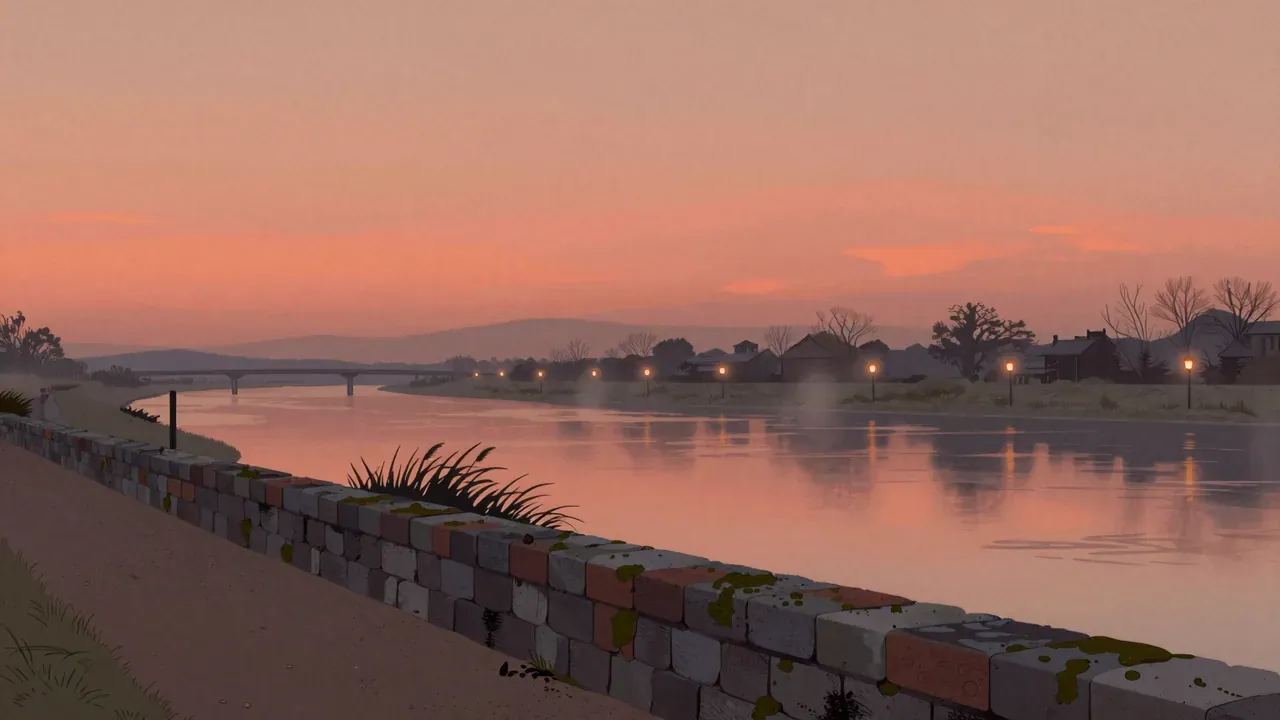
What lands is the film’s unblinking attention to consequence. When Otoku is dismissed from the Onoe household, the camera does not follow her departure but holds on the empty space she occupied beside the infant — a compositional echo of her later absence from Kiku’s triumph. The river parade at the end is not shot as spectacle but as sonic intrusion: its music arrives muffled, then swells, then recedes — heard but unseen, just as Otoku is present only in memory and letter. The final sequence works because it refuses catharsis: Kiku’s reconciliation with his father is granted, but only after Otoku’s death has already been sealed; her sacrifice is not repaid, only acknowledged too late. The film’s long takes do not aestheticise suffering — they insist on its duration. You feel the weight of four years on the road not through montage but through the gradual fraying of fabric, the thinning of voices, the way Otoku’s cough deepens over successive scenes. This is not emotional manipulation; it is arithmetic made visible. The film lands because it treats time not as a device but as material — worn, measurable, irreversible. (156 words)
The river parade
What does not land is the framing of Kiku’s artistic growth as inherently redemptive. His mastery of Sumizome is technically convincing, but the film offers no persuasive internal logic for why this particular role unlocks his ability — beyond the fact that Otoku urged him toward it. The uncle’s death, the firing from the Osaka troupe, the descent into provincial touring: these function as plot mechanics rather than organic developments in Kiku’s craft. Some supporting characters — particularly Fuku and the geisha Eiryū — remain schematic, defined by function (brother, rival) rather than contradiction. The class critique is implicit but never interrogated: we see servants obey, landlords demand rent, actors beg for roles, yet the system itself remains a backdrop, not a subject. There is no scene where Kiku questions the hierarchy he seeks to re-enter; his ambition is presented as natural, not conditioned. A viewer attuned to structural analysis may find the film’s focus on individual endurance insufficiently critical — it names injustice but does not dissect its machinery. That is not a flaw in execution, but a limit of scope. (152 words)
The grammar of space
The themes that matter are female concern as infrastructure, not ornament; artistic legitimacy as inheritance rather than invention; and time as moral ledger. Otoku’s labour — correcting Kiku’s gestures, nursing him through illness, negotiating with his brother, travelling alone to secure his future — is the unseen scaffold of his success. Her body bears the cost: tuberculosis, exhaustion, erasure. The film treats her not as muse but as co-author whose credit is withheld by custom. Ambition here is inseparable from lineage: Kiku’s struggle is not to invent a new art but to earn the right to repeat an old one — to inherit the name ‘Onoe’ without shame. Time is neither cyclical nor progressive but cumulative: each year adds debt, not wisdom. The final river parade is not celebration but reckoning — its sound is the noise of a world that moves on while grief remains fixed. Class is not dramatised through polemic but through spatial grammar: servants occupy thresholds, actors sleep in shared rooms, the father’s house is always slightly out of reach. These are not background details; they are the conditions under which love and art become possible — and impossible. (154 words)
The cost of mastery
This film is for viewers who accept that emotional power need not depend on identification — who can sit with characters whose choices they disapprove of, whose growth feels earned only in retrospect, whose happiness arrives freighted with loss. It is for those accustomed to long takes, minimal scoring, and narratives that privilege environment over exposition. It is not for viewers who require narrative propulsion, psychological exposition, or moral clarity. Those who expect redemption arcs, character arcs with clear turning points, or resolution that balances sacrifice with reward will find the ending withholding, even punitive. A viewer who values agency above endurance may reject Otoku’s passivity as archaic rather than strategic. Someone seeking insight into kabuki technique — rather than its social weight — will be underserved. The film assumes familiarity with Meiji-era social codes; without that context, some motivations — like the scandal of Otoku’s dismissal — read as arbitrary. But none of this is a failure of craft. It is a refusal to translate. (150 words)
The sound of the parade
Yes, it is worth your evening — if you are prepared to meet it on its terms: slow, exacting, unsentimental. Its 142 minutes are not filled but measured — each shot calibrated to sustain duration without slack. The restoration shown at Cannes in 2015 clarifies Minoru Miki’s lighting, making the interplay of shadow and silk legible in ways earlier prints obscured. To call it ‘difficult’ mistakes austerity for obscurity; its logic is rigorous, not obscure. Those who find it unrewarding are not wrong — they are simply outside its intended contract. A viewer who prefers narrative economy or emotional immediacy would reasonably choose otherwise. What would change the verdict? A shorter runtime would fracture its central thesis: that mastery and sacrifice unfold across time, not in moments. Cutting a single long take would not tighten the film — it would dissolve its architecture. This is not cinema that asks for your attention. It assumes it, then earns it, note by note, frame by frame. (149 words)