filmbriefs
Topic

Forgery

The fake that exposes what the market was really valuing.

6
in film
13:00
average
78 min
in total
7
across the network
Forgery across the network →
All briefs6
13:00

Close-Up

Abbas Kiarostami · 1990

Close-Up (1990) is Abbas Kiarostami’s reconstruction of a real 1980s Tehran fraud case: Hossein Sabzian, a print-shop worker, posed as filmmaker Mohsen Makhmalbaf to gain entry into a family’s home, promising them roles in a film. With full participation from Sabzian, the Ahankhah family, the journalist who exposed him, the judge, and Makhmalbaf himself, Kiarostami films their trial and re-enactments of key events — all playing themselves. The film treats identity, cinema, and justice not as abstractions but as lived, contingent acts of attention and consent.
13:00

F for Fake

Orson Welles · 1973

Orson Welles’s 1973 essay-film F for Fake uses the lives of art forger Elmyr de Hory and hoax biographer Clifford Irving to dissect authorship, authenticity, and the cinematic construction of truth. Shot across France, Spain, Italy, and the US, it layers re-enactments, spliced interviews, and fabricated footage — including a wholly invented War of the Worlds scene — to demonstrate how belief is engineered through editing, voice, and framing. With François Reichenbach as cinematographer and Michel Legrand scoring its sly, jazz-inflected passages, the film refuses documentary convention in favour of procedural argument. Its themes — self-deception, the economics of attribution, and the gendered politics of credibility — remain urgent. Though demanding, its 89-minute run is tightly controlled, its provocations precise.

13:00

L'Argent

Robert Bresson · 1983

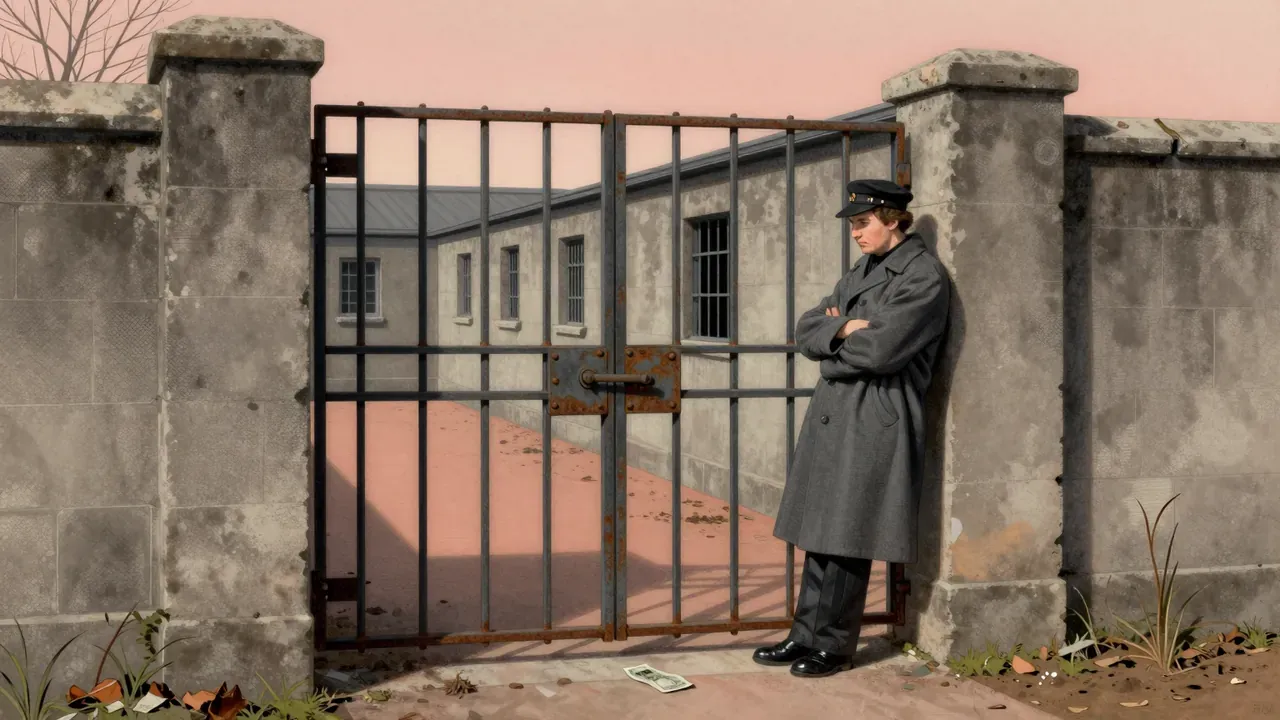
Robert Bresson’s 1983 drama L'Argent follows a forged 500-franc note as it passes through increasingly desperate hands, culminating in murder and confession. Shot with austere precision by Pasqualino De Santis and Emmanuel Machuel, edited by Jean-François Naudon, and scored with two diegetic Bach recordings, it is a rigorously unsentimental study of moral erosion — not as personal failure, but as systemic inevitability.

13:00

Rolling Thunder Revue: A Bob Dylan Story by Martin Scorsese

Martin Scorsese · 2019

Rolling Thunder Revue is a hybrid concert film and constructed documentary, built from restored 1975 tour footage shot by Dylan for Renaldo and Clara, intercut with contemporary interviews — some real, some fictionalised. Directed by Martin Scorsese and produced by Jeff Rosen, it deliberately obscures the line between fact and invention, inviting the viewer to question memory, myth, and the ethics of archival storytelling. Released by Netflix in 2019, it foregrounds performance over biography and texture over testimony.

13:00

The Baron of Arizona

Samuel Fuller · 1950

Samuel Fuller’s 1950 film tells the true-ish story of James Reavis, a conman who forged documents to claim the Arizona Territory as his personal fiefdom. Starring Vincent Price as the fastidious fraudster, it unfolds as a procedural drama of paper, precedent, and institutional hesitation — less a Western than a forensic study of how authority is manufactured, authenticated, and eventually unmade.

13:00

Certified Copy

Abbas Kiarostami · 2010

Abbas Kiarostami’s 2010 film follows a British writer and a French antiques dealer through a single day in Tuscany. Their conversation begins as polite intellectual exchange, then slips — without announcement — into the rhythms of a long-married couple. Shot in natural light with minimal intervention, the film tests how identity, memory and intimacy are sustained not by fact but by repetition, gesture and shared silence.