filmbriefs
Studio

Mosfilm

8
briefs
13:00
average
104 min
in total
On film.briefs8
13:00

Andrei Rublev

Andrei Tarkovsky · 1966

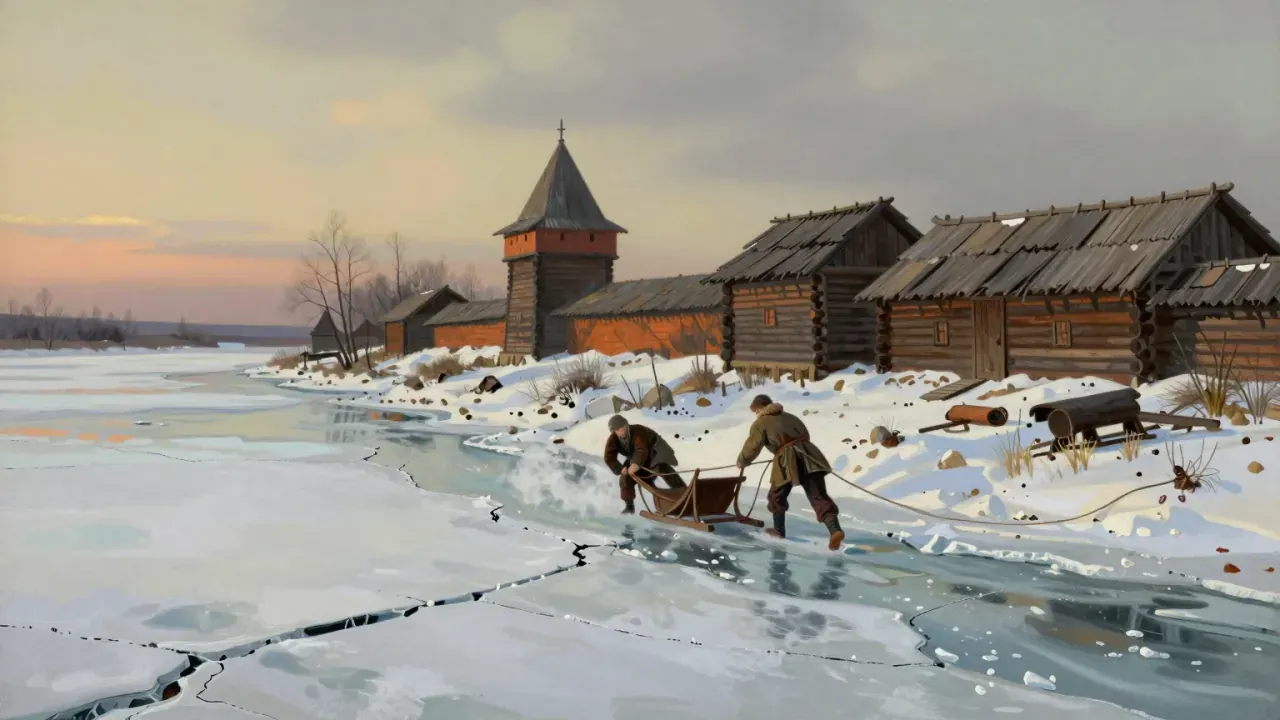
Andrei Rublev (1966) is a Soviet arthouse film directed by Andrei Tarkovsky, loosely based on the life of a 15th-century Russian icon painter. Shot in black and white by Vadim Yusov, with a sparse score by Vyacheslav Ovchinnikov, it unfolds across seven episodic chapters set against the chaos of medieval Rus’. Anatoly Solonitsyn plays Rublev as a man whose vocation is tested by violence, doubt, and self-imposed silence. The film culminates in a colour epilogue showing Rublev’s surviving icons — most notably The Trinity — affirming art’s endurance beyond its maker. Censored on release, it is now regarded as a landmark of cinematic philosophy.

13:00

Battleship Potemkin

Sergei Eisenstein · 1925

Battleship Potemkin (1925) is Sergei Eisenstein’s landmark Soviet silent film dramatising the 1905 mutiny aboard the battleship Potemkin. Made as political art rather than historical record, it uses radical montage—especially in the iconic Odessa Steps sequence—to generate collective emotion and ideological conviction. Shot by Eduard Tisse and Vladimir Uralsky, edited by Eisenstein and Grigori Aleksandrov, it relies on non-professional actors, symbolic types, and rhythmic editing over psychology or narrative. Though its revolutionary certainty feels schematic today, its formal mastery remains potent and instructive.

13:00

Bed and Sofa

Abram Room · 1927

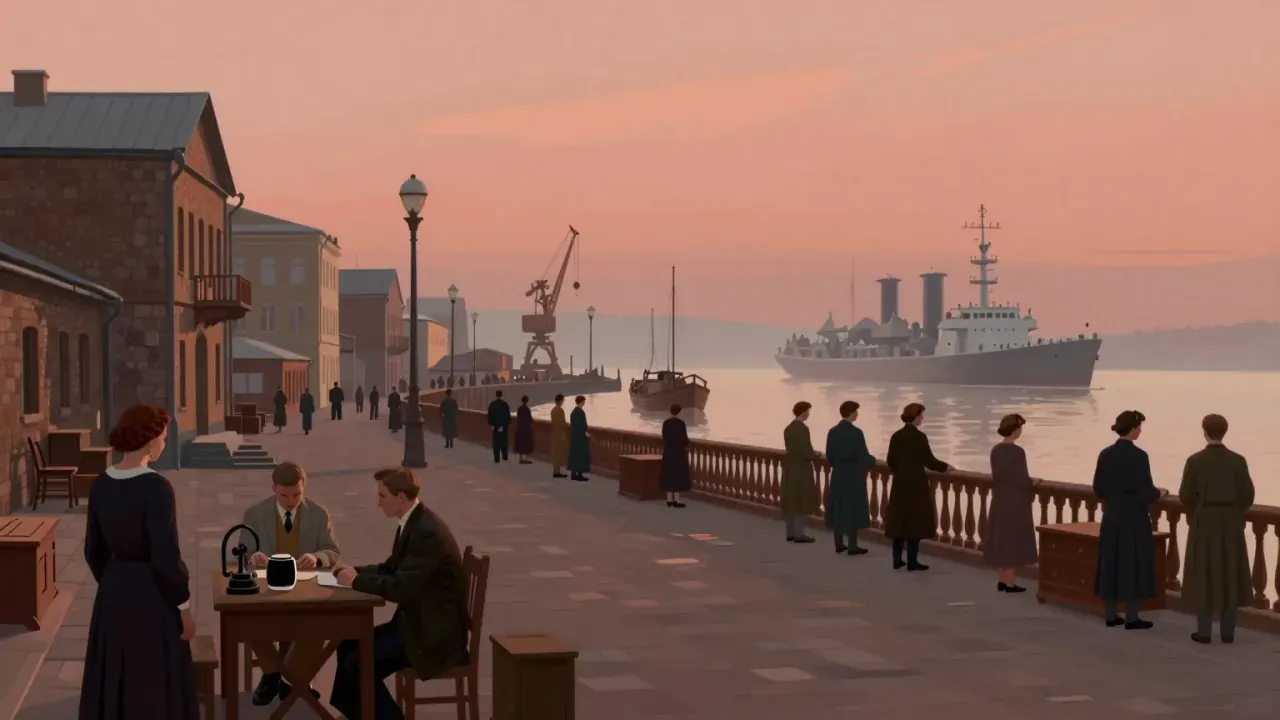
A 1927 Soviet silent film set in cramped Moscow housing during the NEP, Bed and Sofa follows three people — two men and a woman — sharing one room, one bed, and one sofa. Directed by Abram Room with script by Viktor Shklovsky, it observes, without comment, how scarcity, gendered labour, and unspoken desire reshape intimacy. Its realism is architectural, psychological, and unsentimental.

13:00

The Cranes Are Flying

Mikhail Kalatozov · 1957

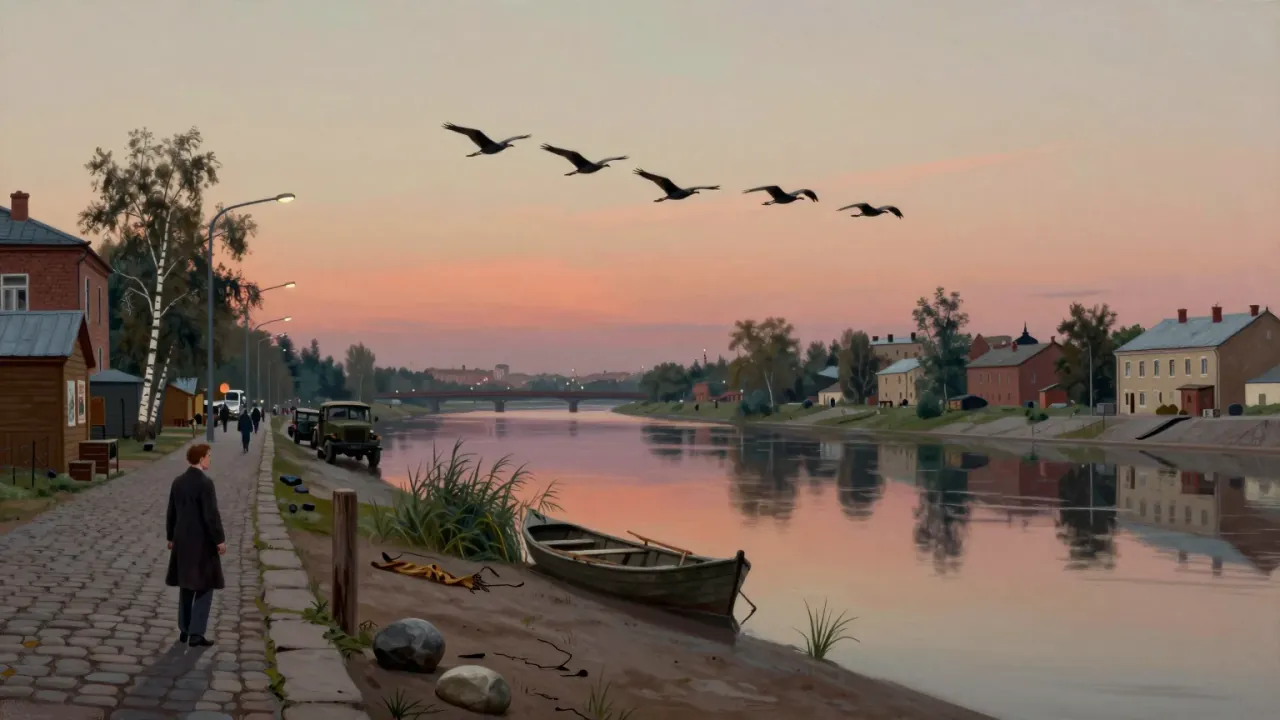
Released in 1957 by Mosfilm, Mikhail Kalatozov’s The Cranes Are Flying follows Veronika, a young Moscow woman whose life fractures after the Nazi invasion. Her lover Boris goes to war, her parents die in an air raid, and she is pressured into marriage with his predatory cousin Mark. Through trauma, silence, and small acts of remembrance—the squirrel toy, Boris’s hidden note—the film charts her slow, unheroic return to life. It won the Palme d’Or in 1958 and remains a landmark of Soviet cinematic humanism.

13:00

The Mirror

Andrei Tarkovsky · 1975

Andrei Tarkovsky’s 1975 film The Mirror is a non-linear, autobiographical essay in image and sound. Shot by Georgy Rerberg and scored by Eduard Artemyev, it weaves childhood recollection, wartime newsreel, poetic voiceover, and maternal presence into a single, flowing meditation on time, inheritance, and perception. Margarita Terekhova plays dual roles; Oleg Yankovsky appears only in voiceover. With around 200 shots across 108 minutes, its rhythm is durational, not dramatic. Released under constraint by Mosfilm, it polarised Soviet critics before becoming widely regarded as Tarkovsky’s most intimate work.

13:00

Come and See

Elem Klimov · 1985

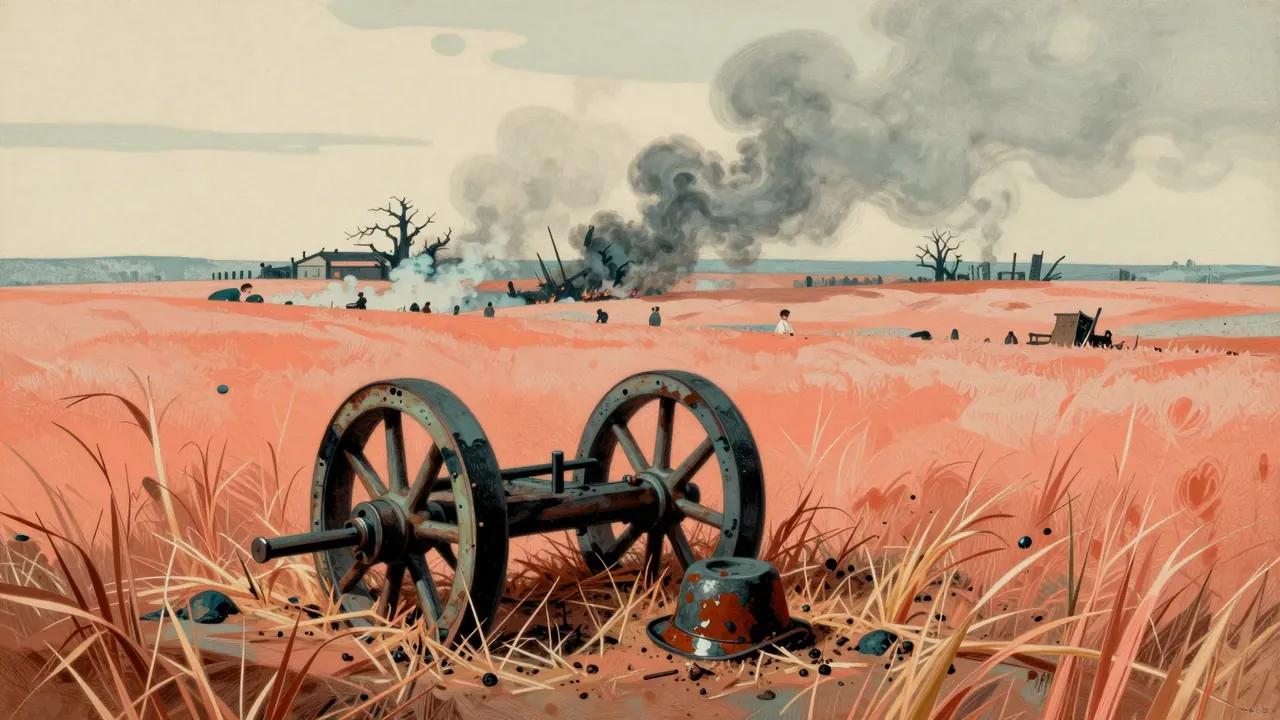
Elem Klimov's 1985 account of the Nazi destruction of Belarusian villages follows a teenage partisan recruit, played by Aleksei Kravchenko, through a descent that the director shot in sequence and largely with non-actors. Built from survivor testimony and a Belarusian novel, and delayed for years by Soviet censors who found the script too raw, it remains one of the starkest war films made anywhere.

13:00

Solaris

Andrei Tarkovsky · 1972

Andrei Tarkovsky's 1972 adaptation of Stanislaw Lem's novel sends psychologist Kris Kelvin to a station orbiting the ocean planet Solaris, where the surviving crew have fallen into crisis after the planet's ocean began materialising physical visitors drawn from their memories, and Kelvin's own dead wife Hari soon appears to him in the same way. Shot by Vadim Yusov with a score by Eduard Artemyev built around a Bach chorale, and made partly as a rebuttal to what Tarkovsky saw as the coldness of 2001: A Space Odyssey, it won the Grand Prix at Cannes and has stood since as one of Soviet cinema's most significant contributions to science fiction.

13:00

Stalker

Andrei Tarkovsky · 1979

Andrei Tarkovsky's 1979 film follows a guide known only as Stalker as he leads a writer and a scientist illegally into the Zone, a restricted area said to contain a room that grants a visitor's innermost desire, and the three spend most of the journey arguing about faith, art and science rather than confronting any visible danger. Adapted loosely from a novel by Arkady and Boris Strugatsky and scored by Eduard Artemyev, the production required three different cinematographers after an early batch of footage was ruined during processing, forcing much of the film to be shot again from scratch over the following year.