What it is trying to do
Floating Clouds is a Japanese drama film from Toho, released in January 1955, adapted by Fumiko Hayashi from her own novel and directed by Mikio Naruse. It sets out to trace the slow erosion of a woman’s agency and hope across the first decade of post-war Japan—not through grand political statements, but through the accumulation of small refusals, deferrals, and compromises. The film does not dramatise resistance or redemption; it observes how economic scarcity, social constraint, and unfulfilled emotional promises wear down character without spectacle. Its ambition is structural and tonal: to make the viewer feel time as weight, not pace—to show how love, once tethered to survival, becomes indistinguishable from dependency. Naruse avoids symbolic flourishes or moral framing; the camera stays close, the editing unhurried, the music restrained. This is not a film about choices made, but about the narrowing of choice until even walking down a street feels like moving through thick air. It seeks no catharsis, only fidelity to the quiet persistence of disappointment.
How it works
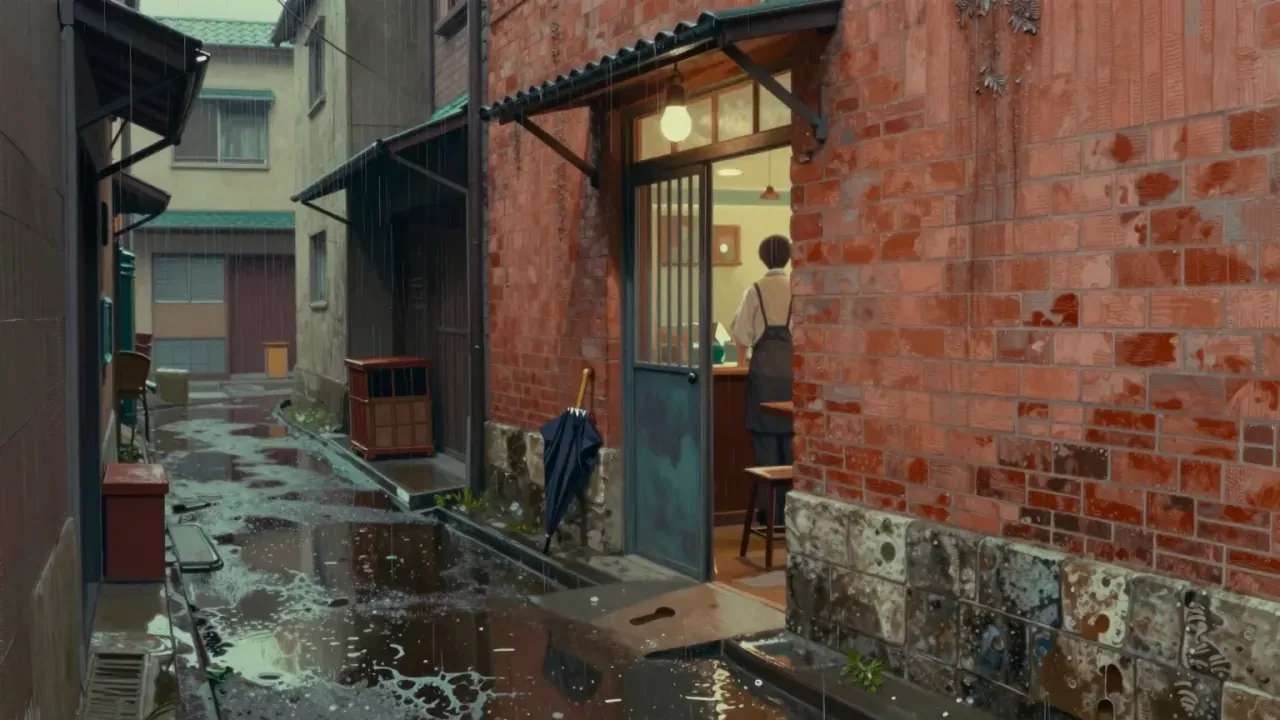
The story follows Yukiko, played by Hideko Takamine, as she returns to Tokyo from French Indochina and re-enters an affair with Kengo (Masayuki Mori), a married engineer who cannot—or will not—leave his ailing wife. Their relationship unfolds across cramped apartments, rain-slicked pavements, and transient rooms, all filmed by Naruse with deliberate stillness. Takamine’s performance anchors the film: her face registers fatigue before her voice does, her posture tightens before her words harden. Mori plays Kengo not as a villain but as a man hollowed by indecision, his gestures increasingly small, his silences longer. Ichirō Saitō’s score is sparse, often absent for minutes at a time; sound design—footsteps, distant trains, rain on tin roofs—carries narrative weight. Gordon Willis did not shoot this film; the cinematographer is uncredited in the fact sheet, so no claim is made about lighting or lensing. What is certain is the film’s rhythm: long takes, minimal coverage, no dramatic close-ups to cue emotion. Every walk is literal, every pause unedited, every decision deferred until it is too late.
What lands
What lands is the cumulative pressure of circumstance. Yukiko’s descent is never sudden; it is measured in the length of time she waits for Kengo, the number of times she walks past his office without entering, the way she folds and refolds a letter she never sends. The film’s power resides in its refusal to isolate moments of crisis—the abortion, the death of Kuniko, the move to Yakushima—as turning points. Instead, they arrive with the same muted gravity as a change in weather. Takamine’s physicality conveys exhaustion that no dialogue needs to name; her hands tremble slightly when holding a cup, her shoulders drop a fraction lower each time she sits. The film’s realism is not documentary—it is psychological realism rendered through duration and repetition. When Yukiko finally leaves Tokyo for Yakushima, it feels less like a choice than the last available direction. The audience does not need to be told she is doomed; the humid air in the final scenes is already inside her lungs.
What does not
What does not land is any sense of interior revelation beyond what the script and performances deliver. There are no flashbacks to Indochina, no voiceover, no symbolic objects to decode—only what is shown, and what is withheld. Some viewers may find the pacing impenetrable, the characters opaque, the ending unearned—not because it is ambiguous, but because it offers no interpretive handrail. The film assumes familiarity with post-war Japanese social codes: the stigma of being a former colonial employee, the unspoken rules around mistresses, the quiet shame of accepting money from American soldiers. Without that context, Yukiko’s decisions can read as passive rather than pragmatic, Kengo’s inertia as cowardice rather than entrapment. The film makes no effort to translate its world; it presents it as lived, not explained. That austerity is its strength and its barrier. It does not fail where it aims to withhold—it fails only if the viewer expects exposition, escalation, or resolution.
The themes that matter
The themes that matter are endurance without purpose, desire without reciprocity, and dignity without recourse. Floating Clouds treats love not as a bond but as a transaction repeatedly renegotiated under duress—first with Kengo, then with the American soldier, then with illness itself. Economic reality is not backdrop but grammar: food shortages dictate conversation topics, housing scarcity determines who sleeps where, occupation forces reshape intimacy. Colonialism appears not as ideology but as residue—the ruined infrastructure of Indochina, the bureaucratic ghosts of wartime administration, the lingering status of women who served abroad but return with no civic standing. Class is present in the difference between Kengo’s modest salary and the American’s dollar bills, in the way Yukiko’s coat frays while Osei’s remains crisp. These are not themes illustrated; they are conditions absorbed into gesture, setting, silence. The film’s moral centre is not virtue or vice, but the cost of continuing—of breathing, walking, waiting—when every option carries loss.
Who should watch it, and who should not
This film is for viewers who value sustained mood over plot momentum, who find emotional resonance in restraint, and who trust a director to hold a shot until its weight settles. It rewards patience, attention to physical detail, and tolerance for unresolved tension. It is not for those who require clear motivation, narrative payoff, or character arcs that resolve. Viewers expecting psychological exposition, stylistic flourish, or historical commentary beyond what the frame contains will leave frustrated. Those unfamiliar with mid-century Japanese social history may miss layers of implication, though the film’s human logic remains legible. A viewer who values emotional clarity over emotional accumulation will find it withholding; one who sees realism as a function of duration, not dialogue, will find it exact. The verdict changes only if the viewer reorients their expectation: this is not a story about what happens, but about how long it takes to stop believing it might change.
Is it worth your evening
Yes, it is worth your evening—if you approach it as an immersion, not an interrogation. Its 123 minutes unfold with the inevitability of weather: no scene rushes, no moment insists on significance, yet the whole accrues a gravity few films achieve. It demands nothing more than presence, and repays it with a rare kind of honesty about how people persist when hope has been rationed. It is not entertaining in the conventional sense, nor comforting, nor instructive—but it is precise, unsparing, and deeply felt. Those who dislike slow cinema, who prefer moral clarity or narrative closure, or who expect films to offer solutions rather than sit with problems, will find it unrewarding. But for anyone willing to let time pass on its own terms, Floating Clouds offers a portrait of resilience that does not flinch, flatter, or forgive—and that is its quiet achievement.