The look of it
Cries and Whispers is a Swedish drama from 1972, written and directed by Ingmar Bergman, set in a decaying 19th-century mansion where three sisters and a maid gather around the deathbed of Agnes, who is dying of uterine cancer. It is not a narrative about medical decline or familial reconciliation, but a formal and psychological study of interiority: how silence, colour, touch and withheld feeling shape the experience of suffering and grief. Bergman intended it as a portrait of his mother, Karin Åkerblom, though all four women — Agnes, Maria, Karin and Anna — are conceived as facets of a single psyche. The film avoids exposition, backstory and causal explanation; instead, it builds meaning through repetition, framing, rhythm and saturated visual tone. Its ambition is not to tell a story but to hold space for unspoken anguish — to make visible what language cannot name, using the material properties of cinema: light, pigment, gesture, duration. It operates less like a chronicle and more like a liturgical object, calibrated to evoke rather than explain.
The rhythm of it
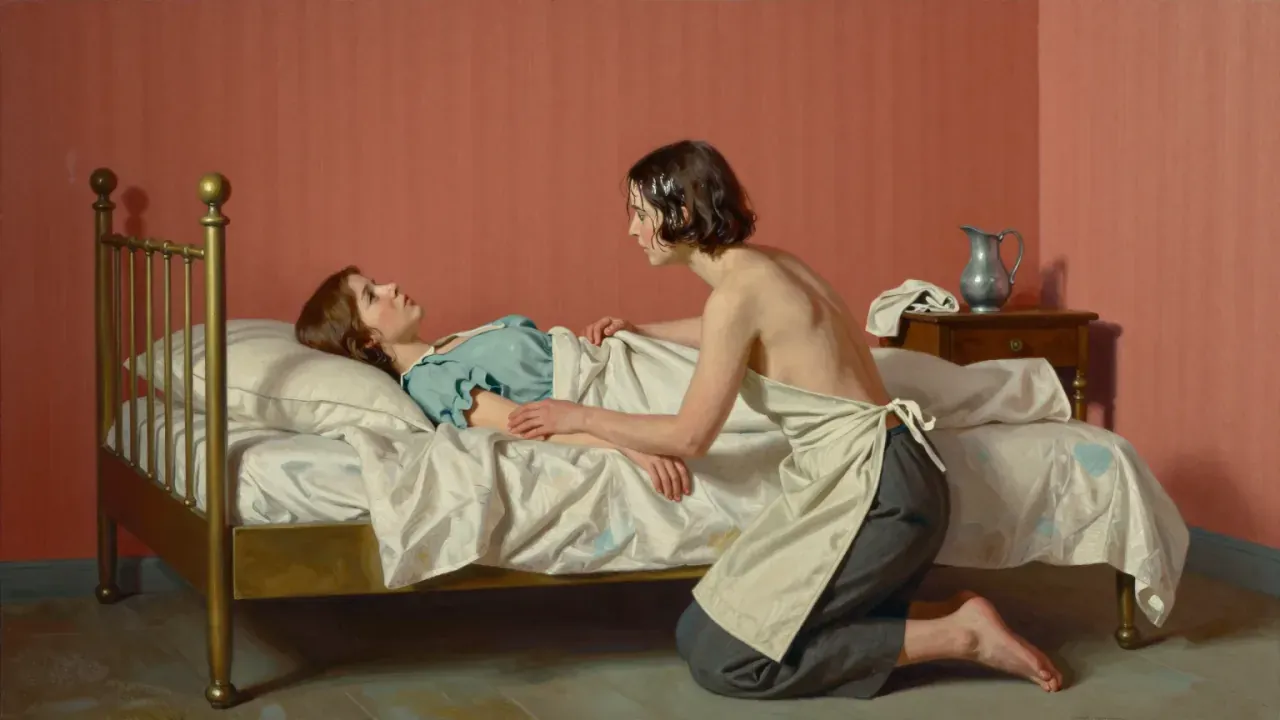
The story unfolds across three days, structured by recurring dissolves, close-ups on hands and eyes, and abrupt cuts to red-tinted interludes that function as emotional punctuation rather than memory or fantasy. Sven Nykvist’s cinematography uses Eastmancolor stock to render crimson walls, carpets and gowns with tactile intensity, while keeping skin tones natural and faces softly lit — a deliberate contrast to the oppressive saturation elsewhere. Harriet Andersson’s performance as Agnes is physically precise: shallow breaths, tremors, sudden spasms, eyes wide with uncomprehending pain. Liv Ullmann and Ingrid Thulin play Maria and Karin with restrained rigidity, their gestures minimal, voices low and hesitant. Kari Sylwan, as Anna the maid, grounds the film with quiet physical presence — her bare-breasted embrace of Agnes is neither erotic nor sentimental, but ritualistic, maternal, wordless. There are no score cues beyond Pierre Fournier’s cello recordings, used sparingly and diegetically; sound design favours silence, muffled footsteps, rustling fabric and laboured breathing. Every element serves compression, not expansion.
The colour of it
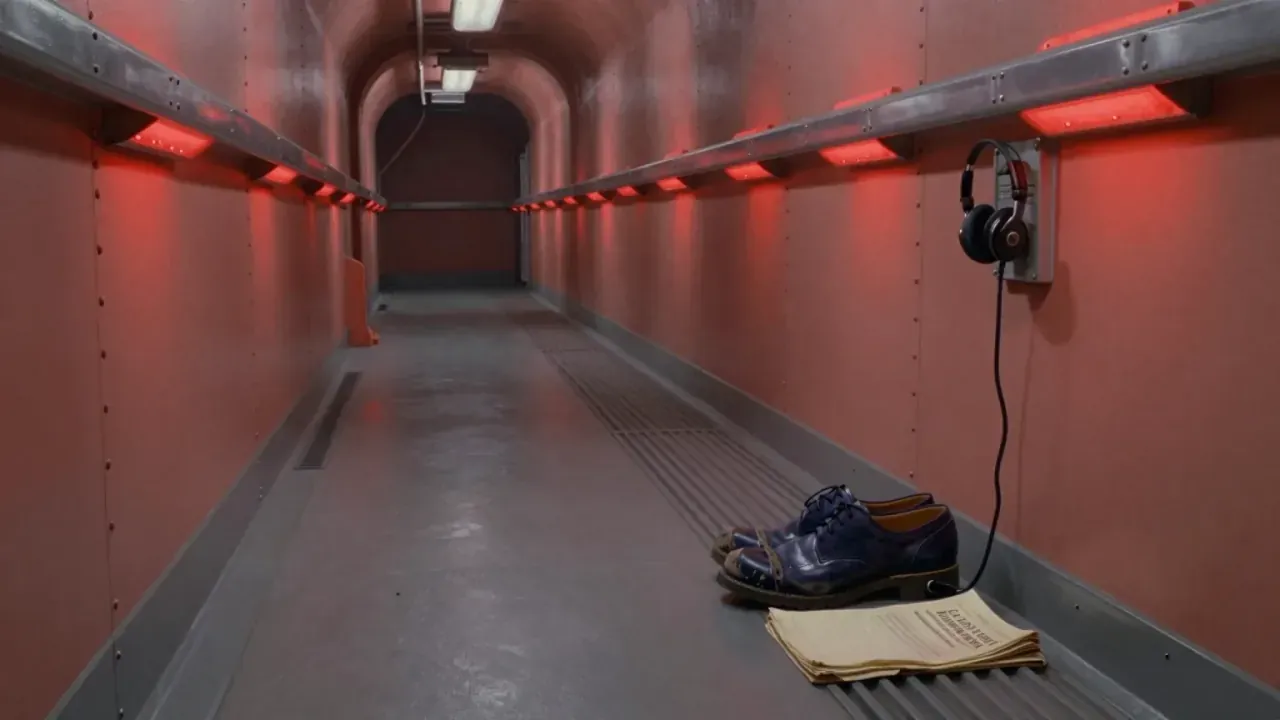
What lands most decisively is the film’s use of colour as moral and psychological grammar. The red rooms do not merely signify blood or passion; they isolate characters within shared space while underlining their emotional separation — each woman remains visually enclosed even when together. The repeated close-ups on hands — clasping, recoiling, stroking, wiping — communicate more about intimacy and inhibition than any dialogue could. Andersson’s final death sequence, filmed in near-total stillness over several minutes, achieves a rare kind of gravity: it feels neither theatrical nor clinical, but physiologically inevitable. The Pietà-like composition of Agnes cradled by Anna carries weight because it emerges from sustained observation, not symbolic shorthand. Nykvist’s lighting choices — natural light filtered through large windows, interiors kept dim except where red dominates — create a world that feels both period-accurate and psychologically immediate. Even the absence of music works: the cello passages arrive only when a character hears them, making sound an extension of subjective experience rather than commentary.
The structure of it
What does not land is the structural reliance on repetition without sufficient variation in rhythm or perspective. The film’s three-day arc is marked by near-identical patterns of arrival, vigil, withdrawal and return, which risks monotony when viewed outside its original theatrical context. The sisters’ backstories — Maria’s affair, Karin’s self-mutilation, their shared childhood neglect — remain deliberately vague, and while this aligns with Bergman’s aim to avoid psychology-as-explanation, it can leave viewers without enough purchase to sustain engagement across ninety minutes. Some performances, particularly Thulin’s Karin, feel held at a remove that borders on opacity rather than reserve. The film assumes familiarity with Bergman’s preoccupations — silence as presence, faith as doubt, the body as site of revelation — and offers no foothold for those unfamiliar with his syntax. Its refusal of narrative momentum, while intentional, means that moments meant to resonate as epiphanies may register instead as pauses. There is no misstep in craft, but there is a narrowing of access.
The feeling of it
The themes that matter are mortality as exposure, silence as relational failure, and care as embodied labour rather than sentiment. The film treats faith not as doctrine but as endurance — Anna’s prayers are practical, not pious; the priest’s eulogy is tentative, not authoritative. Gender is examined through constraint: the sisters wear corseted dresses that restrict movement and breath, mirroring their emotional containment, while Anna moves freely in simpler garments, her physicality unmediated by social expectation. Class divides are present but understated — Anna sleeps in the attic, eats apart, yet holds Agnes in ways the sisters cannot. The film’s central tension is between proximity and connection: bodies share rooms, beds and grief, yet remain psychically distant. Bergman’s recurring interest in the limits of language finds its purest expression here — words are sparse, often halting or incomplete, while glances, hesitations and silences carry the weight of decades. The red room is not just setting but metaphor: a space where interior life becomes visible, not through confession, but through pigment, texture and duration.
The silence of it
This film is for viewers who value formal precision over narrative propulsion, who find resonance in stillness and are comfortable with ambiguity as method rather than deficit. It rewards attention to texture, timing and restraint — people familiar with mid-century European art cinema, or those willing to meet it on its own terms. It is not for viewers who require clear motivation, linear cause-and-effect, or emotional payoff delivered through dialogue or plot resolution. Those who rely on exposition or empathetic identification with character arcs may find the sisters opaque, the pacing inert, the ending unresolved. A viewer expecting psychological realism or cathartic release will be disappointed; the film’s power lies in withholding both. Someone who values acting as physical transcription over expressive display will respond more readily. It asks for patience not as virtue but as condition of entry — and those unwilling to grant it will see only austerity, not architecture.
The weight of it
Yes, it is worth your evening — but only if you approach it as one might approach a painting in a quiet room: slowly, without demand for translation. Its ninety minutes unfold with the weight of ritual, not incident. You will not leave with answers, but with a heightened awareness of how light falls on skin, how silence presses between people, how colour can carry sorrow without naming it. It repays rewatching not because it reveals hidden layers, but because its effects deepen with familiarity — like returning to a room you know well, noticing new shadows each time. Those who find it impenetrable on first viewing may need distance, not explanation. A viewer who prefers narrative clarity or emotional directness would fairly judge it cold or obscure — but that is not a flaw in the film, only a mismatch of expectation. Its value lies in its unwavering commitment to a single, austere idea: that some truths are held in the body, not spoken by the mouth.