filmbriefs
Actor · 1929–2004

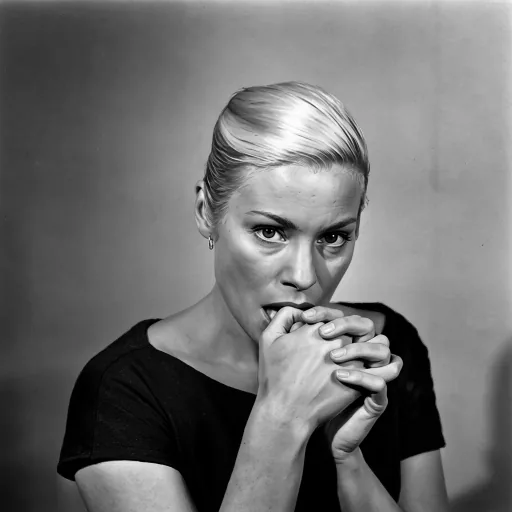
Ingrid Thulin

11
briefs
13:00
average
143 min
in total
On film.briefs11
13:00

After the Rehearsal

Ingmar Bergman · 1984

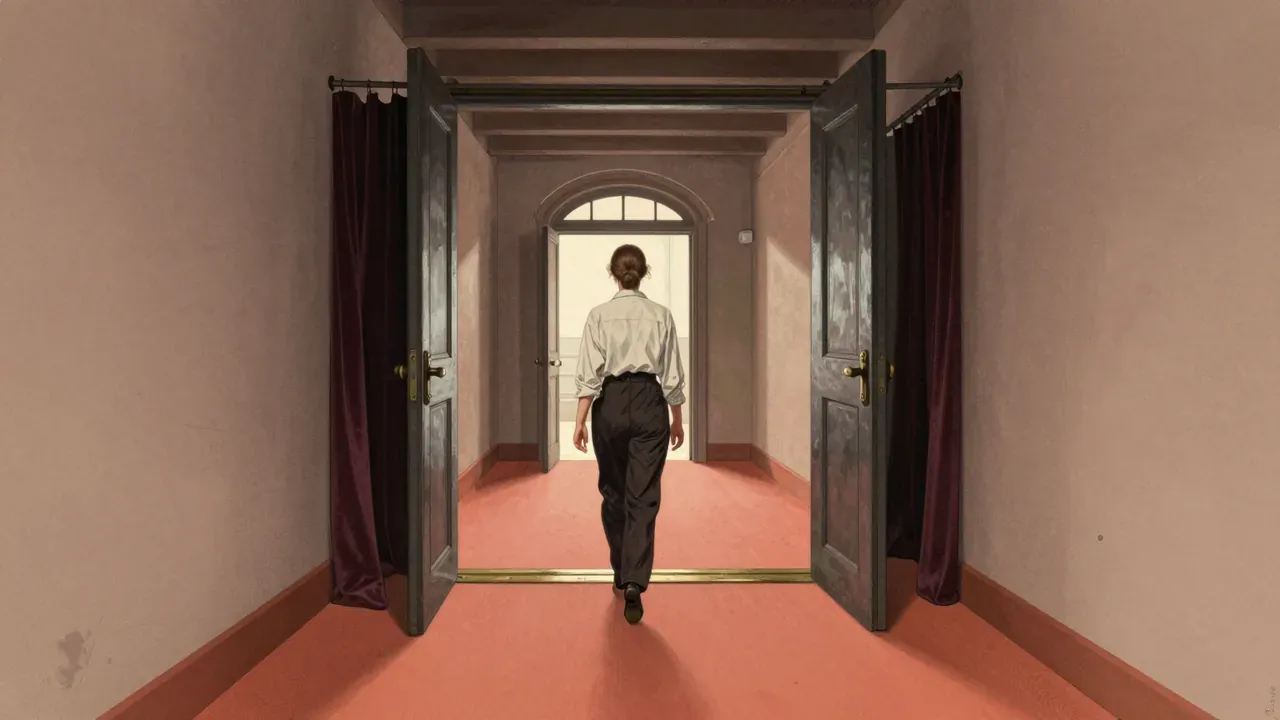
After the Rehearsal is a 1984 Swedish television film written and directed by Ingmar Bergman, shot by Sven Nykvist and starring Erland Josephson, Ingrid Thulin, and Lena Olin. Set entirely in a theatre rehearsal room, it traces a charged encounter between a veteran director and his lead actress — a meeting that triggers memories of her late mother, also his former lover and star. Drawing on Strindberg’s A Dream Play, it uses doubling, repetition, and minimal staging to explore inheritance, memory, and the blurred line between performance and lived experience.
13:00

Brink of Life

Ingmar Bergman · 1958

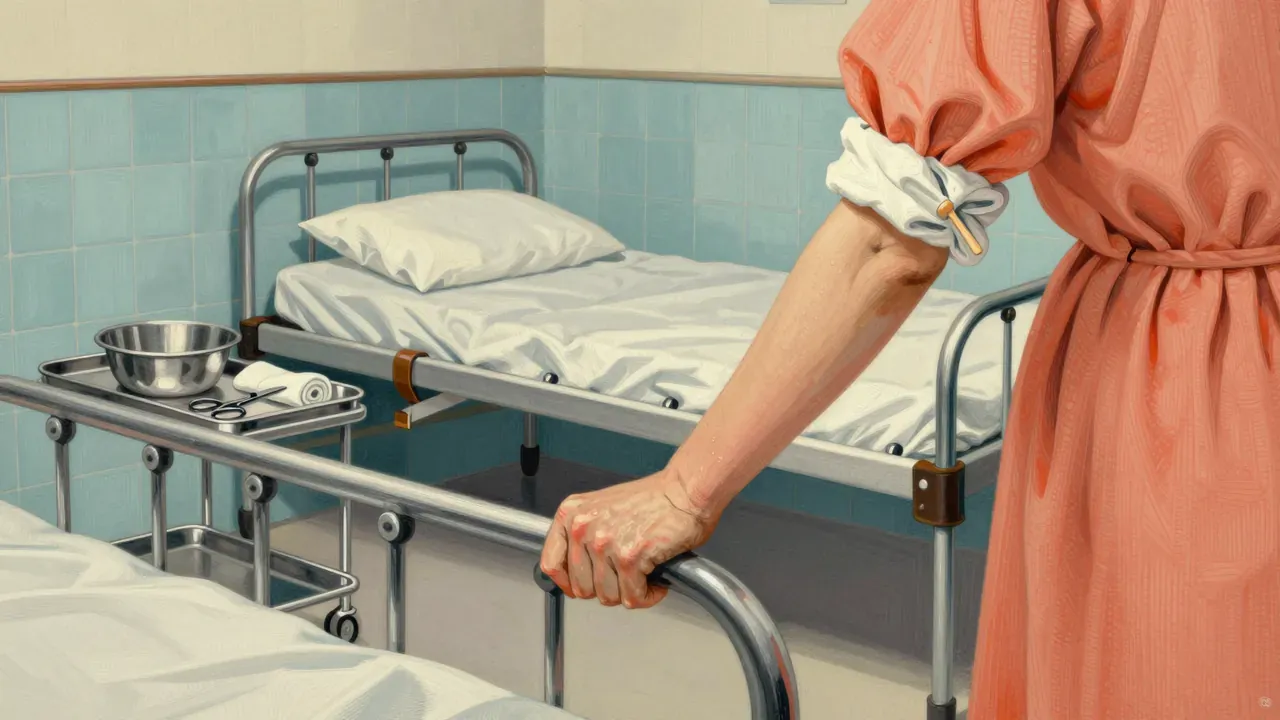
Ingmar Bergman’s 1958 hospital drama observes three pregnant women — one miscarrying, one facing an unwanted pregnancy, one enduring a stillbirth — within the unadorned confines of a Swedish maternity ward. Shot with clinical precision by Max Wilén and written by Ulla Isaksson, it trades psychological exposition for procedural realism, letting silence, duration and restraint carry its moral weight.

13:00

Hour of the Wolf

Ingmar Bergman · 1968

Ingmar Bergman’s 1968 Hour of the Wolf is a psychological horror film starring Max von Sydow and Liv Ullmann as a painter and his wife isolated on a Swedish island. As his visions intensify and his sleep fails, the line between hallucination and reality dissolves. Shot by Sven Nykvist on Fårö and Hovs Hallar, it uses stark naturalism to frame surreal imagery, with Johann Sebastian Bach and Lars Johan Werle on the soundtrack. It explores artistic collapse, intimacy under strain, and the unreliability of perception — not as metaphor, but as lived condition.

13:00

Night Games

Mai Zetterling · 1966

A 1966 Swedish drama directed by Mai Zetterling, Night Games traces a man’s return to his childhood home and the memories it unleashes — particularly of his charismatic, neglectful mother and the sexual and emotional confusions of adolescence. Shot by Rune Ericson and scored by Georg Riedel and Jan Johansson, it uses restrained visuals and elliptical editing to render memory as sensory residue rather than narrative. Starring Ingrid Thulin and Jörgen Lindström, it avoids moral framing, opting instead for psychological fidelity. Controversial on release, it remains a tightly controlled study of inherited trauma.

13:00

The Damned

Luchino Visconti · 1969

Luchino Visconti’s 1969 film traces the Essenbeck family’s moral dissolution as they align with the Nazi Party in early 1933. Shot across Italy, West Germany and Austria, it uses lavish production, deliberate pacing and psychologically precise performances to chart how privilege, desire and fear enable authoritarianism from within. Though acclaimed, it has drawn criticism for its handling of Jewish characters and its reliance on Helmut Berger’s volatile charisma over Dirk Bogarde’s restrained gravitas.

13:00

The Magician

Ingmar Bergman · 1958

Ingmar Bergman’s 1958 The Magician follows a travelling troupe of performers led by mute magician Albert Vogler, whose claims of supernatural ability provoke suspicion in a Swedish village. Through layered deceptions, an autopsy gone awry, and a final royal summons, the film examines belief, authority, and the blurred line between fraud and revelation — all rendered in Gunnar Fischer’s muted, reflective cinematography and sustained by Max von Sydow’s physically restrained performance.

13:00

The Rite

Ingmar Bergman · 1969

Ingmar Bergman’s 1969 television film The Rite confines three actors and a judge to a single office, where questions of obscenity give way to deeper reckonings of guilt, desire, and performance. Shot by Sven Nykvist in stark, unbroken takes, it relies on vocal nuance and spatial tension rather than plot. Gunnar Björnstrand, Anders Ek, and Ingrid Thulin navigate layered relationships under Erik Hell’s implacable scrutiny — until the line between witness and participant dissolves.

13:00

The Silence

Ingmar Bergman · 1963

Ingmar Bergman’s 1963 drama follows two estranged sisters and a child stranded in a nameless, linguistically impenetrable city on the edge of war. With sparse dialogue, deliberate pacing and Sven Nykvist’s muted cinematography, it renders the collapse of communication — between people, languages, selves. Not a puzzle to solve but a space to inhabit, its power lies in what it withholds.

13:00

Cries and Whispers

Ingmar Bergman · 1972

Ingmar Bergman’s 1972 Cries and Whispers is a formally rigorous Swedish drama set in a red-walled 19th-century mansion, where three sisters and a maid attend to Agnes as she dies of cancer. Shot by Sven Nykvist in saturated colour, it prioritises gesture, texture and duration over exposition or psychology, treating grief, faith and intimacy as bodily, not verbal, conditions. It won the Academy Award for Best Cinematography and remains a benchmark of arthouse restraint.

13:00

Winter Light

Ingmar Bergman · 1963

Ingmar Bergman’s 1963 drama follows a Swedish pastor through a single day of spiritual collapse—failing his congregation, his lover, and himself. Shot in austere black-and-white by Sven Nykvist, with no score beyond diegetic organ music, it is a rigorously restrained chamber piece about the physical and moral cost of sustaining belief when conviction has already vanished.

13:00

Wild Strawberries

Ingmar Bergman · 1957

Victor Sjöström, in his last screen role, plays an elderly professor driving to collect an honorary degree while dreams and hitchhikers force him to confront the coldness he built his life on. Ingmar Bergman wrote it from a hospital bed the same year as The Seventh Seal, and it won the Golden Bear in Berlin, becoming one of the clearest statements of his recurring interest in memory, guilt, and old age.