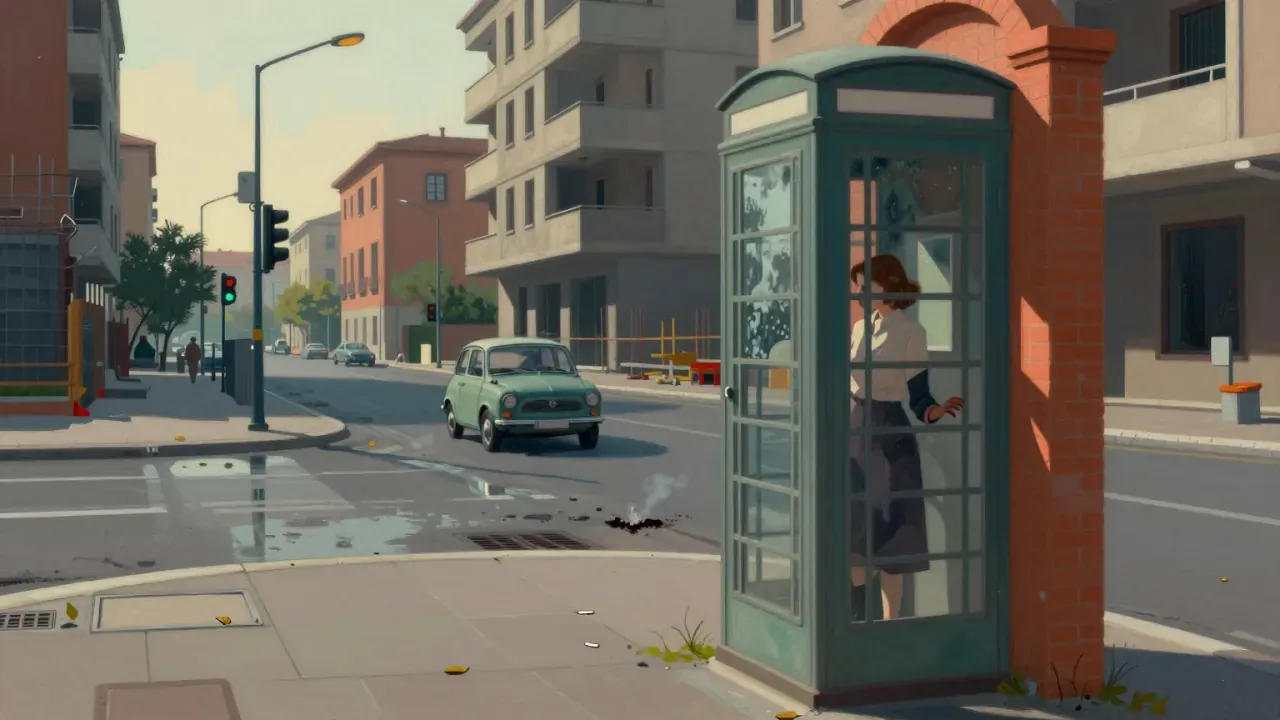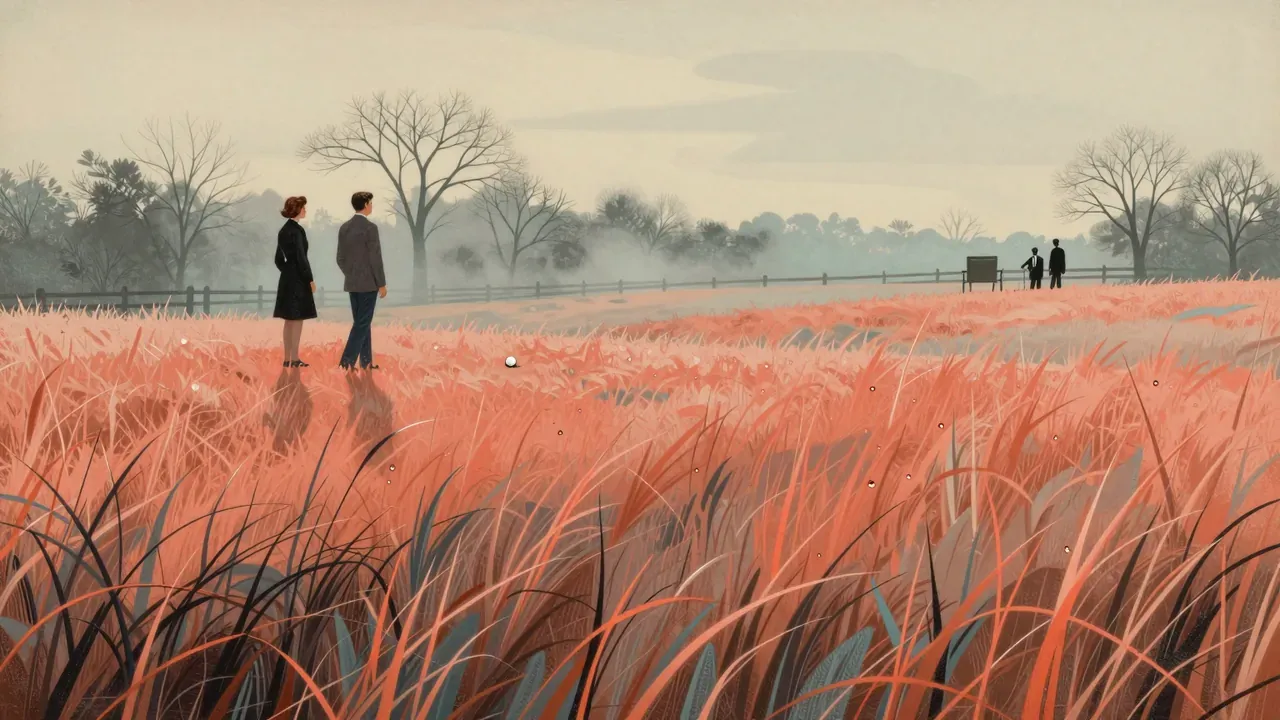
The look of it
Blowup is a psychological mystery set in mid-1960s London, built around the disintegration of certainty in perception and representation. It follows Thomas, a fashion photographer who stumbles upon what may be evidence of a murder while developing pictures taken in a park. The film does not aim to resolve the mystery in conventional terms; instead, it uses the act of looking — through lenses, enlargements, repetitions — to test whether reality can be fixed, verified or owned. Antonioni treats the camera not as a tool of documentation but as a site of ambiguity: each blow-up reveals more grain, less meaning. The film’s structure mirrors this drift — scenes linger without narrative payoff, dialogue remains elliptical, motives stay unspoken. Its ambition lies in exposing the gap between image and event, between intention and interpretation. It is less about solving a crime than about watching a sensibility unmoor itself from shared referents. This is not a puzzle with an answer, but a demonstration of how easily consensus collapses when the medium of proof becomes unstable.
The shape of the story
The story unfolds through observation rather than exposition: Thomas moves through studios, parks, clubs and apartments, his encounters punctuated by silences, glances, and gestures that resist decoding. David Hemmings performs with controlled detachment — his Thomas is technically fluent but emotionally unanchored, a man whose mastery over surfaces makes him ill-equipped for depth. Vanessa Redgrave appears briefly but decisively, her presence charged with withheld knowledge; Sarah Miles conveys unease without explanation. Carlo Di Palma’s cinematography avoids dramatic lighting or framing — he keeps focus shallow, compositions off-centre, colours muted except where pop art intrudes. Herbie Hancock’s score uses piano motifs like interruptions, not accompaniments. Frank Clarke’s editing sustains duration without urgency: a single shot of grass, a long take of Thomas examining negatives, the Yardbirds’ chaotic performance held at arm’s length. There are no flashbacks, no voiceover, no exposition — only accumulation, repetition, and gradual erosion of confidence in what the eye reports.
What stays sharp
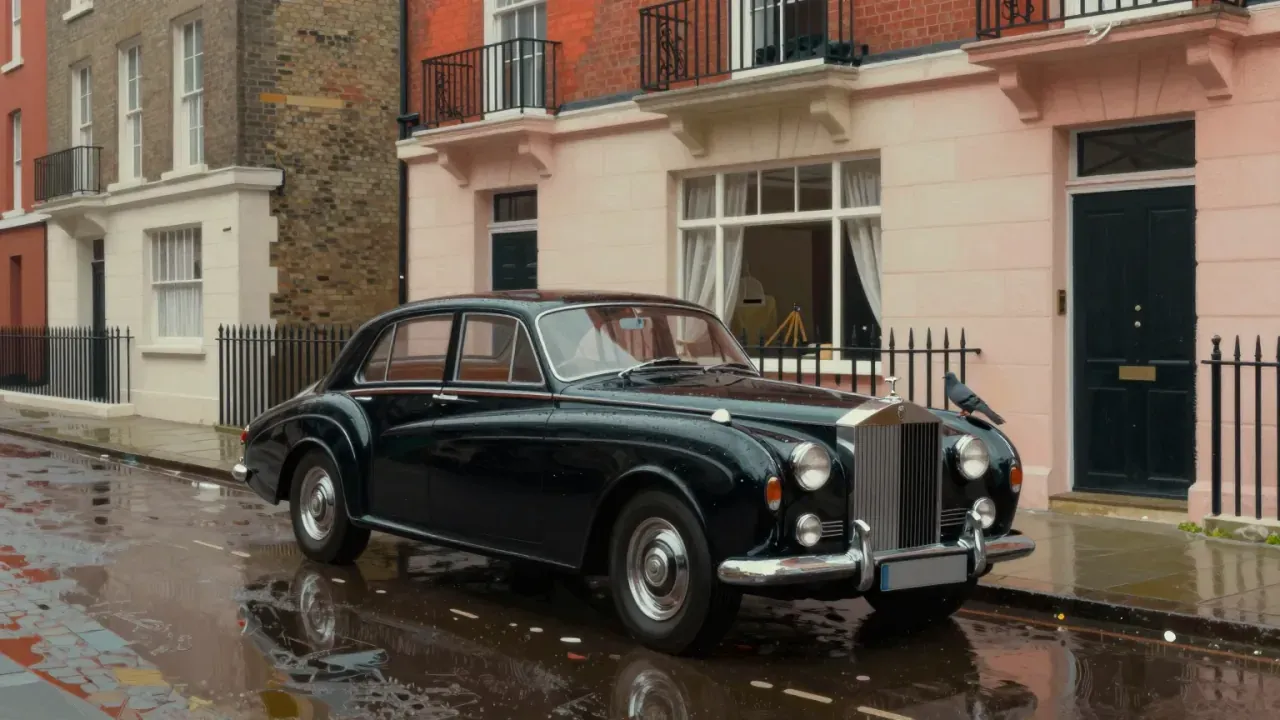
What lands most firmly is the texture of its world: the sheen of wet pavement in Maryon Park, the cluttered chaos of Thomas’s studio, the brittle energy of the mod scene rendered without nostalgia or satire. The film’s central sequence — Thomas enlarging the park photographs, frame by frame, searching for clarity — remains gripping not because it yields truth, but because it dramatises the labour of doubt. The Yardbirds’ scene works as both period document and formal rupture: their noise, Jeff Beck smashing a guitar on stage, then Thomas retrieving the neck as if salvaging meaning from collapse, is one of the film’s few moments where action carries symbolic weight without feeling imposed. The car — a black Rolls-Royce with slanted headlights — functions as a silent character: sleek, expensive, alien, immovable. These elements cohere because they are presented without commentary, allowed to occupy space and time on their own terms. The film trusts the viewer to register dissonance before naming it.
Where the edges blur
What does not land is the attempt to sustain narrative momentum through ambiguity alone. Several characters — particularly Ronan O’Casey’s unnamed man in the park and Tsai Chin’s enigmatic assistant — appear without sufficient grounding, making their roles feel like narrative placeholders rather than fully inhabited presences. The film’s refusal to clarify motive or backstory begins to read less as rigour and more as omission, especially in light of claims — reported in the fact sheet — that key scenes explaining Vanessa Redgrave’s character’s actions were never shot due to budget constraints. The final tennis sequence, though often praised as enigmatic, risks feeling arbitrary: the mime game lacks emotional or logical continuity with what precedes it, and its resolution offers no pivot, only suspension. Without stronger internal logic binding Thomas’s arc to the world around him, the drift tips into inertia. Some viewers will find this deliberate; others will find it unresolved.
What the lens refuses
The themes that matter are perception as mediation, not access; photography as a practice of exclusion rather than revelation; and alienation as a condition produced not by isolation but by saturation — by being surrounded by images, bodies, sounds, and surfaces without stable points of reference. The film interrogates how mass media reshapes attention: Thomas watches models pose, then watches himself watching them; he films a band, then watches footage of himself filming. Nothing is direct — everything passes through a lens, a screen, a print, a memory. The ‘murder’ is never confirmed, because confirmation would require a shared frame of reference, and the film systematically withdraws those frames. It also engages with class and privilege: Thomas moves freely through studios, galleries, and private gardens, yet remains unable to interpret what he sees — his access is total, his understanding nil. This is not a film about ignorance, but about the limits of competence in a world where expertise no longer guarantees insight.
Who walks with it
This film is for viewers who value sustained mood over plot mechanics, who find intellectual friction pleasurable, and who are comfortable sitting with uncertainty for extended stretches. It rewards patience with texture, rhythm, and visual precision — not with answers. It is not for those who require narrative closure, clear motivation, or emotional catharsis. Viewers expecting a thriller will be frustrated; those seeking social realism will find the mod milieu too stylised; fans of classical Hollywood pacing will flag well before the 90-minute mark. A viewer who values craftsmanship in cinematography and editing but dislikes abstraction may still engage — but only if willing to accept that the film’s coherence lies in its refusal to cohere. Those who found Last Year at Marienbad impenetrable are likely to feel similarly here. The verdict shifts if the film were shorter, or if its ambiguities were anchored by even one scene of unambiguous human connection — but it is not, and it does not.
The time it takes
Yes, it is worth your evening — provided you approach it as an object of sustained attention, not a story to be solved. Its 111 minutes unfold with unhurried authority, and its visual language remains distinct decades later: no digital intermediate could replicate Di Palma’s grain, no algorithm replicate the physicality of those enlargements. It repays rewatching not because it gives up secrets, but because its textures deepen — the way light falls across Veruschka’s cheek, the hollow echo in Thomas’s studio, the precise moment the park grass stops looking real. It is not universally accessible, nor does it try to be. Detractors — including Pauline Kael, whose reservations are noted in the fact sheet — argue it mistakes opacity for profundity. That reading holds if you expect symbolism to resolve. But if you accept that ambiguity is the subject, not the flaw, then Blowup delivers something rare: a film that changes how you look at photographs, at streets, at other people — long after the credits roll.