The shape of absence
L’Avventura is a film about the absence of resolution — not as a flaw, but as its central subject. It begins with a disappearance: Anna vanishes from a yacht off the Aeolian Islands, and the search for her occupies the first third. But the film does not treat her absence as a puzzle to be solved. Instead, it holds that absence in place while attention drifts — to Sandro’s restlessness, Claudia’s quiet recalibration, the weight of unspoken feeling between them. Antonioni co-wrote the script with Elio Bartolini and Tonino Guerra, but the film’s structure resists narrative propulsion. It is not trying to tell a story about loss so much as to enact the emotional and perceptual drift that follows when meaning collapses. The title — ‘The Adventure’ — is quietly ironic: there is no quest, no revelation, no return. What unfolds is the slow erosion of shared assumptions, the way people continue moving even when their reasons have dissolved. This is not ambiguity as evasion; it is form made from the texture of modern disorientation.
The look of it
The film works through sustained duration, compositional restraint, and deliberate withholding. Aldo Scavarda’s cinematography keeps space open and light flat — interiors are neither warm nor cold, exteriors neither radiant nor oppressive. Monica Vitti’s performance as Claudia avoids emphasis: her silences are not pregnant with subtext but held as neutral ground. Gabriele Ferzetti’s Sandro is restless without being frantic; his gestures are precise, his shifts in mood registered in posture more than expression. Editing by Eraldo Da Roma favours long takes — a conversation on a train platform lasts over two minutes without a cut; a walk across volcanic terrain unfolds in real time. Giovanni Fusco’s score appears only briefly, and then as a sparse, ancient-sounding jazz motif — less commentary than atmospheric punctuation. There is no voiceover, no exposition, no flashback. The film trusts the viewer to register what changes in a face, a glance, a pause — not because it assumes sophistication, but because it treats perception itself as the material.
The weight of stillness
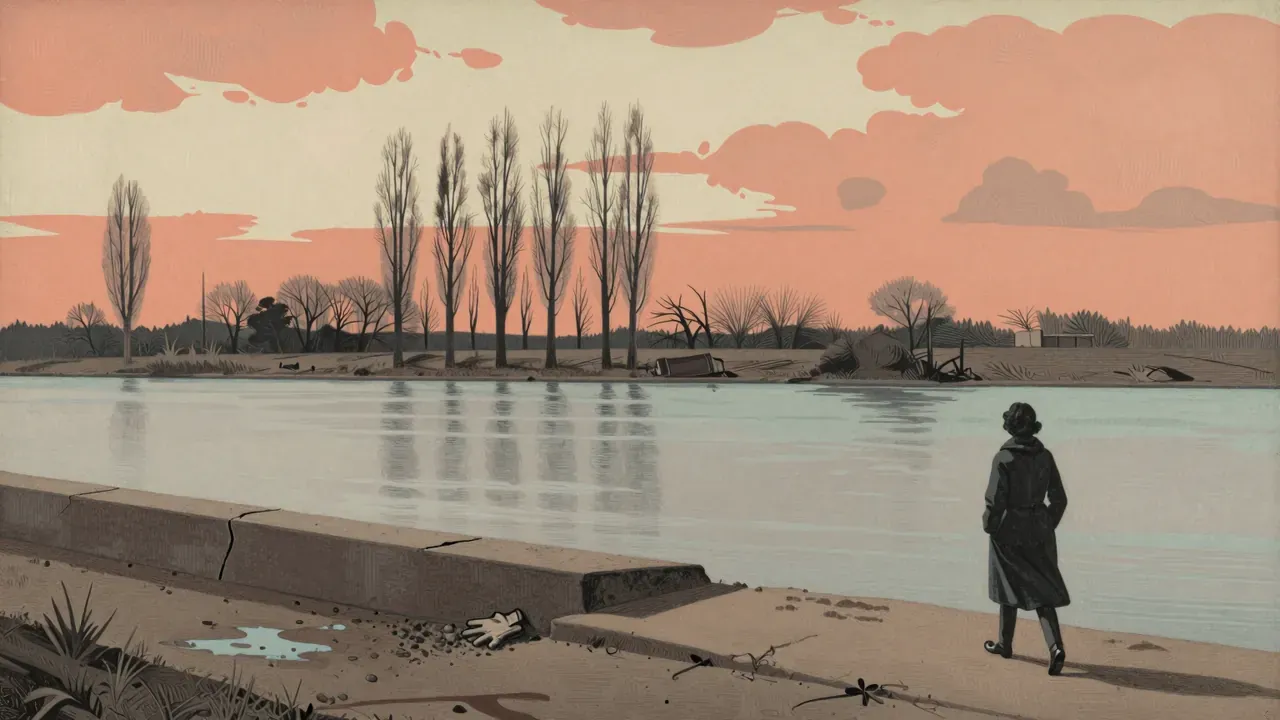
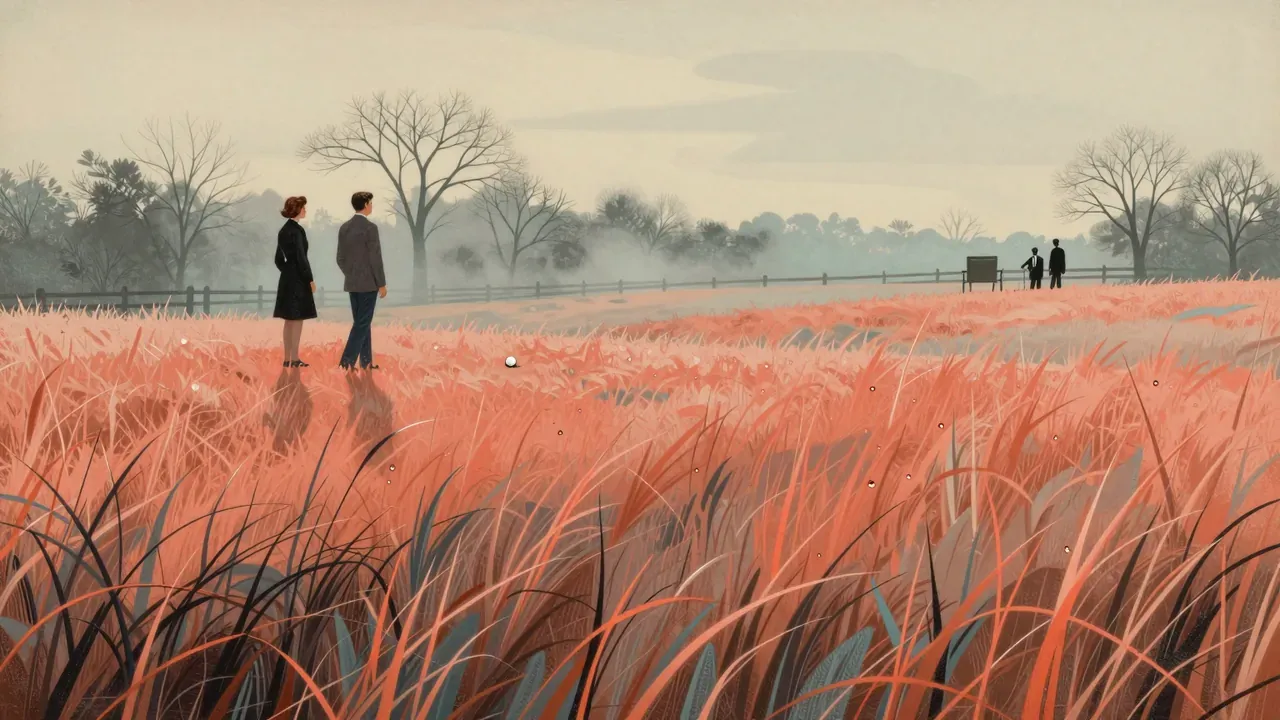
What lands is the physicality of uncertainty. The island sequences — shot on Lisca Bianca under harsh conditions — carry an undeniable grit: the wind, the salt, the uneven rock, the exhaustion in the actors’ eyes. These are not backdrops but active presences, shaping how characters move and relate. The abandoned fascist architecture in Santa Panagia feels less like set design than historical residue — a built environment that outlives its ideology and now hosts private unease. The final scene at the San Domenico Palace Hotel terrace does not resolve anything, yet its stillness carries weight: two people standing apart, looking out, not speaking, the camera holding them in frame without judgment. That moment lands because it refuses consolation — it accepts the distance as real, unbridgeable, and worthy of attention. The film’s pacing, often called glacial, functions as calibration: it slows perception down enough to notice how little is said, how much is deferred, how much remains untranslatable between people who share a language but not a grammar of feeling.
The refusal of closure
What does not land is the expectation of narrative continuity — and this is by design, not failure. Viewers accustomed to cause-and-effect plotting will find the middle stretch opaque: Anna’s disappearance is never explained, her fate left open, her friends’ grief neither deepened nor resolved. The film declines to offer psychological justification for Sandro’s infidelity or Claudia’s passive complicity. Scenes that appear inert — waiting for a train, walking past empty buildings — do not build toward payoff. Some performances feel muted not because they lack skill but because the script denies them dramatic outlet: Lea Massari’s Anna has almost no dialogue before vanishing, and her absence is never filled with memory or backstory. The film’s resistance to closure can read as indifference, especially in early screenings where laughter and boos broke out. That reaction was not misreading but friction — the film refuses the contract of conventional engagement, and some viewers rightly sense they are being asked to relinquish control rather than invited in.
The architecture of obsolescence
The themes that matter are moral obsolescence and affective dislocation. Antonioni stated the film aimed to show ‘not the birth of an erroneous sentiment, but rather the way in which we go astray in our sentiments’. The characters inhabit a world where old codes — romantic fidelity, bourgeois duty, narrative coherence — persist as habits, not convictions. Their gestures retain shape but lose function: Sandro proposes marriage while distracted; Claudia visits churches not in faith but as habit or refuge; conversations circle without landing. Architecture becomes allegory: Mussolini-era buildings stand empty, functional forms stripped of purpose. Even the Mediterranean setting — usually a symbol of sensuality or myth — is rendered austere, windswept, indifferent. The film treats emotion not as interior truth but as social artefact: something worn, repeated, misapplied. Its concern is not why people feel lost, but how they continue moving inside that loss — how silence becomes syntax, how hesitation becomes habit, how landscape absorbs intention without returning meaning.
The terms of attention
This film is for viewers who tolerate extended silence, who find tension in stillness, who value composition over exposition, and who accept that some questions are held, not answered. It suits those familiar with mid-century European art cinema, or those willing to adjust their viewing reflexes — to watch for shifts in light rather than plot turns, to listen for what is unsaid rather than what is delivered. It is not for viewers who require narrative propulsion, psychological explanation, or emotional catharsis. Those who expect character motivation to be legible, or who rely on editing rhythms to signal importance, will likely disengage. A viewer who values clarity over ambiguity, or who reads pacing as intention rather than symptom, may find the film inert. That verdict would not be wrong — it reflects a legitimate expectation of cinema that L’Avventura deliberately suspends. Nothing in the film changes that; its value lies precisely in that suspension.
The measure of endurance
Yes, it is worth your evening — but only if you arrive prepared to let go of narrative expectation and meet the film on its own terms. Its 145 minutes ask for patience, not passive consumption. You will not leave with answers, but you may leave with altered attention: a heightened awareness of how space shapes feeling, how silence carries weight, how bodies speak when language fails. It rewards rewatching not because it hides clues, but because its textures deepen with familiarity — the way Scavarda frames a doorway, how Vitti’s gaze shifts over ten seconds, how Fusco’s music enters and recedes like breath. Those who find it alienating on first viewing may find it resonant later, once the rhythm settles into the nervous system. It is not universally accessible, nor does it aim to be. Its worth lies in its unwavering commitment to a vision of modern disaffection — one that remains unsettlingly precise fifty years on.