filmbriefs
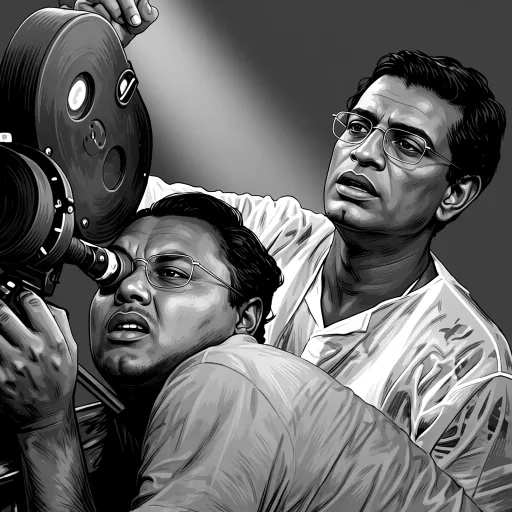
Cinematographer · 1930–2001

Subrata Mitra

8
briefs
13:00
average
104 min
in total
On film.briefs8
13:00

Mahanagar

Satyajit Ray · 1963

Satyajit Ray’s 1963 Bengali drama Mahanagar follows Arati, a Calcutta housewife who becomes a door-to-door saleswoman to support her extended family. As her earnings reshape domestic authority and challenge patriarchal norms, the film traces the subtle, irreversible recalibration of dignity, dependence and decision-making — not through polemic, but through gesture, silence and economic fact.
13:00

Nayak

Satyajit Ray · 1966

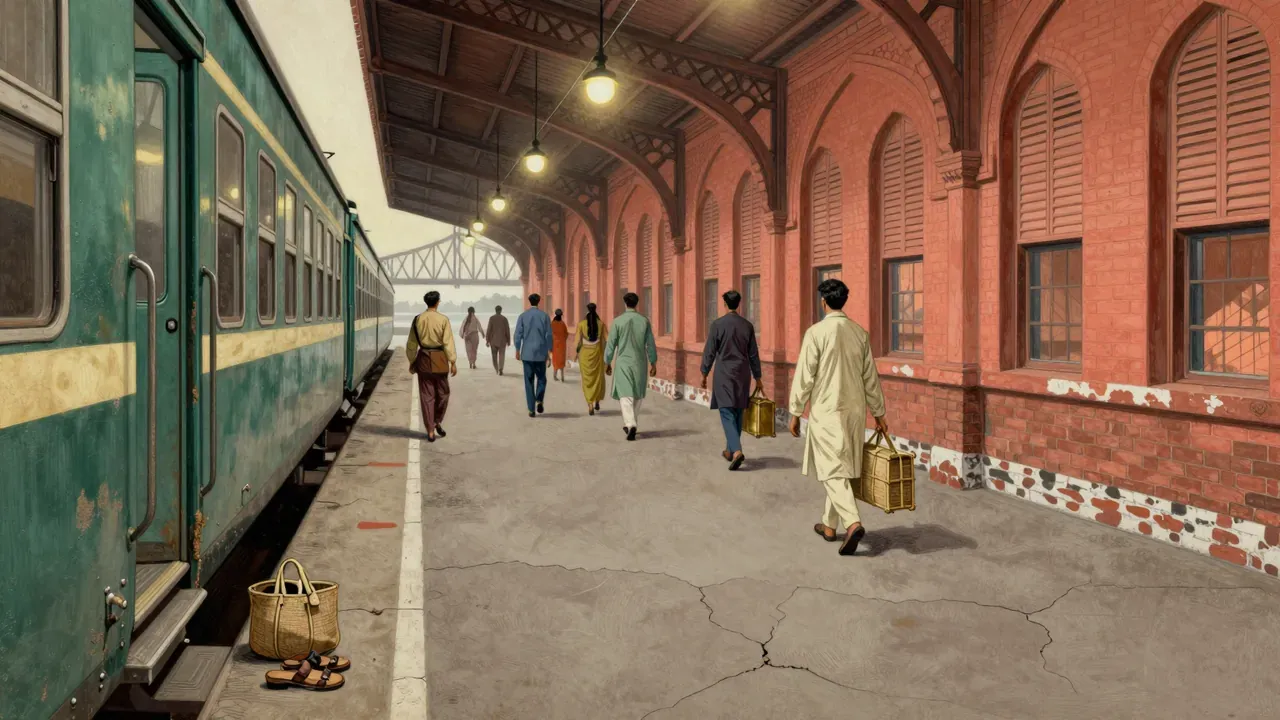
Satyajit Ray’s 1966 drama follows Bengali film star Arindam Mukherjee on an overnight train to receive a national award. Over 113 minutes, he unravels in conversation with a young journalist, revealing insecurities, regrets, and contradictions beneath his celebrity facade. Shot in studio-built train compartments with precise, unhurried craft, the film treats fame as erosion rather than triumph — and intimacy as fleeting, not redemptive.

13:00

Apur Sansar

Satyajit Ray · 1959

Satyajit Ray’s 1959 Apur Sansar concludes the Apu Trilogy with quiet rigour: Soumitra Chatterjee’s debut as the adult Apu traces a path from drifting graduate to bereft father to tentative parent, shaped by Subrata Mitra’s restrained cinematography and Ravi Shankar’s sparse score. Adapted from Bibhutibhushan Bandopadhyay’s novel, it finds emotional gravity in understatement — in shared meals, unspoken decisions, and the slow reassembly of a life after loss.

13:00

Jalsaghar

Satyajit Ray · 1958

Satyajit Ray’s 1958 Bengali drama follows Biswambhar Roy, a zamindar clinging to ritual and prestige as his estate crumbles. Shot at Nimtita Rajbari and a studio-built music room, it uses Chhabi Biswas’s restrained performance, Subrata Mitra’s deep-focus cinematography and Vilayat Khan’s diegetic classical score to chart decline not as crisis but as quiet, inevitable erosion. Awarded India’s National Film Award for Second Best Feature and Best Bengali Film in 1959, it has since been ranked among the greatest films ever made.

13:00

Aparajito

Satyajit Ray · 1956

Satyajit Ray’s 1956 Bengali drama Aparajito, the second film of The Apu Trilogy, follows Apu from childhood to young adulthood across Varanasi, rural Bengal, and Kolkata. It charts his intellectual ascent alongside his emotional withdrawal from his mother Sarbajaya, culminating in her death and his muted, complex response. Shot by Subrata Mitra with diffused lighting and scored by Ravi Shankar, the film relies on stillness, silence, and precise gesture rather than exposition or climax. Though less immediately accessible than its predecessor Pather Panchali, it deepens the trilogy’s inquiry into time, memory, and filial love—winning the Golden Lion at Venice and cementing Ray’s international reputation.

13:00

Charulata

Satyajit Ray · 1964

Satyajit Ray’s 1964 adaptation of Tagore’s Nastanirh follows Charu, an intelligent Bengali wife in 1879 Calcutta, whose intellectual isolation deepens when her husband invites his cousin Amal into their home. As Charu and Amal bond over literature and writing, unspoken feelings grow — but Ray refuses melodrama, resolving nothing. Shot by Subrata Mitra, scored by Ray, and performed with meticulous restraint, it is a film built on stillness, composition, and the weight of what goes unsaid.

13:00

Devi

Satyajit Ray · 1960

Satyajit Ray’s 1960 Bengali drama Devi follows Doyamoyee, a young wife declared a goddess incarnate by her father-in-law after a dream. Set in 19th-century rural Bengal, the film charts her slow erasure as ritual replaces relationship, silence replaces speech, and worship replaces care. With restrained performances, Subrata Mitra’s understated cinematography, and Ali Akbar Khan’s sparse score, it builds tension through stillness and accumulation — not spectacle. The result is a precise, unsentimental anatomy of how social certainty can extinguish personhood.

13:00

Pather Panchali

Satyajit Ray · 1955

Satyajit Ray’s 1955 debut, adapted from Bibhutibhushan Bandyopadhyay’s novel, follows Apu’s childhood in rural Bengal. Shot on location with amateur actors and a minimal budget, it renders poverty, joy and loss through unhurried observation — no score to cue feeling, no edits to underline meaning. Its influence on global cinema is vast, but its power remains local, specific, and deeply human.