The shape of belief
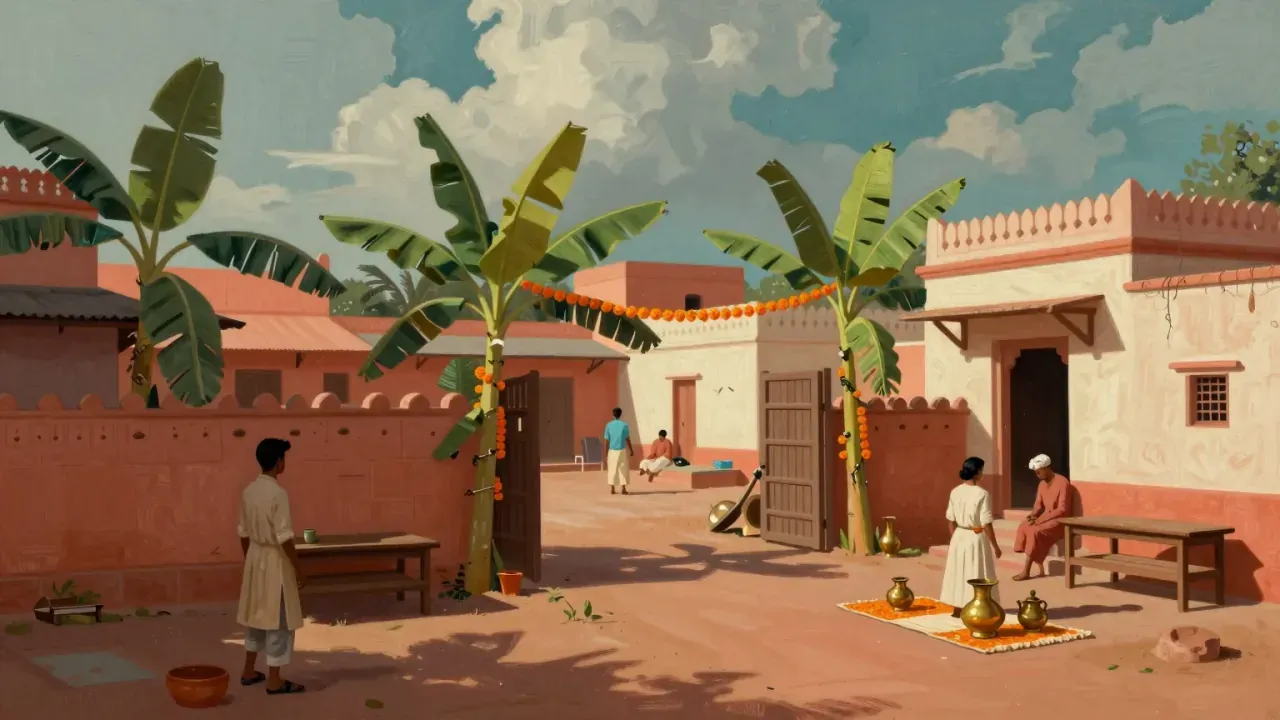
Devi is a 1960 Bengali-language drama set in 19th-century rural Bengal, adapted by Satyajit Ray from Prabhat Kumar Mukhopadhyay’s short story. It traces the rapid, irreversible dehumanisation of Doyamoyee, a young wife elevated to divine status after her father-in-law interprets a dream as revelation. The film does not seek to dramatise faith as belief or doubt as conflict, but to show how ritual, silence, and passive compliance coalesce into an inescapable social machinery. Ray avoids allegory and moral framing: there are no voiceovers, no editorial cuts to suggest irony, no score that cues judgement. Instead, he holds the camera steady while divinity is conferred, performed, and ultimately weaponised — not against reason, but against intimacy, agency, and ordinary feeling. The film’s aim is anatomical: to chart the precise moment when reverence becomes erasure, and devotion becomes detention. It treats religious fervour not as superstition nor as spiritual truth, but as a structural force with material consequences — one that reshapes space, speech, touch, and time without ever needing to raise its voice. (158 words)
The weight of stillness
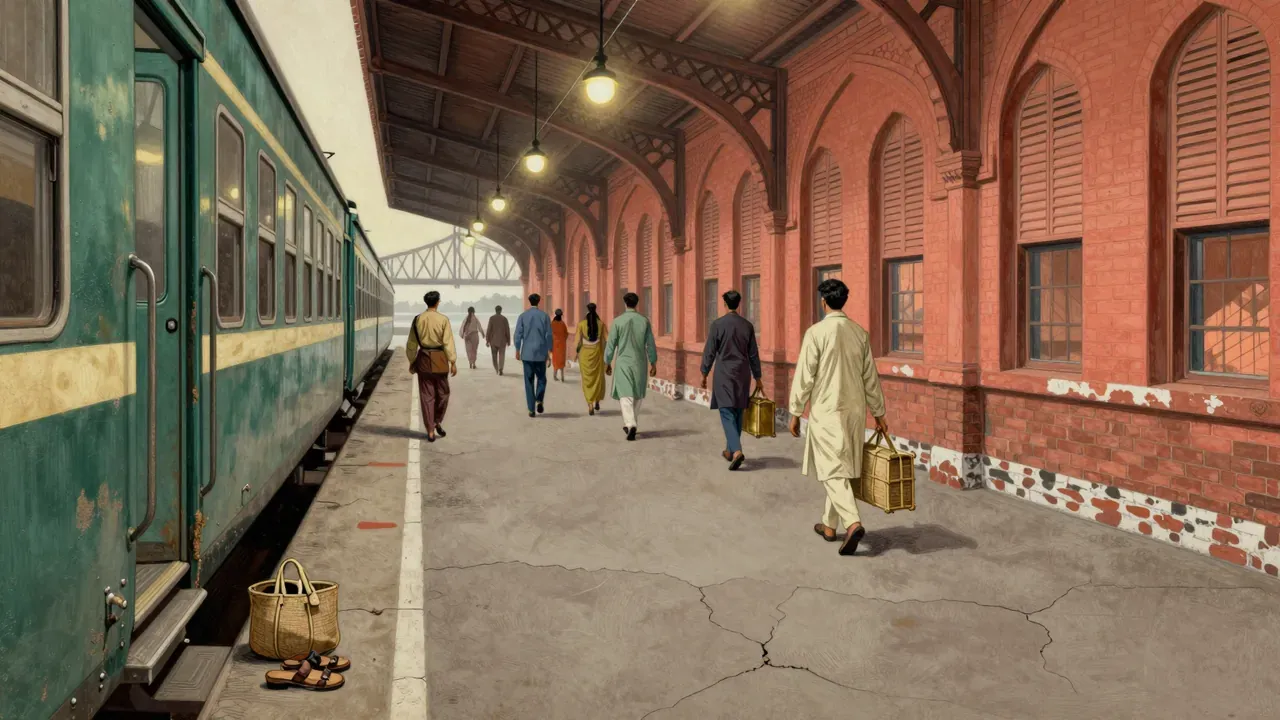
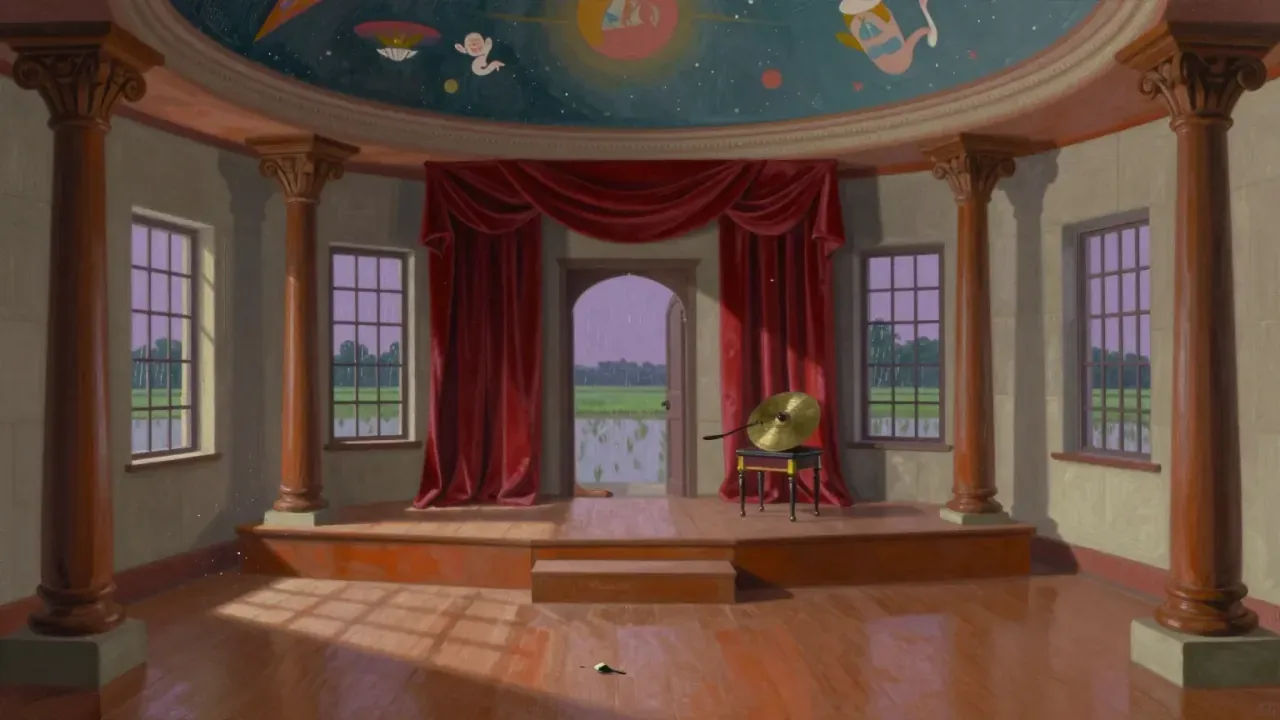
The story unfolds with unbroken cause-and-effect logic: each decision — Kalikinkar’s dream, the priest’s ritual, the beggar’s plea, Umaprasad’s return — follows from the last without narrative flourish or psychological exposition. Sharmila Tagore’s performance rests almost entirely in stillness and micro-shifts of gaze; her Doyamoyee speaks little, reacts less, and withdraws inward with accumulating gravity. Soumitra Chatterjee gives Umaprasad quiet urgency, not rebellion — his arguments are practical, his despair muted. Subrata Mitra’s cinematography uses shallow depth and restrained framing: doorways bisect faces, corridors recede into shadow, and interiors remain dimly lit even in daylight, reinforcing enclosure. Bansi Chandragupta’s art direction renders the mansion as both sanctuary and cell — high ceilings echo, empty rooms amplify silence. Ali Akbar Khan’s score is sparse, mostly sitar and tanpura drones that hover without resolving, while Dulal Dutta’s editing sustains duration: scenes breathe, pauses hold, and no cut rushes relief. There are no flashbacks, no subjective distortions — only what happens, where it happens, and who watches it happen. (159 words)
What the silence carries
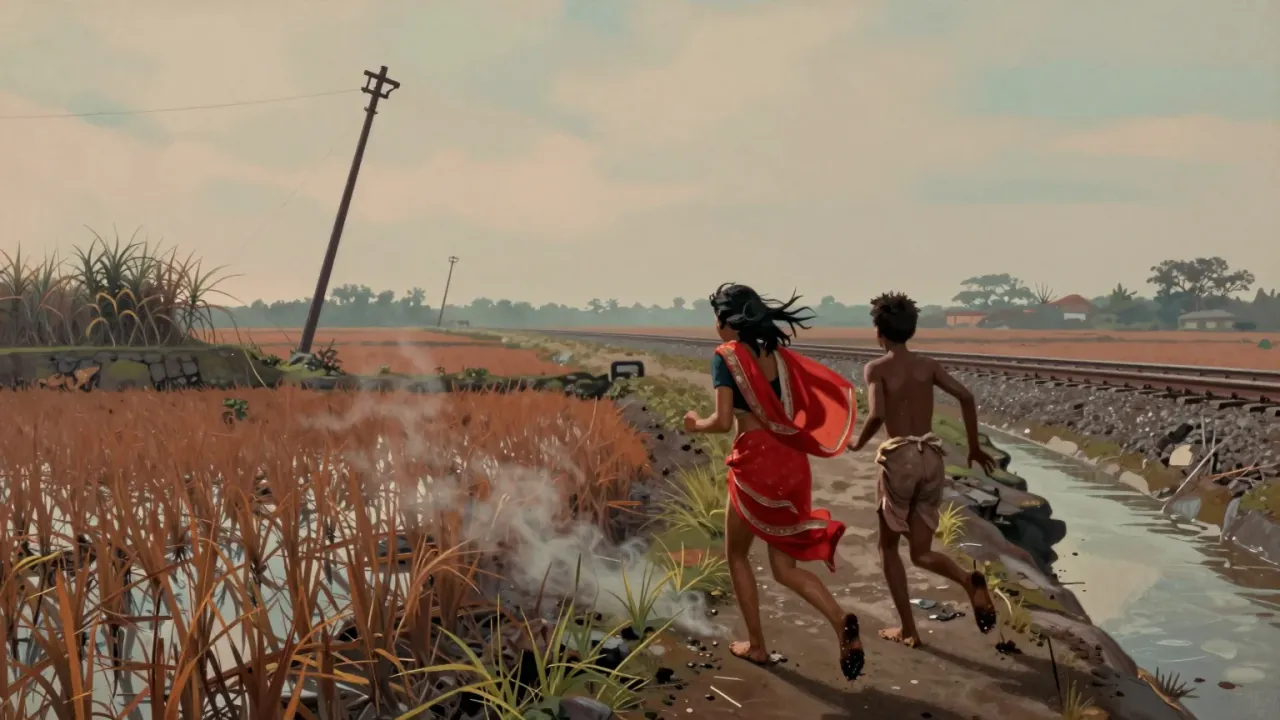
What lands is the suffocating weight of collective certainty. The scene where Khoka is brought to Doyamoyee for healing lands not because of melodrama, but because every gesture — Harasundari’s suppressed flinch, Kalikinkar’s trembling hands, the servant’s silent retreat — confirms that no one dares name the absurdity aloud. The film’s restraint makes the horror cumulative: Doyamoyee’s gradual withdrawal from Khoka, then from her own reflection, then from coherent speech, feels inevitable rather than symbolic. The final image — her running into mist in wedding attire — lands precisely because it is neither triumphant nor tragic, but dissociative: a mind unmoored by sustained misrecognition. The sound design, too, lands — Durgadas Mitra’s use of ambient hush, muffled bells, and sudden silences makes ritual feel physically oppressive. Even the charanamrito, a detail easily rendered kitsch, gains dread through repetition and context: it is not magic water, but the residue of expectation, served cold and unquestioned. Nothing here shouts; everything accumulates until the air itself feels thick with implication. (157 words)
Where the lens stops
What does not land is the framing of Umaprasad’s education as a counterweight to orthodoxy. His English textbooks and Calcutta lectures are presented as implicit rationality, yet the film never shows him applying that knowledge — only rejecting faith, not proposing alternatives. His argument with Kalikinkar lacks intellectual texture; it remains emotional and procedural, not ideological. Similarly, the priest’s role is underdeveloped: he performs rites without commentary, and his authority goes unexamined beyond his utility to Kalikinkar’s conviction. The film assumes the audience shares Ray’s secular humanist lens, so it offers no internal challenge to the theology — no theological debate, no competing interpretation of Kali, no articulation of why devotion need not require surrender of personhood. This absence leaves the critique powerful but narrow: it condemns idolatry as social violence, but does not engage with Hindu devotional practice on its own terms. The result is a morally clear film that risks flattening the very tradition it interrogates — not through malice, but through omission. A more complex treatment would have risked ambiguity, but also resonance beyond its immediate indictment. (156 words)
The cost of the crown
The themes that matter are the violence of passive consent, the erosion of self under sustained projection, and the domestication of transcendence. Devi is not about religion versus modernity, but about how any system — religious, patriarchal, colonial, or pedagogical — can repurpose intimacy as evidence, silence as assent, and care as complicity. Doyamoyee’s maternal bond with Khoka is the first thing sacrificed to her apotheosis; her marriage to Umaprasad dissolves not through betrayal, but through enforced distance. The film treats ‘divinity’ as a social role with fixed script and costume — one that demands immobility, inscrutability, and abstinence from ordinary response. Even grief is denied her: when Khoka dies, she does not weep — she is already outside mourning, having been stripped of the right to ordinary sorrow. The zamindar’s mansion becomes a microcosm of institutional power: hierarchical, self-reinforcing, and indifferent to contradiction. What matters most is not whether Doyamoyee is divine, but how quickly everyone — including herself — stops asking the question. Faith here is less belief than infrastructure: invisible, pervasive, and structurally coercive. (159 words)
The demand of attention
This film is for viewers who attend to stillness, who trust long takes over exposition, and who find moral weight in withheld reaction rather than stated position. It suits those accustomed to non-Western narrative pacing and comfortable with ambiguity that refuses resolution. It is not for viewers who require character arcs, plot propulsion, or explicit thematic signposting — there are no monologues about freedom, no climactic confrontations, no redemption. Those expecting psychological realism may find Doyamoyee’s passivity frustrating rather than legible; those seeking historical context about 19th-century Bengal zamindari or Vaishnavite-Shakta syncretism will find none. A viewer who values didactic clarity over atmospheric precision, or who reads restraint as emptiness, will likely disengage. The film assumes patience as ethical posture — and that assumption divides its audience. Someone who finds the final shot haunting rather than obscure will stay; someone who needs Doyamoyee to speak, resist, or explain will leave wondering what the point was. (158 words)
The edge of the frame
Yes, it is worth your evening — provided you give it your full, unhurried attention. Its ninety-four minutes unfold with the gravity of a slow ritual: every pause matters, every glance carries consequence, and the ending lingers not because it shocks, but because it crystallises what has been building since frame one. It rewards close viewing, not passive consumption — the composition, the light, the rhythm of breath between lines all serve the central inquiry. Those who watch it distracted or impatient will miss the accumulation of small violences that make the tragedy real. It is not ‘accessible’ in the streaming sense, but it is deeply coherent on its own terms. A viewer who prefers tightly plotted dramas or emotionally demonstrative performances may find it withholding — and they would not be wrong, only mismatched. What changes the verdict is not the film’s difficulty, but the viewer’s willingness to meet it where it stands: in silence, in stillness, in the unbearable weight of what goes unsaid. (159 words)