filmbriefs
Actor · Screenwriter · Director · Producer · 1954

Jackie Chan

12
briefs
13:00
average
156 min
in total
On film.briefs12
13:00

Enter the Dragon

Robert Clouse · 1973

A 1973 martial arts action film directed by Robert Clouse, Enter the Dragon stars Bruce Lee as a Shaolin monk infiltrating a criminal island tournament. Produced by Warner Bros. and Golden Harvest on a $850,000 budget, it fused spy-thriller structure, blaxploitation casting, and Lee’s choreographed philosophy. Though its script leans on genre shorthand and its themes remain gestural, its physical grammar — in fight staging, performance, and Schifrin’s score — endures as a benchmark. It grossed $90 million worldwide and remains culturally pivotal, preserved in the US National Film Registry.
13:00

Fearless Hyena Part II

Lo Wei · 1983

Fearless Hyena Part II (1983) is a fractured Hong Kong martial arts film directed by Lo Wei, written by Jackie Chan, and released after Chan broke his contract to join Golden Harvest. With Chan absent for much of the shoot, the film relies on doubles, reused material, and disjointed editing. Its plot — two cousins avenging their slain fathers — is undercut by narrative incoherence, tonal whiplash, and visible production strain. Yet its absurdity and historical significance as a case study in studio power make it more revealing than entertaining.

13:00

Half a Loaf of Kung Fu

Chi-Hwa Chen · 1978

Half a Loaf of Kung Fu (1978) is Jackie Chan’s early experiment in kung fu slapstick: a bumbling acrobat named Jiang stumbles through a series of misadventures — spying on a witch, collecting bounties on corpses, apprenticing to a beggar — all while trying, and mostly failing, to learn kung fu. Directed by Chi-Hwa Chen and written by Chan, it parodies the genre’s gravitas with physical comedy, episodic plotting, and a refusal to treat mastery as earned rather than stumbled upon.

13:00

My Lucky Stars

Sammo Hung · 1985

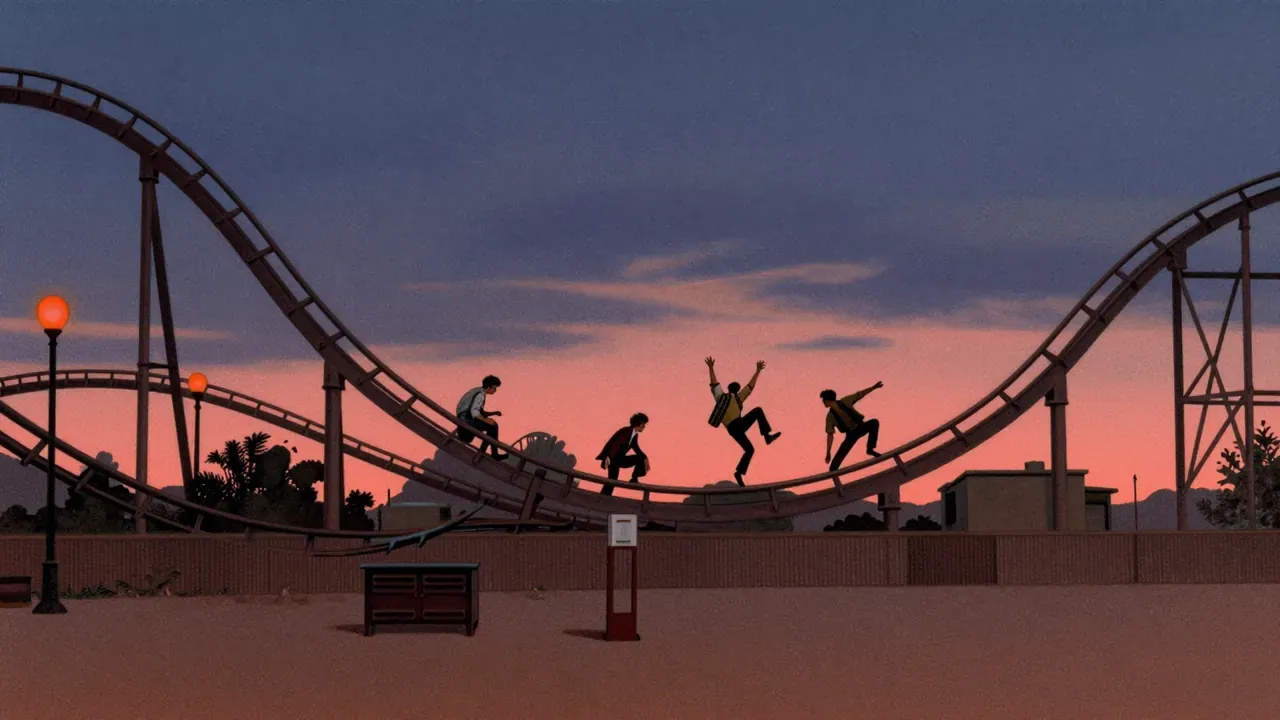
My Lucky Stars (1985) is a Hong Kong action comedy directed by Sammo Hung, starring Hung, Jackie Chan, Yuen Biao, Eric Tsang, Stanley Fung, Richard Ng, Charlie Chin, and Sibelle Hu. Built around the 'Five Lucky Stars' troupe, it follows their reluctant deployment to Tokyo to rescue a kidnapped officer from a yakuza group operating beneath an amusement park. Though Jackie Chan’s role is brief, the film showcases tightly coordinated group choreography, broad but precise comic timing, and inventive use of Fuji-Q Highland’s architecture. It prioritises physical logic over narrative coherence and communal rhythm over individual arc.

13:00

Police Story 2

Jackie Chan · 1988

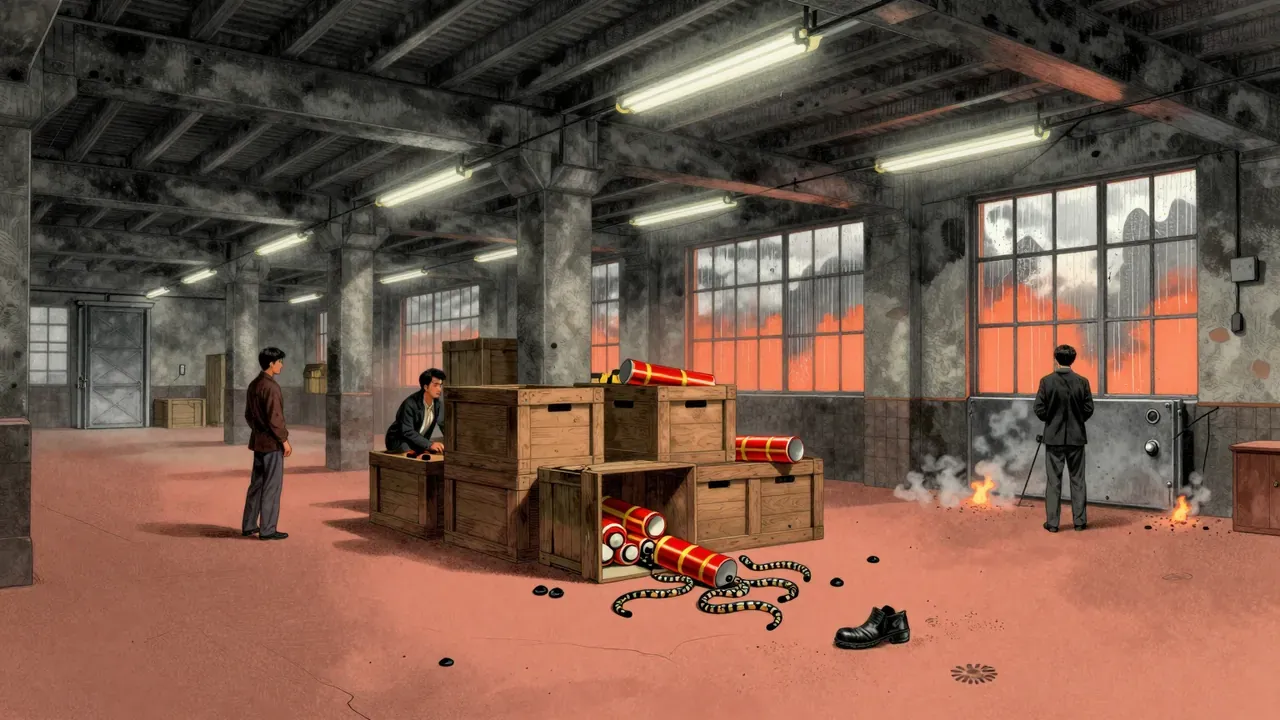
Jackie Chan’s 1988 sequel trades the first film’s procedural texture for streamlined stunt logic: Ka-kui is demoted, provoked, resigns, then re-enters a bomb plot that culminates in the mall explosion and fireworks warehouse finale. Written by Chan and Edward Tang, shot by Arthur Wong, and awarded Best Action Choreography at the 1989 Hong Kong Film Awards, it delivers physical clarity over psychological depth — a film where every punch lands because the ground beneath it was measured first.

13:00

Rouge

Stanley Kwan · 1987

Stanley Kwan’s 1987 romantic drama Rouge follows Fleur, a 1930s courtesan who returns from the afterlife to find her lover Chan, presumed dead after their joint suicide pact. Instead, she discovers he survived, married, failed, and now lives in obscurity. Anchored by Anita Mui’s restrained performance and Bill Wong’s understated cinematography, the film measures time not in years but in unkept promises, social constraint, and the quiet persistence of grief.

13:00

Spiritual Kung Fu

Lo Wei · 1978

Spiritual Kung Fu (1978) is a Lo Wei-directed Hong Kong martial arts comedy starring Jackie Chan as Yi-lang, a quick-witted Shaolin student who learns the Five Style Fists from five spectral masters. Made early in 1978 but shelved due to budget constraints, it was released late that year after Chan’s breakout success in Snake in the Eagle’s Shadow. The film blends slapstick, modest special effects, and clear, varied fight choreography — with Yuen Biao uncredited as one of the ghostly instructors. Its strengths lie in Chan’s timing and the functional integration of animal-style kung fu; its weaknesses are thin motivation and underdeveloped lore. It is a transitional work — technically assured, thematically light, and structurally coherent.

13:00

The Fearless Hyena

Jackie Chan · 1979

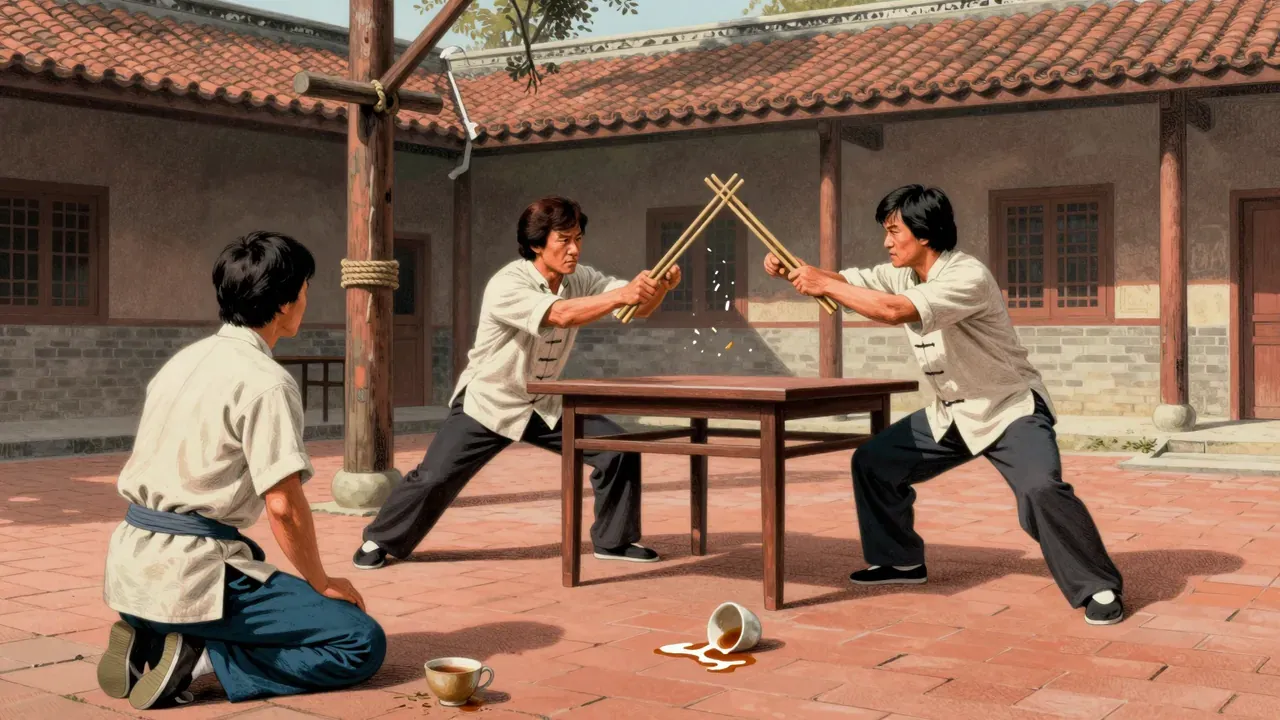
Jackie Chan’s 1979 directorial debut is a Hong Kong action comedy built around his own body as instrument, prop, and punchline. It follows a reckless martial arts student whose flaws drive both plot and fight design — gambling, disobedience, and emotional volatility become narrative engines. Though its revenge arc feels tacked-on and its supporting characters thinly drawn, its slapstick-infused choreography (chopsticks duels, cross-dressing, ‘Emotional Kung-Fu’) remains inventive and influential. Shot with functional clarity by Jung-Shu Chen and scored with brassy levity by Frankie Chan, it is a pragmatic, performer-first film — uneven, urgent, and foundational.

13:00

The Young Master

Jackie Chan · 1980

Jackie Chan’s 1980 directorial effort The Young Master marks his debut for Golden Harvest and refines his signature blend of martial arts, comedy, and stunt-driven storytelling. As Dragon, Chan navigates fraternal betrayal, mistaken identity, and a punishing final duel with criminal Kam — all staged with growing control over choreography, editing, and physical expression. Though some plot elements remain underdeveloped and tonal shifts occur, the film’s commitment to grounding action in consequence and character makes it a vital milestone in Hong Kong action cinema.

13:00

Drunken Master II

Lau Kar-leung · 1994

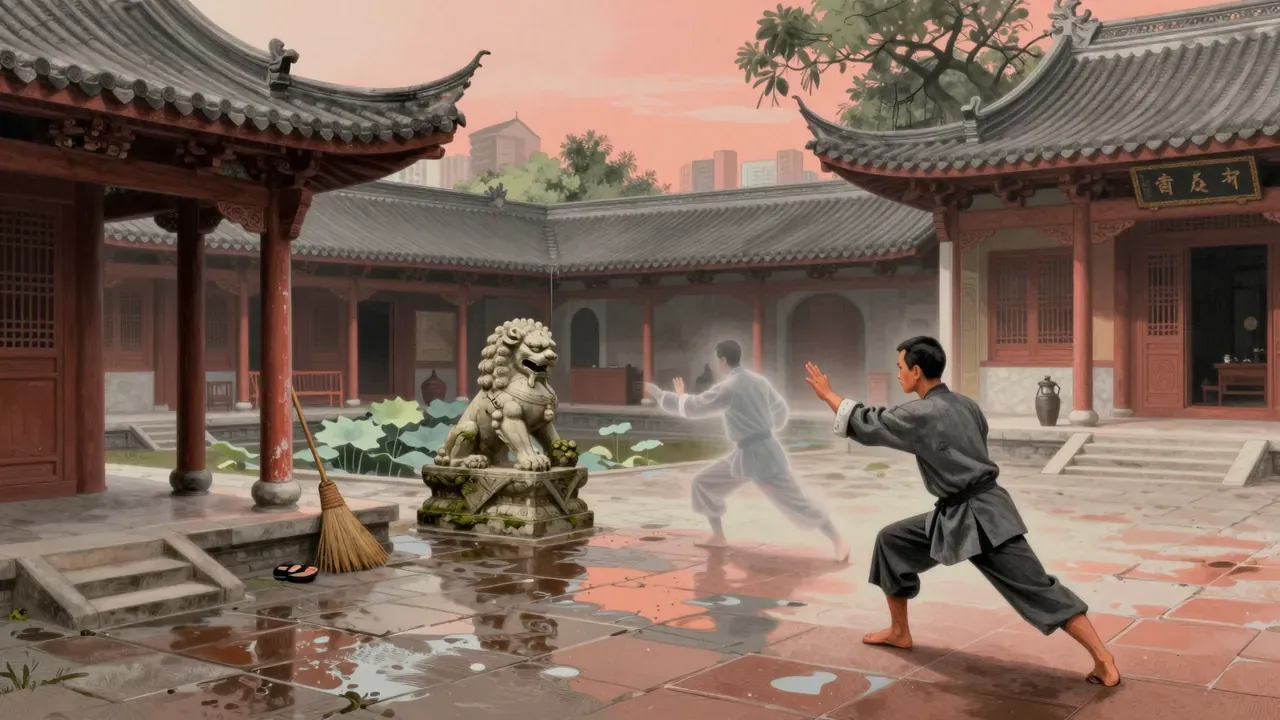
Drunken Master II is a 1994 Hong Kong martial arts film directed by Lau Kar-leung and starring Jackie Chan as Wong Fei-hung. Set in early 20th-century Canton, it follows Wong’s moral and physical trial after accidentally acquiring an Imperial Seal targeted by British colonial agents. Built around formally distinct fight scenes — Hung Ga, Shaolin, Drunken Boxing, Taekwondo — the film anchors comedy in consequence and action in lineage. Its unflinching final image of Wong’s disability remains controversial, but its choreographic rigour and ethical structure mark it as a high point of the genre.

13:00

Drunken Master

Yuen Woo-ping · 1978

Drunken Master (1978) is a Hong Kong action comedy directed by Yuen Woo-ping and starring Jackie Chan as the young Wong Fei-hung. Forced into brutal tutelage under the eccentric Beggar So (Yuen Siu-tien), Wong endures punishing training in a fictionalised 'Drunken Boxing' style before facing a lethal rival. The film’s enduring power lies in its choreographic intelligence, its commitment to physical cause-and-effect, and its depiction of skill as something metabolised through repetition, failure, and synthesis — not bestowed or discovered.

13:00

Police Story

Jackie Chan · 1985

Jackie Chan’s 1985 Police Story is a Hong Kong action comedy structured around large-scale, practical stunts — a shantytown chase, a bus stop, and a shopping mall fight culminating in a pole slide through exploding lights. Written by Chan and Edward Tang, it follows Sergeant Chan Ka-Kui as he clears his name after being framed, using physical endurance rather than procedural logic. Yiu-Tsou Cheung’s cinematography and Peter Cheung’s editing prioritise legibility over flair, grounding each stunt in cause and consequence. It won Best Film at the 1986 Hong Kong Film Awards and remains influential for its commitment to tangible risk.