filmbriefs
Actor · 1944–2025

Udo Kier

10
briefs
13:00
average
130 min
in total
On film.briefs10
13:00

Berlin Alexanderplatz

Rainer Werner Fassbinder · 1980

Rainer Werner Fassbinder’s 1980 fourteen-part television adaptation of Alfred Döblin’s novel traces Franz Biberkopf’s failed attempts at honest living in late-Weimar Berlin. Shot by Xaver Schwarzenberger, scored by Peer Raben, and edited by Juliane Lorenz, it treats the city as a system of pressures — economic, legal, sexual — that wear down individual agency. With a cast including Barbara Sukowa, Gottfried John, and Hanna Schygulla, it avoids psychological exposition in favour of documentary texture, rhythmic repetition, and moral density. At 894 minutes, it asks for time not as concession but as condition.
13:00

Blood for Dracula

Paul Morrissey, Antonio Margheriti · 1974

Blood for Dracula (1974) is a co-credited Paul Morrissey–Antonio Margheriti splatter film starring Udo Kier as a dying Count Dracula who travels to pre-Fascist Italy seeking virgin blood, only to find sexual candour, Marxist rhetoric, and aristocratic bankruptcy instead. Shot in France with an English-speaking cast, it uses gothic tropes to dissect legitimacy, scarcity, and ideological exhaustion. Luigi Kuveiller’s underlit cinematography and Claudio Gizzi’s sparse score reinforce its clinical tone. Though released as Andy Warhol’s Dracula, Warhol’s involvement was nominal. The film opened to mixed reviews and remains a singular artefact of 1970s arthouse-horror hybridity.

13:00

Breaking the Waves

Lars von Trier · 1996

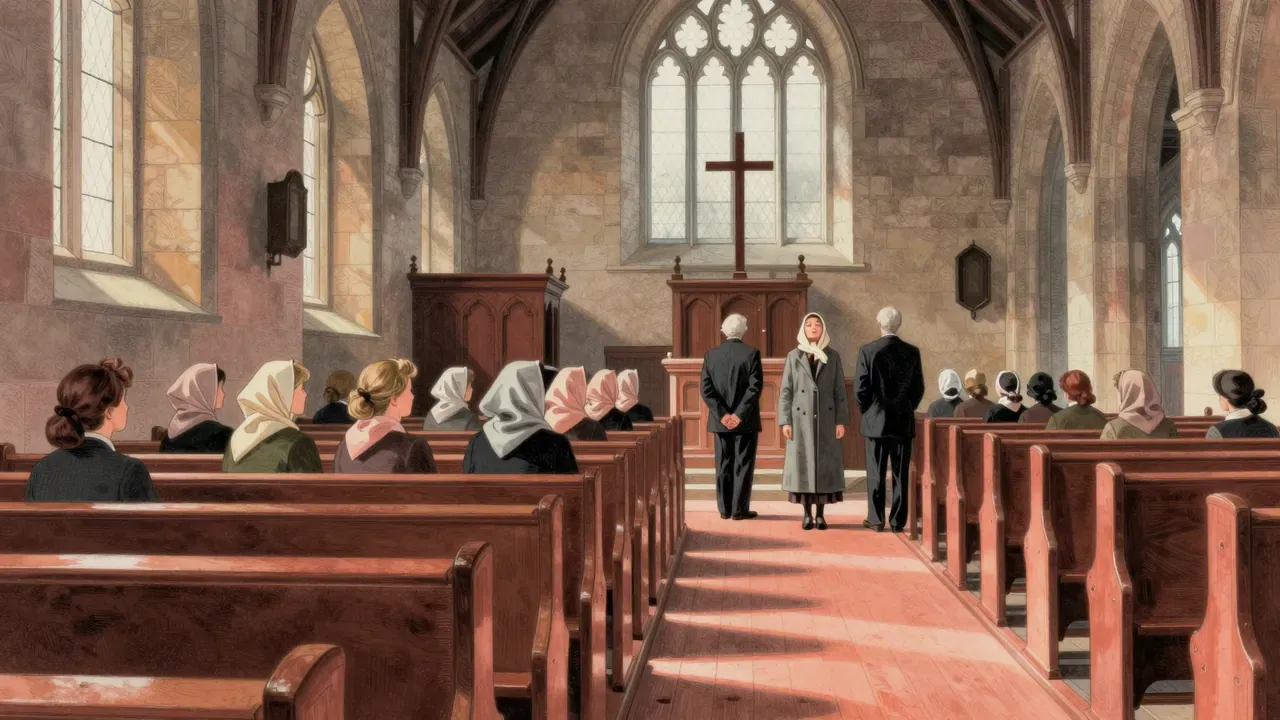
Breaking the Waves (1996), directed by Lars von Trier, follows Bess McNeill, a devout young woman in the Scottish Highlands, whose literal interpretation of love and faith leads her to increasingly harrowing acts of self-sacrifice after her husband is paralysed. Shot on location in Scotland and in Danish studios, with Robby Müller’s handheld cinematography and Emily Watson’s breakthrough performance, it is a morally uncompromising drama about belief, gender, and communal judgment—neither a Dogme 95 film nor a conventional religious parable, but something starker and more enduring.

13:00

Epidemic

Lars von Trier · 1987

Lars von Trier’s 1987 metafictional horror Epidemic follows two screenwriters drafting a script about a plague while a real outbreak begins to mirror their fiction. Shot on 16mm, structured across five days, and starring von Trier and Niels Vørsel as themselves, it treats narrative as a vector and authorship as contagion — the second instalment of the Europa trilogy.

13:00

Flesh for Frankenstein

Paul Morrissey, Antonio Margheriti, Andy Warhol · 1973

Flesh for Frankenstein (1973) is a Paul Morrissey-directed body horror film shot in Rome, starring Udo Kier as a Serbian-obsessed Baron who constructs living specimens from corpses. Its deadpan satire targets eugenics, authoritarianism and sexual repression through grotesque, tactile set-pieces and stilted dialogue. Though credited to Warhol and Margheriti, Morrissey shaped its vision, aided by Luigi Kuveiller’s flat, theatrical cinematography and Claudio Gizzi’s jagged score. It is neither pure parody nor sincere horror, but a conceptual object that demands attention to texture, logic and failure.

13:00

Lola

Rainer Werner Fassbinder · 1981

Rainer Werner Fassbinder’s 1981 drama Lola, the second film in his BRD Trilogy, relocates Heinrich Mann’s Professor Unrat to 1957 Coburg. It follows building commissioner von Bohm’s doomed attempt to impose integrity on a town whose elite — mayor, banker, police chief — all profit from property developer Schuckert’s brothel, run by singer Lola. As von Bohm falls for her, uncovers systemic corruption, and ultimately marries her with Schuckert’s blessing, the film anatomises how moral authority is staged, delegated, and sold. Stylised, unsentimental, and rigorously structured, it treats reconstruction not as renewal but as rebranding.

13:00

My Own Private Idaho

Gus Van Sant · 1991

Gus Van Sant’s 1991 arthouse drama follows two young male hustlers — Mike, who suffers narcoleptic blackouts, and Scott, the mayor’s son — as they travel from Portland to Idaho and Rome in search of Mike’s absent mother. Loosely modelled on Shakespeare’s Henry IV plays, it blends documentary realism with poetic fragmentation, anchored by River Phoenix’s understated performance and Eric Alan Edwards’ naturalistic cinematography. Though uneven in execution, its cultural impact and formal daring have secured its place as a landmark of new queer cinema.

13:00

The Secret Agent

Kleber Mendonça Filho · 2025

Kleber Mendonça Filho’s The Secret Agent is a Portuguese-language historical political thriller set in Recife during Brazil’s military dictatorship. Starring Wagner Moura as Armando, a former professor evading persecution, it traces his movements through carnival crowds, bureaucratic offices and dissident networks—all while a severed leg found in a shark becomes a media smokescreen for state violence. Shot on location with 1970s-inspired cinematography and edited for procedural realism, the film prioritises texture over exposition, embedding its politics in infrastructure, sound and silence.

13:00

Europa

Lars von Trier · 1991

Lars von Trier’s 1991 arthouse drama Europa uses stark black-and-white cinematography, surreal superimpositions, and second-person narration to tell the story of an American railway conductor drawn into the moral quicksand of occupied Germany. Set against a fictional railway network named Zentropa, the film explores complicity, betrayal, and the impossibility of neutrality in a compromised world. Its formal rigour is uncompromising; its emotional register, deliberately austere.

13:00

Melancholia

Lars von Trier · 2011

Lars von Trier’s 2011 science fiction drama Melancholia uses an inevitable planetary collision to examine how two sisters—one depressive, one anxious—respond when all future is cancelled. Kirsten Dunst and Charlotte Gainsbourg anchor its two-part structure, supported by Manuel Alberto Claro’s restrained cinematography and Richard Wagner’s Tristan und Isolde prelude, which dictates the film’s rhythm. Made by Zentropa with co-producers across Europe, it premiered at Cannes, where Dunst won Best Actress. Its power lies in tonal certainty, not plot mechanics: it asks how consciousness persists when meaning has no horizon.