A rubber-boom dreamer and an opera house
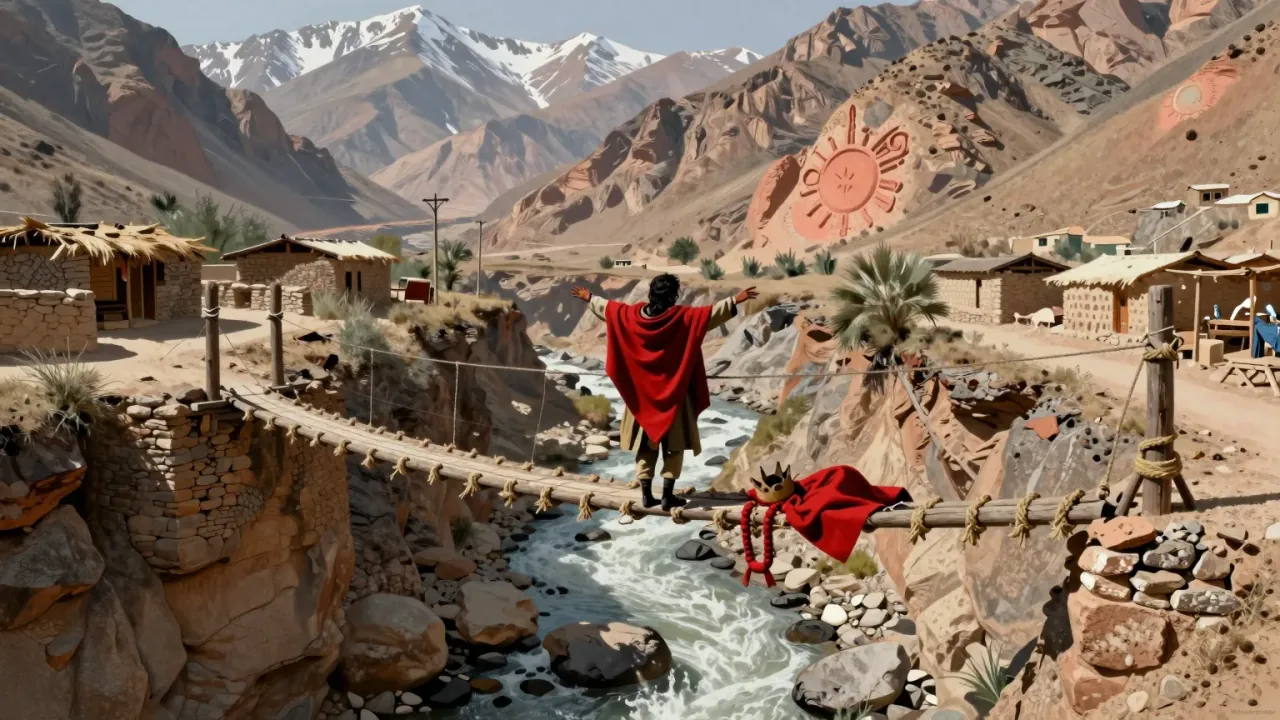
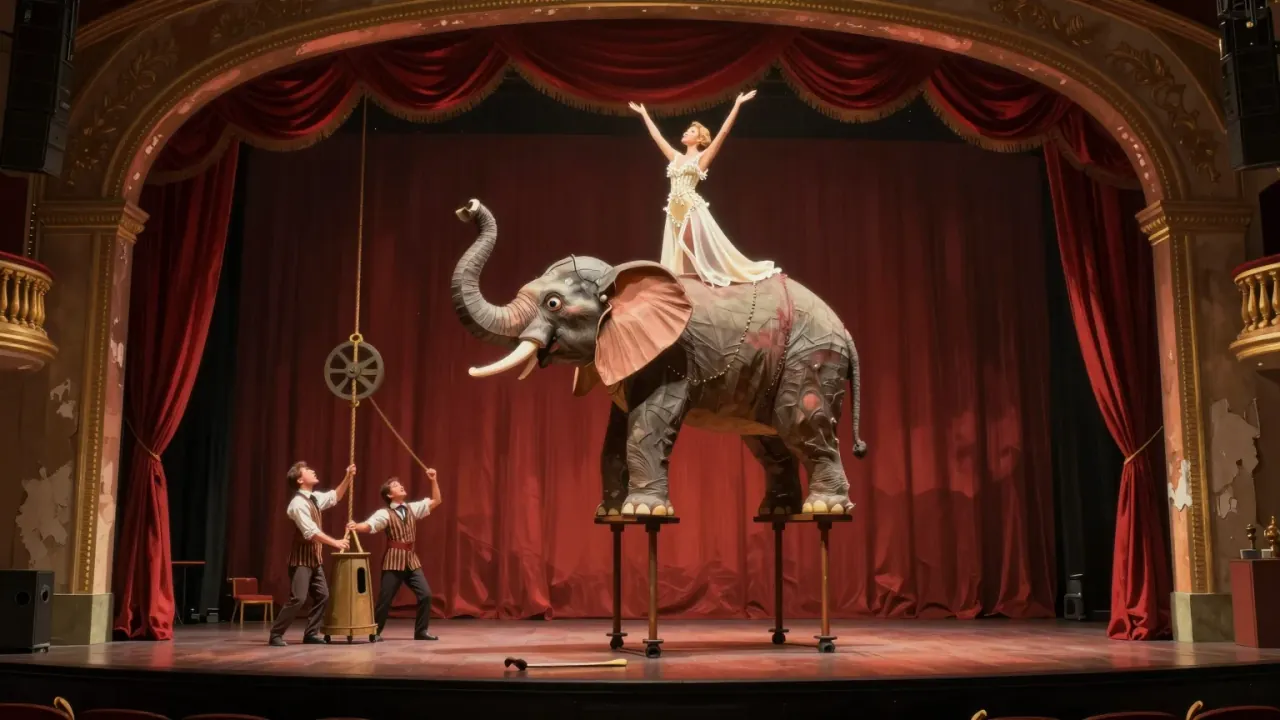
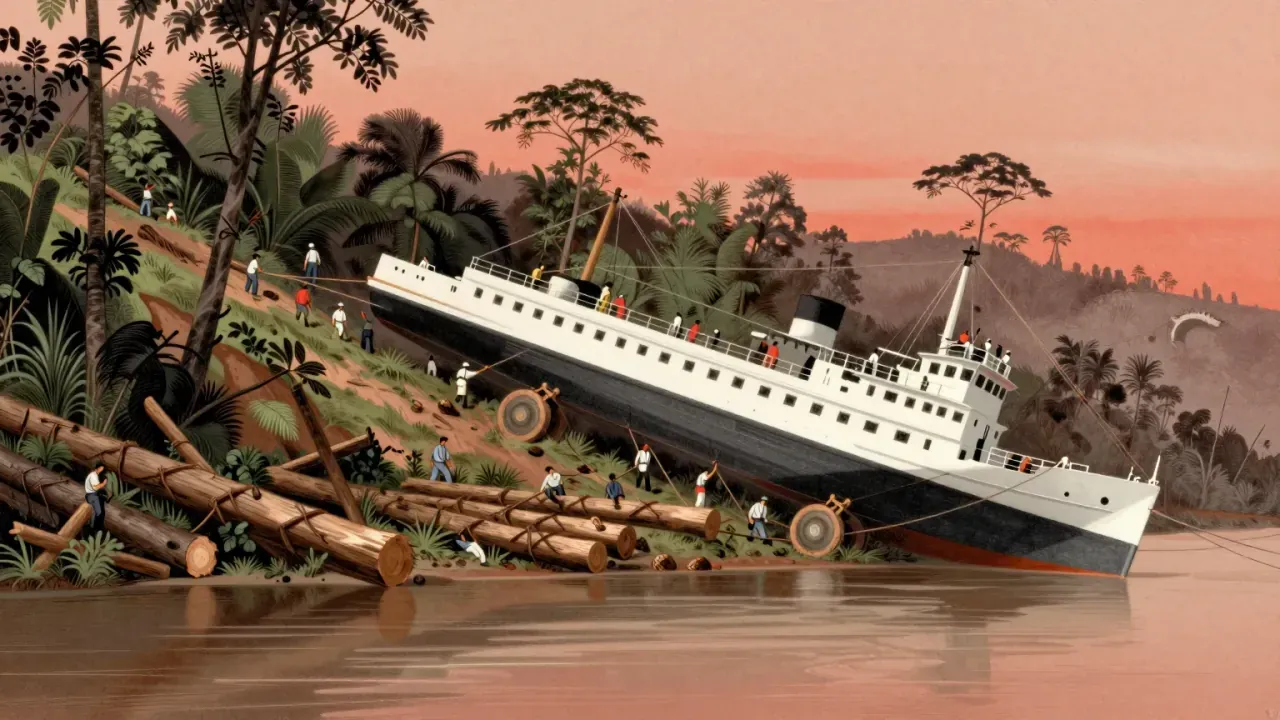
Fitzcarraldo (1982) is Werner Herzog’s telling of an Irishman in the Peruvian rubber boom who wants to bankroll an opera house by hauling a three-deck steamship over a muddy hill between two river systems, opening a stretch of unclaimed rubber territory otherwise sealed off by rapids. Herzog wrote, produced and directed it, casting Klaus Kinski as Brian Sweeney Fitzgerald after Jason Robards, the original star, contracted dysentery and was ordered home by doctors partway through the shoot. The character is loosely drawn from the real rubber baron Carlos Fitzcarrald, who moved a much smaller boat, dismantled into pieces, across a similar isthmus in the 1890s. Herzog inflated the tonnage and refused to fake the crossing, which is the decision the rest of the film turns on.
Hauling a 320-ton ship over a hill
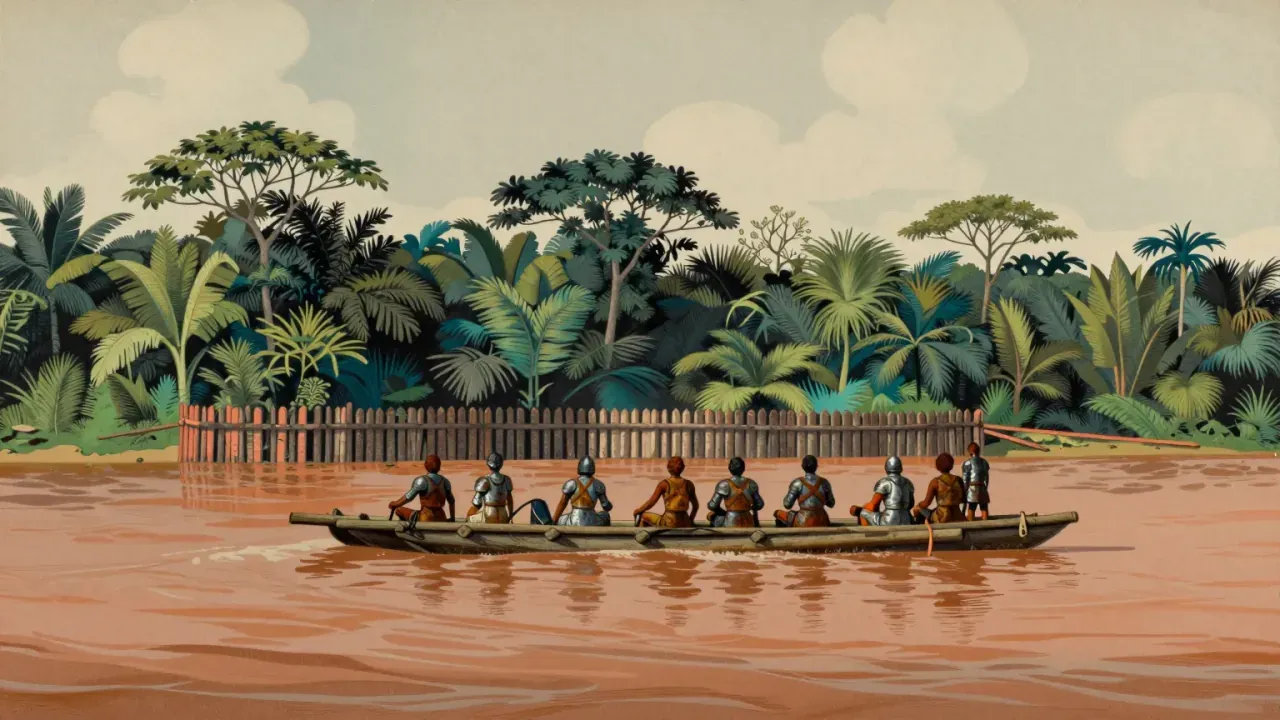
The hauling of the ship is real: Herzog had his crew winch the 320-ton vessel up a 40-degree slope using block and tackle, filmed without models or effects, and the strain shows in the footage; three crew members were injured in the attempt. Kinski’s performance runs on the same friction; he and Herzog had already clashed on three previous films, and the shoot was volatile enough that the Machiguenga extras hired as labourers asked Herzog’s permission to kill him, which Herzog declined only because he still needed him for the remaining scenes. Thomas Mauch’s camera keeps returning to the ship’s scale against the jungle rather than to Kinski’s face. Florian Fricke’s score and a scattering of opera recordings, Verdi, Puccini, Caruso himself, carry the film’s other subject, Fitzcarraldo’s fixation on bringing Enrico Caruso to the Amazon, across 158 minutes.
What the ship does that effects can’t
What the film earns is scale you can’t get any other way: because the ship really is being dragged up real mud by real winches and real men, the images carry a weight that models or compositing would drain out of them, and Herzog cuts to the labourers’ faces often enough that the ship’s ascent reads as their achievement rather than a special effect. Kinski, manic and largely unmoored from ordinary dialogue delivery, becomes plausible as a man nobody in Iquitos takes seriously, which the plot depends on. Herzog won the Best Director award at Cannes in 1982, and the film was nominated for the Palme d’Or; critics reviewing it at the time judged it a flawed but genuinely soaring piece of filmmaking, a verdict that has mostly held up since.
Where the plot thins
The film is far less interested in the people whose land this is than in Fitzcarraldo’s obsession, and the plotting shows it: the Amazonian crew who eventually walk out on the expedition are barely characterised, and the Aguaruna extras hired as labourers appear mostly as spectacle rather than participants with their own account of events. An anthropologist writing in The Progressive in 1982 alleged that relations with the Aguaruna soured badly once Herzog began building sets on their land without consulting the tribal council, and that Aguaruna men burned down one film set in December 1979. An Amnesty International inquiry, prompted by Herzog himself, found no evidence of mistreatment, but the film offers no vantage on any of this from inside the community it depended on.
Colonial ambition and its costs
Underneath the opera-house dream sits an ordinary colonial transaction: the Peruvian government has parcelled the Amazon basin into leases for private rubber extraction, and Fitzcarraldo’s plan only works because he finds the one parcel nobody else wanted, cut off from the river network by rapids. His girlfriend Molly, a brothel owner, funds the steamship purchase, commerce financing culture, more or less directly. The film never quite decides whether Fitzcarraldo is a visionary or simply another operator working the same extraction economy as the rubber barons he resents, and it doesn’t need to: the ship going over the hill is presented as proof of will independent of what the will is for. That refusal to moralise is also why the film keeps drawing comparisons between Herzog’s own methods on set and Fitzcarraldo’s on the river.
Who has the patience for this
This is a film for anyone curious about what happens when a director refuses every shortcut available to him; the steamship crossing is a genuine historical curiosity in film production, not just a plot device, and the Herzog-Kinski dynamic that produced it is its own story worth knowing before you watch. It rewards patience with the Amazon’s slow rhythms and Kinski’s unpredictable register, and it helps to have some tolerance for a colonial adventure narrative that doesn’t examine its own colonialism. It is not for viewers wanting a tight two-hour drama, or anyone who needs a film to interrogate the ethics of its own production rather than simply display them. The 158-minute runtime and its long stretches of river travel will test viewers looking for incident over atmosphere.
An evening built around obsession
Fitzcarraldo earns its reputation on the strength of one unrepeatable fact: nobody has hauled an actual ship over an actual hill for a film since, and the effort is visible in every frame of the ascent. That alone justifies the time for anyone interested in cinema as physical labour rather than illusion. Where it’s weaker, its treatment of the Indigenous people whose land and labour the production consumed, and its comparatively thin second half once the ship crests the hill, keeps it from being a film without reservations. Rotten Tomatoes lists a Tomatometer score of 75% against an average rating of 7.3 out of 10, figures that track with a film admired more for its audacity than loved unconditionally. Set aside an evening for it once, and you’ll likely remember the hill scene for years after everything else fades.