filmbriefs
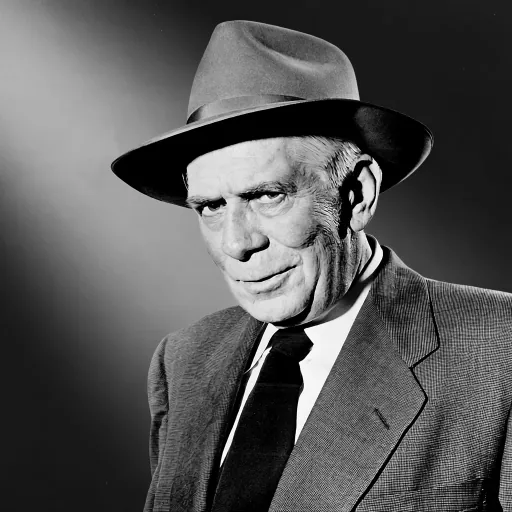
Actor · 1889–1965

Ray Collins

5
briefs
13:00
average
65 min
in total
On film.briefs5
13:00

Leave Her to Heaven

John M. Stahl · 1945

Leave Her to Heaven (1945), directed by John M. Stahl, is a Technicolor psychological drama starring Gene Tierney as Ellen Berent, a woman whose obsessive love curdles into calculated violence. Adapted by Jo Swerling from Ben Ames Williams’s novel, it uses Leon Shamroy’s precise cinematography and Tierney’s controlled performance to map the internal architecture of possession. Though some narrative threads remain underdeveloped and its protagonist’s passivity tests credulity, the film endures as a formally rigorous study of zero-sum love — selected for preservation by the Library of Congress in 2018.
13:00

The Heiress

William Wyler · 1949

William Wyler’s 1949 adaptation of Henry James’s Washington Square follows Catherine Sloper’s quiet, decades-long transformation from a cowed daughter into an unassailable heiress. Olivia de Havilland’s precisely calibrated performance, Leo Tover’s under-lit interiors, and Aaron Copland’s sparse score coalesce into a film that treats emotional deprivation as structural fact — not melodrama. It is austere, deliberate, and unsentimental, earning its acclaim through cumulative psychological precision rather than dramatic flourish.

13:00

The Magnificent Ambersons

Orson Welles · 1942

Orson Welles’s 1942 adaptation of Booth Tarkington’s novel traces the slow collapse of a wealthy Midwestern family amid industrial change. Though RKO cut over forty minutes and reshot the ending — destroying the excised footage — the surviving film remains a landmark of restrained, atmospheric storytelling, anchored by Agnes Moorehead’s performance and Stanley Cortez’s cinematography. Its power lies in what it implies, not what it states.

13:00

Touch of Evil

Orson Welles · 1958

Orson Welles’s 1958 *Touch of Evil*, shot by Russell Metty and scored by Henry Mancini, follows Mexican narcotics officer Miguel Vargas as he investigates a cross-border bombing amid institutional obstruction and moral decay. Though compromised by studio edits, its formal rigour, layered performances, and unsentimental treatment of power make it a cornerstone of American crime cinema.

13:00

Citizen Kane

Orson Welles · 1941

Orson Welles's 1941 debut tells the life of publishing baron Charles Foster Kane through the conflicting memories of the people who knew him, filmed by Gregg Toland in deep focus that keeps whole rooms in sharp relief at once. It cost RKO under $840,000, won a single Oscar out of nine nominations, and lost money on release before critics rebuilt its reputation from the 1950s onward.