filmbriefs
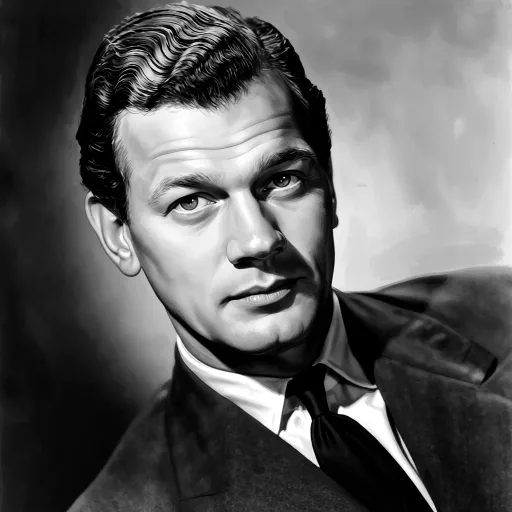
Actor · 1905–1994

Joseph Cotten

7
briefs
13:00
average
91 min
in total
On film.briefs7
13:00

F for Fake

Orson Welles · 1973

Orson Welles’s 1973 essay-film F for Fake uses the lives of art forger Elmyr de Hory and hoax biographer Clifford Irving to dissect authorship, authenticity, and the cinematic construction of truth. Shot across France, Spain, Italy, and the US, it layers re-enactments, spliced interviews, and fabricated footage — including a wholly invented War of the Worlds scene — to demonstrate how belief is engineered through editing, voice, and framing. With François Reichenbach as cinematographer and Michel Legrand scoring its sly, jazz-inflected passages, the film refuses documentary convention in favour of procedural argument. Its themes — self-deception, the economics of attribution, and the gendered politics of credibility — remain urgent. Though demanding, its 89-minute run is tightly controlled, its provocations precise.
13:00

Heaven's Gate

Michael Cimino · 1980

Michael Cimino’s 1980 Western Heaven’s Gate, starring Kris Kristofferson and Christopher Walken, is a visually sumptuous but narratively austere epic loosely based on the Johnson County War. Shot by Vilmos Zsigmond and scored by David Mansfield, it attempts to render class conflict as landscape and duration. Though reviled on release for its cost and length, later reappraisals treat it as a landmark of directorial conviction — flawed, forbidding, and formally uncompromising.

13:00

Othello

Orson Welles · 1951

Orson Welles’s 1951 Othello is a self-financed, erratically shot adaptation of Shakespeare’s tragedy, filmed across Morocco, Venice and Rome between 1949 and 1951. Starring Welles as Othello and Micheál Mac Liammóir as Iago, it won the Palme d’Or in 1952 but reached US audiences only in 1955 — in a heavily altered version. A 1992 restoration, supervised by Welles’s daughter, became the default home-video release despite widespread criticism of its dubbing, re-recorded score and departures from Welles’s original cut. The film’s power lies in its stark, discontinuous style and unwavering focus on the mechanics of belief and betrayal.

13:00

The Magnificent Ambersons

Orson Welles · 1942

Orson Welles’s 1942 adaptation of Booth Tarkington’s novel traces the slow collapse of a wealthy Midwestern family amid industrial change. Though RKO cut over forty minutes and reshot the ending — destroying the excised footage — the surviving film remains a landmark of restrained, atmospheric storytelling, anchored by Agnes Moorehead’s performance and Stanley Cortez’s cinematography. Its power lies in what it implies, not what it states.

13:00

Touch of Evil

Orson Welles · 1958

Orson Welles’s 1958 *Touch of Evil*, shot by Russell Metty and scored by Henry Mancini, follows Mexican narcotics officer Miguel Vargas as he investigates a cross-border bombing amid institutional obstruction and moral decay. Though compromised by studio edits, its formal rigour, layered performances, and unsentimental treatment of power make it a cornerstone of American crime cinema.

13:00

The Third Man

Carol Reed · 1949

Set in ruined, four-zone Vienna, Carol Reed’s 1949 noir follows an American writer searching for his vanished friend, only to uncover layers of betrayal, black-market complicity, and compromised ideals. Shot on location with stark, expressionist-influenced cinematography by Robert Krasker and scored entirely on zither by Anton Karas, it sustains a mood of exhausted ambiguity. Its power lies in what it withholds: explanation, catharsis, closure.

13:00

Citizen Kane

Orson Welles · 1941

Orson Welles's 1941 debut tells the life of publishing baron Charles Foster Kane through the conflicting memories of the people who knew him, filmed by Gregg Toland in deep focus that keeps whole rooms in sharp relief at once. It cost RKO under $840,000, won a single Oscar out of nine nominations, and lost money on release before critics rebuilt its reputation from the 1950s onward.