filmbriefs
Cinematographer · 1940–2018

Robby Müller

12
briefs
13:00
average
156 min
in total
On film.briefs12
13:00

Alice in the Cities

Wim Wenders · 1974

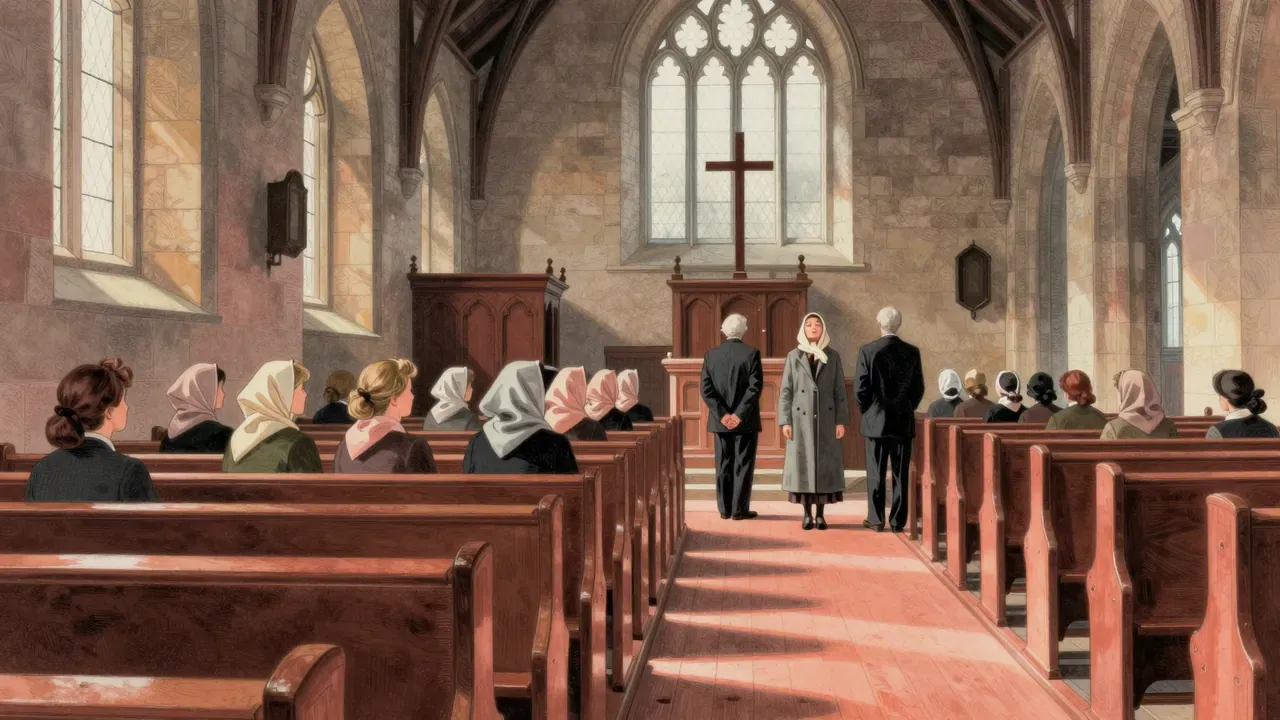
Wim Wenders’ 1974 road film follows a stalled writer and a nine-year-old girl as they search across Germany for her estranged grandmother. Shot in black-and-white 16 mm by Robby Müller, it favours duration over exposition, silence over speech, and observation over explanation. Its power lies in restraint: in the weight of a glance, the rhythm of a bus ride, the quiet persistence of mutual attention.
13:00

Breaking the Waves

Lars von Trier · 1996

Breaking the Waves (1996), directed by Lars von Trier, follows Bess McNeill, a devout young woman in the Scottish Highlands, whose literal interpretation of love and faith leads her to increasingly harrowing acts of self-sacrifice after her husband is paralysed. Shot on location in Scotland and in Danish studios, with Robby Müller’s handheld cinematography and Emily Watson’s breakthrough performance, it is a morally uncompromising drama about belief, gender, and communal judgment—neither a Dogme 95 film nor a conventional religious parable, but something starker and more enduring.

13:00

Dead Man

Jim Jarmusch · 1995

Dead Man (1995) is Jim Jarmusch’s monochrome acid western starring Johnny Depp as a fatally wounded accountant guided west by Gary Farmer’s enigmatic Native American spirit-guide Nobody. Shot by Robby Müller and scored by Neil Young, it rejects narrative convention in favour of ritual, silence, and poetic logic — foregrounding Indigenous epistemology, untranslated Cree and Blackfoot dialogue, and a vision of landscape as sentient participant. Though critically divisive on release, it has since been reassessed as a singular, austere meditation on mortality, colonialism, and perception.

13:00

Down by Law

Jim Jarmusch · 1986

Jim Jarmusch’s 1986 black-and-white arthouse film follows three mismatched convicts — a radio DJ, a pimp, and an Italian immigrant — who escape from a New Orleans prison into the Louisiana bayou. With minimal plot, deliberate pacing, and Robby Müller’s stark cinematography, it foregrounds texture, silence, and the quiet evolution of trust over conventional narrative drive. Starring Tom Waits, John Lurie, and Roberto Benigni, it is a study in tonal precision, linguistic friction, and the unforced poetry of ordinary endurance.

13:00

Ghost Dog: The Way of the Samurai

Jim Jarmusch · 1999

Ghost Dog: The Way of the Samurai (1999) follows a Black hitman in New Jersey who lives by the samurai code of Hagakure while working for an Italian-American crime family. Directed by Jim Jarmusch and scored by RZA, it unfolds with deliberate stillness, using Robby Müller’s restrained cinematography and Forest Whitaker’s physically precise performance to sustain a world where ritual, silence, and cross-cultural synthesis are structural facts, not themes to be explained.

13:00

Kings of the Road

Wim Wenders · 1976

Wim Wenders’ 1976 Kings of the Road follows a projection-equipment repairman driving along West Germany’s side of the inner-German border, fixing decaying cinemas and sharing his cab with a man recovering from emotional collapse. Shot in black and white by Robby Müller, with sparse dialogue and long, observational takes, it is less a story than a sustained mood — one of quiet endurance, technical care, and landscape-as-character. Its 168-minute runtime tests attention but rewards it with granular detail and unsentimental humanity.

13:00

Mystery Train

Jim Jarmusch · 1989

Mystery Train is Jim Jarmusch’s 1989 triptych set over one night in Memphis, following a Japanese couple, an Italian widow, and a disoriented Englishman as they navigate the city’s margins. Shot in controlled colour by Robby Müller and scored sparsely by John Lurie, it treats narrative as variation rather than progression. Though critically acclaimed and formally assured, its third segment falters under schematic weight. It rewards patient attention with cumulative texture, not plot resolution.

13:00

Repo Man

Alex Cox · 1984

Alex Cox’s 1984 debut follows a disillusioned punk (Emilio Estevez) who joins a car repossession agency in Los Angeles, only to become entangled in a surreal chase for a radioactive Chevrolet Malibu linked to extraterrestrials. Shot on location by Robby Müller and scored by Tito Larriva and punk bands including Black Flag and Iggy Pop, the film uses deadpan absurdity to dissect Reagan-era consumerism, bureaucracy, and Cold War anxiety. It has endured as a cult object for its texture, not its plot.

13:00

The American Friend

Wim Wenders · 1977

Wim Wenders’ 1977 adaptation of Patricia Highsmith’s Ripley’s Game stars Bruno Ganz as a terminally ill picture framer drawn into murder by Dennis Hopper’s enigmatic American, Tom Ripley. Shot in Hamburg and Paris by Robby Müller, with a sparse score by Jürgen Knieper, the film treats the thriller form as a vessel for existential portraiture — prioritising texture, hesitation, and linguistic nuance over plot mechanics. Its power lies in accumulation, not revelation.

13:00

Wrong Move

Wim Wenders · 1975

Wrong Move (1975), directed by Wim Wenders and written with Peter Handke, follows Wilhelm Meister’s journey across West Germany as he attempts to become a writer. Shot by Robby Müller with stark, painterly compositions, the film reframes Goethe’s Bildungsroman as a critique of Romantic self-making. Its sparse dialogue, detached performances, and refusal of catharsis make it the most philosophically dense and emotionally austere entry in Wenders’ Road Movie trilogy.

13:00

Until the End of the World

Wim Wenders · 1991

Wim Wenders’ 1991 epic follows Claire and Sam across continents as they evade bounty hunters and test a camera that lets the blind see recorded experiences. Shot across eleven countries with Robby Müller, it treats the road movie as philosophical drift — prioritising texture, duration, and the fragility of perception over plot or resolution.

13:00

Paris, Texas

Wim Wenders · 1984

A man wanders out of the Texas desert after four unexplained years, and Wim Wenders spends 147 patient minutes on what it costs him to reclaim a son and finally speak to the wife he left behind.