The opening at the hospital
Loving Couples is Mai Zetterling’s 1964 debut feature, a Swedish drama structured around three women converging at a maternity hospital in the summer of 1914. It attempts to map the social and psychic terrain of pre-war Swedish class hierarchy through interwoven biographies — Angela, niece of estate owner Petra von Pahlen; Adèle, wife of a tenant farmer; and Agda, a maid married by arrangement to an artist. The film uses flashbacks not for exposition but as psychological layering: childhood humiliations, erotic awakenings, coercive intimacies, and the quiet violence of inheritance all fold into the present moment of childbirth. Its ambition is structural and political — to treat birth not as resolution but as culmination, and to place female subjectivity at the centre of historical transition. It does not seek narrative closure but rhythmic recurrence: each woman’s story circles back to Eka gård, to Midsummer Eve, to the war’s sudden arrival, and finally to the hospital where their bodies become sites of both rupture and continuity. This is not a period piece about manners; it is a study in how power settles into posture, speech, and silence.
The three timelines
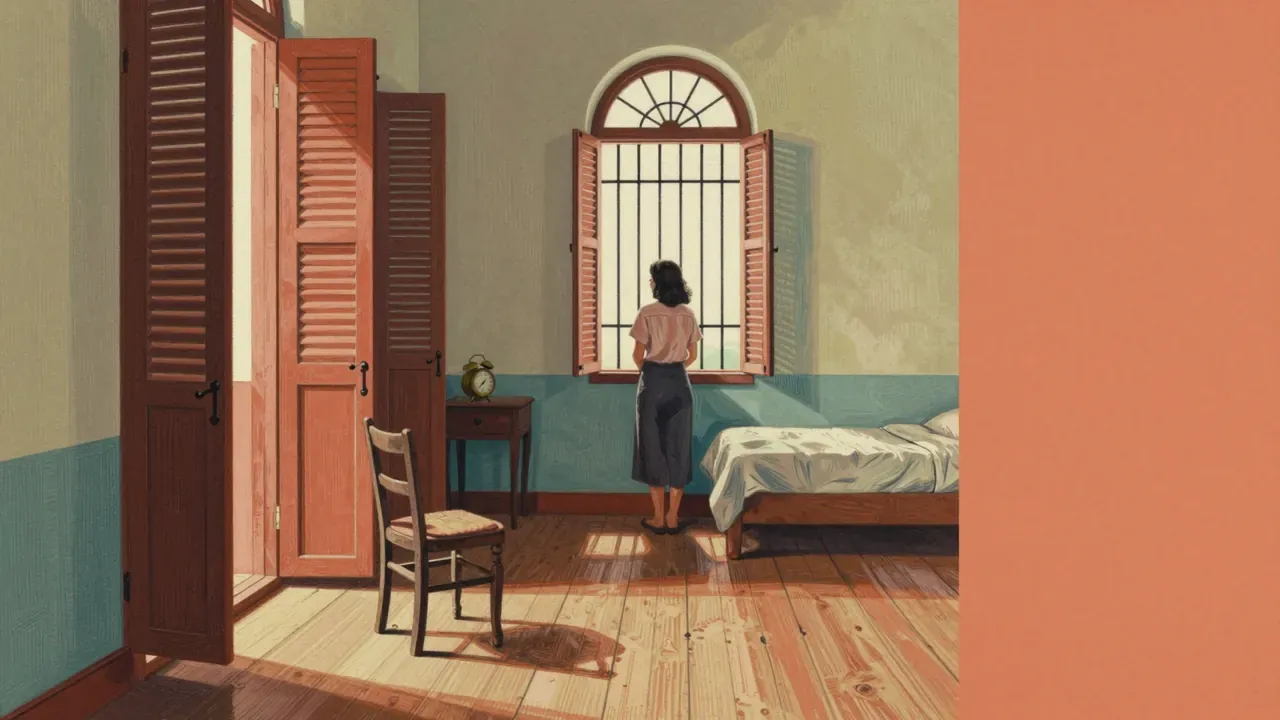
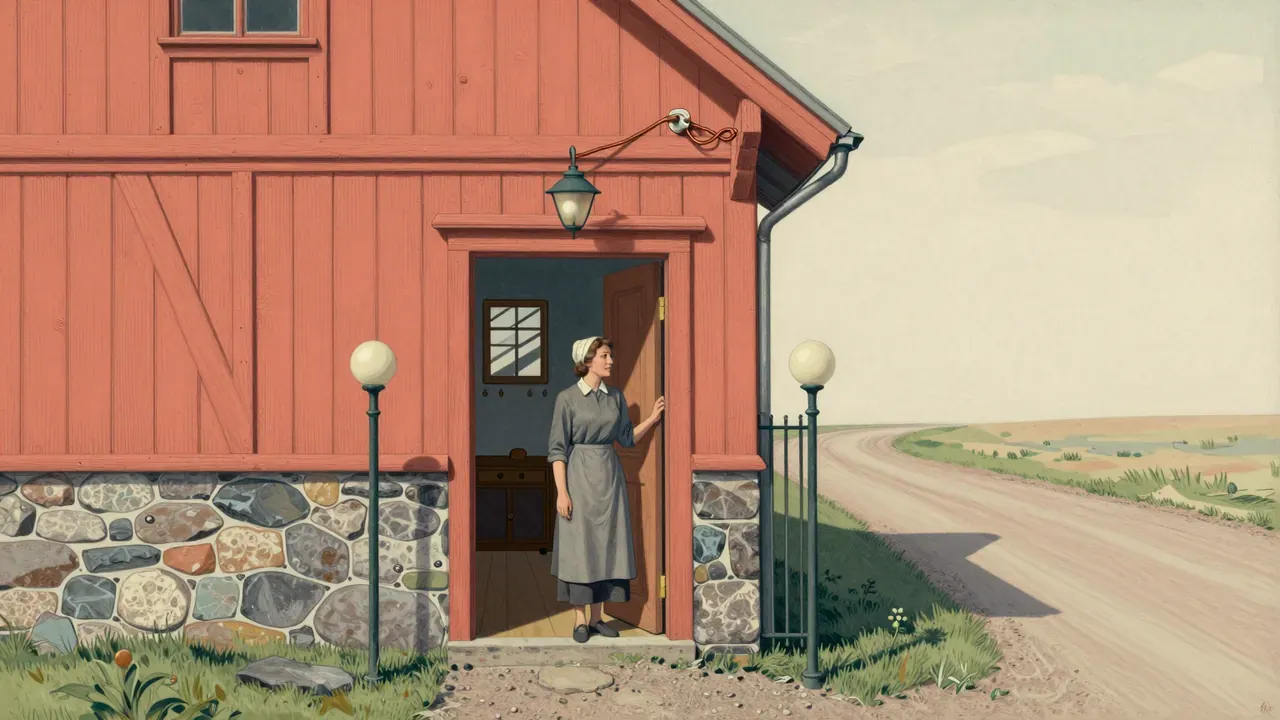
The film works through restraint and accumulation. Sven Nykvist’s cinematography avoids flourish: interiors are lit with the flat, even clarity of early daylight, faces held in medium shot without emphasis or evasion. Performances are muted but precise — Harriet Andersson’s Agda carries warmth without sentimentality, Gunnel Lindblom’s Adèle sustains bitterness like breath, Gio Petré’s Angela moves between reserve and flickers of agency without overstatement. The script, written by Zetterling herself, parcels information sparingly: a glance at a station platform, a Salvation Army hymn drowned out at dinner, a doctor’s hands adjusting a speculum — these are the film’s syntax. Editing is elliptical but never obscure; time folds cleanly between memory and present, schoolroom and operating theatre. Roger Wallis’s score is sparse, mostly absent, letting diegetic sound — footsteps on gravel, a baby’s first cry, the whirr of newly installed electric wiring — carry weight. There are no montages, no voiceover, no symbolic objects left unexplained. What holds it together is not plot logic but tonal consistency: a steady, unsentimental gaze that refuses to flinch from discomfort or ambiguity.
The look of it
What lands is the film’s refusal to moralise its characters’ compromises. Agda’s marriage of convenience reads not as defeat but as negotiation; Adèle’s drunken rage at Midsummer is neither pitied nor excused, but registered as consequence; Angela’s final childbirth — real, uncut, filmed in documentary style — lands not as shock but as culmination: the body asserting itself against narrative expectation. The hospital scenes work because they are anchored in procedural realism: Dr. Lewin’s calm authority, the nurses’ efficient movements, the clinical detachment that makes the emotional weight more palpable. The film’s structure also lands: the triple timeline does not confuse but clarifies, revealing how each woman’s past conditions her response to the same historical pivot — the outbreak of war, the arrival of electricity, the end of certainty. Even minor roles register: Eva Dahlbeck’s Mrs. Landborg is all poised condescension, Åke Grönberg’s ‘fat man’ a brief, unsettling presence whose function is purely atmospheric. Nothing feels decorative; every scene serves the central question: what does it cost a woman to remain visible within a system designed to erase her?
The party at Ösa
What does not land is the framing device’s occasional stiffness. The hospital setting, though conceptually strong, sometimes functions more as a narrative hinge than a lived space — the transitions between flashback and present feel less organic in the second half, as if the film’s structural discipline begins to override its emotional rhythm. Some flashbacks, particularly Angela’s boarding-school episodes, risk abstraction: the erotic tension with teacher Bell is suggested rather than embodied, leaving the viewer to infer stakes that the performance does not fully convey. The male characters remain broadly functional — Thomas Möller, Bernhard Landborg, Stellan von Pahlen — drawn with enough specificity to avoid caricature but lacking the interiority granted to the three leads. This is not a flaw in intention — Zetterling clearly subordinates them — but it means their motivations occasionally read as schematic, especially Bernhard’s abrupt shift from seducer to annuity provider. The film’s austerity, which serves it so well elsewhere, here edges toward withholding: some silences feel earned, others merely empty.
The new era
The themes that matter are inheritance, consent, and visibility. Not just of property or title — though Petra von Pahlen’s estate and the Landborgs’ neighbouring wealth anchor the class critique — but of bodily autonomy, narrative authority, and historical record. Each woman inherits something she did not choose: Angela inherits privilege and expectation; Adèle inherits debt and disgrace; Agda inherits labour and surveillance. Their pregnancies are not metaphors but material facts, shaped by access to care, legal status, and social permission. Consent operates across registers: sexual, marital, medical — often negotiated under duress or misrepresentation. And visibility is contested throughout: Agda singing while talked over, Adèle’s fury dismissed as hysteria, Angela’s labour filmed without commentary — all point to who gets to be seen, heard, and believed. The film treats feminism not as ideology but as practice: the daily labour of holding space, making decisions under constraint, and insisting on one’s own chronology when history insists on erasure.
The births
It is for viewers who value structural rigour over narrative ease, who find resonance in understatement, and who are comfortable sitting with unresolved tension. It rewards attention to gesture, lighting, and pacing rather than plot turns. Those who expect clear character arcs or cathartic resolution will leave frustrated — this is not a film that offers comfort or vindication. It is not for viewers who require exposition, emotional signposting, or moral clarity. Anyone seeking conventional romance, wartime heroism, or psychological exposition will find it withholding. Disagreement would come from those who see formal restraint as emotional distance — critics who value expressive camerawork or heightened performance may find Nykvist’s flatness and Zetterling’s stillness alienating. A different verdict would follow if the film offered more interiority in its male figures or allowed its flashbacks greater sensory texture — but that would change its purpose, not improve it.
The final frame
Yes, it is worth your evening — provided you arrive prepared to meet it on its terms. It demands patience, not passivity: the 118 minutes unfold deliberately, each scene weighted, none expendable. Its power accumulates slowly, like pressure before a storm — the final childbirth sequence lands with force precisely because the film has spent so long refusing spectacle. It is not entertainment in the habitual sense, but it is deeply engaged with how lives are shaped by forces too large to name and too intimate to ignore. Those who watch for immersion in story may feel distanced; those who watch for insight into form, history, and embodiment will find it richly rewarding. Its value lies not in what it explains but in what it insists you notice: the tilt of a head, the pause before a sentence, the way light falls on a hospital wall. That attentiveness is rare, and worth the time it asks.