The look of it
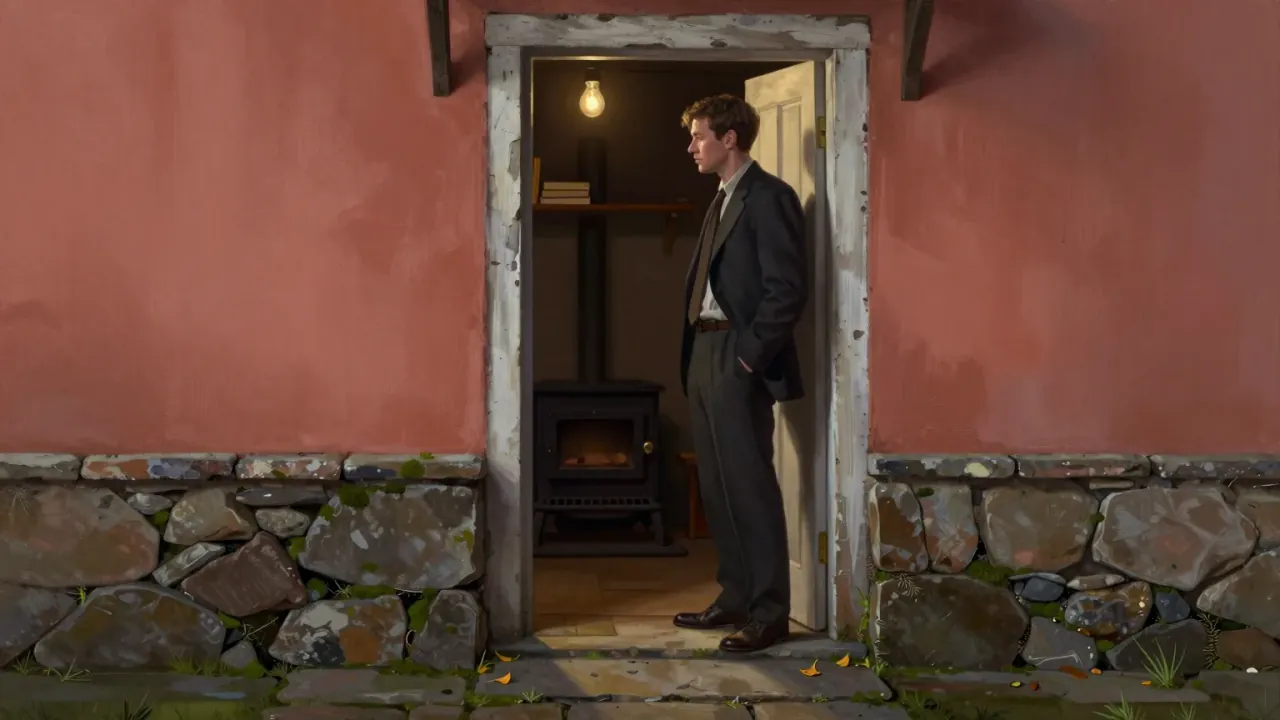
Phantom Thread is a psychological period drama set in 1950s London, centred on Reynolds Woodcock, a fastidious haute couture dressmaker whose creative rigour masks deep emotional rigidity. Paul Thomas Anderson writes, directs, and serves as cinematographer — his first film shot outside the US and his second with Daniel Day-Lewis. The film attempts something precise: to dramatise the interdependence of control and vulnerability in an intimate relationship, using fashion not as backdrop but as grammar — every seam, stitch, and fitting room silence calibrated to express power, care, and coercion. It avoids biographical literalism but borrows texture from real figures: Charles James’s obsessive precision, Balenciaga’s sculptural severity. Anderson treats the dressmaking process as ritual, not craft; the atelier as confessional, not workplace. There is no grand historical pivot or external threat — the stakes are internal, domestic, physiological. The film’s ambition lies in sustaining tension through restraint: no car chases, no betrayals of state, only the slow recalibration of two people learning how much autonomy each can surrender without dissolving. It is less about mid-century fashion than about the architecture of mutual dependency disguised as hierarchy. (158 words)
The shape of it
The story unfolds in measured, almost symphonic movements: courtship, integration, rupture, illness, renegotiation, and uneasy synthesis. Day-Lewis’s performance is exacting but never ornamental — his Reynolds speaks in clipped cadences, breathes through his nose like a man holding back panic, and moves with the economy of someone who has rationed every gesture for decades. Vicky Krieps matches him beat for beat, her Alma gaining authority not through volume but through stillness, timing, and quiet agency — particularly in the two poisoning sequences, which land not as shocks but as logical extensions of her character’s growing fluency in Reynolds’s language of control. Lesley Manville’s Cyril is the film’s structural counterweight: dry, observant, loyal without sentimentality. Anderson’s cinematography — shot on 35mm, deliberately underexposed and hazed — rejects the glossy clarity of prestige television, favouring a tactile, slightly muffled world where light pools unevenly and faces emerge from shadow. Jonny Greenwood’s score, present for nearly ninety minutes, avoids leitmotif in favour of nervous, plucked strings and sudden silences that function like needle drops in fabric. Dylan Tichenor’s editing sustains rhythm without urgency, letting scenes breathe just past comfort. (159 words)
The weight of it
What lands most decisively is the film’s central dynamic: the way love and domination coexist, not as contradictions but as reciprocal conditions. Alma’s poisonings are neither revenge nor madness but calibrated interventions — acts of care that require cruelty to be legible within Reynolds’s moral and sensory universe. The scene where he swallows the omelet and demands a kiss before vomiting is not theatrical bravado but the first moment he chooses her terms over his own. The costume design — winner of the Academy Award — does more than evoke 1950s elegance; it renders psychology visible: stiff collars, hidden linings, seams that both bind and reveal. The production design, anchored in Owlpen Manor and Fitzroy Square, feels lived-in rather than curated — wallpaper peels subtly, teacups retain faint lipstick marks, and Reynolds’s Bristol 405 sits in the drive like a dormant animal. Even minor performances register with weight: Richard Graham’s brief turn as a nervous client conveys decades of social anxiety in three lines. The film’s refusal to explain Alma’s background — her accent, her origins, her pre-Reynolds life — works as discipline, not omission. Her mystery is structural, not lazy. And the final image — Alma stitching a label into a gown while Reynolds watches, unsmiling but unresisting — lands with the quiet force of a treaty signed in thread. (157 words)
The strain in it
What does not land is the film’s occasional drift into self-conscious stylisation, particularly in its second half. The Swiss interlude — honeymoon shots of Lake Brienz and the Grandhotel Giessbach — feels detached from the film’s core tension, visually sumptuous but narratively inert, as if Anderson paused the engine to admire the chassis. Some supporting characters remain stubbornly opaque: Camilla Rutherford’s Lady Harding appears only twice, her defection to a rival house registered as plot point rather than emotional event. The film’s resistance to exposition occasionally tips into obscurity — Cyril’s motivations beyond loyalty are never probed, and her late-line ‘He’s not getting any younger’ carries weight only if the viewer supplies subtext the script withholds. The mushroom poisonings, while thematically coherent, risk allegorical overreach: their recurrence strains plausibility not as medical fact but as behavioural logic — would Alma truly repeat a method that nearly killed him, without variation or escalation? The film assumes we accept her actions as metaphor first, personhood second. And though Greenwood’s score is omnipresent, its near-constant presence dulls its impact in places; a single sustained cello note might have unsettled more than three minutes of skittering strings. These are not failures of craft but of calibration — moments where precision curdles into preciousness. (156 words)
The pattern in it
The themes that matter are not those of era or industry but of reciprocity under constraint. Phantom Thread treats creativity not as inspiration but as maintenance — a daily act of boundary-setting that requires constant reinforcement. Control here is not tyranny but self-preservation; vulnerability is not weakness but the necessary condition for change. The film interrogates how intimacy forms when one party defines reality and the other must learn its grammar before speaking back. Fashion functions as both metaphor and material: garments are armour, confession, inheritance, and weapon — all at once. The recurring motif of hidden messages stitched into linings speaks to the unspeakable made tangible, the private made permanent. Time is another theme: 1954 is chosen not for post-war rupture but for its suspended modernity — telephones exist but feel intrusive, cars are elegant but slow, and the atelier operates on a clock calibrated to handwork, not deadlines. Gender is handled without polemic: Cyril manages the business, Alma rewrites the rules of the household, Reynolds submits not to femininity but to specificity — to Alma’s particular will, not to womanhood as category. The film’s deepest concern is with systems — of labour, love, and legacy — and how they hold only as long as all parties consent, however silently, to their terms. (159 words)
The fit of it
This film is for viewers who value slowness as strategy, not deficiency; who find tension in withheld glances and unresolved pauses; who trust actors to convey history in a blink and composers to imply motive in a harmonic shift. It rewards attention to texture — the rustle of taffeta, the grain of wood panelling, the slight tremor in a hand holding scissors. It is not for those who require narrative propulsion, clear moral coordinates, or emotional signposting. Anyone needing explicit motivation, cause-and-effect causality, or cathartic release will find it withholding — not enigmatic, but indifferent. Some critics have called it emotionally distant; others, like Mark Kermode, found it tender. That disagreement is built into the film: its ambiguity is structural, not accidental. A viewer who dislikes Day-Lewis’s mannered delivery or finds Greenwood’s score oppressive will not warm to the film with repeated viewings — its methods are inseparable from its meaning. To change the verdict, the film would need to loosen its grip on restraint, but that would dissolve its central proposition: that love between certain people is negotiated in silences, stitches, and swallowed bites. (158 words)
The finish of it
Yes, it is worth your evening — provided you arrive prepared to sit inside its rhythms rather than wait for them to yield. Its 130 minutes pass without hurry but also without dead air; every scene earns its duration through accumulation, not exposition. The film’s reward is cumulative: the satisfaction of watching two people slowly, painfully, invent a new grammar of closeness. It is not entertainment in the transactional sense, but it is deeply absorbing — a rare case where craft and theme are indistinguishable. Those who leave disappointed often expected a psychological thriller or a romance with resolution; what they get instead is a chamber piece about mutual recalibration, played on instruments tuned to very fine tolerances. The box office return of 1.4x reflects its niche appeal — it was never aiming for broad uptake. But for its intended audience — patient, attentive, attuned to subtext — it delivers a singular experience: not catharsis, but quiet recognition. You do not finish it exhilarated, but you may find yourself thinking about it for days, unpicking its seams like Alma unpicks a hem. (157 words)