The look of it
Chak De! India is a Hindi-language sports drama produced by Yash Raj Films and released in 2007. It tells the story of Kabir Khan, a disgraced former captain of the Indian men’s national field hockey team, who takes charge of the women’s national squad seven years after being accused of throwing a match against Pakistan. His task is to unify sixteen players from disparate regional, linguistic, and class backgrounds into a competitive unit capable of winning international honours. The film sets itself within the conventions of the underdog sports narrative but anchors its stakes not in individual redemption alone, but in collective discipline, institutional neglect of women’s sport, and the quiet erosion of dignity through prejudice. It attempts something rare in mainstream Hindi cinema: a sustained focus on women’s athletic labour, with minimal romantic subplots, no lip-synced musical interludes, and no narrative deference to a single star—even Shah Rukh Khan’s character functions as catalyst and frame, not centre. Its ambition is structural as much as emotional: to make hockey legible, credible, and urgent on screen, while treating each player as a person before she is an athlete. (152 words)
The shape of the team
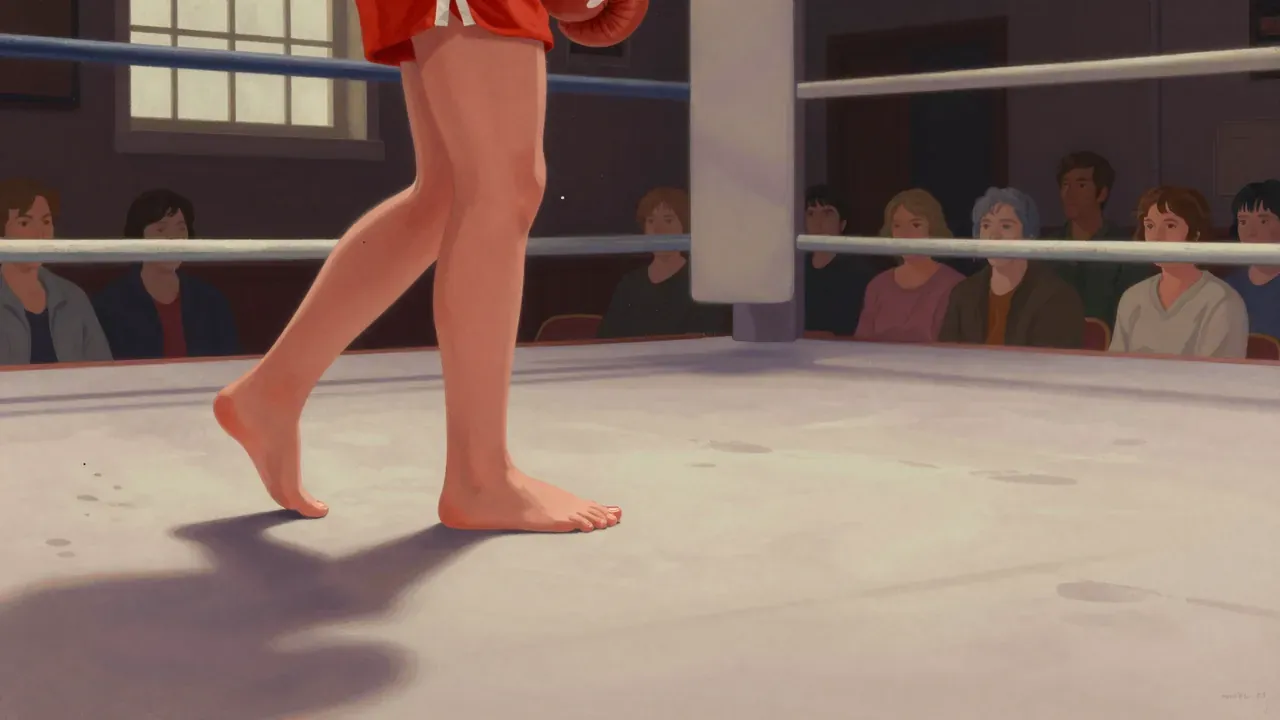
The story unfolds across a clear three-act arc—recruitment, fracturing, reassembly—with Jaideep Sahni’s screenplay giving each of the sixteen players at least one defining moment that reveals social background, personal grievance, or unspoken resilience. Shah Rukh Khan delivers a tightly coiled performance: restrained, physically precise, avoiding both caricature and sentimentality. The supporting cast, largely unknown at the time, are uniformly grounded; their hockey movements are credibly awkward early on, then gradually assured—not through montage alone, but through visible repetition, fatigue, and error. Sudeep Chatterjee’s cinematography favours mid-shots and shallow focus during training sequences, keeping the camera low and close to the turf to emphasise effort over spectacle. Amitabh Shukla’s editing sustains rhythm without rushing: pauses between drills feel earned, silences after arguments land with weight. Salim-Sulaiman’s score avoids orchestral swells, using percussion-led motifs that mirror stick-work and breath control. Rob Miller’s choreography treats hockey as choreographed labour—not dance, not fight, but repetitive, muscular negotiation with gravity and friction. (158 words)
How it holds together
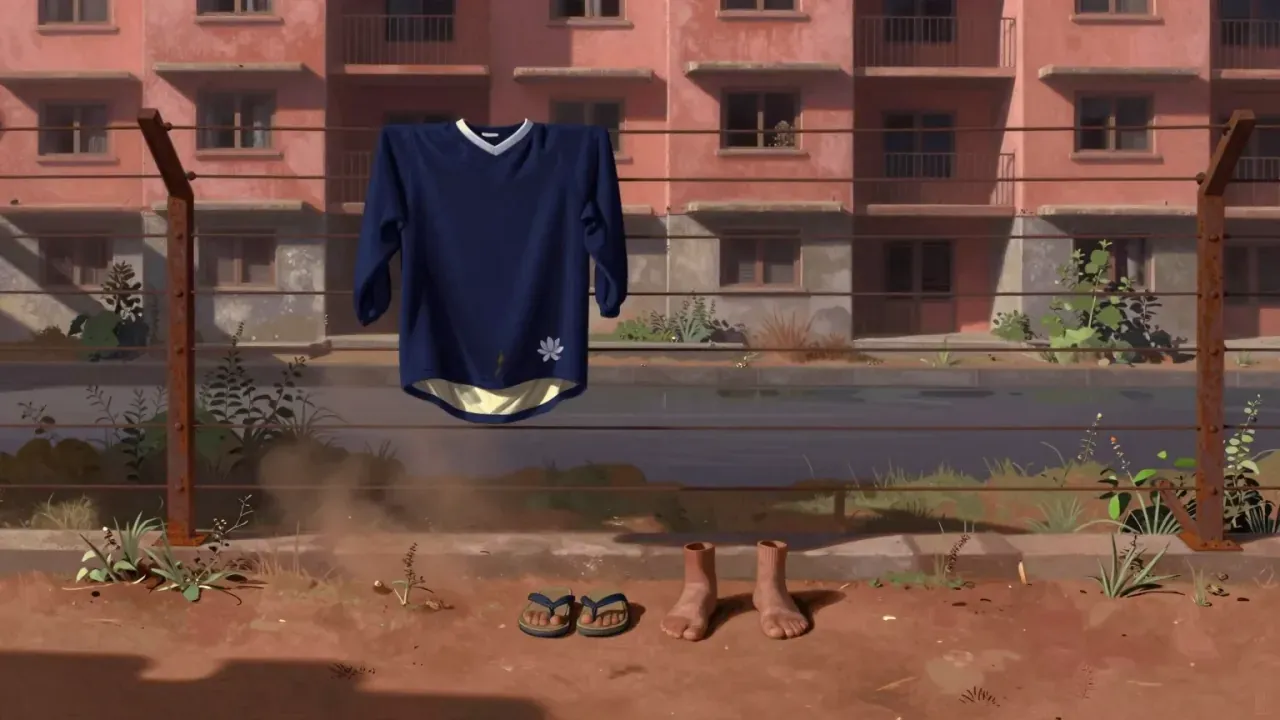
What lands most firmly is the film’s refusal to treat unity as spontaneous or sentimental. The team’s cohesion emerges not from speeches but from shared exhaustion, mutual correction during drills, and small acts of accountability—like a player returning a borrowed jersey without being asked. The hockey scenes hold up because they show process: missed passes, misjudged tackles, recovery runs that go nowhere. Even the final match avoids conventional climaxing; victory arrives not with a last-minute goal but through accumulated pressure, tactical patience, and defensive resilience. The film’s feminist argument is embedded in structure: no female character exists solely to reflect on Khan, no subplot hinges on romance or domestic duty, and no injury or setback is resolved off-screen. Vidya Malvade’s character, the team’s vice-captain, carries authority without exposition; Shilpa Shukla’s coach offers institutional memory without exposition. The dialogue avoids slogans: when players argue about caste or region, it is specific, unvarnished, and unresolved until action—not rhetoric—bridges the gap. The title phrase ‘Chak De!’ functions not as exclamation but as instruction: a call to lift, to reset, to begin again. That repetition, across contexts and characters, gives the film its quiet, cumulative force. (156 words)
Where it steps back
What does not land is the framing device of Khan’s personal redemption arc. His backstory—religious suspicion, public shaming, seven years of obscurity—is sketched with broad strokes and little psychological texture. The film never explores how his own privilege as a man and former elite athlete shapes his authority over the women, nor does it interrogate whether his return to coaching is an act of atonement or reassertion. A few secondary characters dissolve into type: the ‘angry North Indian’, the ‘quiet South Indian’, the ‘rebellious Muslim girl’—traits introduced but rarely deepened beyond plot function. The opposition teams lack presence or personality; rival coaches are faceless, their tactics invisible. Some training montages rely too heavily on rhythmic editing and percussive scoring, momentarily slipping into generic uplift rather than lived exertion. The film also sidesteps systemic questions: there is no depiction of funding shortfalls, media neglect, or infrastructure decay—only individual failure and individual triumph. When the team wins the World Cup, the celebration feels emotionally earned but institutionally unmoored: no minister appears, no policy shifts, no follow-up on what happens next for any player beyond a brief epilogue. The film’s realism stops where bureaucracy begins. (154 words)
What it believes in
The themes that matter are discipline as resistance, visibility as labour, and collectivity as method. The film treats hockey not as metaphor but as practice—repetition, injury, positional awareness, split-second decision-making—all of which demand attention the camera grants without embellishment. It foregrounds how women’s sport in India is made invisible not by absence but by active erasure: empty stands, indifferent officials, delayed travel permits, mismatched kits. The players’ conflicts—over language, religion, class—are not resolved through dialogue but through shared physical consequence: a missed pass costs everyone the same. Leadership here is distributed: Khan delegates set-piece calls, Malvade mediates disputes, Chitrashi Rawat’s character organises logistics. The film’s feminism is procedural, not declarative—it shows women making decisions, bearing consequences, and holding space for each other’s contradictions. It also treats masculinity critically: Khan’s authority is constantly tested, his control repeatedly undermined—not by villains but by the players’ insistence on agency. His growth lies not in becoming more charismatic, but in learning when to step back, when to listen, when to let the team speak for itself. That restraint, across writing, direction, and performance, is the film’s quietest and most consequential theme. (159 words)
Who it meets
This film is for viewers who value craft over convenience, who want to see sport treated as work rather than spectacle, and who respond to ensemble storytelling where no character is purely functional. It suits those familiar with Hindi cinema’s rhythms but hungry for structural rigour, and those new to Indian film seeking an accessible entry point grounded in tangible effort. It is not for viewers who require rapid pacing, ironic detachment, or narrative ambiguity—this is a film of clear stakes and deliberate progression. Nor is it for those who expect biographical fidelity: though inspired by real events and people, it is fictional, and its omissions—of institutional critique, of post-victory reality—are deliberate, not accidental. Anyone expecting a Shah Rukh Khan vehicle built around charm or romance will find the film withholding. Those who prefer sports films where the opponent is as developed as the protagonist may also feel short-changed. A viewer who values thematic density over stylistic flourish will find it rewarding; one who prioritises visual innovation or tonal complexity may not. (152 words)
What it gives back
Yes, it is worth your evening—provided you watch it as a film about collective discipline, not individual triumph. Its 152 minutes unfold with unhurried purpose: every scene serves either character grounding, tactical clarity, or emotional calibration. The performances do not ask for sympathy but for attention; the hockey feels real because it was rehearsed for months, not cut for effect. It rewards patience with precision: the way a player adjusts her grip before a penalty stroke, the sound of sticks hitting wet turf, the silence after a dropped pass. Some may find its moral clarity simplistic, its politics implicit rather than argued—but that is by design, not deficit. Critics who called it ‘inspirational’ missed its quieter achievement: it makes inspiration contingent on repetition, not revelation. Those who dismiss it as formulaic have likely missed how thoroughly it reworks that formula—removing the love interest, shrinking the star’s screen time, refusing the villain, and letting the women’s voices dominate the soundtrack. It remains uncommon, not because it is exceptional, but because it is ordinary in its commitment: to showing work, properly. (154 words)