The look of it
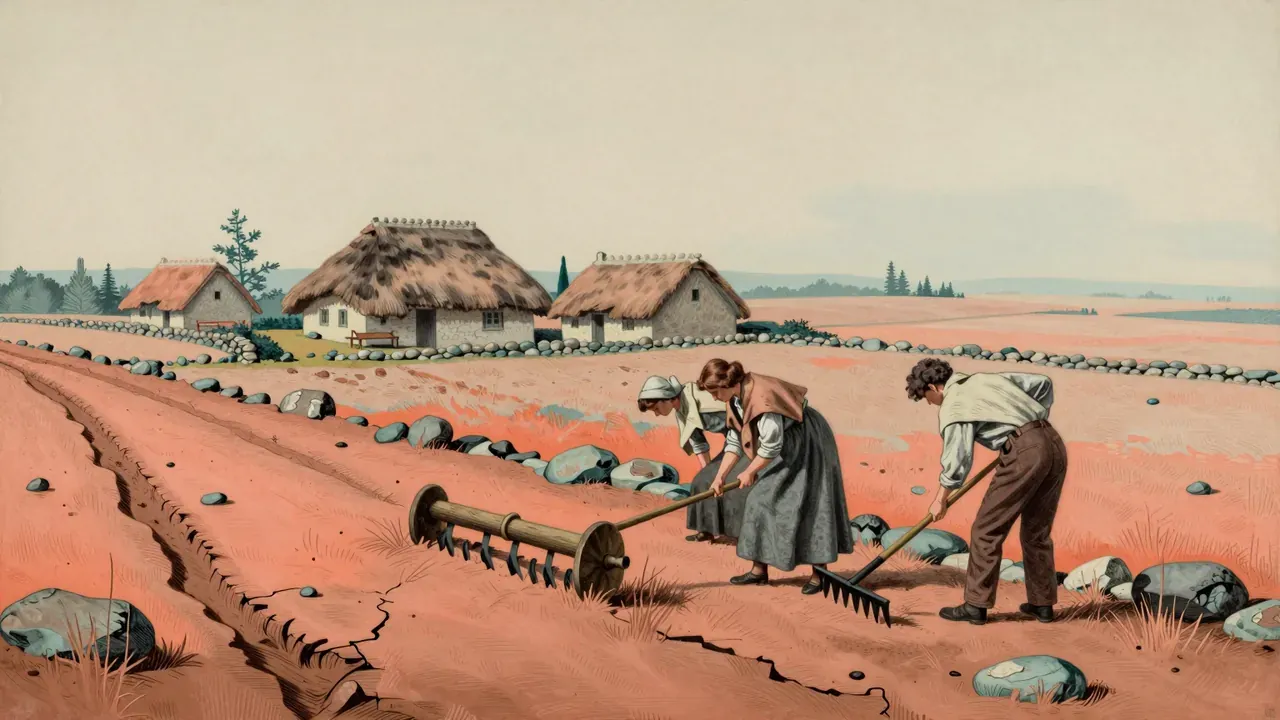
Pelle the Conqueror is a Danish-Swedish co-production adapting the first volume—Boyhood—of Martin Andersen Nexø’s 1906 novel. It sets out to render, with epic scale and quiet fidelity, the migration of a Swedish father and son to Denmark in the late 1850s, and their struggle for dignity amid poverty, exploitation, and social exclusion. Bille August frames this not as myth or allegory but as lived material reality: the weight of a sack of grain, the chill of a stone floor, the silence after a rebuke. The film avoids symbolic shorthand; its ambition is structural and historical—to show how economic precarity, linguistic alienation, and generational fracture shape consciousness before language can name them. It treats childhood not as innocence but as apprenticeship under duress, and fatherhood not as authority but as diminishing capacity. The epic register emerges not from spectacle but from duration: long takes, unbroken sequences of labour, and a refusal to cut away from discomfort. This is realism calibrated to the rhythm of agricultural time and human endurance. (157 words)
The weight of it
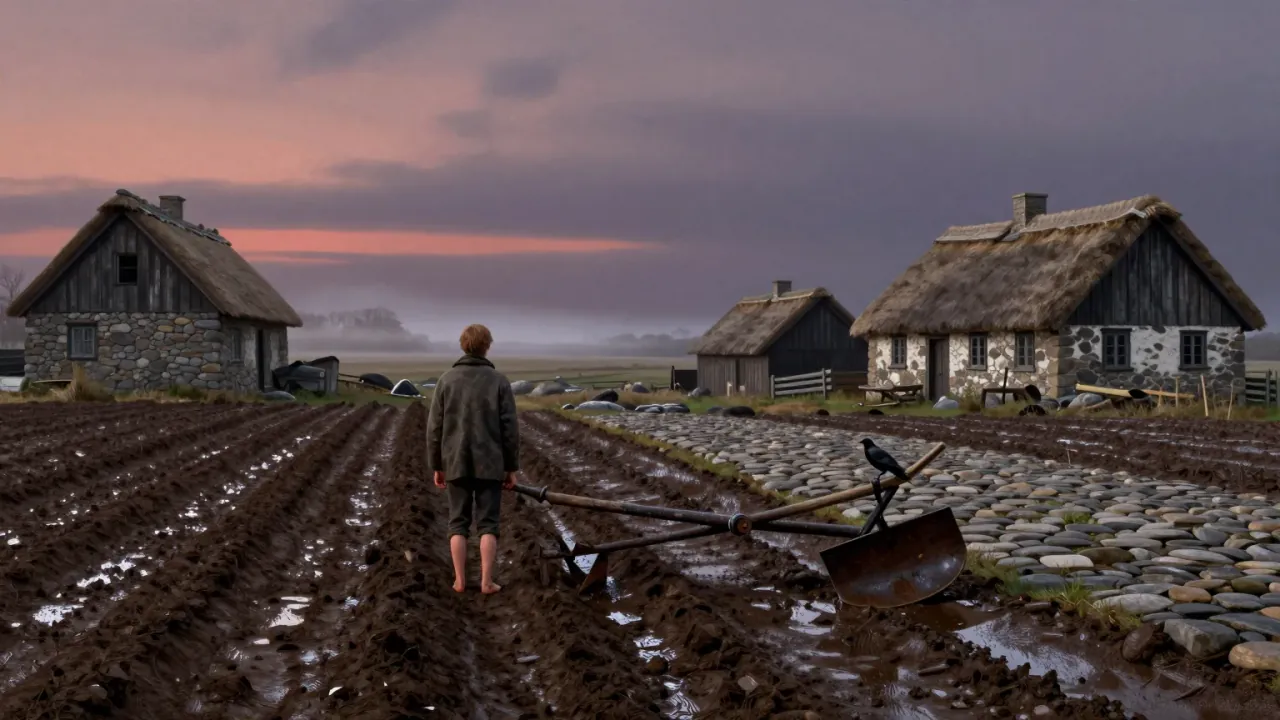
The story follows Lasse Karlsson and his son Pelle across one year on a Bornholm farm, tracking incremental shifts in agency, language, and self-perception. Max von Sydow’s Lasse moves through resignation, brief hope, and slow collapse without rhetorical emphasis; his performance rests in posture, breath, and withheld reaction. Pelle Hvenegaard, eleven at filming, conveys awakening not through expression but through attention—how he watches others, how he holds tools, how he absorbs Danish words like stones in his mouth. Jörgen Persson’s cinematography anchors the film in texture: damp wool, cracked plaster, mud-slicked cobbles. Anna Asp’s production design—black-and-white walls, low ceilings, narrow windows—makes architecture a character of constraint. Stefan Nilsson’s score is sparse, mostly piano and strings, used only where silence would mislead. Editing by Janus Billeskov Jansen sustains continuity across seasons, letting winter arrive not as transition but as accumulation. The craft does not serve mood but precision: every frame specifies class, geography, and temporal placement without exposition. (159 words)
The measure of it
What lands is the film’s unwavering commitment to embodied experience. The physicality of work—the ache in Lasse’s shoulders, the blisters on Pelle’s hands—is rendered with forensic consistency. The school scenes, where Pelle fumbles Danish grammar while older boys mock his accent, land because they avoid caricature: the cruelty is casual, the teacher’s indifference bureaucratic, the boy’s persistence unheroic. Rud’s friendship with Pelle works not as narrative convenience but as quiet counterpoint—two outsiders learning language through shared vulnerability. Erik’s injury and expulsion carry weight because the revolt he leads is small, disorganised, and swiftly crushed; its failure feels inevitable, not tragic. Even Kongstrup’s castration—reported off-screen, then absorbed in stunned silence—lands not for shock but for its aftermath: the sudden, hollow quiet in the manor house, the way servants lower their eyes, the way Mrs. Kongstrup’s face remains unreadable. These moments succeed because they are anchored in behaviour, not symbolism. The film trusts the viewer to infer consequence from stillness. (158 words)
The gaps in it
What does not land is the film’s occasional drift into schematic contrast—Lasse’s stoicism versus Erik’s restless idealism, Pelle’s diligence versus Rud’s flight—without sufficient interior scaffolding to make those differences feel earned rather than assigned. The subplot involving Mrs. Olsen’s husband’s return arrives with narrative weight but little emotional preparation; Lasse’s subsequent descent into alcoholism feels abrupt, not cumulative. Some secondary characters—Axel Strøbye’s Kongstrup, Astrid Villaume’s Mrs. Kongstrup—remain functionally opaque: their motivations are implied by status, not revealed by action. The film’s resistance to psychological exposition works against it in these instances, leaving gaps that feel like omission rather than restraint. Likewise, the final separation between father and son lacks the visceral tension of earlier partings; it reads as thematic necessity rather than emotional inevitability. The film’s discipline sometimes becomes austerity, mistaking absence of explanation for depth of implication. A few scenes—particularly those set in the manor’s parlour—feel staged for moral clarity rather than lived ambiguity. (159 words)
The order of it
The themes that matter are not migration or coming-of-age in the abstract, but the slow transfer of agency across generations under material constraint. It is about how language becomes a site of power—not just Danish versus Swedish, but the vocabulary of complaint, of petition, of self-advocacy—and how that vocabulary is acquired through humiliation, repetition, and observation. It treats labour not as virtue but as condition: the body as instrument, then as liability, then as archive of use. Ageing is shown not as decline but as displacement—Lasse’s strength recedes not because his muscles weaken, but because the work no longer requires his kind of strength. The film also insists on the ordinariness of injustice: no villain monologues, no grand speeches against oppression—only routines of dismissal, rationed food, withheld wages, and the quiet erasure of a worker’s name from the payroll. Its central tension is between endurance and departure—not whether Pelle will leave, but what he carries with him when he does: not dreams of ‘conquering’ the world, but the memory of how to hold a plough, how to read a face, how to wait. (158 words)
The patience of it
This film is for viewers who value sustained attention to physical detail, who find emotional resonance in restraint, and who accept that a child’s growth may be measured in glances held longer, questions asked more directly, silences broken less often. It suits those familiar with Scandinavian social realism or patient with its pacing—viewers who do not require plot propulsion to stay engaged. It is not for those who need clear moral signposting, rapid narrative escalation, or psychological exposition. Anyone expecting the warmth of a family saga or the uplift of a triumph-over-adversity arc will find it withholding. Those who dislike long takes, minimal music, or unvarnished depictions of poverty may feel estranged. A viewer who values thematic clarity over behavioural nuance, or who finds ambiguity indistinguishable from vagueness, will likely resist it. Its pace and tone assume a willingness to sit with discomfort without resolution—a stance not all viewers share, and rightly so. (159 words)
The time of it
Yes, it is worth your evening—if you have ninety minutes to give without expectation of reward, only readiness to receive. It repays attention not with catharsis but with accumulation: small gestures accrue into moral weight, repeated images deepen into structure, silences gather meaning. It is not an easy watch, nor meant to be; its value lies in how thoroughly it refuses to flatter the viewer’s sense of progress or control. Someone who prefers tightly wound narratives or emotionally legible performances may find it inert. But for those willing to meet it on its own terms—attentive, unhurried, open to the gravity of ordinary endurance—it offers rare coherence between form and subject. Its length is not indulgence but necessity: this is a life measured in seasons, not scenes. To call it ‘slow’ mistakes its purpose; it is steady. And steadiness, in a medium that favours acceleration, is itself a quiet act of resistance. (158 words)