The world around him
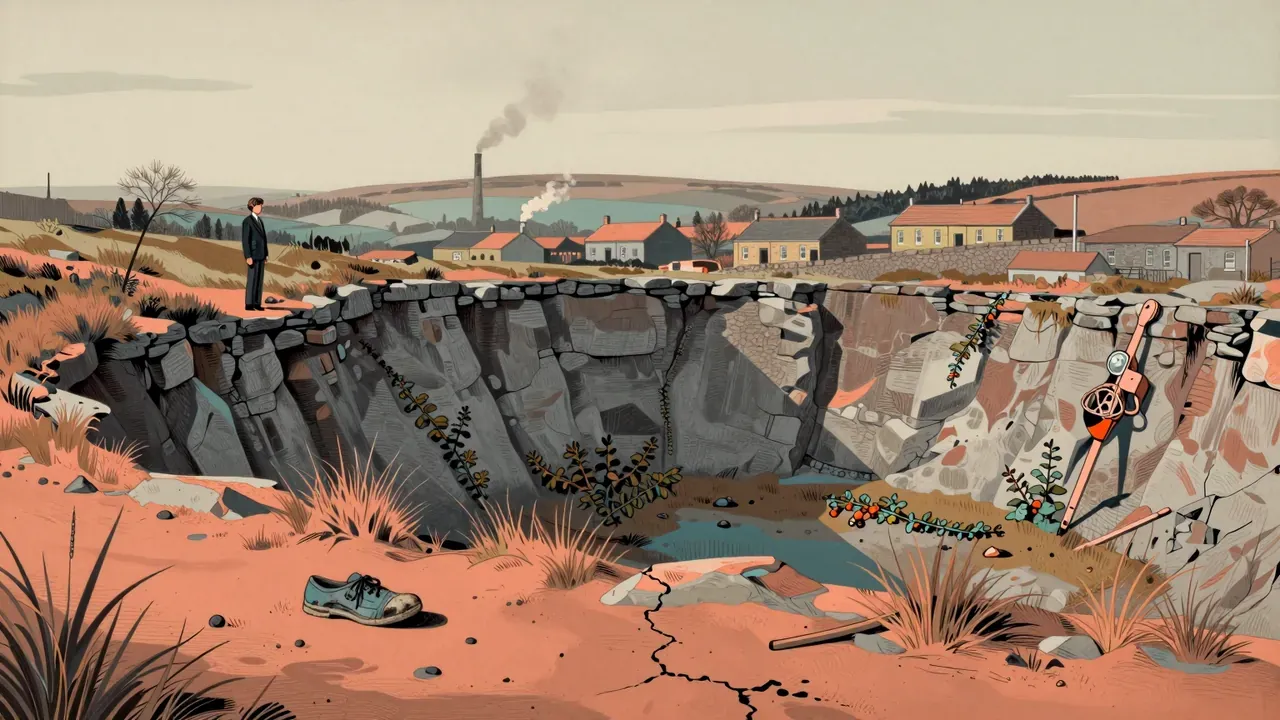
Kes is a 1969 British drama that adapts Barry Hines’s novel A Kestrel for a Knave to follow Billy Casper, a fifteen-year-old boy in post-industrial South Yorkshire. It does not aim to dramatise social policy or deliver a polemic, but to hold steady on one boy’s daily reality: school routines, family friction, casual adult indifference, and the quiet intensity of caring for a wild bird. The film works within the constraints of its setting — a secondary modern school, terraced streets near Barnsley, the scrubland where kestrels nest — not as backdrop but as active condition. Its intention is neither uplift nor despair, but fidelity: to the rhythms of working-class life in 1960s coalfield Britain, to the texture of unscripted speech, and to the moral weight of small choices. It assumes no prior knowledge of falconry, education reform, or regional dialect, and makes no effort to translate its world for outsiders. It asks only that the viewer attend — without condescension, without ornament — to how a boy finds agency when almost nothing else grants it. (158 words)
The look of it
The story unfolds across a single week, anchored by Billy’s training of a fledgling kestrel and his repeated encounters with institutional dismissal — at home, where his older brother bullies and his mother is worn thin; at school, where teachers range from weary to openly contemptuous. Dai Bradley, then fifteen and untrained, carries the film with unforced physicality and silence that reads as thought, not vacancy. Lynne Perrie and Colin Welland play Billy’s mother and teacher with restraint, avoiding caricature even in moments of cruelty. Chris Menges shoots almost entirely with natural light, using available windows and overcast skies to keep interiors dim and faces half-shadowed. Roy Watts’s editing avoids emphasis: cuts land where breath pauses, not where music swells. John Cameron’s score is sparse, often absent — the sound design foregrounds birdsong, distant trains, classroom chatter, and the scrape of a chair on lino. Dialogue remains in authentic Barnsley dialect without subtitles or dubbing in the original cut, refusing assimilation into mainstream English cadence. (159 words)
The things that land
What lands most firmly is the contrast between Billy’s competence with the bird and his powerlessness elsewhere. His patience while hooding, feeding, and flying Kes is rendered with tactile precision — no montage, no exposition, just hands, wind, and feathered weight. The football scene lands because it is structurally absurd yet emotionally legible: Brian Glover’s PE teacher referees, plays Bobby Charlton, and mocks the boys’ efforts — all in one take, with no wink to the audience. The classroom scenes land not through satire but accumulation: the headmaster’s cane, the geography teacher’s boredom, the careers master’s rote dismissal of Billy’s future — each moment feels rehearsed by repetition, not written for effect. Even minor figures register: Bob Bowes as the sympathetic school caretaker speaks little but listens fully; Bernard Atha as Billy’s brother never softens, yet his aggression reads as inherited, not invented. The film trusts its details — a cracked mug, a patched coat, the way Billy folds his arms when cornered — to carry meaning without commentary. (157 words)
The things that don’t
What does not land is any attempt to universalise Billy’s experience beyond its specific material conditions. The film offers no counterpoint to its world — no visiting social worker, no sympathetic journalist, no off-screen union organiser — and that absence, while deliberate, risks flattening structural critique into fatalism for some viewers. The ending, though earned, may feel abrupt to those expecting narrative resolution rather than emotional punctuation. Some performances, particularly among the non-professional schoolboys, verge on documentary rawness: their shock during the caning scene was genuine, but the lack of rehearsal also means occasional line flubs or hesitations that break rhythm without adding verisimilitude. The dialect, while central to the film’s integrity, remains a barrier — not stylistic but practical — for audiences unfamiliar with Northern English intonation and vocabulary. That is not a flaw in execution, but a limit of its method: the film refuses to meet viewers halfway, and some will simply disengage before the kestrel takes flight. (156 words)
The weight of it
The themes that matter are not abstract but embedded in action: the difference between instruction and education, between labour and vocation, between neglect and care. Class appears not as ideology but as consequence — in the school’s streaming system, the father’s absence (not unemployment but erasure), the way Billy’s brother treats him as disposable property. Adolescence here is not hormonal turbulence but a narrowing of possibility: every corridor, every lesson, every job advert reinforces the same message. The kestrel is not a symbol so much as a functional alternative — a living thing that responds to attention, not status. The film treats dignity as something practised, not bestowed: Billy gains no promotion, no scholarship, no adult validation, yet he learns to read the sky, judge wind, and hold still. There is no redemption arc, only a temporary expansion of self — brief, fragile, and wholly earned. The closing image is not of loss alone, but of Billy’s face holding stillness after rupture: not resignation, but recalibration. (158 words)
Who it’s for
This film is for viewers who accept that realism need not mean austerity, and that compassion requires no sentimentality. It suits those accustomed to dialect-heavy British film or television, or those willing to listen closely for thirty minutes before full comprehension settles. It is not for viewers who require narrative propulsion, exposition, or psychological explanation — Billy’s inner life is shown through gesture, not monologue. It is not for those who expect historical context to be narrated: the film presumes knowledge of 1960s British schooling, or willingness to infer it. Teachers, social workers, and education researchers may find it valuable not as case study but as ethical calibration — a reminder of how easily attention becomes transactional. Those who reject naturalism outright, or who associate ‘social realism’ with didacticism, will likely resist its pace and refusal to underline meaning. A viewer who needs closure, or who mistakes authenticity for authenticity-as-suffering, will leave unreconciled. (159 words)
Is it worth your evening
Yes, it is worth your evening — not as diversion, but as calibration. Its 106 minutes do not pass quickly, yet they accumulate weight without strain. The film earns its gravity through accumulation of detail, not escalation of incident. It rewards attention, not interpretation: what matters is not what the kestrel ‘means’, but how Billy’s hands move when he adjusts the jesses. Some will argue it is too narrow, too regionally bound, too quiet for contemporary viewing — and those viewers would prefer a film with broader scaffolding or faster pacing. But its endurance rests precisely on its refusal to accommodate. A digitally restored print sharpens Menges’s grain without sanitising it; the Criterion extras deepen context without overriding the film’s own silence. If you watch it once, you may remember Billy’s face at the bus stop. Watch it twice, you notice how often he blinks before speaking. That is the film’s economy: nothing wasted, nothing explained, everything held. (159 words)