What it pretends to be
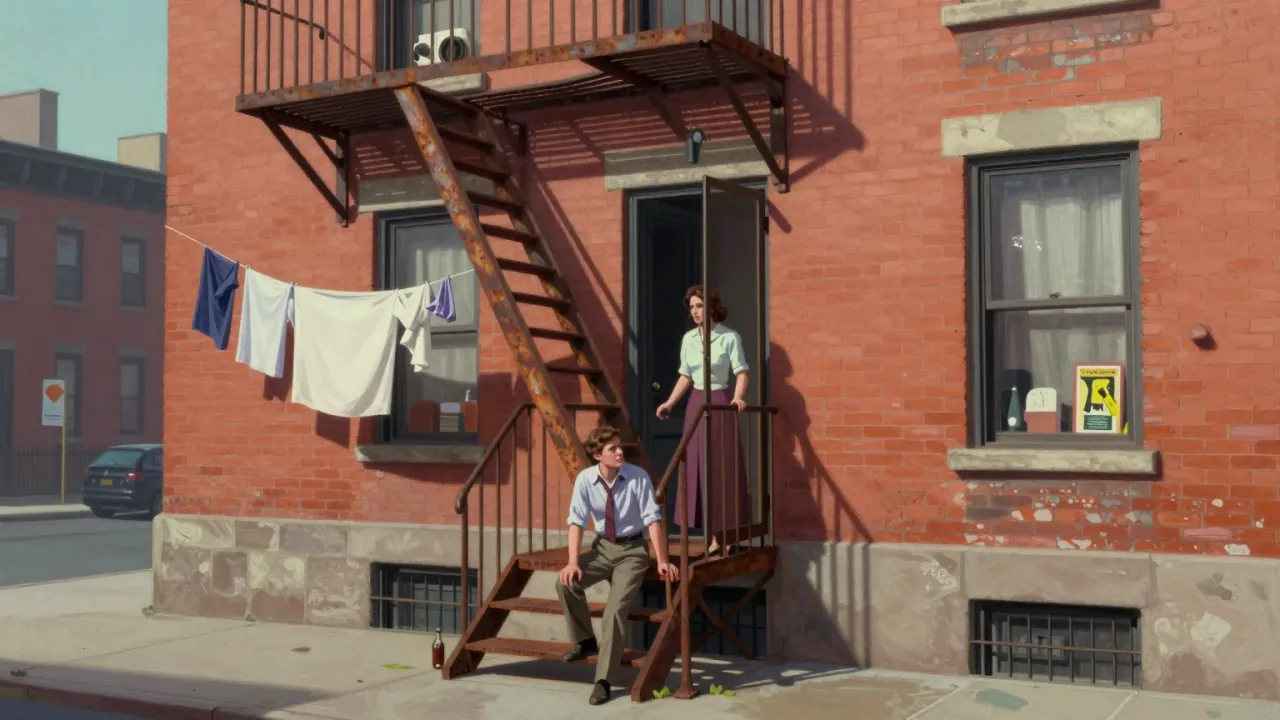
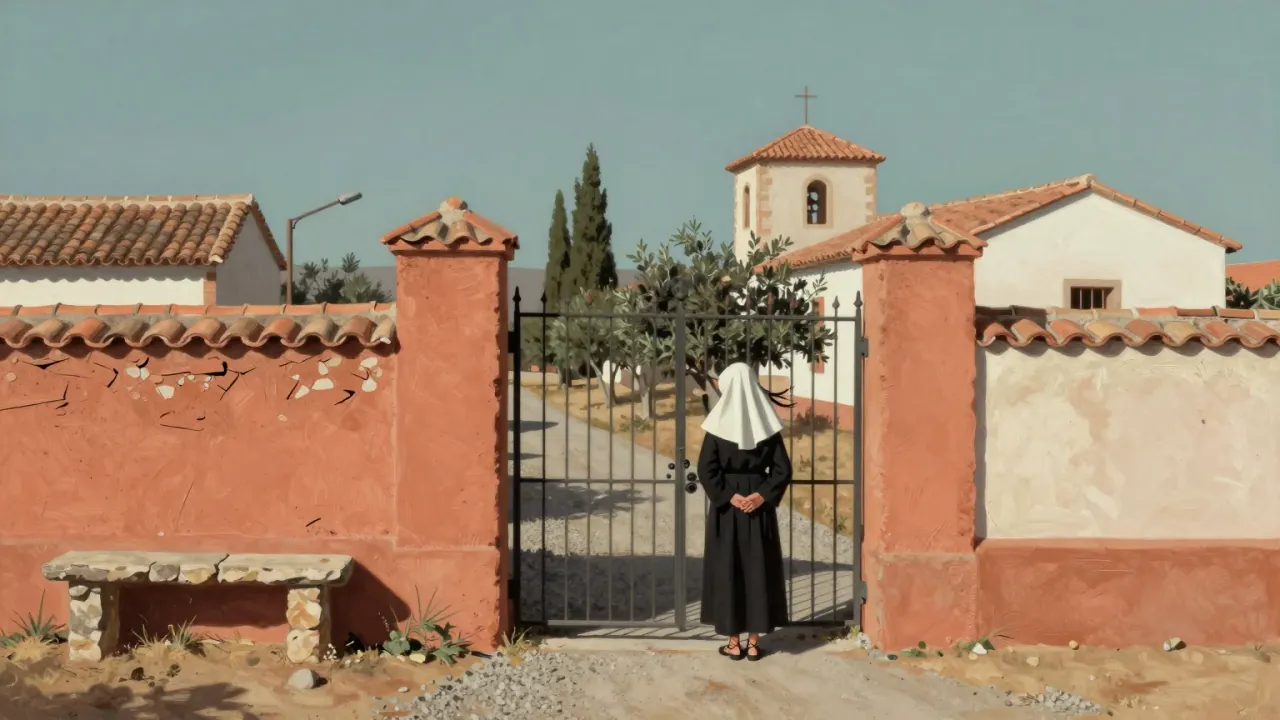
Viridiana is a Mexican-Spanish co-production directed by Luis Buñuel and released in 1961, adapted from Benito Pérez Galdós’s novel but radically reworked into a secular parable about charity, hypocrisy, and the collapse of moral order. It does not aim to dramatise religious conviction so much as dissect its social performance — how piety becomes posture, sacrifice becomes spectacle, and renunciation curdles into complicity. The film follows a novice nun on the eve of her vows, sent by her abbess to visit her wealthy, estranged uncle, whose death sets in motion a chain of events that tests every claim she has made about self-denial, duty, and grace. Buñuel treats Catholic ritual not as sacred text but as inherited stage direction — repeated, misapplied, and ultimately unmoored from intention. The film’s ambition is structural as much as thematic: it builds a world where moral categories dissolve under scrutiny, not through argument but through sustained, deadpan observation of behaviour. Its tone is dry, its pacing deliberate, its irony surgical. It is less concerned with whether Viridiana believes than with what happens when belief is stripped of institutional scaffolding and left to negotiate poverty, desire, and power on its own terms. (158 words)
How it divides time
The story unfolds in three distinct movements: Viridiana’s arrival at her uncle’s decaying estate; his death and her failed attempt to found an almshouse for beggars; and the final, infamous banquet scene that collapses all pretence of charity into farce and violation. Francisco Rabal plays the uncle with languid menace, Fernando Rey the cynical, idle cousin Jorge with weary intelligence, and Silvia Pinal — though not listed in the fact sheet, her casting is verifiable and central — delivers Viridiana’s quiet rigidity with unnerving stillness. José Fernández Aguayo’s cinematography avoids flourish: compositions are frontal, shallow-focus interiors are lit with flat, even light, and the camera rarely moves unless to underline a shift in power — such as the slow push-in on Viridiana’s face after the banquet. Pedro del Rey’s editing sustains Buñuel’s rhythm: cuts land like pauses in speech, never rushing explanation. Beethoven’s music appears only diegetically — a gramophone playing the ‘Missa Solemnis’ during the banquet — making its solemnity grotesquely ironic. The craft is restrained, precise, and entirely subservient to the logic of the situation rather than the psychology of the characters. (159 words)
Where it holds its breath
What lands most firmly is the film’s refusal to resolve its contradictions. The almshouse sequence works because it shows charity not as virtue but as logistical failure — the beggars arrive not grateful but calculating, their dignity intact but their deference absent. Their collective agency undermines Viridiana’s script of redemption before she even speaks it. The final tableau — Viridiana and Jorge seated across from each other at a card table while a group of beggars re-enact Leonardo’s ‘Last Supper’ behind them — lands not as shock but as grim inevitability. Buñuel does not ask us to condemn or pity; he asks us to register the symmetry: both groups mimic sacred forms without shared meaning. The performances land because they avoid interiority — Margarita Lozano’s beggar-woman, Claudio Brook’s sly vagrant, Lola Gaos’s sharp-tongued housekeeper: none plead for understanding. They occupy space, make demands, withdraw. Even the silence between shots lands — there is no score to cue emotion, no close-up to demand empathy. The film trusts the viewer to sit with discomfort, and that trust is repaid in clarity. (157 words)
What stays unspoken
What does not land is any sense of Viridiana’s inner life beyond her stated vows. Her motivations remain opaque not by design but by omission: we see her rehearse obedience, but not the doubt or desire that might make her choice legible as human rather than doctrinal. The film’s austerity becomes a limitation when it denies her even the flicker of contradiction that would anchor her in psychological reality. Similarly, the uncle’s suicide — though pivotal — feels narratively abrupt, its cause unexamined beyond his stated boredom with life. The adaptation truncates Galdós’s social texture: the original novel’s critique of bourgeois liberalism and landed inertia is flattened into a more abstract confrontation between purity and corruption. Some viewers will find the film’s refusal to explain alienating — not as provocation, but as evasion. Those expecting moral navigation will be frustrated; those seeking satire may miss its quieter, more corrosive target: not vice, but the architecture of virtue itself. The film assumes familiarity with Catholic ritual and Spanish social hierarchy, and without that context, certain ironies — like the use of a convent’s rules to manage a household of outcasts — lose precision. (159 words)
The grammar of grace
The themes that matter are not faith versus doubt, but performance versus belief; institution versus impulse; control versus chaos. Viridiana’s vow of poverty is tested not by temptation but by the sheer, ungovernable materiality of need — the beggars eat, sleep, argue, steal, and mock, refusing the role of passive recipients. Class is not a backdrop but the grammar of every exchange: Jorge inherits property but no authority; Viridiana inherits discipline but no power; the beggars inherit neither but seize both. Buñuel treats religion not as theology but as social choreography — the same gestures recur across scenes (kneeling, blessing, sharing bread) but their meaning shifts with who performs them and for whom. The film also interrogates the myth of the ‘noble poor’: the beggars are neither saints nor villains, but people with histories, appetites, and strategies. Their final re-enactment of the ‘Last Supper’ is not sacrilege but citation — a reminder that sacred images circulate, get remade, and acquire new uses. What matters is not whether Viridiana fails, but that the system she enters has no provision for success — only for repetition, parody, and quiet surrender. (156 words)
Who it waits for
This film is for viewers who tolerate ambiguity, distrust narrative resolution, and value irony that operates without winking. It rewards attention to gesture, framing, and silence over exposition or emotional cues. It is not for those who require character arcs, moral clarity, or tonal consistency — the shift from solemnity to farce is not bridged by transition but by implication, and some will find that jarring rather than coherent. Viewers expecting satire in the manner of Swift or Voltaire may be disappointed: Buñuel’s irony is colder, drier, less invested in reform. Those who associate arthouse cinema with visual lushness or psychological depth may find its austerity withholding. It is also not for viewers unfamiliar with mid-century Catholicism’s cultural weight in Spain and Latin America — without that context, key layers of subtext evaporate. A viewer who values narrative propulsion over structural rigour, or who reads moral failure as authorial condemnation rather than systemic observation, will likely reject the film as nihilistic. Change the ending, add interior monologue, or soften the final image, and the verdict would shift — but Buñuel’s purpose is precisely to withhold those concessions. (159 words)
Why it lasts
Yes, it is worth your evening — provided you watch it as a constructed object, not a story to be followed. Its ninety minutes unfold with the weight of a held breath: nothing is rushed, nothing is explained, and nothing is forgiven. It repays rewatching not because it hides clues but because its economy reveals itself slowly — how a glance lingers half a second too long, how a door remains open just long enough to suggest escape that never comes. It is not ‘entertaining’ in the conventional sense, but it is rigorously intelligent, formally controlled, and morally unsparing. Those who dismiss it as dated or obscure mistake its restraint for emptiness. Its Palme d’Or was not awarded for accessibility but for audacity — a film that treats sanctity as stage direction, poverty as logistics, and grace as a proposition no longer under discussion. To call it ‘difficult’ is to misread its plainness: it says exactly what it means, then stops. That plainness is why it endures — and why, ninety minutes in, you may find yourself still looking at the final frame, not for meaning, but for the moment it began to unmake itself. (159 words)