What it is trying to do
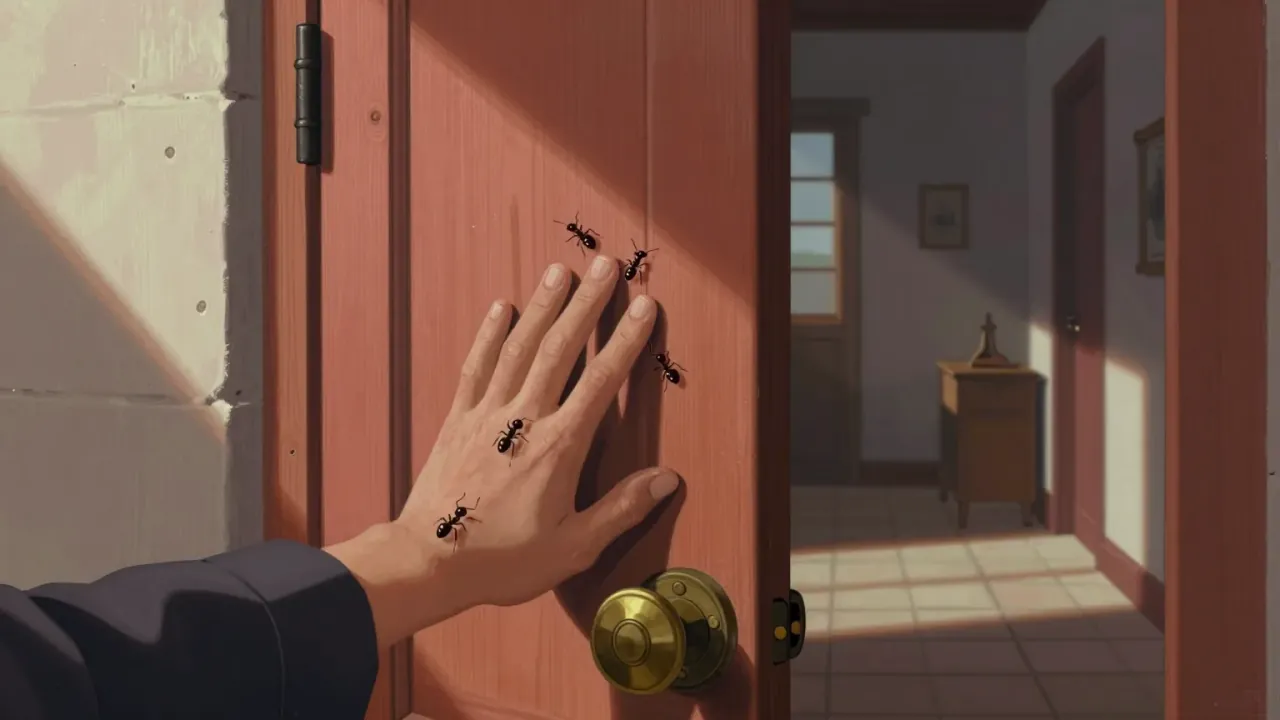
L’Age d’Or is a sixty-minute French surrealist film made in 1930, co-written by Luis Buñuel and Salvador Dalí, and produced under the patronage of Charles and Marie-Laure de Noailles. It is not a narrative in any conventional sense, nor does it aim to persuade through argument or character development. Instead, it assembles a sequence of disjunctive, provocative images — scorpions, crushed beetles, a man slapping a woman at a party, a woman fellating a statue’s toe — to stage a sustained assault on bourgeois morality, Catholic orthodoxy, and sexual repression. Its method is associative, not logical; its intention is to unsettle, not explain. It treats social institutions not as frameworks for order but as mechanisms of inhibition, and love not as a private feeling but as a force that ruptures decorum. The film refuses coherence as a virtue, and its satire operates without punchlines or resolution. It is less about what happens than about how violently the act of watching it disrupts settled assumptions. It is a polemic in image-form, made with deliberate crudity and precision.
How it works
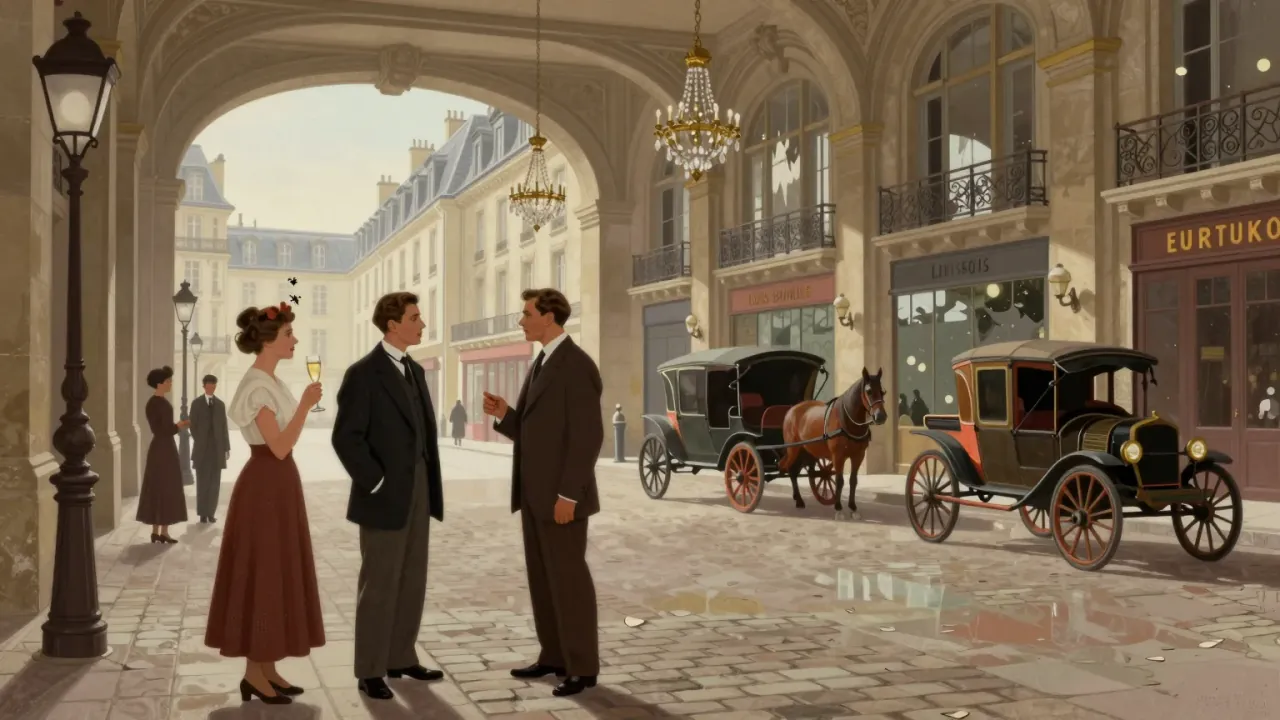
The film works through juxtaposition and rupture: documentary footage of scorpions gives way to staged vignettes where cause and effect dissolve. Gaston Modot plays the man with physical urgency and little inflection; Lya Lys’s young girl registers desire and frustration through gesture and gaze rather than exposition. There are no sustained performances in the theatrical sense — the cast includes artists like Max Ernst and Josep Llorens i Artigas, who appear as presences rather than interpreters. Buñuel edits with a rhythm that denies continuity, cutting between scenes without transition, inserting title cards like a silent film despite being among France’s earliest sound pictures. Sound is sparse and often ironic: Liebestod swells then cuts dead; ambient noise is muted while footsteps or slaps land with unnatural weight. The camera stays at medium distance, avoiding intimacy or psychology. Lighting is functional, not expressive. Sets are theatrical, not realistic — a ballroom where a horse-drawn cart barrels through, a garden where a burning tree is thrown from a window. Nothing is built to last; everything is built to provoke.
What lands
What lands is the film’s cumulative pressure — the way repeated interruptions of erotic possibility accumulate into a portrait of systemic suffocation. The man’s outbursts — kicking a dog, crushing a beetle, slapping a mother — feel less like character flaws than physiological responses to constraint. The party scene works because its absurdities are presented with deadpan consistency: flies on a face, a child shot for mischief, flames behind a maid — all absorbed without reaction. That indifference is more chilling than any overt violence. The final sequence, with its allusion to de Sade and the bearded Duc emerging from a castle before re-entering with a sobbing woman, lands not as narrative closure but as ideological exposure: the sacred and the sadistic share the same robes, the same authority. The scalps on the cross, swinging to jaunty music, land as a single, unambiguous statement about institutionalised violation. These images do not require decoding. They operate like shocks — immediate, physical, resistant to rationalisation.
What does not
What does not land is any sustained emotional identification with the central couple. Their longing is clear, but their interiority remains inaccessible; they function as vectors for desire, not people. The film’s refusal of psychological realism means it cannot build empathy in the way a drama might — and does not intend to — but this also limits its reach beyond those already aligned with its premises. Some sequences feel arbitrary rather than inevitable: the blind man assaulted on the street, the conductor wandering into the garden, the sudden appearance of a giraffe statue — these read as provocations without sufficient connective tissue. The sound design, while deliberately sparse, sometimes undermines itself: diegetic silence can feel like absence rather than strategy, especially when the film’s own historical status as an early French sound picture makes its omissions conspicuous. And though the satire is sharp, its targets — bourgeois hypocrisy, clerical power — are so broadly drawn that specificity blurs. It attacks a system, but never quite maps its machinery.
The themes that matter
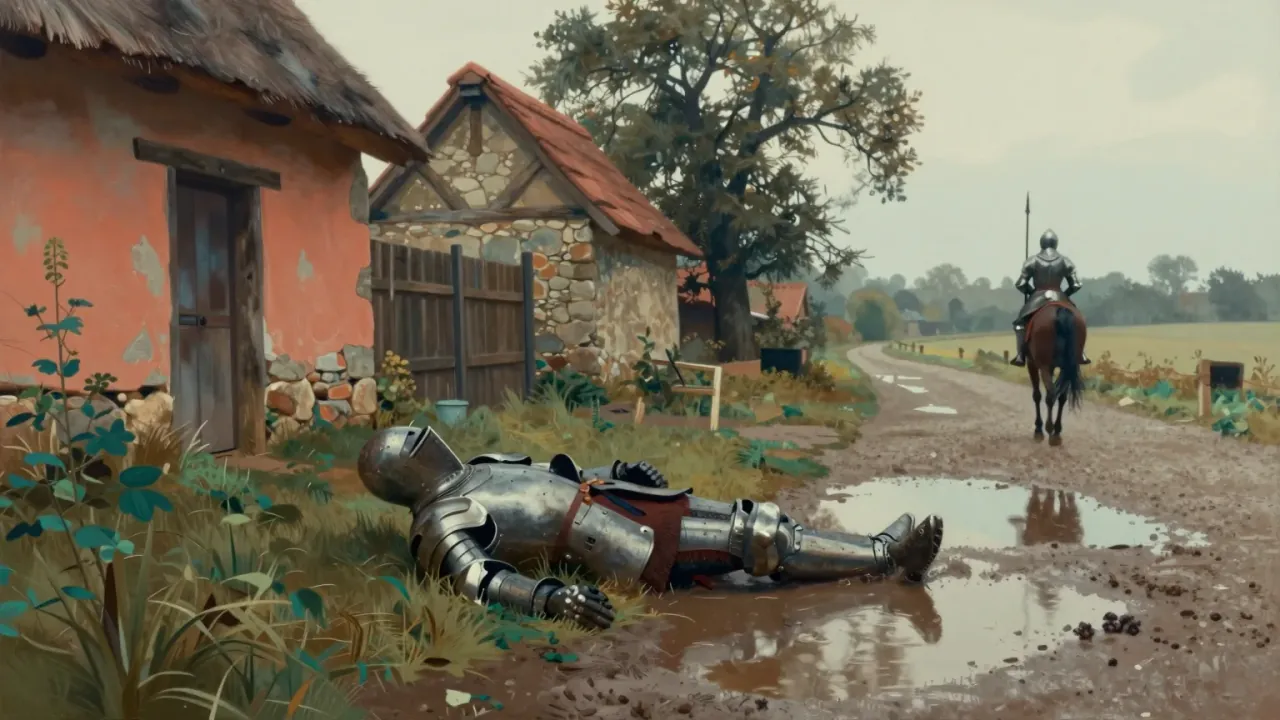
The themes that matter are repression as a generative force for violence, the collusion of religion and state in policing desire, and the absurdity of social ritual when stripped of shared meaning. The film treats sexuality not as transgression but as gravity — a natural force constantly deflected by architecture, etiquette, doctrine. The scorpion prologue establishes this: instinctual behaviour observed without moral framing. Later, the man’s body reacts before his mind can intervene — kicking, crushing, slapping — suggesting that repression does not vanish desire but reroutes it into aggression. The Church appears not as theology but as costume and furniture: bishops, statues, crosses, all treated as props in a staging of power. Class is rendered through setting and posture — the ballroom’s rigid elegance versus the mud of the opening ceremony — but never through dialogue or exposition. The film’s most persistent theme is the violence of normalcy: how routine, ceremony and consensus become instruments of control. It is less about liberation than about exposing the cost of containment.
Who should watch it, and who should not
This film is for viewers who approach cinema as a site of conceptual confrontation, not emotional immersion — those familiar with Dada, early surrealism, or Buñuel’s later work will recognise its grammar. It rewards patience with discontinuity and tolerance for unresolved tension. It is not for viewers seeking narrative coherence, psychological realism, or moral resolution. Those who require motivation for character action, or who find irony without anchor alienating, will likely reject it as nihilistic or merely abrasive. Its hostility to bourgeois values may read as dated to some, or as insufficiently radical to others — Marxist critics have questioned its lack of class analysis, feminist scholars its reliance on female bodies as sites of symbolic violation. A viewer who values craft over message, or who finds pleasure in formal audacity, may still resist its tone. It demands active resistance to comfort — not just in content, but in form. Without that willingness, it remains inert provocation.
Is it worth your evening
Yes, it is worth your evening — but only if you treat it as a historical artefact with present-day teeth, not as entertainment. Sixty minutes is short enough to absorb its logic-free logic without fatigue, and its confrontational energy has not eroded. It repays attention not because it reveals new layers on repeat viewings, but because its provocations shift in resonance across time: what read as anti-clerical in 1930 now reads as anti-institutional, anti-authoritarian, anti-performativity. It is not ‘enjoyable’ in any conventional sense, but it is vital — one of the few films that genuinely alters the terms of what cinema can do. Those who dismiss it as dated shock tactics miss how precisely its methods anticipate later avant-garde, structuralist and even viral aesthetics. Its value lies in its refusal to compromise its terms. To watch it is to accept its terms — or to walk out. Either response is valid. But to ignore it is to skip a hinge moment in film history.