The premise that does not proceed
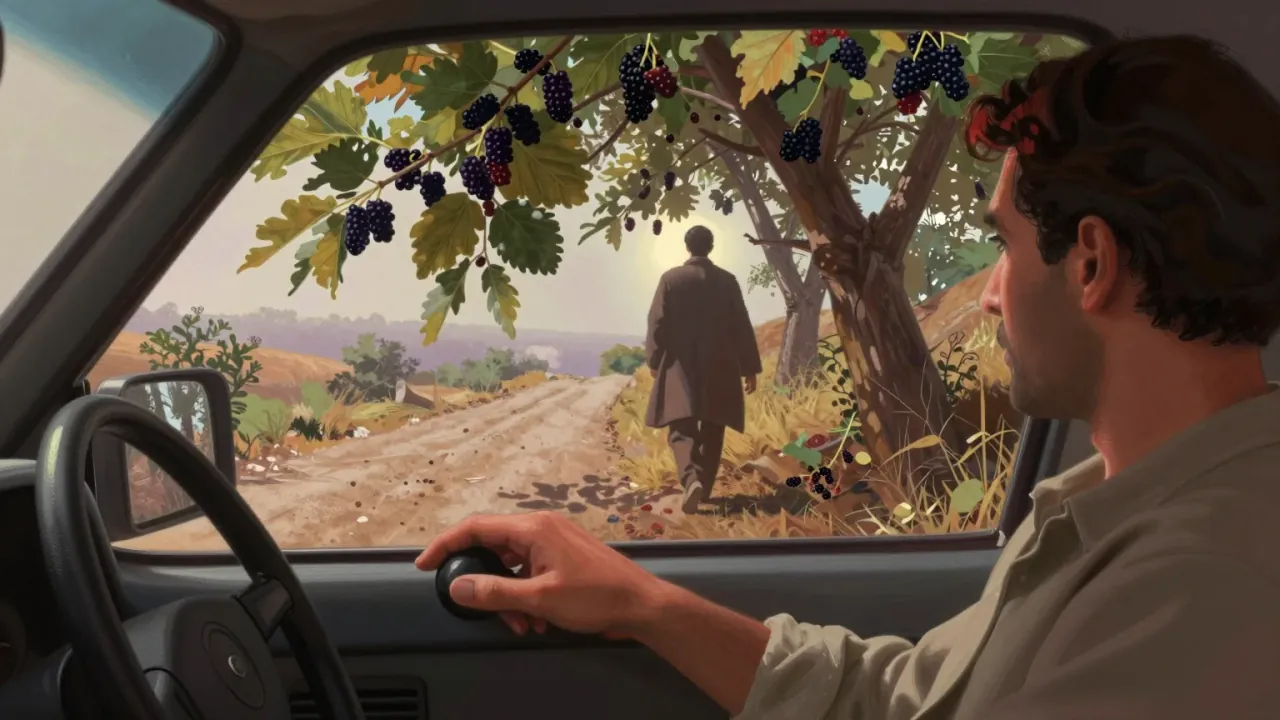
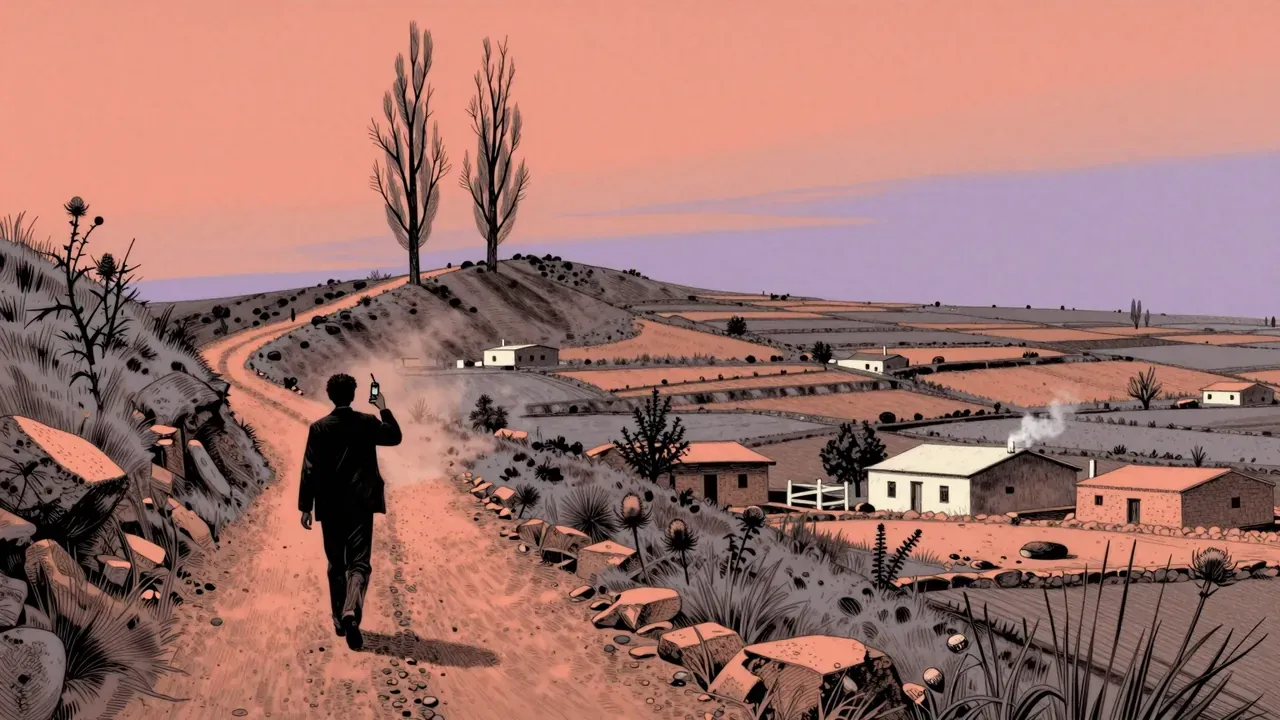
The Wind Will Carry Us is a film about waiting — not as suspense, but as duration made visible. It follows a Tehran-based filmmaker who travels to Siah Darreh, a Kurdish village in western Iran, posing as a civil engineer while intending to document local mourning rituals for a dying centenarian. The film does not aim to deliver that ritual, nor to resolve the premise; instead, it treats the delay as its subject. Abbas Kiarostami constructs a slow, observational frame in which narrative expectation is held in abeyance, and attention shifts from event to environment, from purpose to presence. The film’s ambition lies in its refusal to convert lived time into plotted time: it asks the viewer to inhabit the same rhythm as its protagonist — one dictated by mobile signal strength, goat paths, schoolyard chants, and the changing light on dusty hills. It is not a documentary about Kurdish rites, nor a satire of urban intrusion, but a sustained inquiry into how meaning accrues when nothing happens as planned. Word count: 142
The look of it
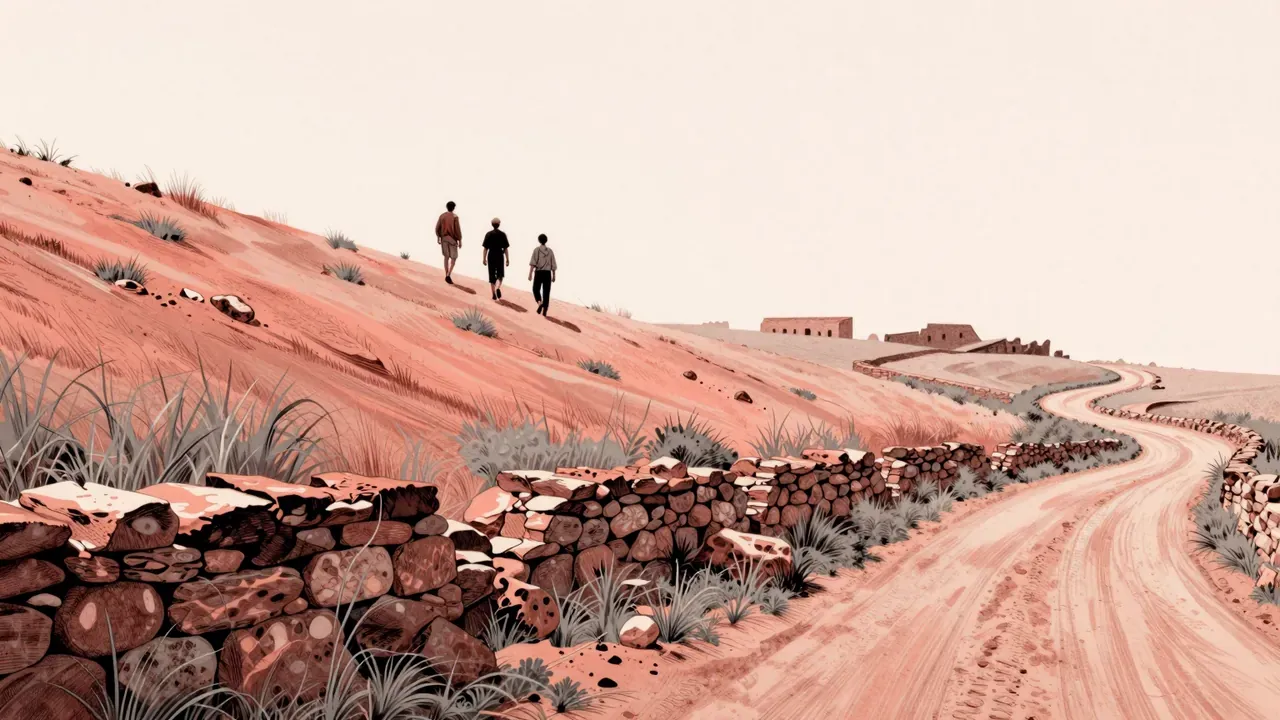
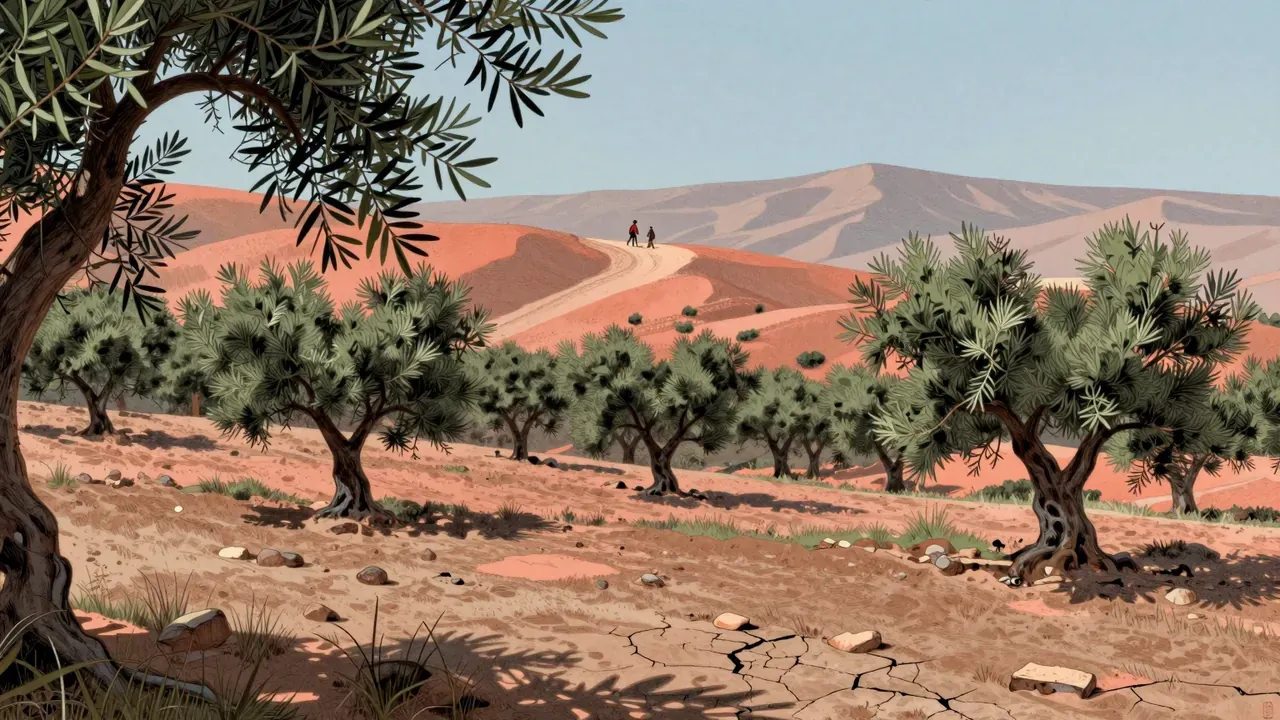
The story unfolds through off-screen voices, partial views, and withheld information: the two assistants are heard but never seen; the old woman remains unseen and unnamed; the protagonist’s face is often obscured or turned away. Behzad Dorani plays the filmmaker with quiet, unemphatic restraint — his reactions are registered in pauses, glances at the horizon, or the way he holds a phone. Bahman Ghobadi appears briefly as a local contact, but most interaction is with a boy who guides him, delivers messages, and embodies the village’s unselfconscious continuity. Mahmoud Kalari’s cinematography keeps the frame open and shallow, favouring natural light and long takes that follow movement without commentary. Editing by Kiarostami avoids emphasis: cuts land without punctuation, often mid-sentence or mid-gesture. Peyman Yazdanian’s score is sparse — mostly ambient textures and occasional traditional motifs — never underscoring emotion but allowing silence to hold weight. The craft works not by drawing attention to itself, but by withdrawing, so the village’s rhythms become legible as structure. Word count: 153
What settles into place
What lands is the cumulative effect of patience — the way small exchanges accrue significance over time. A boy’s question about whether the moon is alive; a woman singing while threshing wheat; the repeated climb up the hill to catch a signal; the sound of a tractor starting in the distance — none are framed as ‘moments’, yet each becomes resonant through repetition and context. The film trusts the viewer to notice shifts in tone, in light, in social texture: how formality softens, how suspicion gives way to shared tea, how professional distance erodes not through confession but through shared inconvenience. The mobile phone — a device of urgency — becomes an engine of slowness, its intermittent signal forcing ritualised departures and returns. The film’s humour is dry and situational: bureaucratic misdirection, linguistic gaps, the absurdity of filming death while life insists on continuing. These elements do not build to a climax, but settle into a register of gentle, unsentimental attentiveness. Word count: 149
What stays unresolved
What does not land is any sense of dramatic payoff tied to the central premise. Viewers expecting resolution — the woman’s death, the completion of the documentary, even clarity about the protagonist’s motives — will find no such closure. The film resists psychological exposition: we learn little of the filmmaker’s past, his ethics, or his inner conflict beyond what his actions imply. There is no backstory for the villagers, no exposition about Kurdish history or funerary custom beyond what is overheard or observed. Some may read this as evasion; others, as discipline. The pacing also tests tolerance for stillness — long stretches where the camera holds on empty roads or static interiors, where dialogue trails off or dissolves into ambient noise. The absence of music cues, conventional editing rhythms, or character close-ups means the film offers no handholds for viewers accustomed to narrative scaffolding. Its refusal to explain itself is deliberate, but not neutral: it assumes a contract of mutual attention that not all will accept. Word count: 152
What the film is really about
The themes that matter are mortality and mediation — not as abstract ideas, but as daily conditions. Death is present not as event but as rumour, as delay, as the space between expectation and arrival. The film treats mourning not as spectacle but as social infrastructure: the way people gather, speak, eat, and move when loss is anticipated but not yet confirmed. Mediation runs parallel — the filmmaker’s camera, his phone, his urban identity — all function as filters between him and the village, and between the film and its audience. Kiarostami questions the ethics of observation: can one witness without distorting? Can documentation coexist with respect? The film also explores time as uneven — cellular network coverage defines when calls arrive; school bells mark hours; seasonal light alters the texture of every shot. These are not metaphors but material facts, grounding abstraction in geography and technology. The title’s reference to Forugh Farrokhzad’s poetry is felt less in language than in cadence: a wind that carries not words, but breath, dust, and implication. Word count: 148
Who it is for
This film is for viewers who value duration over destination, who find resonance in restraint, and who trust that meaning can reside in what is withheld. It suits those familiar with Kiarostami’s earlier work — particularly Through the Olive Trees or Taste of Cherry — or with the broader Iranian New Wave’s preference for ellipsis and environmental storytelling. It is not for viewers who require clear motivation, psychological exposition, or narrative propulsion. Those seeking cultural exposition — about Kurdish life, Iranian rural society, or Islamic mourning practices — will find only fragments, not synthesis. The film makes no effort to educate or contextualise; its knowledge is experiential, not didactic. A viewer who values strong performances as vehicles for interiority may feel under-served: the acting is muted, the characters deliberately opaque. But for those willing to sit with ambiguity, to let scenes breathe, and to treat silence as syntax, the film repays attention not with answers, but with recalibrated perception. Word count: 147
Whether it is worth your evening
Yes, it is worth your evening — if you approach it as a practice in attention rather than as entertainment. Its 118 minutes ask for surrender to rhythm, not investment in outcome. That verdict rests on the film’s consistency of method: every choice — from Kalari’s flat, sun-bleached palette to Kiarostami’s refusal to cut away from a stalled car — serves the same principle of respectful non-intervention. Someone who finds the pace inert, or who reads its ambiguity as evasion, would reasonably disagree; for them, the film’s value collapses. What would change the verdict is not a different ending, but a different contract — one that prioritised explanation over implication, or urgency over endurance. Yet within its own terms, the film achieves what it sets out to do: it makes waiting palpable, communal, and quietly profound. Word count: 144