filmbriefs
Screenwriter · Director

Kaneto Shindō

5
briefs
13:00
average
65 min
in total
On film.briefs5
13:00

Fighting Elegy

Seijun Suzuki · 1966

Seijun Suzuki’s 1966 drama follows Kiroku Nanbu, a Catholic teen in pre-war Japan whose sexual repression and institutional alienation spiral into ritualised violence and, finally, political extremism. Adapted by Kaneto Shindō from Takashi Suzuki’s novel, the film uses stark black-and-white imagery, abrupt editing and physical performance to chart a psyche collapsing under the weight of unspoken longing and enforced discipline.
13:00

Kuroneko

Kaneto Shindō · 1968

Kaneto Shindō’s 1968 Kuroneko is a black-and-white jidaigeki horror film about two women who return as vengeful spirits after being raped and murdered by samurai. Set in feudal Japan during civil war, it follows their spectral seductions and killings, and the tragic confrontation with the son-husband who must destroy them — even as he loves them. Stylised with Noh and kabuki techniques, shot by Kiyomi Kuroda, and scored by Hikaru Hayashi, it is a study in restraint, doubling, and irreversible consequence.

13:00

Onibaba

Kaneto Shindō · 1964

Set in 14th-century Japan amid civil war, Onibaba follows two unnamed women who kill stray soldiers in a vast reed field to trade armour for food. When a masked samurai dies in their pit, the older woman takes his hannya mask — and finds it will not come off. Kaneto Shindō’s 1964 film uses stark black-and-white cinematography, minimal dialogue, and physical performance to explore moral erosion, interdependence, and the bodily cost of fear.

13:00

The Naked Island

Kaneto Shindō · 1960

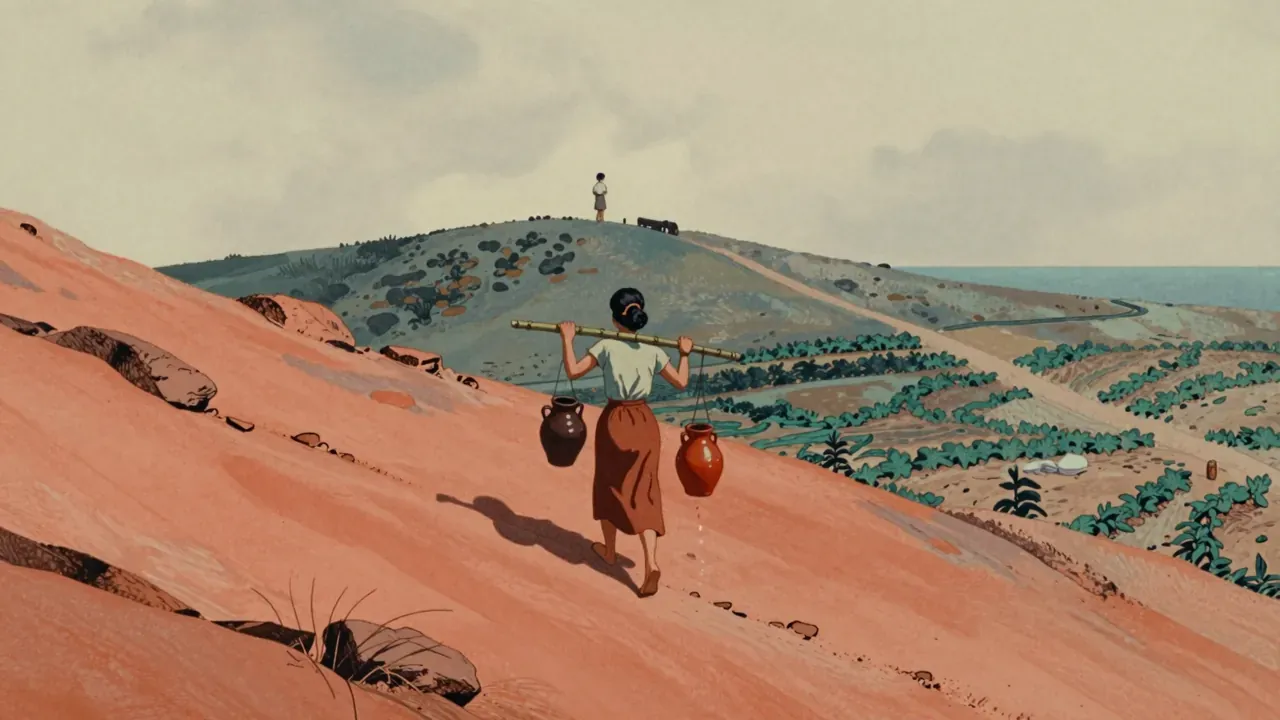
Kaneto Shindō’s 1960 film follows a family surviving alone on a remote island in Japan’s Seto Inland Sea, carrying water daily to grow crops. With almost no spoken dialogue, it relies on repetition, physical exertion and Kiyomi Kuroda’s restrained cinematography to convey endurance, grief and routine. Though its agricultural premise is factually flawed, its austere method remains compelling: a rigorous, unsentimental portrait of persistence.

13:00

Zatoichi's Pilgrimage

Kazuo Ikehiro · 1966

The fourteenth Zatoichi film sees Shintarō Katsu’s blind swordsman undertake the Shikoku pilgrimage, seeking quiet reckoning rather than redemption. Directed by Kazuo Ikehiro with script by Kaneto Shindō, it trades action set-pieces for sustained atmosphere, subtle performance, and restrained craft. Violence is brief and consequential; stillness is prolonged and meaningful. The film’s strength lies in its commitment to rhythm over revelation, repetition over resolution.