Saved
Director · Cinematographer · Producer · Screenwriter · Editor · Actor · 1963

Steven Soderbergh

8
briefs
13:00
average
104 min
in total
On film.briefs8
13:00

And Everything Is Going Fine

Steven Soderbergh · 2010

Steven Soderbergh’s 2010 documentary And Everything Is Going Fine assembles archival monologues, interviews and home movies of Spalding Gray into a portrait built entirely from his own words and presence. Edited by Susan Littenberg and scored by Gray’s son Forrest, it avoids biography-by-explanation in favour of temporal layering and verbal recurrence. The film premiered at Slamdance in January 2010 and was released on Criterion Collection Blu-ray and DVD in 2012.
13:00

Che Part 2: Guerrilla

Steven Soderbergh · 2008

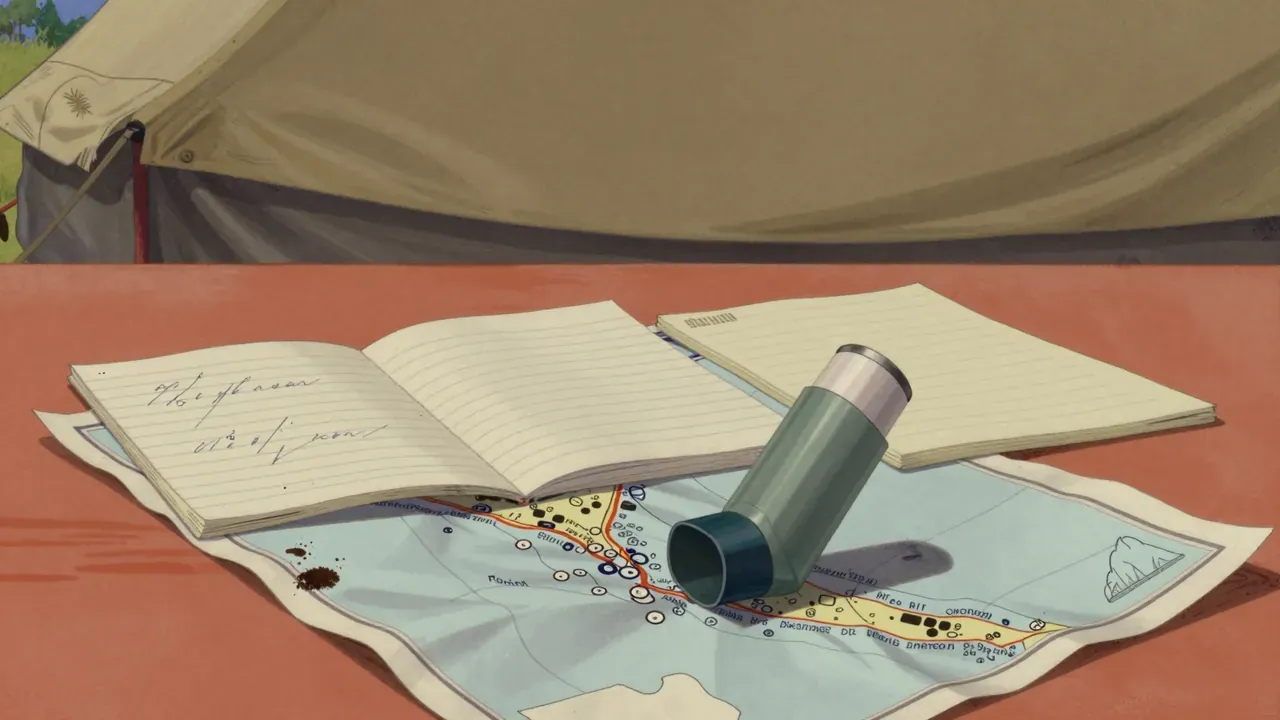
Che Part 2: Guerrilla follows Ernesto Guevara’s 1965–67 Bolivian campaign as a procedural collapse: dwindling supplies, failed communications, eroding morale, and mounting isolation. Directed by Steven Soderbergh and starring Benicio del Toro, it avoids mythmaking in favour of granular, unsentimental chronology — treating revolution as logistics, not legend.

13:00

Gray's Anatomy

Steven Soderbergh · 1996

Spalding Gray’s 1996 monologue film, directed by Steven Soderbergh, documents his diagnosis with macular pucker and his turn toward alternative treatments. Filmed in ten days with minimal staging, it relies entirely on Gray’s voice, syntax, and timing. Elliot Davis’s restrained cinematography and Cliff Martinez’s sparse score support rather than interpret. The film balances wit and vulnerability without resolving into either satire or sermon — though its final passages strain under the weight of their own metaphysical drift.

13:00

King of the Hill

Steven Soderbergh · 1993

Steven Soderbergh’s 1993 coming-of-age drama, adapted from A. E. Hotchner’s memoir, follows eleven-year-old Aaron as he lives alone in a St. Louis hotel during the Great Depression, his mother hospitalised and his father absent. With restrained cinematography by Elliot Davis, sparse scoring by Cliff Martinez, and a lead performance of extraordinary quietude from Jesse Bradford, the film builds emotional force through accumulation — not climax. It treats poverty, illness, and abandonment as environmental facts, not dramatic engines, and finds moral weight in small, sustained acts of self-preservation.

13:00

Schizopolis

Steven Soderbergh · 1996

Steven Soderbergh’s 1996 experimental comedy Schizopolis uses fractured narrative, invented speech, and role-swapping to dissect communication, identity, and social scripting. Shot in Baton Rouge on a $250,000 budget, it follows three overlapping perspectives — office worker Fletcher Munson, dentist Dr. Korchek, and exterminator Elmo Oxygen — all played by Soderbergh and his collaborators. With no traditional credits and a deliberately alienating style, it tests the limits of audience patience and narrative coherence.

13:00

Sex, Lies, and Videotape

Steven Soderbergh · 1989

Steven Soderbergh’s 1989 debut is a tightly controlled drama set in Baton Rouge, following a married couple, the wife’s sister, and a visiting friend whose videotaped interviews about female sexuality unsettle their relationships. Shot on a $1.2m budget, with deliberate pacing, flat natural lighting by Walt Lloyd, and a sparse Cliff Martinez score, it builds tension through understatement. It won the Palme d’Or, launched the 1990s US indie wave, and remains a benchmark for psychological realism — not as catharsis, but as sustained, uncomfortable attention.

13:00

The Daytrippers

Greg Mottola · 1996

The Daytrippers (1996) follows Eliza and her family on a single-day drive from Long Island to Manhattan after she finds evidence her husband may be having an affair. Written and directed by Greg Mottola, it unfolds through tightly observed interactions, subtle performances, and a refusal to resolve its tensions neatly. With a strong ensemble cast and a focus on emotional authenticity over plot mechanics, it captures the friction and tenderness of family life under uncertainty.

13:00

Traffic

Steven Soderbergh · 2000

Steven Soderbergh’s 2000 crime drama Traffic traces the US drug trade across four interwoven storylines — political, enforcement, consumer, and supplier — using distinct colour grading, multilingual dialogue (including unsubtitled English and fully subtitled Spanish), and a procedural rhythm. Written by Stephen Gaghan and shot by Soderbergh under a pseudonym, it won four Academy Awards including Best Director and Best Supporting Actor for Benicio del Toro. Its ambition lies in structural coherence, not emotional resolution.