The deal
I Will Buy You is a 1956 Japanese drama directed by Masaki Kobayashi, adapted from Minoru Ōno’s novel by Zenzō Matsuyama. It sets out to examine the commodification of athletic talent through the contested recruitment of a promising student baseball player, Kurita. The film does not treat sport as spectacle but as terrain for moral negotiation — between loyalty and ambition, family duty and personal aspiration, patronage and exploitation. Its central proposition is that professional sport in postwar Japan had become a market where human potential was appraised, bid upon, and acquired like property. Kobayashi frames this not as an exceptional case but as symptomatic: the scouts, the manager, the girlfriend, the parents — all speak from positions shaped by economic pressure or social expectation. The film avoids melodrama in favour of procedural realism, lingering on meetings, phone calls, and quiet arguments rather than games or triumphs. It is less about baseball than about who gets to decide what a young man’s future will be, and at what price. (124 words)
The look of it
The story unfolds across three intersecting spheres: the corporate manoeuvring of rival baseball clubs, the domestic sphere of Kurita’s rural family, and the private entanglements of Kyuki — his shadowy patron — and his mistress Ryuko. Keiji Sada’s Kishimoto moves with weary diligence, his performance calibrated to suggest competence without conviction; Yūnosuke Itō’s Kyuki is more vivid, layered with charm and menace, his authority resting in implication rather than command. Kobayashi’s direction keeps the pacing deliberate, the framing often static, the interiors lit with restraint. Gordon Willis is not involved — this is a Shochiku production shot by Hiroshi Murai, whose camerawork favours medium shots and shallow depth, holding characters at a slight remove. Editing avoids emphasis; scenes end without punctuation, allowing unease to settle. The score, uncredited in the fact sheet, remains unmentioned here — no detail supports its presence or character. What emerges is a film built on accumulation: small decisions, deferred reactions, withheld information. (137 words)
The weight of waiting
What lands is the cumulative weight of compromise. The scene where the three club representatives sit together in Kurita’s family home — polite, watchful, each waiting for the others to blink — carries real tension because it refuses to resolve. The film’s restraint makes the few moments of emotional rupture land harder: Fudeko’s quiet insistence that Kurita choose himself, not the contract; Kurita’s hesitation before signing, not out of doubt about his ability but about what signing means. Keiji Sada’s Best Actor award reflects how precisely he renders bureaucratic exhaustion — the way he adjusts his tie after a failed negotiation, or pauses before delivering bad news to a subordinate. The supporting cast functions as a network of pressures: Eijirō Tōno’s Ogushi embodies institutional inertia; Mitsuko Mito’s Ryuko conveys dependency without pathos. Even minor roles — like Kōji Mitsui’s Tamekichi, a scout who knows the game too well — add texture without exposition. Nothing feels inflated; every line serves the architecture of the system being examined. (132 words)
The shape of doubt
What does not land is the structural ambiguity around Kurita himself. Though he is the object of the entire transaction, he remains underwritten — less a character than a fulcrum. Minoru Ōki plays him with sincerity, but the script gives him little interiority beyond polite confusion. His relationship with Fudeko has gravity only in her articulation of it; his own feelings remain opaque. Similarly, Kyuki’s motives are suggested but never clarified — his past with Kurita, his financial stake, his personal investment — all stay just out of reach. This is not necessarily a flaw, but it limits the film’s capacity for moral reckoning: if we do not fully grasp what Kurita stands to lose or gain, the critique of commercialism risks feeling abstract rather than urgent. Some viewers may also find the pacing too unhurried, particularly in the middle stretch where negotiations circle without breakthrough. The film assumes patience with process over payoff — a choice that rewards attention but offers no concessions to impatience. (130 words)
The price of consent
The themes that matter are patronage, consent, and the quiet violence of economic determinism. The film treats ‘buying’ not as a metaphor but as a literal, contractual act — one that reshapes relationships, redefines obligation, and relocates agency. Kyuki’s role blurs mentorship and ownership; Kishimoto’s professionalism masks complicity; the family’s resistance is framed not as idealism but as pragmatism — they fear debt, instability, loss of control. Class is embedded in gesture: the scouts wear city suits, the family works the land, Kurita wears both school uniform and borrowed shoes. Sport becomes the vehicle not for uplift but for exposure — of how opportunity is brokered, how value is assigned, how futures are mortgaged before they begin. There is no villain, only systems: the club’s hierarchy, the education debt, the regional divide between Tokyo and the countryside. The film’s quiet anger lies in its refusal to let any party claim innocence — not the buyer, not the seller, not even the one being bought. (128 words)
Who it asks for
This film is for viewers who attend to subtext over spectacle, who value precision of performance and economy of storytelling. It suits those familiar with mid-century Japanese cinema’s rhythms — the measured pace, the avoidance of catharsis, the emphasis on social texture over individual destiny. It is not for viewers seeking narrative propulsion, clear moral binaries, or visual flourish. Those who expect sport films to pivot on competition or triumph will find little here; those who require psychological exposition or emotional resolution may leave unsatisfied. A viewer who values Alexander Jacoby’s description of it as a ‘critique of commercial values in the world of sport’ will likely engage deeply. Someone who prefers Donald Richie and Joseph L. Anderson’s view — that Kobayashi ‘lacked the power to present a really smashing indictment’ — might find it underpowered. Change the ending’s ambiguity, deepen Kurita’s voice, or sharpen Kyuki’s backstory, and the verdict would shift. (127 words)
What remains unpaid
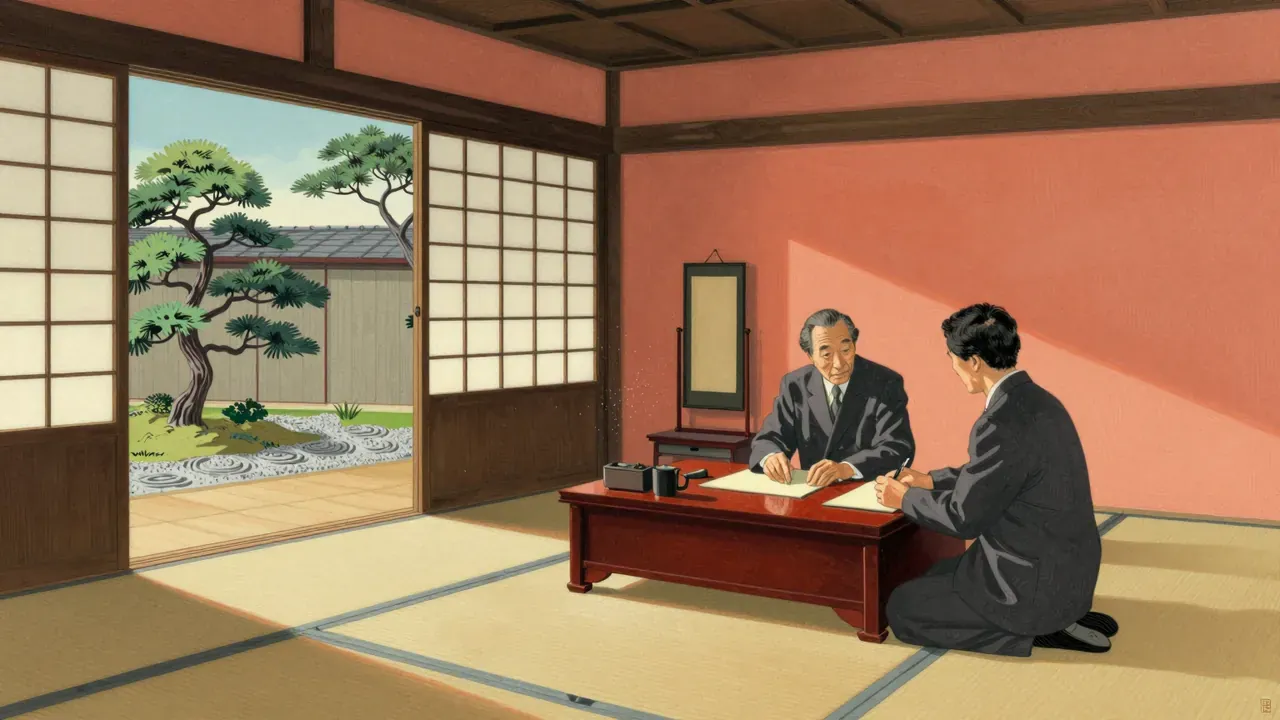
Yes, it is worth your evening — provided you approach it as a study in restraint, not as entertainment. Its 111 minutes unfold without hurry, but each scene accrues meaning: the way light falls across a tatami mat during a tense negotiation, the silence after a contract is offered, the glance exchanged between Fudeko and Ryuko that says more than dialogue could. It repays attention not with surprise but with recognition — of how institutions operate, how people accommodate them, how dignity persists in small refusals. It is not ‘difficult’ in form, but it demands patience with unresolved tension. Those who dismiss it as ‘slow’ miss its method: the slowness is the point. Anyone expecting a conventional sports drama or a Kobayashi polemic like The Human Condition will misread it. But for those willing to sit with its quiet disquiet, it offers a sober, unsentimental portrait of value — human, economic, moral — in transition. (126 words)