The shape of longing
Heartbeats is a French-language Canadian drama from Xavier Dolan, released in 2010, that charts the parallel infatuations of two Montreal friends — Francis and Marie — with the same man, Nicolas. It is not a conventional romance but a stylised study of projection, self-performance, and unrequited longing. Dolan’s aim is to render desire as surface and gesture: less about who Nicolas is than how Francis and Marie fabricate him as an object of mutual fascination and rivalry. The film leans into artifice — its saturated colour grading, deliberate framing, and rhythmic editing all serve this preoccupation with image-making as emotional strategy. It treats friendship and attraction as overlapping, unstable registers, where intimacy blurs into competition and affection becomes indistinguishable from mimicry. The narrative structure mirrors this: scenes repeat with slight variations, dialogue loops, gestures recur like motifs. This is not realism but a dramatisation of interior logic — how young adults rehearse love before they understand it, using each other as both audience and foil. The film’s ambition lies in its refusal to resolve the tension between sincerity and performance, holding that space open rather than collapsing it into confession or catharsis. (158 words)
The look of it
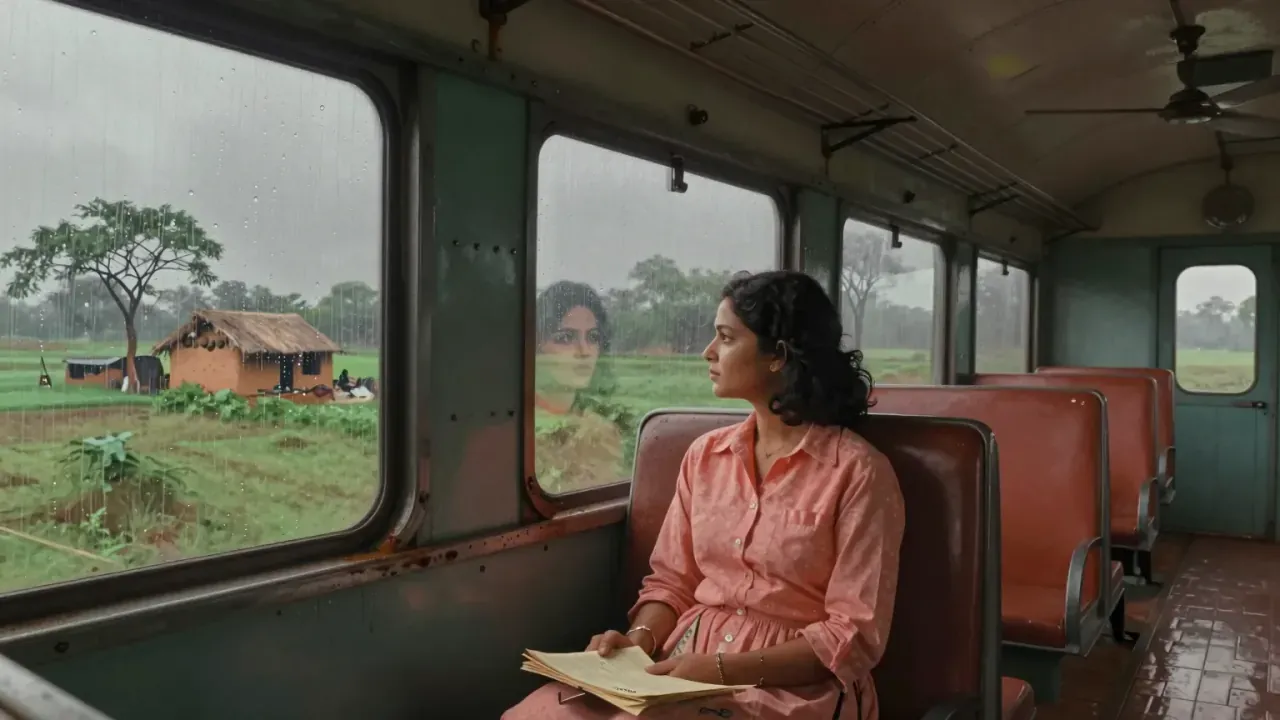
The story unfolds over several weeks, centring on shared meals, late-night conversations, and a weekend trip to a country house — all rendered with tight spatial control by cinematographer Stéphanie Weber Biron, who favours shallow focus and close proximity, keeping faces and hands prominent while backgrounds dissolve. Xavier Dolan edits with a percussive rhythm, cutting on movement or breath, often lingering just past comfort. Performances are calibrated to the tone: Monia Chokri and Niels Schneider underplay their characters’ volatility, letting jealousy register in posture or a withheld glance; Dolan himself, as Francis, avoids theatricality, relying instead on stillness and micro-timing. Anne Dorval appears briefly but decisively as Marie’s mother, grounding one scene in generational contrast. The soundtrack layers pop songs and original score with abrupt fades and repetitions, reinforcing the looped quality of the characters’ thinking. Costume and production design lean into early-2010s Montreal indie aesthetics — slim-fit tailoring, muted pastels, vinyl records on shelves — not as backdrop but as active signifiers of identity construction. There is no voiceover, no exposition; meaning accrues through accumulation of detail, not explanation. (159 words)
What holds still
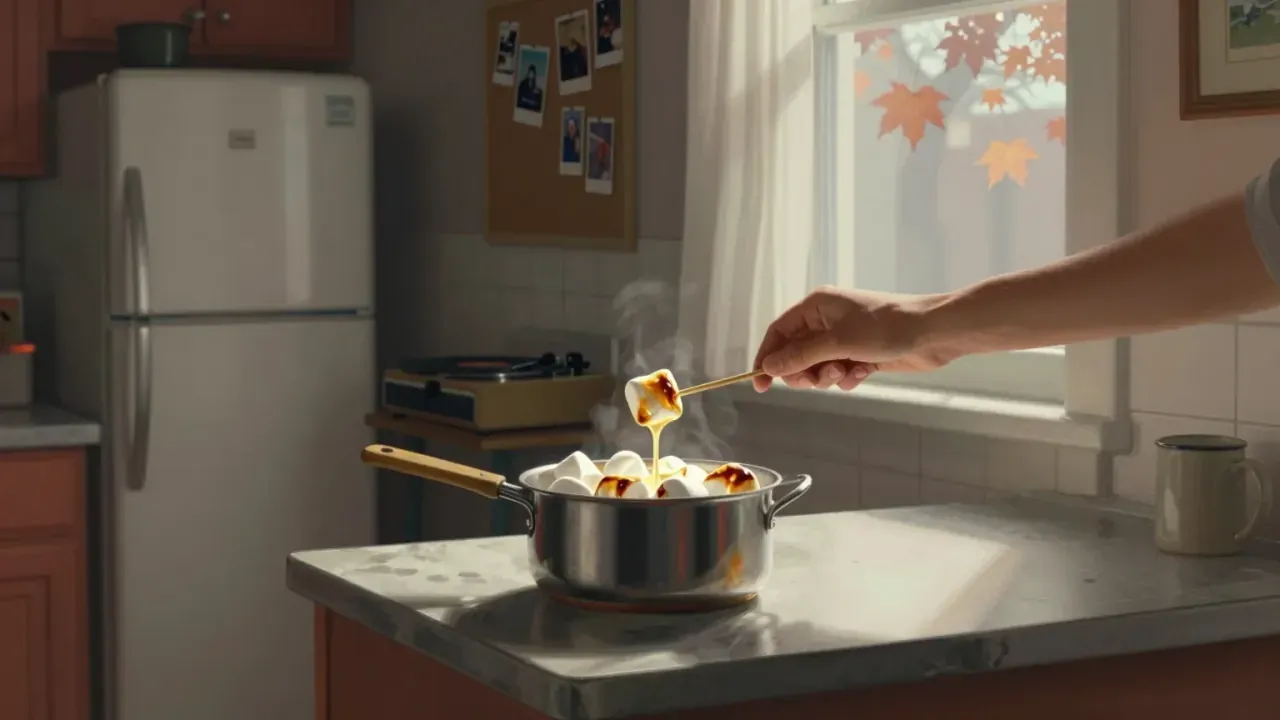
What lands most firmly is the film’s precision in rendering the choreography of unspoken feeling — the way Marie watches Nicolas feed Francis a marshmallow, or how Francis hesitates before picking up the phone after the country trip. These moments avoid sentimentality because they are observed, not interpreted. The visual grammar sustains this: Weber Biron’s lighting keeps skin tones warm but textures soft, avoiding glamour while preserving vulnerability. Dolan’s editing gives weight to silence — pauses last long enough to become charged, then break without release. The doubling of Francis and Marie works not as symmetry but as counterpoint: their voices overlap in voiceover, their gestures echo, yet their internal logics diverge. The final party scene, where they jointly approach another man, lands with quiet force because it refuses closure — it shows repetition as resilience, not failure. The film’s restraint in withholding Nicolas’ inner life pays off: he remains opaque, which makes the projections onto him feel more truthful, not less. Even the voicemail messages — unheard, unreturned — land because they are left in full, unedited duration, trusting the viewer to sit with their awkwardness. (157 words)
Where the frame slips
What does not land is the film’s occasional over-reliance on stylistic quotation. References to Nouvelle Vague and Wong Kar-wai surface as mannerisms — sudden slow motion, abrupt zooms, mirrored compositions — that sometimes interrupt rather than deepen the emotional line. A few scenes, particularly the Vietnamese restaurant sequence, strain under the weight of their own symbolism: the cherry passed hand-to-mouth, the table arrangement, the seating distance — all legible, but over-determined. The decision to cast Dolan himself as Francis risks self-indulgence without adding narrative necessity; his performance is capable but lacks the subtle dissonance Chokri brings to Marie. Some viewers will find the pacing glacial, especially in the middle stretch where conversation circles without forward motion — not as a formal choice but as inertia. The film assumes familiarity with its visual lexicon, so those unfamiliar with its intertextual cues may read affectation where Dolan intends homage. The ending’s ambiguity works only if the preceding hour has built sufficient investment in the characters’ interiority; for some, the emotional returns do not match the stylistic demands. (156 words)
The grammar of closeness
The themes that matter are not love or heartbreak in the abstract, but the mechanics of desire as social performance — how identity solidifies in relation to an imagined other. The film treats friendship as a rehearsal space for romance, where loyalty and rivalry coexist without contradiction. It explores the gap between intention and interpretation: Marie misreads Nicolas’ affection for Francis as confirmation of her own desirability; Francis mistakes physical proximity for emotional reciprocity. Class and cultural capital surface quietly — the characters move through apartments with exposed brick and record collections, speak fluent English and French, reference films and poetry — not as markers of privilege but as tools they wield to construct themselves in front of each other. Time is treated non-linearly: the opening and closing parties mirror each other, suggesting growth as iteration, not progression. The film’s central tension is between authenticity and artifice — not as opposites, but as interdependent conditions of being seen. It asks whether self-fashioning is evasion or the only possible route to self-knowledge, and declines to answer. That refusal is its moral clarity. (159 words)
Who it meets halfway
This film is for viewers who value formal rigour over narrative propulsion, who find pleasure in composition, timing, and the weight of a held glance. It suits those familiar with arthouse traditions — particularly French and Québécois cinema — and comfortable sitting with unresolved emotion. It rewards attention to texture: the grain of film stock, the cadence of breathing, the way light falls on a shoulder. It is not for viewers seeking psychological exposition, plot-driven momentum, or clear moral resolution. Those who require character motivation to be verbally articulated, or who dislike stylisation that foregrounds its own construction, will find it alienating. A viewer expecting a straightforward queer coming-out narrative will be disappointed — the film’s treatment of sexuality is oblique, situational, and ultimately less about orientation than about projection. Someone who values emotional directness over aesthetic mediation may dismiss its restraint as coldness. What would change the verdict? A tighter edit — trimming ten minutes — would sharpen its impact without sacrificing nuance. (159 words)
The weight of waiting
Yes, it is worth your evening — provided you arrive prepared to meet it on its terms. Its ninety minutes unfold deliberately, asking for patience with repetition, ambiguity, and surfaces that refuse to yield easy meaning. It repays attention not with revelation but with accumulation: small shifts in expression, incremental changes in framing, the gradual thickening of atmosphere. Those who watch it expecting catharsis or closure will leave unsatisfied; those who accept its premise — that longing is often more vivid than fulfilment — will find it quietly resonant. It is not a film to consume, but to inhabit for its duration. A viewer who dislikes slow-burn character studies or finds stylisation distracting should skip it; there is no compromise in its approach. Its value lies in its consistency — every shot, cut, and performance choice serves its central concern. It does not ask to be loved, only witnessed. And in that witnessing, it offers something rare: a portrait of desire that feels lived-in, not literary. (158 words)