filmbriefs
Actor · 1925–2010

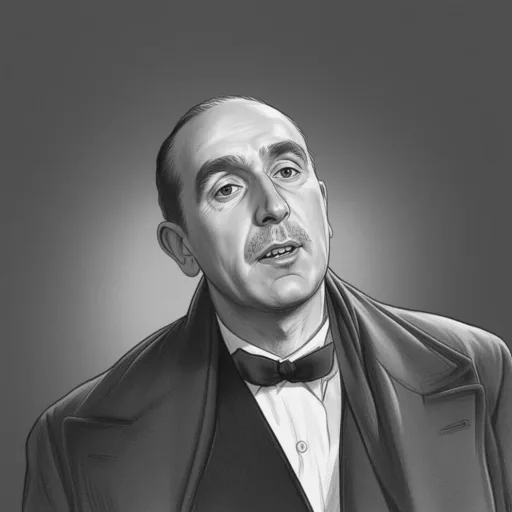
Bernard Musson

6
briefs
13:00
average
78 min
in total
On film.briefs6
13:00

Charade

Stanley Donen · 1963

Stanley Donen’s 1963 Charade pairs Cary Grant and Audrey Hepburn in a Paris-set romantic thriller about stolen wartime gold, shifting identities and a widow who inherits confusion. Written by Peter Stone and shot by Charles Lang, it balances suspense, banter and visual clarity without overreaching. Its strengths lie in structure, performance and tone; its limits in psychological depth and thematic ambition. It remains a masterclass in mid-century studio craft.
13:00

Diary of a Chambermaid

Luis Buñuel · 1964

Luis Buñuel’s 1964 Diary of a Chambermaid adapts Octave Mirbeau’s novel with Jean-Claude Carrière, following Jeanne Moreau’s Célestine as she navigates a decaying provincial household in late-1920s France. Rejecting surrealism for restrained realism, the film traces how power, prejudice and violence settle into routine — through glances, footwear, leaflets and wills. Roger Fellous’ cinematography treats interiors like crime scenes; Moreau’s performance hinges on withheld reaction. It ends not with justice but consolidation: the system endures, reshaped but intact.

13:00

Who Are You, Polly Maggoo?

William Klein · 1966

William Klein’s 1966 French film is a satirical mockumentary following Polly Maggoo, an American model pursued by a television crew in Paris. Using fragmented editing, stylised photography, and deadpan performance, it dissects how media constructs identity through repetition, framing, and erasure — never resolving who Polly is, because the system it critiques has no use for her answer.

13:00

Belle de Jour

Luis Buñuel · 1967

Luis Buñuel’s 1967 film follows Séverine Serizy, a Parisian housewife who spends weekday afternoons working as a high-class prostitute. Catherine Deneuve’s performance anchors a film defined by restraint: Sacha Vierny’s cool cinematography, Michel Magne’s sparse score, and a script that refuses psychological exposition. It treats fantasy not as illusion but as a parallel system of order — one that structures time, desire, and selfhood. The ending is deliberately ambiguous, looping back into uncertainty rather than resolution.

13:00

Gigi

Vincente Minnelli, Charles Walters · 1958

Gigi (1958) is a Metro-Goldwyn-Mayer romantic musical set in Belle Époque Paris, adapted by Alan Jay Lerner from Colette’s novella. Leslie Caron stars as a young woman raised to be a courtesan who instead chooses love on her own terms. Directed by Vincente Minnelli and Charles Walters, it features music by Frederick Loewe, cinematography by Joseph Ruttenberg and Ray June, and costumes by Cecil Beaton. It won nine Academy Awards, including Best Picture and Best Director.

13:00

That Obscure Object of Desire

Luis Buñuel · 1977

Luis Buñuel’s 1977 swan song adapts Pierre Louÿs’s novel into a stark, absurdist study of erotic fixation. Fernando Rey plays Mathieu, a wealthy Frenchman obsessed with Conchita — portrayed interchangeably by Carole Bouquet and Ángela Molina. Framed as a train confession and punctuated by unexplained terrorist violence, the film refuses psychological coherence, using repetition, structural disjunction, and deadpan tone to embody desire as irrational, inescapable, and faintly ridiculous.