The look of it
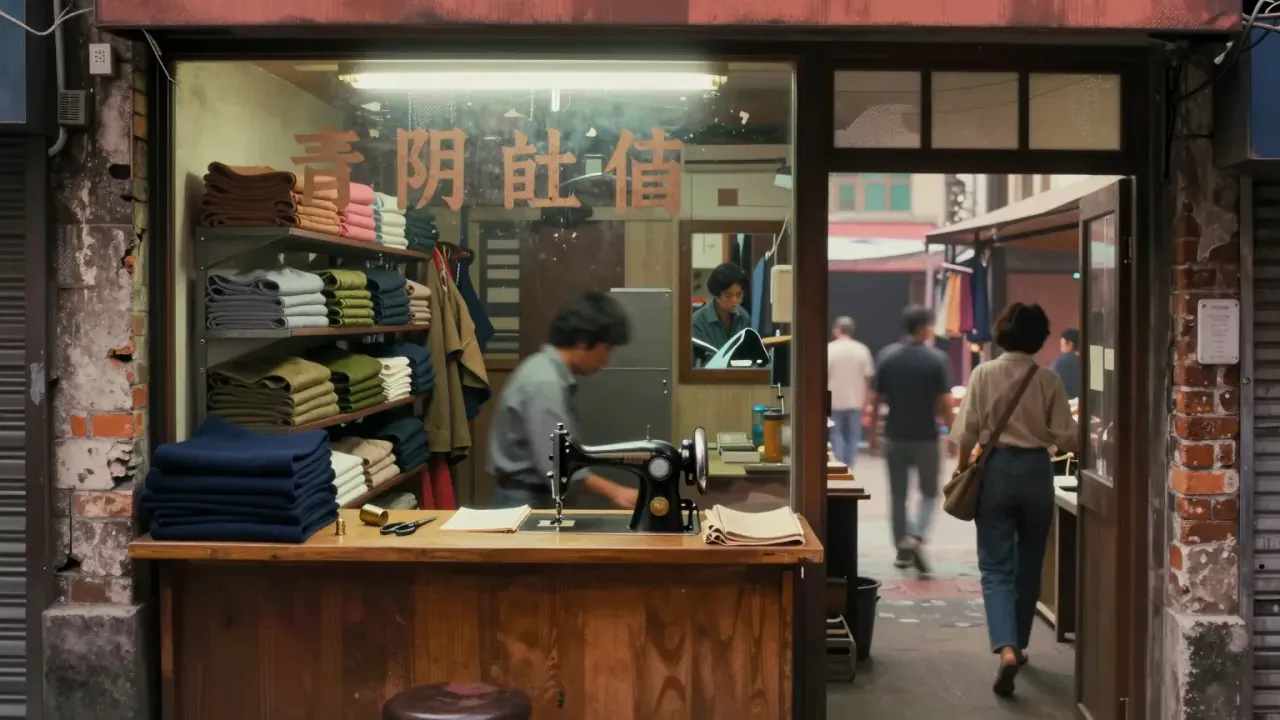
Dust in the Wind is a Taiwanese romance film set in the early 1970s, tracing the quiet separation of two rural sweethearts as they migrate from Jiufen to Taipei. It does not seek dramatic rupture or moral argument but instead sustains a steady, observational gaze on ordinary life — on train platforms, tailoring shops, printing presses, and army barracks — as a vessel for larger social change. The film treats urbanisation not as an event but as a slow erosion: of dialect, of proximity, of shared labour, of unspoken promises. Its ambition lies in restraint: to register what vanishes without fanfare — the rhythm of coal-mining families, the weight of a hand-sewn shirt, the silence after a letter stops arriving. It is not nostalgic in the sentimental sense; it withholds judgment on Ah Yun’s marriage or Ah Yuan’s resignation, treating both as inevitable consequences of distance and time. The film’s project is structural rather than psychological: to map how economic shifts reconfigure intimacy, one missed train, one stolen motorbike, one unanswered letter at a time. (158 words)
The weight of silence
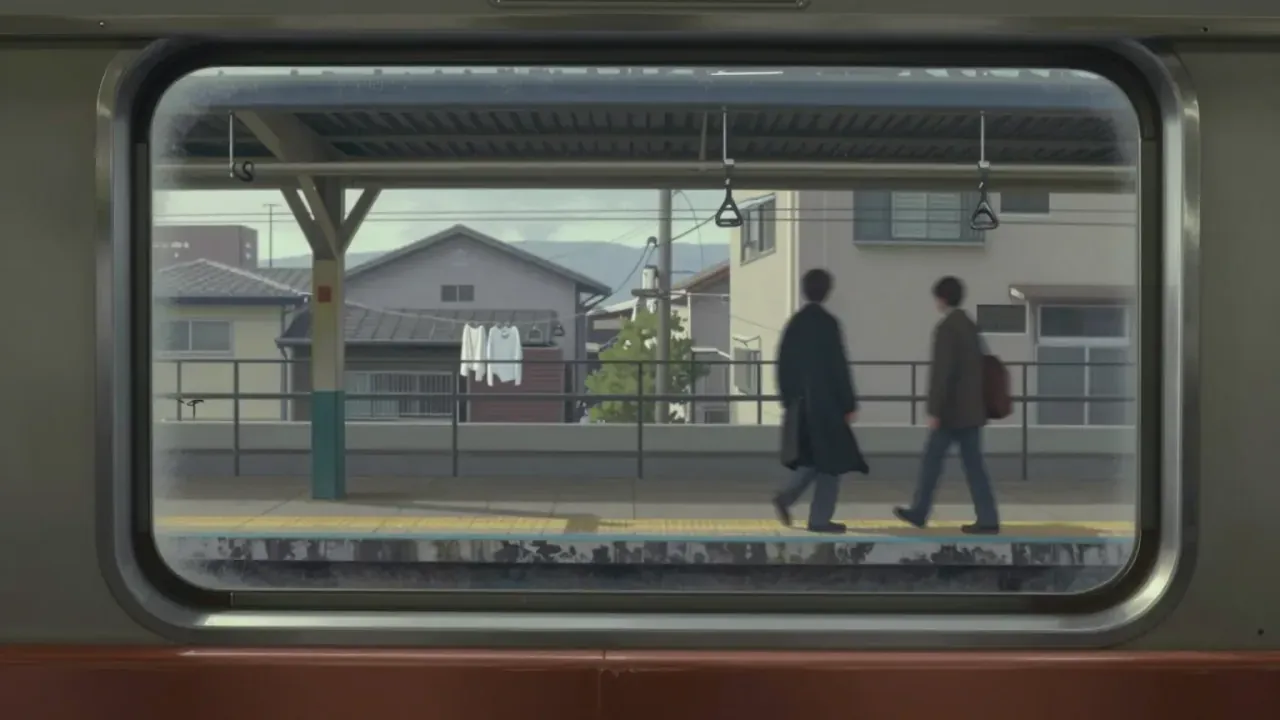
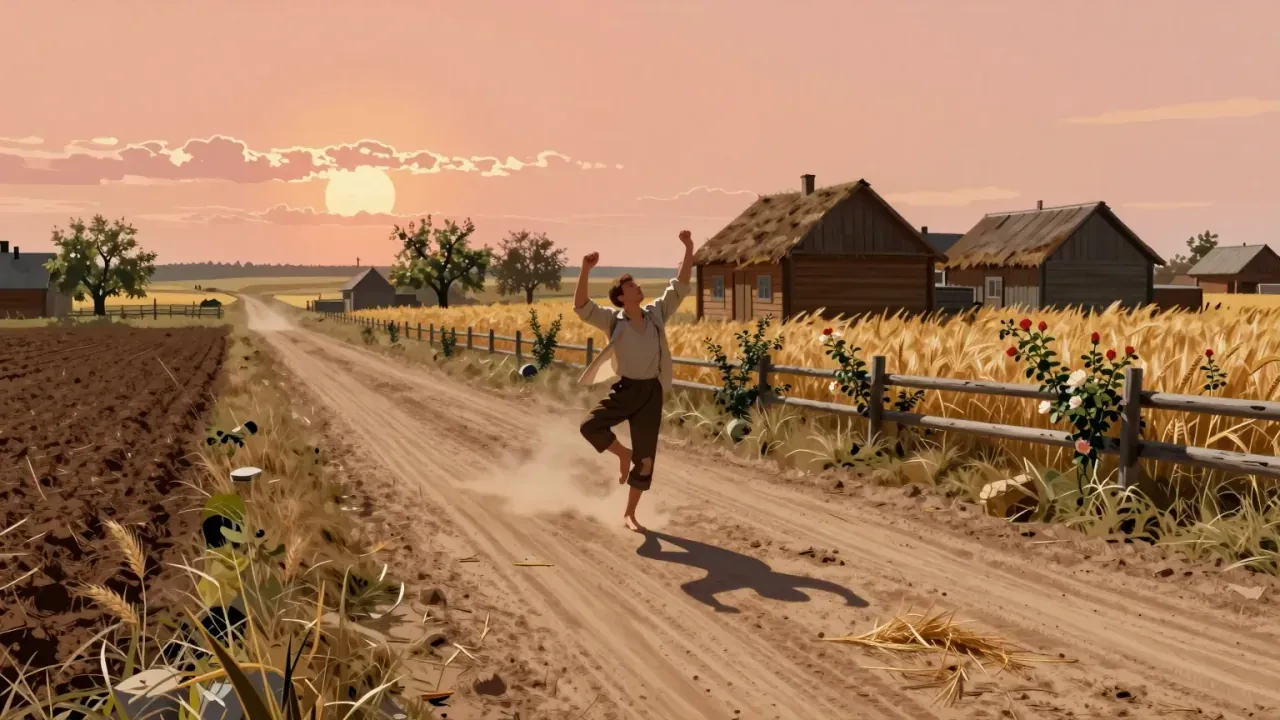
The story unfolds across three zones — Jiufen’s hillside paths and railway line, Taipei’s cramped tailor shop and Chunghua Market, and the offscreen military post of Kinmen — each anchored by Mark Lee Ping Bin’s fixed, medium-distance compositions. Li Tian-lu, in his debut performance, delivers the grandfather’s lines with uninflected gravity, while Hsin Shu-fen and Wang Chien-wen play Ah Yun and Ah Yuan with minimal inflection, their emotions held just beneath the surface. Liao Ching-sung’s editing avoids emphasis: scenes end when action ceases, not when feeling peaks. There are no close-ups to cue interpretation; no score swells to underline sorrow. Chen Ming-chang’s soundtrack uses acoustic guitar and harmonica not as commentary but as ambient texture — present, unobtrusive, slightly weathered. The camera watches Ah Yuan walk the same railway track twice, once with Ah Yun, once alone, without altering framing or pace. This consistency is the craft’s discipline: every shot confirms that nothing here is exceptional, only repeated, then gradually altered. The film’s mechanics are all in service of duration — of letting time accrue, not accelerate. (159 words)
The shape of absence
What lands is the accumulated weight of small absences: the space beside Ah Yuan on the train seat after Ah Yun leaves Jiufen; the unused second bed in their Taipei room; the way Ah Yuan folds and refolds the shirt she made him, long after he knows she will not return. The film’s power resides in its refusal to isolate emotion — grief arrives not in a breakdown but in the grandfather’s complaint about ruined sweet potatoes, spoken while Ah Yuan sits silently, listening. The railway motif works because it is literal before it is symbolic: trains carry people, freight, coal, letters, conscripts — and their schedules dictate the film’s rhythm. The depiction of workplace strain — Ah Yuan’s exhaustion at the printing press, the miners’ muted grievances — lands not through exposition but through posture and repetition: hands ink-stained, shoulders hunched, voices low and unraised. Even the outdoor screening of Beautiful Duckling functions not as homage but as environmental fact — the projector’s hum, the children’s chatter, the flicker on the wall — grounding the film in a tangible, tactile past. Nothing is heightened; everything is registered. (157 words)
Where the frame holds back
What does not land is the military service sequence, which remains structurally necessary but emotionally inert. Shot in Xiangshan after the Kinmen request was denied, the scenes lack the geographical specificity that anchors the rest — no typhoon, no sea wind, no visible border tension — and so feel like narrative placeholders rather than lived experience. Ah Yuan’s heartbreak is conveyed through absence of letters, not through any interior shift we see in him; his younger brother’s revelation arrives offscreen, leaving the emotional pivot unanchored. The miners’ strike talk, though historically grounded, floats without consequence — no escalation, no resolution, no personal stake drawn for Ah Yuan beyond overhearing. Similarly, the transition from rural to urban life relies on contrast rather than causation: we see Ah Yun’s homesickness, but not the precise mechanism by which Taipei erodes her attachment — the film shows the symptom, not the pressure. These gaps are not failures of intent but of emphasis: the film’s commitment to understatement occasionally muffles stakes that require sharper articulation. Some viewers may find the pacing indistinguishable from stasis, mistaking patience for passivity. (159 words)
What endures
The themes that matter are migration as quiet severance, labour as unremarked continuity, and memory as physical residue. The film treats departure not as choice but as drift — Ah Yuan goes first, Ah Yun follows, neither fully intending the rupture that follows. Their work is never romanticised: printing plates wear fingers raw, tailoring demands exactness under fluorescent light, mining is shown in passing, not in drama. What endures is not love but habit — the way Ah Yuan still walks the railway line, the way he wears the shirt, the way he hears his grandfather’s voice as comfort, not nostalgia. The typhoon that ruins the harvest matters less as disaster than as cyclical interruption — part of the same weather system that brings rain to Taipei streets and damp to Kinmen barracks. Time here is geological, not biographical: generations overlap in Li Tian-lu’s face, in the red-brick walls of Jiufen, in the unchanged layout of the tailor shop now housing the Red House Theatre. The film’s central concern is not whether love lasts, but what persists when it does not — language, craft, terrain, routine. (156 words)
Who it meets
This film is for viewers who value duration over disclosure, who find resonance in what is withheld rather than what is stated, and who accept that some endings arrive not with closure but with quiet resettlement. It suits those accustomed to arthouse pacing — fans of Ozu, early Yang, or later Tsai — and those interested in Taiwan’s social history as embedded in domestic detail. It is not for viewers who require narrative propulsion, clear moral positions, or psychological exposition; those expecting a conventional romance will find its restraint alienating, its silences opaque. Anyone needing plot signposting or emotional cues will struggle: the film offers no score-led guidance, no flashbacks to clarify motive, no voiceover to interpret meaning. A viewer who values thematic clarity over atmospheric accumulation — someone drawn to A City of Sadness for its political urgency rather than its visual grammar — may find Dust in the Wind too diffuse. Its worth depends on willingness to sit with ambiguity, not resolve it. (158 words)
Why it stays
Yes, it is worth your evening — provided you watch it as a study in accretion, not revelation. Its 109 minutes do not build to a climax but settle into a rhythm, and that rhythm carries the film’s meaning: the slow wearing down of expectation, the gradual reassembly of self after loss. It repays attention not through surprise but through recurrence — the same train whistle, the same street corner, the same shirt worn again. Those who dismiss it as ‘slow’ mistake slowness for emptiness; the film is densely populated with gesture, texture, and unspoken history. Someone who prefers tightly plotted fiction or emotionally explicit storytelling will likely leave unsatisfied — and that verdict would be valid, not mistaken. What would change the rating is not better acting or sharper dialogue, but a different contract with the viewer: this film assumes you already know that love ends, cities grow, and people leave — and asks only that you watch how those facts take shape in the grain of everyday life. (159 words)