The look of it
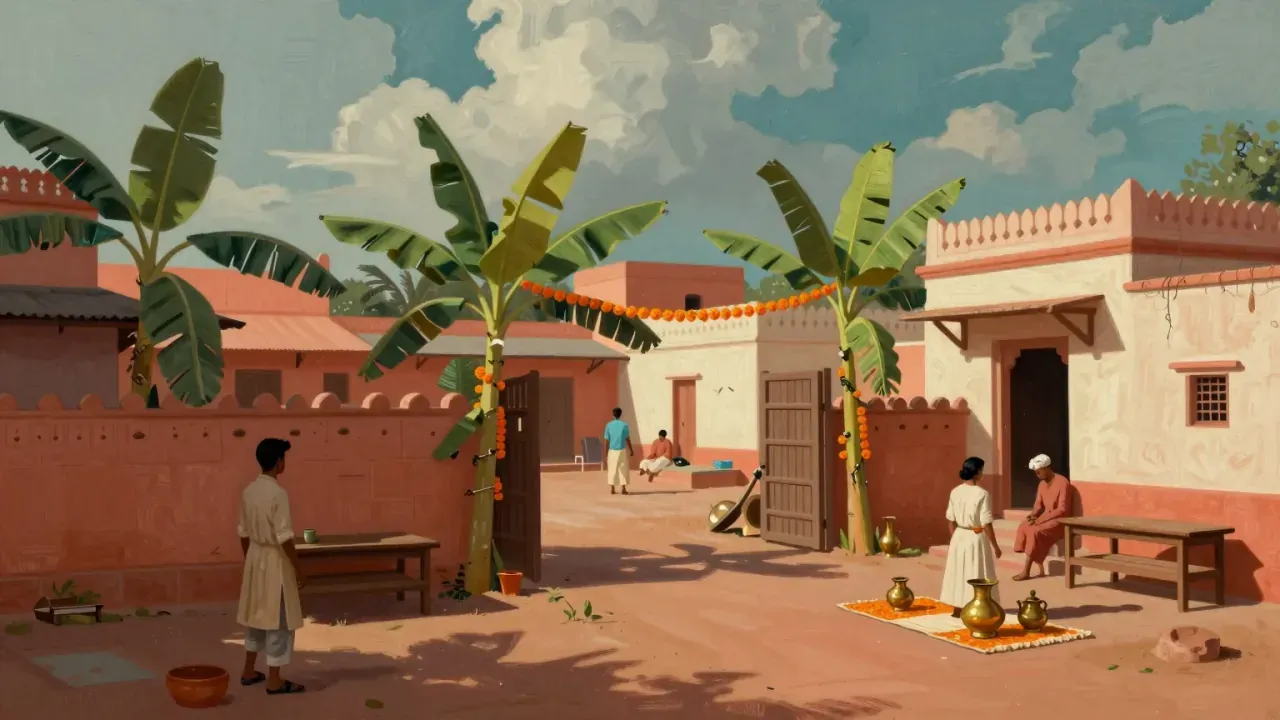
Days and Nights in the Forest is a Bengali-language drama set over four days in the Palamu forest, following four Calcutta men on an unplanned rural retreat. Satyajit Ray adapts Sunil Gangopadhyay’s novel not as a literal translation but as a quiet calibration of urban selfhood against rural presence — less a plot-driven narrative than a sustained observation of how manners, silence, and unspoken hierarchies shift when removed from their usual frame. The film does not seek to resolve or instruct, but to hold still: to let gesture, hesitation, and withheld speech carry weight; to treat a boiled egg, a borrowed tiffin, or the absence of a shave as indices of moral posture. It works within the conventions of classical Indian literary realism while gently unsettling them — the ‘carnivalesque’ noted in the source material appears not in chaos or inversion, but in the soft erosion of certainty among educated men who assume they understand both women and wilderness. Ray’s aim is neither satire nor sermon, but precise, unhurried portraiture of consciousness in mild crisis. (158 words)
The men in the forest
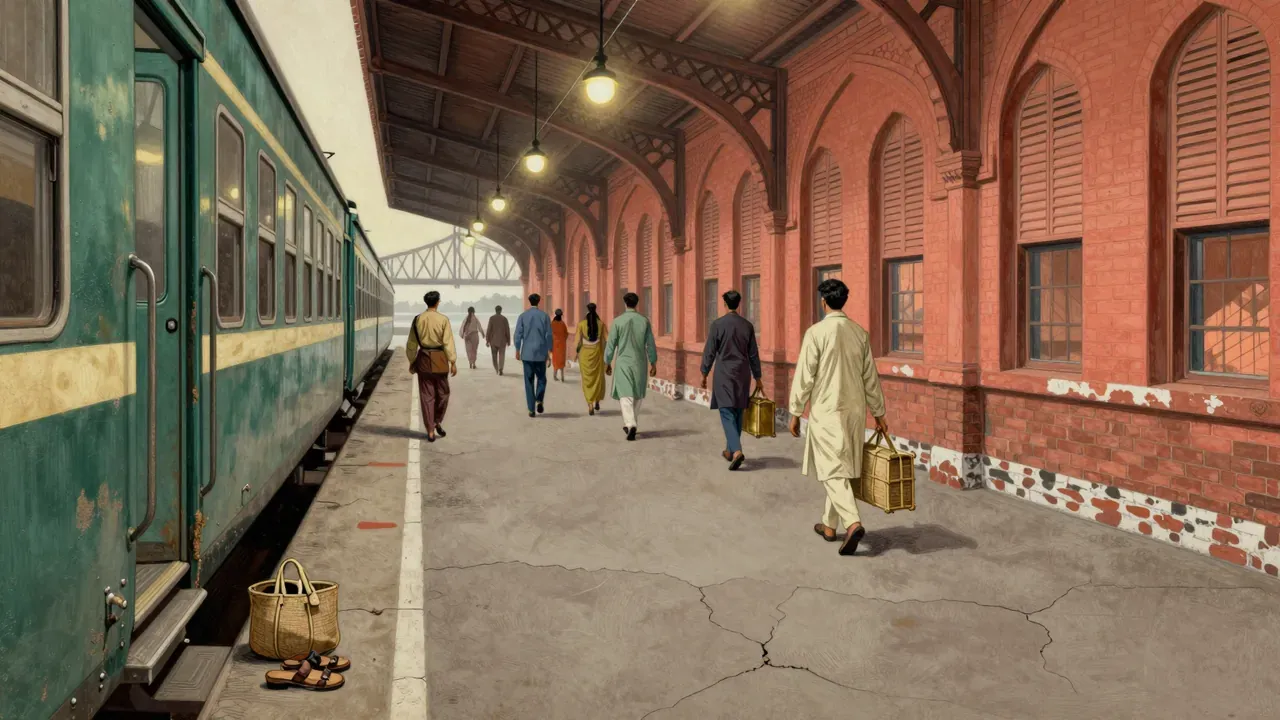
The story unfolds through accumulation rather than incident: a bribe to a chowkidar, a shared drink, a game of cards, a missed breakfast. Soumendu Roy’s cinematography keeps light low and movement deliberate — forest paths are dappled, interiors dim and uncluttered, faces often held in medium close-up without emphasis. Performances avoid theatricality: Soumitra Chatterjee’s Asim registers pride through posture more than dialogue; Sharmila Tagore’s Aparna speaks little but listens with visible gravity; Simi Garewal’s Duli moves with unselfconscious ease that unsettles the men’s assumptions. Satyajit Ray’s score uses sparse sitar and flute phrases, never underscoring emotion but marking transitions — a pause before a line, a breath after a silence. Dulal Dutta’s editing sustains rhythm without hurry: scenes end when their tension has settled, not when their purpose is declared. There are no flashbacks, no voiceover, no symbolic cutaways. Every shot serves duration, not explanation. The craft does not call attention to itself; it holds space for what is unsaid, trusting the viewer to notice the weight of a glance or the significance of a door left open. (159 words)
The women who stay still
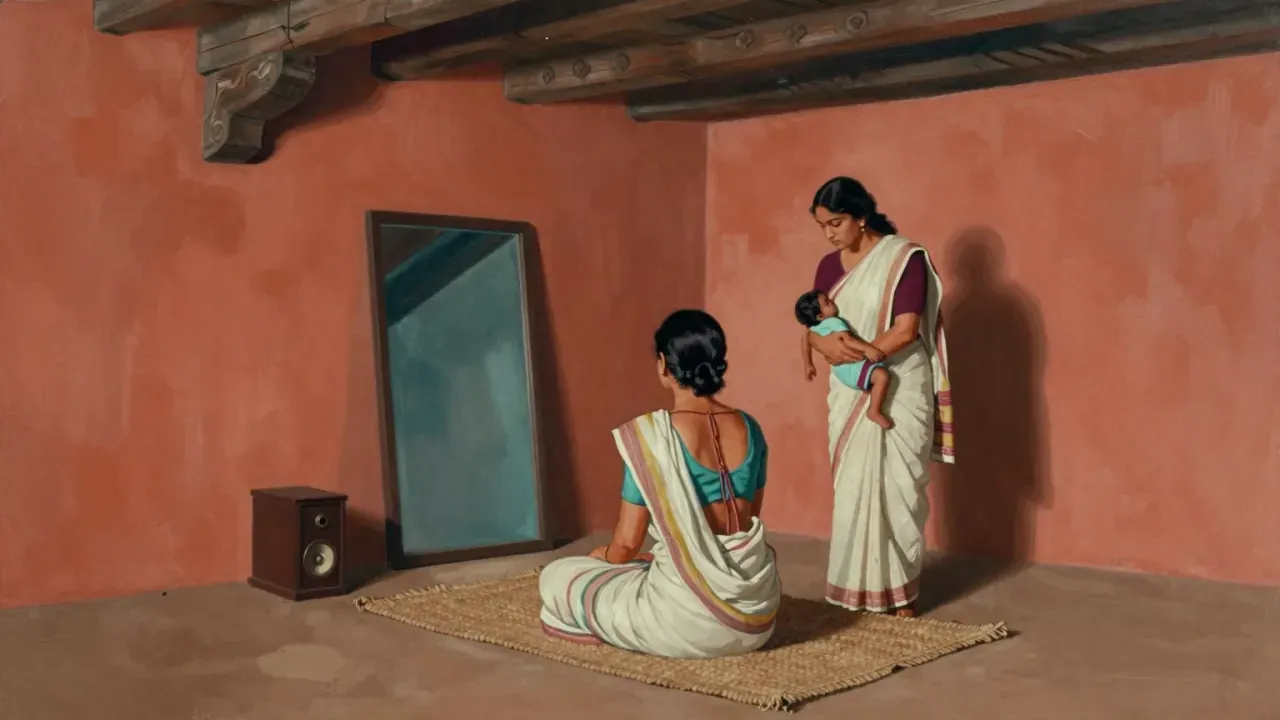
What lands is the film’s quiet insistence on dignity in small things — the care with which Jaya arranges a tiffin, the way Aparna corrects Asim’s misreading of her reserve not with anger but with a single, unflinching question. The forest does not transform the men, but reveals them: Hari’s vulnerability surfaces not in confession but in his clumsy, tender approach to Duli; Shekhar’s buffoonery gives way to quiet competence when Hari is injured; Sanjoy’s restraint reads less as prudishness than as a real, felt conflict between desire and self-conception. The film’s emotional accuracy lies in its refusal to simplify motive — no character is reduced to type, even when they behave badly. The final image — four men leaving in a car, silent, holding boiled eggs — lands because it carries no commentary, only the accumulated weight of three days’ minor reckonings. Nothing is resolved, yet something has shifted: not in circumstance, but in the texture of awareness. That subtlety, sustained across 112 minutes without strain, is the film’s most durable achievement. (157 words)
The unseen woman
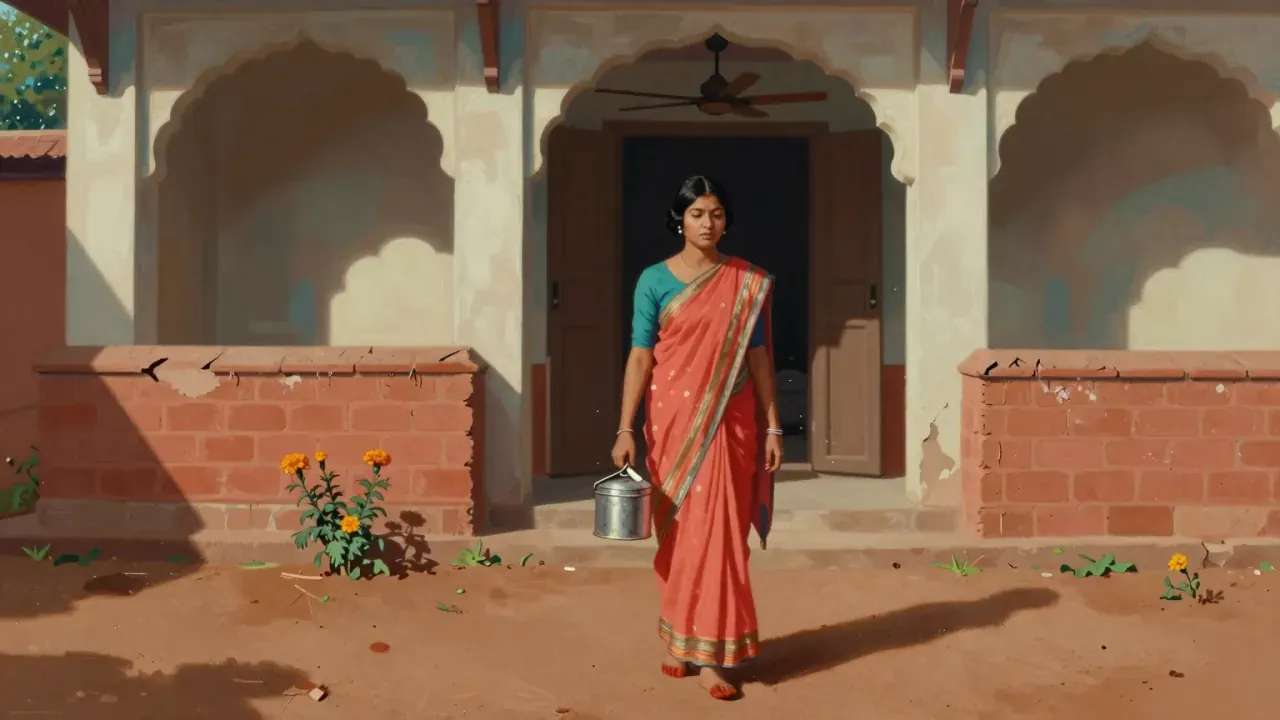
What does not land is the film’s structural patience when viewed outside its cultural and linguistic context. The pacing assumes familiarity with the rhythms of Bengali middle-class speech and social evasion — pauses that read as contemplative in Calcutta may register as vacancy elsewhere. Some Western critics mistook this for inertia, reading the lack of plot escalation as absence of stakes. The film’s resistance to exposition means key tensions — why Asim’s pride fractures, why Sanjoy withdraws from Jaya — remain implicit, anchored in class-inflected assumptions about propriety and reciprocity that go unnamed. The chowkidar’s wife, mentioned only once, is not a forgotten detail but a structural hinge; yet without that cultural grammar, her absence feels like oversight, not indictment. The film also asks the viewer to accept its geography as given: Palamu is not scenic backdrop but active counterpoint, its tribal presence framing rather than serving the urban gaze — a framing that may elude viewers unfamiliar with the colonial and postcolonial history embedded in those relationships. (159 words)
The fair where nothing is won
The themes that matter are civility as performance, the fragility of male self-regard, and the quiet violence of urban condescension disguised as curiosity. The forest is not a place of renewal but of exposure: stripped of office titles and social scripts, the men reveal how much their identities rely on external validation. Their fascination with ‘simple’ tribal women collapses under its own assumptions — Duli’s autonomy unsettles them more than her openness. Aparna and Jaya are not foils but interlocutors, holding up mirrors calibrated to each man’s blind spot: Asim’s vanity, Sanjoy’s moral rigidity, Hari’s woundedness, Shekhar’s performative detachment. Class operates not through dialogue but through gesture — the way Asim handles money, how Sanjoy folds his hands, who pours tea and who receives it. The film treats caste and tribal identity obliquely, through omission and access: the chowkidar’s marginality, the conservator’s authority, the women’s ease in spaces the men must bribe or beg their way into. These are not background details but the architecture of the film’s moral field. (156 words)
The parting gift
This film is for viewers who trust silence as meaning, who find resonance in understatement, and who accept that character may be revealed more reliably through hesitation than declaration. It rewards attention to physical detail — a hand resting on a windowsill, the angle of a head turned away, the duration of a shared look — and assumes some fluency in the unspoken codes of Indian bourgeois life. It is not for those who require narrative propulsion, clear cause-and-effect, or psychological exposition. Viewers expecting either folkloric exoticism or political polemic will misread its restraint as neutrality. Those unfamiliar with Ray’s work may find its pace alienating without the context of his broader filmography — this is not an entry point, but a late refinement. Its demands are modest but specific: time, stillness, and willingness to sit with ambiguity. Anyone who finds Pauline Kael’s praise persuasive, or who values David Robinson’s notion of ‘rightness’ in cinematic selection, will find it essential. Those who prefer Rosenbaum’s ‘essential’ list as checklist rather than invitation may leave unmoved. (158 words)
The leaving
Yes, it is worth your evening — not as diversion, but as recalibration. Its 112 minutes ask nothing more than that you attend, without agenda, to how people move, speak, withhold, and recover in proximity. It repays slow viewing: a second watch reveals how precisely Roy frames peripheral action — a servant passing behind a conversation, a child watching from a doorway — and how Ray’s music marks not emotion but transition. The restoration makes visible textures previously lost: the grain of wood in the bungalow, the weave of a sari, the dust motes in afternoon light. Its value lies not in what it says but in how thoroughly it refuses to rush. Detractors like William Paul found it anachronistic; their objection holds if you measure films by plot density or stylistic novelty. But if you judge by emotional fidelity, compositional integrity, and the courage to let meaning reside in what is left unsaid — then it remains singular. It is not urgent, but it is necessary. Not loud, but unmistakable. (159 words)