filmbriefs
Editor · 1907–1966

Mario Serandrei

12
briefs
13:00
average
156 min
in total
On film.briefs12
13:00

Chains

Raffaello Matarazzo · 1950

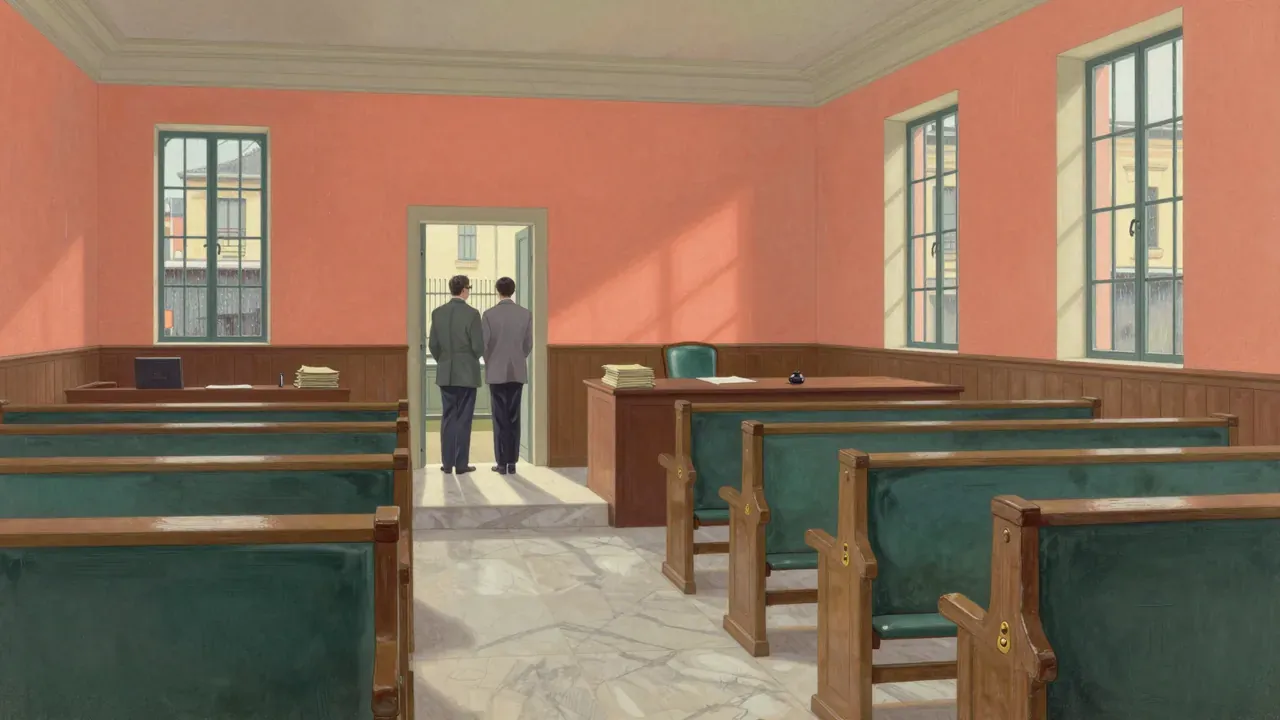
Raffaello Matarazzo’s 1950 Italian melodrama Chains follows mechanic Guglielmo Aniello, his wife Rosa, and the returned ex-fiancé Emilio whose blackmail threatens their marriage and family. Shot by Carlo Montuori and edited by Mario Serandrei, it builds tension through restraint — in performance, framing, and narrative economy — culminating in a courtroom verdict that affirms legality over morality. Though maligned by neorealist critics, its commercial success and inclusion in Italy’s ‘100 films to be saved’ list attest to its cultural resonance.
13:00

Hands Over the City

Francesco Rosi · 1963

Francesco Rosi’s 1963 Golden Lion winner follows Neapolitan developer and councillor Edoardo Nottola as he leverages public office for private real-estate gain—until a building collapse triggers an official inquiry. Shot in stark, observational style by Gianni Di Venanzo and written with journalistic rigour, the film avoids psychology and spectacle in favour of committee rooms, permits, and quiet complicity. Rod Steiger and Carlo Fermariello anchor a cast that includes non-professionals, reinforcing its documentary texture. It is a film about how power consolidates not in crises but in paperwork.

13:00

I Figli di nessuno

Raffaello Matarazzo · 1951

I Figli di nessuno (1951), directed by Raffaello Matarazzo, follows a marble quarry owner and the daughter of his employee whose relationship and child provoke familial rejection and tragic consequences. Starring Amedeo Nazzari and Yvonne Sanson, it is a formally precise, studio-bound drama rooted in postwar Italian melodrama conventions — prioritising emotional legibility, moral structure, and quiet endurance over psychological nuance or social critique.

13:00

Il bidone

Federico Fellini · 1955

Federico Fellini’s 1955 drama follows a trio of swindlers working rural Italy, whose cons on poor farmers gradually unravel their self-deception. Broderick Crawford plays Augusto, whose late moral crisis culminates in abandonment and death on a barren hillside. Shot by Otello Martelli, scored by Nino Rota, and anchored by Giulietta Masina’s restrained performance, the film treats conscience as physical decay rather than spiritual awakening.

13:00

Salvatore Giuliano

Francesco Rosi · 1962

Francesco Rosi’s 1962 docudrama reconstructs the life and death of Sicilian bandit Salvatore Giuliano not as myth or biography, but as a forensic inquiry into institutional complicity. Shot on location in Sicily with non-professional actors, it uses fragmented chronology, courtroom transcripts and contradictory testimony to expose how power operates across Mafia, carabinieri and judiciary. Giuliano appears only fleetingly — dead, distant, obscured — while figures like his betrayer Pisciotta and judges presiding over rigged trials occupy the frame. The film’s rigour lies in its refusal to narrativise, opting instead for procedural clarity and structural irony.

13:00

The Golden Coach

Jean Renoir · 1952

Jean Renoir’s 1952 film follows an Italian commedia troupe arriving in colonial Peru, where their performances intersect with the Viceroy’s court, local bullfighting culture, and a magnificent golden coach. Shot in Technicolor at Cinecittà, it uses Vivaldi’s music, Claude Renoir’s cinematography, and Anna Magnani’s precise performance to explore the porous boundary between acting and living — not as a critique of illusion, but as an affirmation of its necessity.

13:00

The Moment of Truth

Francesco Rosi · 1965

Francesco Rosi’s 1965 drama follows Miguel Romero, a young man from rural poverty who abandons farming for bullfighting in search of dignity and recognition. Shot with restrained realism by Di Venanzo, De Santis and Parolin, and performed largely by real bullfighters including Miguelín himself, the film avoids mythmaking in favour of procedural observation — tracing how ritual, class and visibility reshape identity. Linda Christian appears as an ambiguous outsider. Its themes centre on substitution, erasure and the cost of becoming legible in a hierarchical world.

13:00

The White Angel

Raffaello Matarazzo · 1955

Raffaello Matarazzo’s 1955 sequel The White Angel follows a wrongfully imprisoned woman’s return to society under a false name, her search for her lost child, and her slow reintegration into a world that punished her for motherhood. Starring Amedeo Nazzari and Yvonne Sanson, and shot by Tonino Delli Colli, it sustains emotional force through restraint — in performance, editing, and score — rather than escalation.

13:00

White Nights

Luchino Visconti · 1957

Luchino Visconti’s 1957 adaptation of Dostoevsky’s ‘White Nights’ transposes the short story’s introspective melancholy into a meticulously controlled studio production. Set over three winter nights in a recreated Livorno, it follows Mario’s growing attachment to Natalia, who waits nightly for a lover who may never return. With Maria Schell, Marcello Mastroianni and Jean Marais, and cinematography by Giuseppe Rotunno, the film sustains a tone of quiet inevitability—rejecting catharsis in favour of emotional precision.

13:00

Rocco and His Brothers

Luchino Visconti · 1960

Luchino Visconti’s 1960 epic follows the Parondi family—mother and four sons—as they migrate from rural Lucania to industrial Milan. Their attempts to adapt fracture along lines of class, labour, and desire: Simone turns to boxing and self-destruction, Rocco clings to quiet decency, Ciro embraces union politics, and Luca walks away. Shot by Giuseppe Rotunno in Milan’s housing projects and factories, scored by Nino Rota, and performed with restrained intensity by Alain Delon, Renato Salvatori and Annie Girardot, the film treats disintegration as process, not event.

13:00

Senso

Luchino Visconti · 1954

Luchino Visconti’s 1954 colour debut adapts Camillo Boito’s novella into a Venice-set melodrama about Countess Livia Serpieri’s ruinous affair with an Austrian officer during the 1866 war. Alida Valli’s restrained performance anchors a film whose painterly visuals, Bruckner-scored intensity, and structural rigour treat romantic obsession as a slow, irreversible erosion of moral and political clarity.

13:00

The Leopard

Luchino Visconti · 1963

Luchino Visconti’s 1963 adaptation of Tomasi di Lampedusa’s novel follows Sicilian Prince Don Fabrizio Corbera as he observes — without intervening — the slow displacement of aristocracy by a rising bourgeoisie during the Italian unification of 1860. Starring Burt Lancaster, Claudia Cardinale, and Alain Delon, it is a visually sumptuous, deliberately paced drama whose power resides in accumulation, restraint, and the physical texture of decay.