filmbriefs
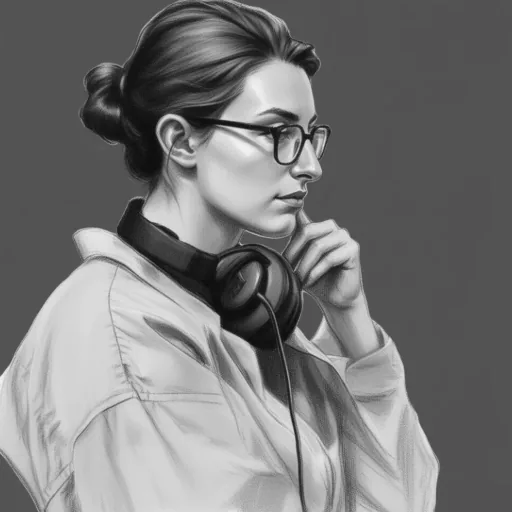
Editor · 1931–2005

Agnès Guillemot

9
briefs
13:00
average
117 min
in total
On film.briefs9
13:00

A Woman Is a Woman

Jean-Luc Godard · 1961

Jean-Luc Godard’s 1961 colour debut is a self-aware, formally restless romantic comedy starring Anna Karina as Angéla, an exotic dancer determined to have a child. Shot in Paris by Raoul Coutard and scored by Michel Legrand, it uses musical interludes, abrupt edits, and stylised dialogue to interrogate genre conventions, gender roles, and the language of desire — all without relinquishing its wit or warmth.
13:00

Alphaville

Jean-Luc Godard · 1965

Jean-Luc Godard’s 1965 Alphaville transplants American detective Lemmy Caution into a nameless, near-future city ruled by Alpha 60, a sentient computer that bans emotion, poetry, and questioning. Shot on real Paris locations with no futuristic props, it merges film noir and dystopian satire to interrogate language, control, and the persistence of feeling. Eddie Constantine and Anna Karina star; Raoul Coutard shot it, Agnès Guillemot edited it, Paul Misraki scored it. It won the Golden Bear at Berlin in 1965.

13:00

Bed and Board

François Truffaut · 1970

François Truffaut’s 1970 film follows Antoine Doinel and Christine as newlyweds navigating Parisian domestic life: a cramped apartment, a faltering job, the birth of their son, and Antoine’s brief, hollow affair with a Japanese woman. Shot by Néstor Almendros with restrained naturalism, it avoids moralising or climax, instead observing the textures of habit, compromise, and quiet endurance. It is the fourth in Truffaut’s Doinel cycle and stands apart for its unblinking, unsentimental portrayal of marriage as daily practice rather than emotional event.

13:00

Contempt

Jean-Luc Godard · 1963

Jean-Luc Godard’s 1963 Contempt adapts Moravia’s novel into a self-aware drama about a playwright whose marriage unravels during the fraught production of a film version of the Odyssey. Shot in Rome and Capri, it stars Brigitte Bardot and Michel Piccoli, with Fritz Lang playing himself. The film interrogates authorship, fidelity, and the commodification of art — using form, colour, and silence as its primary arguments.

13:00

Made in U.S.A

Jean-Luc Godard · 1966

Made in U.S.A (1966) is Jean-Luc Godard’s fractured, politically charged crime film starring Anna Karina as journalist Paula Nelson, investigating her ex-boyfriend’s death in a fictional French coastal town. Loosely adapted without permission from Richard Stark’s The Jugger, it deploys genre tropes—murder, conspiracy, double-cross—as scaffolding for linguistic play, political satire, and formal experimentation. Shot by Raoul Coutard and edited by Agnès Guillemot, it favours graphic colour, abrupt cuts, and disembodied voices over narrative coherence. Its themes pivot on naming, ideological exhaustion, and the impossibility of clean political action in a mediated world.

13:00

Masculin Féminin

Jean-Luc Godard · 1966

Jean-Luc Godard’s 1966 Masculin Féminin follows Paul—a young idealist navigating love, work, and politics in Paris—as a loose sequence of interviews, encounters, and interruptions. Shot in black-and-white with natural light and minimal crew, it treats youth culture as a field of study, not a story. Its structure mimics opinion polling: questions posed, answers recorded, conclusions withheld. Starring Jean-Pierre Léaud, Chantal Goya, Marlène Jobert, and Catherine-Isabelle Duport, it remains one of Godard’s most formally rigorous and thematically restless works.

13:00

Stolen Kisses

François Truffaut · 1968

François Truffaut’s 1968 romantic comedy returns to Jean-Pierre Léaud’s Antoine Doinel as a young man navigating love, work, and self-deception in Paris. Discharged from the army, he cycles through jobs — night clerk, private detective, TV repairman — while drifting between Christine Darbon and Fabienne Tabard. With Denys Clerval’s unshowy cinematography and Antoine Duhamel’s wistful score, the film traces how intimacy forms not through grand gestures but accumulated small returns: unanswered letters, staged breakdowns, silent proposals. It is the third in Truffaut’s five-film Doinel cycle, rooted in behavioural realism and quiet persistence.

13:00

Bande à part

Jean-Luc Godard · 1964

Jean-Luc Godard’s 1964 Bande à part follows three young people who plan a robbery but spend more time dancing in cafés and racing through the Louvre. Adapted from Dolores Hitchens’s novel, it foregrounds gesture over plot, mood over motive, and physical presence over psychological depth. Raoul Coutard’s cinematography and Michel Legrand’s score reinforce its light-footed melancholy. Though often called Godard’s most accessible film, its pleasures are formal and fleeting — a dance, a pause, a run — rather than dramatic or conclusive.

13:00

Weekend

Jean-Luc Godard · 1967

Jean-Luc Godard’s 1967 Weekend follows a bourgeois couple’s disastrous road trip through a hallucinatory French countryside, where narrative collapses into allegory, history bleeds into farce, and revolution ends in cannibalism. Shot by Raoul Coutard and edited by Agnès Guillemot, it is a formally radical, politically abrasive essay-film that treats cinema as a site of ideological combat — not storytelling.