The making of it
The Harder They Come is a Jamaican-made crime film that sets out to portray urban marginality in Kingston through the arc of a young man who moves from rural poverty to outlaw fame. It attempts something rare for its time: a locally financed, locally cast, Patois-speaking narrative feature rooted in Jamaican social reality, not imported genre templates. Perry Henzell and co-writer Trevor D. Rhone adapt only loosely from the life of 1940s criminal Rhyging, discarding historical accuracy in favour of symbolic resonance — Ivan’s trajectory mirrors the structural traps faced by Black Jamaicans under postcolonial economic exclusion. The film does not aim for realism as documentary but for authenticity as texture: real locations, non-professional actors alongside musicians, unvarnished dialogue, and a soundtrack that functions as both commentary and counterpoint. Its ambition is twofold: to assert cinematic self-representation for Jamaica, and to embed reggae not as exotic garnish but as the film’s moral and rhythmic architecture. That it was made outside studio infrastructure, with intermittent funding and no precedent, shapes its form as much as its content.
The shape of the story
The story follows Ivan’s incremental disenchantment — from grandmother’s death to con artistry, church labour, exploitative recording contracts, and finally armed resistance — without psychological exposition or voiceover. Jimmy Cliff’s performance is restrained, watchful, grounded in physical presence rather than emotive display; his singing carries more interiority than his line readings. Prince Buster, Ras Daniel Heartman, and Carl Bradshaw bring lived-in authority to their roles, while the camera work avoids flourish: Gordon Willis is not involved, and the cinematography (by Denys Coop) favours medium shots and natural light, letting Kingston’s streets and tenements occupy the frame without stylisation. Editing is functional, sometimes slack, especially in the second half, where plot mechanics overtake character logic. The music is inseparable from narrative progression: each song marks a turning point — ‘Many Rivers to Cross’ as resignation, ‘Pressure Drop’ as communal tension, ‘Johnny Too Bad’ as fatalism — and the sound design privileges diegetic audio: street noise, radio static, gunshot reverb. There are no score swells, no non-diegetic strings — only what the world produces.
The sound of it
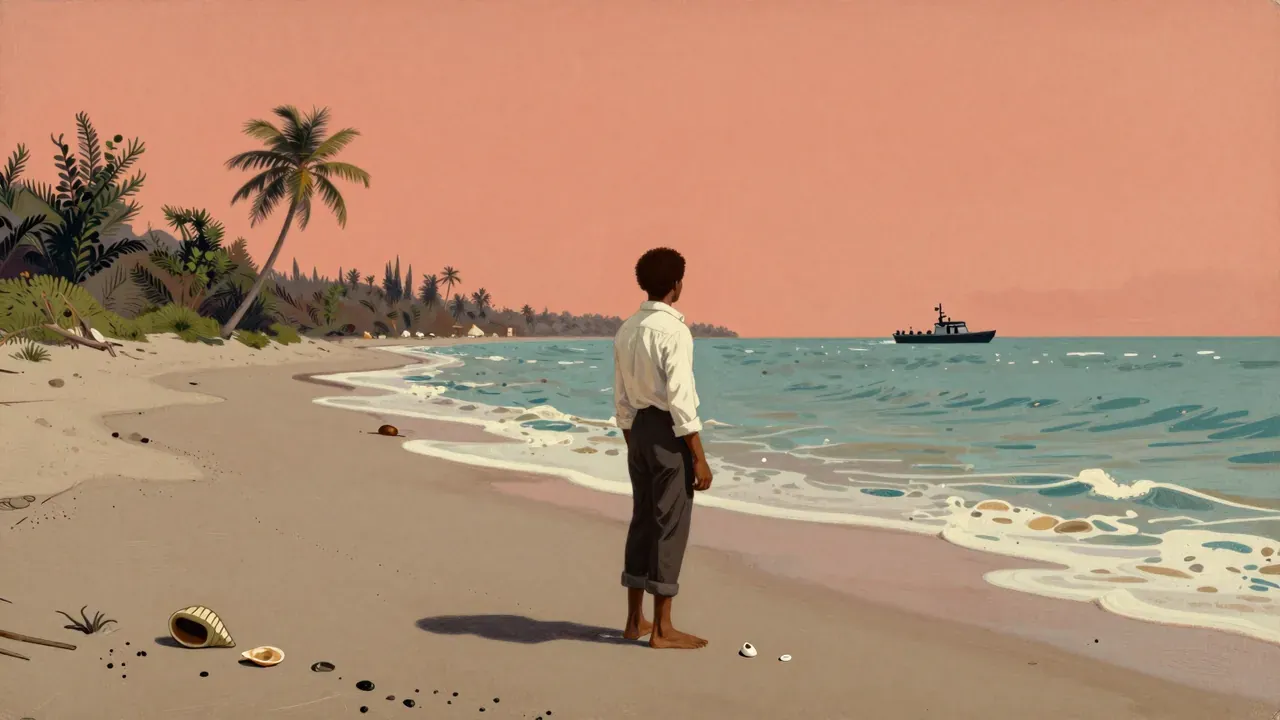
What lands most firmly is the film’s sense of place and linguistic rhythm. Kingston is not backdrop but participant: the heat, the narrow lanes, the open-air markets, the church compound’s claustrophobic piety — all register with tactile consistency. The use of Jamaican Patois is neither softened nor translated in context; it asserts linguistic sovereignty, and the subtitles (required even in English-speaking markets) become part of the viewing contract, not a concession. Jimmy Cliff’s songs land with cumulative force because they are diegetically earned — recorded in a real studio, played on real radios, heard by real crowds — and because their lyrics echo Ivan’s narrowing options. The final beach ambush gains power from its dissonance: the cut between police gunfire and cinema applause reframes Ivan not as criminal but as folk antihero, his death absorbed into myth before it is processed as tragedy. That sequence, brief and unsentimental, holds the film’s clearest statement about fame, violence, and representation — not as critique, but as fact.
The turning point
What does not hold is the narrative’s late-stage drift into schematic cause-and-effect. Once Ivan takes up arms, motivation blurs: his shift from exploited musician to drug runner feels less like choice than plot necessity, and his killing spree lacks the earlier scenes’ social specificity. The corruption of Detective Jones and Hilton operates as broad archetype rather than developed system — we see their power, not its machinery. Elsa’s betrayal, though plausible in economic terms, arrives without prior emotional groundwork; her agency is reduced to survival calculus, then erased. Some supporting characters — José, Pedro — remain tonally inconsistent, veering between satire and sincerity without settling. The film’s pacing sags in the middle third, where exposition replaces immersion: Ivan’s grievances accumulate without deepening, and the escalation from knife fight to gunplay feels less inevitable than expedient. These are not flaws of amateurism — they are the strain of trying to compress systemic critique into a linear crime arc without the scaffolding of genre convention or studio discipline.
The weight of it
The themes that matter are not those of individual rebellion but of structural containment. The film traces how opportunity closes at every turn: the preacher offers work but demands obedience; Hilton offers recording but withholds distribution; the police offer order but enforce extraction. Ivan’s ‘freedom’ — first through music, then through guns — is always already circumscribed by capital, race, and geography. The soundtrack reinforces this: ‘You Can Get It If You Really Want’ sounds aspirational until heard beside the $20 contract; ‘The Harder They Come’ becomes ironic when sung over footage of Ivan’s corpse. Class is rendered physically — in the difference between the preacher’s compound and the shantytown, in the weight of Ivan’s bicycle frame versus the gleam of Hilton’s studio console. Colonial residue appears not in speeches but in infrastructure: the roads built for export, the churches modelled on British liturgy, the radio frequencies controlled by foreign-owned stations. What endures is not Ivan’s legend but the persistence of the conditions that produced him — the same ones that kept the film underfunded for two years and required subtitles for American audiences.
The watching of it
It is essential viewing for anyone interested in Caribbean cinema, reggae’s cultural transmission, or the politics of vernacular language in film — particularly students of postcolonial media, music historians, or filmmakers working outside industrial pipelines. It rewards attention to texture over plot, to sound over spectacle, to environment over psychology. Those who expect tight genre pacing, psychological exposition, or resolution will find it frustrating: the film refuses catharsis, explanation, or redemption. Viewers unfamiliar with Jamaican history or Patois may need to adjust to its rhythms, but the subtitles are precise and consistent — the barrier is not comprehension but expectation. Anyone seeking polished craft or narrative closure should look elsewhere; this film’s roughness is not incidental but constitutive. Critics who judged it against Blaxploitation templates (as Ebert did) missed its different project entirely — it is not an American genre export but a local articulation that happened to travel.
The leaving of it
Yes, it is worth your evening — not as entertainment but as encounter. Its 120 minutes unfold with unhurried gravity, demanding patience with silence, repetition, and unresolved tension. You will not leave humming a tune you knew, but with the cadence of Ivan’s walk, the glare of Kingston sun on concrete, the weight of a $20 contract in your palm. It repays rewatching not for hidden clues but for accumulated detail: the way Elsa’s hands move when she lies, the frequency with which characters touch their own shoulders after violence, the recurrence of bicycles as both mobility and fragility. Those who dislike slow-burn social realism, distrust musical interludes that advance theme rather than plot, or require clear moral alignment will find it alienating. But its endurance rests on its refusal to simplify — and that refusal remains as urgent now as in 1972.