filmbriefs
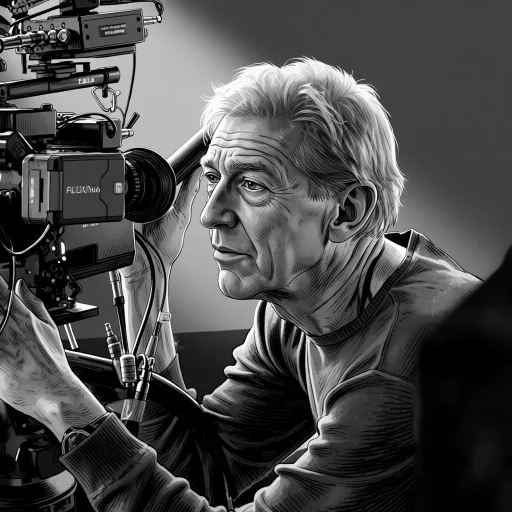
Cinematographer · 1946

Frederick Elmes

8
briefs
13:00
average
104 min
in total
On film.briefs8
13:00

Night on Earth

Jim Jarmusch · 1991

Night on Earth (1991) is Jim Jarmusch’s anthology film following five taxi rides across Los Angeles, New York, Paris, Rome, and Helsinki, all occurring over the same night. Each vignette centres on a temporary, often fraught, bond between driver and passenger. Shot on location with minimal intervention, it prioritises quiet observation over plot, using natural light, sparse music by Tom Waits, and unhurried performances to explore miscommunication, class, mortality, and fleeting kinship. Though uneven in impact—its Paris and Rome segments falter linguistically and tonally—the film’s cumulative power lies in its restraint and specificity.
13:00

Ride with the Devil

Ang Lee · 1999

Ang Lee’s 1999 film Ride with the Devil follows young Missouri bushwhackers during the Civil War, adapting Daniel Woodrell’s novel with deliberate slowness and minimal exposition. Shot by Frederick Elmes and written by James Schamus, it foregrounds domestic endurance over battlefield drama, treating violence as rupture rather than climax. Its themes — loyalty, freedom, gendered labour, and the weight of time — emerge through gesture and silence, not speech. Though commercially overlooked and structurally demanding, it remains a singular, unhurried portrait of war’s human residue.

13:00

The Ice Storm

Ang Lee · 1997

Set over a single Thanksgiving weekend in 1973, The Ice Storm follows two Connecticut families adrift in marital and generational disaffection. Directed by Ang Lee from James Schamus’s screenplay, it renders suburban ennui through restrained performances, muted cinematography, and a structure built on accumulation rather than escalation. A fatal accident during an ice storm forces a reckoning — not with morality, but with the cost of emotional drift.

13:00

Wild at Heart

David Lynch · 1990

David Lynch’s 1990 Palme d’Or winner adapts Barry Gifford’s novel into a hyper-stylised Southern Gothic crime film starring Nicolas Cage and Laura Dern as a couple fleeing violence across the American South. Anchored by Elvis obsession, Wizard of Oz motifs and Angelo Badalamenti’s score, it trades psychological realism for emotional extremity — landing some sequences with unforgettable force, while others rely too heavily on shock. Its value lies in its unwavering commitment to a singular, dissonant vision.

13:00

Storytelling

Todd Solondz · 2001

Todd Solondz’s 2001 film Storytelling divides itself into two unrelated segments — 'Fiction' and 'Non-Fiction' — each dissecting how narrative power operates in education, documentary, and family life. With restrained performances, underlit interiors, and a refusal to resolve its ethical dilemmas, it sustains a low, persistent discomfort. Its value lies in structural rigour and thematic consistency, not emotional payoff.

13:00

Synecdoche, New York

Charlie Kaufman · 2008

Charlie Kaufman’s 2008 directorial debut follows theatre director Caden Cotard as he constructs an ever-expanding, hyper-real stage production inside a Manhattan warehouse — a project that blurs life and art until neither remains distinct. Starring Philip Seymour Hoffman and featuring Catherine Keener, Samantha Morton, and Emily Watson, the film uses recursive structure, deliberate ambiguity, and physical decay to explore mortality, identity, and the exhausting persistence of self-making. Shot by Frederick Elmes and scored by Jon Brion, it premiered at Cannes and polarised critics — some calling it a masterpiece, others pretentious — but has since gained stature as a defining arthouse work of the 21st century.

13:00

Blue Velvet

David Lynch · 1986

David Lynch followed the disaster of Dune with a $6m film he was left almost entirely alone to make, trading a pay cut for final cut. Kyle MacLachlan's amateur sleuth spies on Isabella Rossellini's abused nightclub singer and runs into Dennis Hopper's Frank Booth, and the American town around them turns out to hide as much as either of them.

13:00

Eraserhead

David Lynch · 1977

David Lynch spent roughly five years shooting his AFI student project in disused stables and a soundproofed studio he built himself, financed along the way by donations from friends including Sissy Spacek. The result follows Henry Spencer, left to care for a grotesquely deformed baby in an industrial wasteland, shot in stark black and white with sound design as unsettling as anything on screen. It became a midnight-movie staple and launched Lynch's career from almost nothing.