filmbriefs
Producer · Director · Screenwriter · 1893–1956

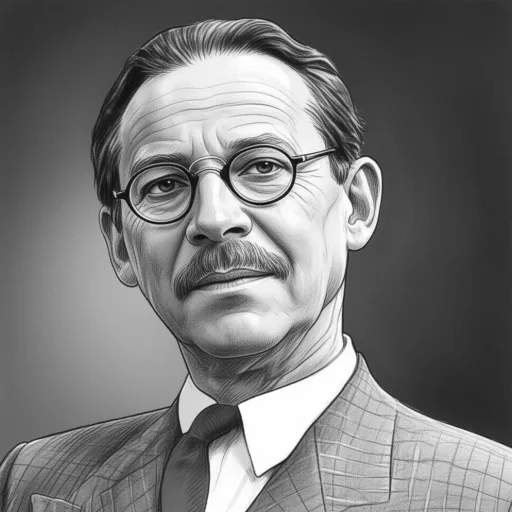
Alexander Korda

16
briefs
13:00
average
208 min
in total
On film.briefs16
13:00

Elephant Boy

Robert J. Flaherty, Zoltan Korda · 1937

Elephant Boy (1937), directed by Robert J. Flaherty and Zoltan Korda, adapts Kipling’s 'Toomai of the Elephants' with location footage shot in Mysore and studio work at Denham. Twelve-year-old Sabu stars as a boy whose quiet observation of elephants earns him recognition among mahouts. The film balances documentary realism with narrative simplicity, avoiding sensationalism in favour of physical authenticity and restrained craft.

13:00

Jungle Book

Zoltan Korda · 1942

Zoltán Korda’s 1942 Jungle Book is a Hollywood-produced Technicolor fantasy starring Sabu as Mowgli, adapted loosely from Kipling. Shot by Lee Garmes and W. Howard Greene, scored by Miklós Rózsa, and designed by Vincent Korda, it foregrounds jungle atmosphere, animal presence, and physical performance over psychological depth or narrative precision. Though commercially successful and nominated for four Academy Awards, its human drama remains schematic, its themes implied rather than explored. It endures as a feat of mid-century studio craft — vivid, deliberate, and unapologetically ornamental.

13:00

Marius

Alexander Korda · 1931

Marius (1931), directed by Alexander Korda from Marcel Pagnol’s play, is the first film of the Marseille Trilogy. Set in a waterfront bar in pre-war Marseille, it traces Marius’s conflict between love for Fanny and longing for the sea. With restrained performances, naturalistic lighting by Theodore J. Pahle, and dialogue rooted in subtext, it prioritises emotional authenticity over plot mechanics. Though structurally dependent on coincidence, its power lies in specificity: gesture, silence, and the quiet gravity of ordinary choice.

13:00

Rembrandt

Alexander Korda · 1936

Alexander Korda’s 1936 biographical film follows Rembrandt van Rijn across two decades of personal and financial decline, anchored by Charles Laughton’s physically precise performance and Georges Périnal’s shadow-drenched cinematography. Eschewing Hollywood plot mechanics, it renders grief, debt, exile, and quiet resilience through mood, gesture, and composition — not exposition or climax.

13:00

Richard III

Laurence Olivier · 1955

Laurence Olivier’s 1955 Richard III is a Technicolor, 161-minute British drama adapting Shakespeare with material from Henry VI, Part 3. Olivier directs, produces and stars, supported by Ralph Richardson, Claire Bloom and John Gielgud. Otto Heller’s cinematography and William Walton’s score reinforce the film’s theatrical intensity. Though heavily cut for pace and focus, it remains a landmark in Shakespearean adaptation — acclaimed at release, awarded five major prizes, and later reappraised as Olivier’s finest screen Shakespeare.

13:00

Sanders of the River

Zoltan Korda · 1935

Sanders of the River (1935) is a British colonial drama directed by Zoltán Korda, starring Leslie Banks and Paul Robeson. Set in Nigeria, it portrays imperial administration as benevolent and necessary, centring Commissioner Sanders as a stabilising force among fractious tribes. Though technically accomplished and commercially successful, it was condemned by Robeson, Nigerian officials, and anti-colonial thinkers for its pro-imperial message and cultural distortions. Its legacy rests less on artistic merit than on its stark documentation of how empire narrated itself — and how collaborators came to reject that narration.

13:00

That Hamilton Woman

Alexander Korda · 1941

That Hamilton Woman (1941) is a black-and-white historical drama directed by Alexander Korda, starring Vivien Leigh and Laurence Olivier as Emma Hamilton and Horatio Nelson. Made in Hollywood during British exile, it uses the Napoleonic Wars as allegory for Britain’s resistance to Nazi Germany. The film follows Emma’s rise from courtesan to national symbol and her tragic decline, framed by Nelson’s principled defiance and ultimate sacrifice at Trafalgar. Crafted with restraint and moral clarity, it prioritises thematic weight over psychological nuance or visual spectacle.

13:00

The Drum

Zoltan Korda · 1938

The Drum (1938), directed by Zoltan Korda, is a British Technicolor adventure set on the North-West Frontier during the Raj. It follows Prince Azim’s flight after his uncle’s coup, his alliance with British officer Carruthers, and his climactic warning on the Sacred Drum. Filmed partly on location in Chitral and North Wales, it foregrounds military detail and imperial certainty — making it a revealing artefact of pre-war British cinema, not a neutral period piece.

13:00

The Four Feathers

Zoltan Korda · 1939

Zoltan Korda’s 1939 Technicolor adaptation of A. E. W. Mason’s novel follows a disgraced British officer who journeys to Sudan to redeem himself through acts of courage during the Mahdist War. Shot on location with meticulous craft, it balances physical spectacle with psychological restraint — though its treatment of Sudanese characters remains strictly functional and its imperial framework unquestioned.

13:00

The Private Life of Don Juan

Alexander Korda · 1934

Alexander Korda’s 1934 film stars Douglas Fairbanks, aged 51, as an ageing Don Juan returning to Seville only to discover his name has become a public fiction. Adapted from Henry Bataille’s play by Frederick Lonsdale, it uses irony, restraint, and studio-era craft to explore reputation, ageing, and the quiet persistence of self amid erasure. Georges Périnal’s cinematography and Ernst Toch’s music support a tone of wry melancholy, anchored by Fairbanks’s physically diminished but emotionally precise performance.

13:00

The Private Life of Henry VIII

Alexander Korda · 1933

The Private Life of Henry VIII (1933) is a British biographical drama directed by Alexander Korda and starring Charles Laughton as the ageing king. Structured as a series of vignettes covering five of his six marriages, it avoids religious and political context in favour of intimate, darkly comic portraiture. Shot by Georges Périnal and written by Arthur Wimperis and Lajos Bíró, it won Laughton the Academy Award for Best Actor — the first foreign winner in that category. Though historically selective and stylistically restrained, it endures as a masterclass in performance-led storytelling.

13:00

The Rise of Catherine the Great

Paul Czinner · 1934

The Rise of Catherine the Great (1934) is a UK-produced biographical drama directed by Paul Czinner and produced by Alexander Korda. Starring Elisabeth Bergner as Catherine, Douglas Fairbanks Jr. as Grand Duke Peter, and Flora Robson as Empress Elizabeth, it adapts a 1912 Hungarian play to trace Catherine’s path from German princess to Russian empress. Shot by Georges Périnal with music by Ernst Toch, the film privileges interiority over action, restraint over spectacle, and performance over exposition.

13:00

The Thief of Bagdad

Michael Powell, Tim Whelan, Alexander Korda, Zoltan Korda · 1940

The Thief of Bagdad (1940) is a British Technicolor fantasy directed by Michael Powell, Tim Whelan, Alexander Korda and Zoltan Korda. It tells of Prince Ahmad’s exile, his alliance with the thief Abu, and their battle against the sorcerer Jaffar — all sustained by Georges Périnal’s Oscar-winning cinematography, Miklós Rózsa’s score, and a cascade of inventive special effects. Though its romance lacks spark and its cultural framing is decorative, its visual logic, tonal consistency, and sheer craft make it a durable, joyful achievement.

13:00

Things to Come

William Cameron Menzies · 1936

Things to Come (1936) is a British science fiction film directed by William Cameron Menzies, produced by Alexander Korda, and scripted by H. G. Wells and Lajos Bíró. Set across three eras — 1940, 1970, and 2036 — it charts humanity’s collapse into post-war barbarism and subsequent rebirth under a global technocracy. Starring Raymond Massey and Ralph Richardson, it foregrounds Vincent Korda’s production design and Arthur Bliss’s score, treating cinema as a medium for philosophical demonstration rather than dramatic immersion. Its enduring significance lies in its uncompromising visual logic and its articulation of interwar rationalist utopianism.

13:00

Summertime

David Lean · 1955

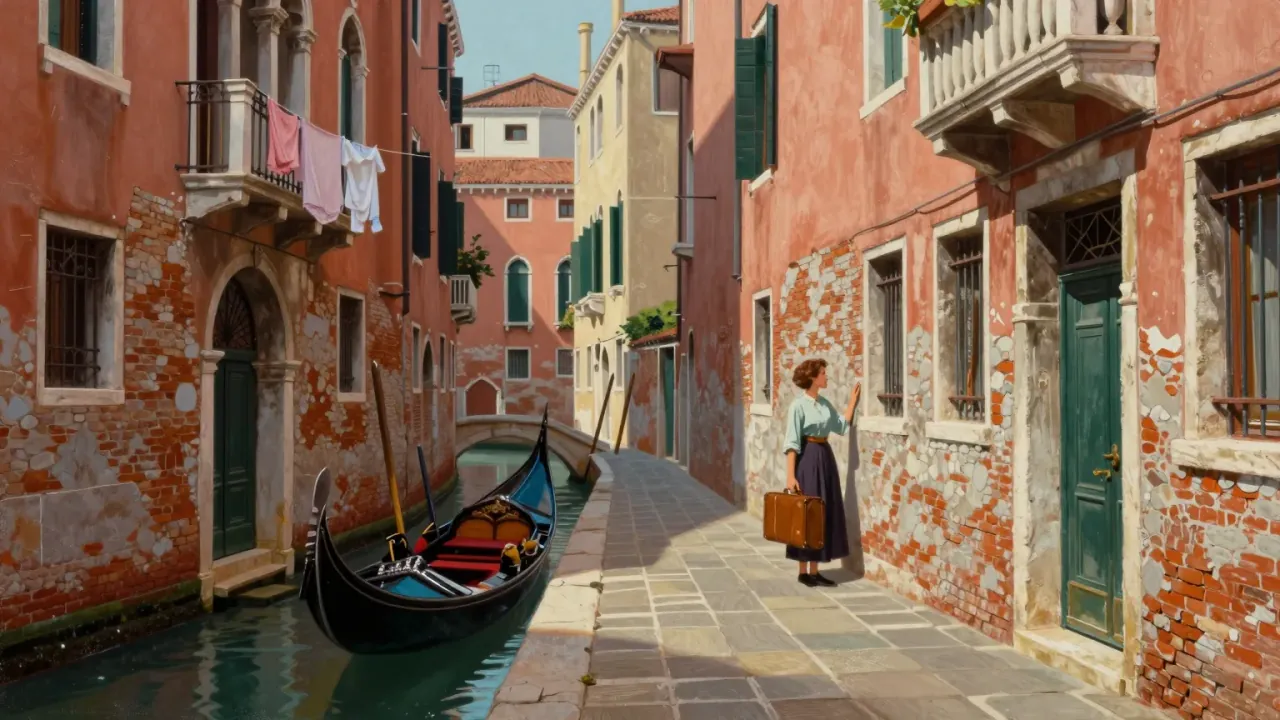
David Lean’s 1955 Summertime follows Katharine Hepburn as Jane Hudson, a lonely American secretary on her first solo trip to Venice, where she forms a tender, complicated bond with an Italian antiques dealer. Shot on location in Eastmancolor, the film leans on Hepburn’s understated performance, Jack Hildyard’s observant cinematography, and a script that prizes psychological realism over plot mechanics. Though constrained by 1950s censorship and occasional theatrical residue, it remains a quietly devastating study of longing, ageing, and the asymmetries of desire.

13:00

The Third Man

Carol Reed · 1949

Set in ruined, four-zone Vienna, Carol Reed’s 1949 noir follows an American writer searching for his vanished friend, only to uncover layers of betrayal, black-market complicity, and compromised ideals. Shot on location with stark, expressionist-influenced cinematography by Robert Krasker and scored entirely on zither by Anton Karas, it sustains a mood of exhausted ambiguity. Its power lies in what it withholds: explanation, catharsis, closure.