The shape of time
The Curious Case of Benjamin Button is a studio romance film built around a literal inversion of ageing: its protagonist, Benjamin Button, is born elderly and grows younger over time. It adapts F. Scott Fitzgerald’s 1922 short story not as satire or allegory but as earnest, large-scale period drama — one that uses reverse chronology less as structural experiment than as emotional scaffolding for a love story spanning decades. David Fincher directs with deliberate pacing and visual restraint, anchoring the premise in tactile realism: weathered wood, rain-slicked cobblestones, the weight of wool coats and wartime uniforms. The film aims to treat mortality not as abstraction but as rhythm — something measured in train station clocks, hospital heart monitors, and the slow erosion of muscle and memory. Its ambition lies in sustaining emotional continuity across eighty years of fictional time while making physiological reversal feel materially plausible. That it does so without resorting to cartoonish gimmickry or narrative fragmentation marks a departure from Fincher’s earlier work, trading procedural precision for sustained lyrical gravity. (158 words)
The weight of a glance
Eric Roth and Robin Swicord expand Fitzgerald’s slender sketch into a three-act life arc, threading Benjamin’s reverse ageing through historical touchpoints — the Spanish flu, Murmansk in 1941, New Orleans post-Katrina — without letting history overwhelm intimacy. Brad Pitt modulates his physicality with quiet exactness: posture slackens, then firms; voice deepens, then thins; gaze shifts from weary assessment to unguarded curiosity. Cate Blanchett matches him in stillness, her Daisy holding grief and resolve in equal measure. Kirk Baxter and Angus Wall edit with patient symmetry — scenes echo across decades, not through montage but through recurrence of gesture, light, and silence. Alexandre Desplat’s score avoids sentimentality, favouring muted brass and harp glissandi that suggest time as something liquid and resistant to direction. Digital Domain’s visual effects remain largely invisible, their success lying in how rarely they draw attention: Pitt’s face ages backward not as spectacle but as gradual, almost bureaucratic process — skin texture shifting, joints loosening, hair receding like tide. (159 words)
The texture of care
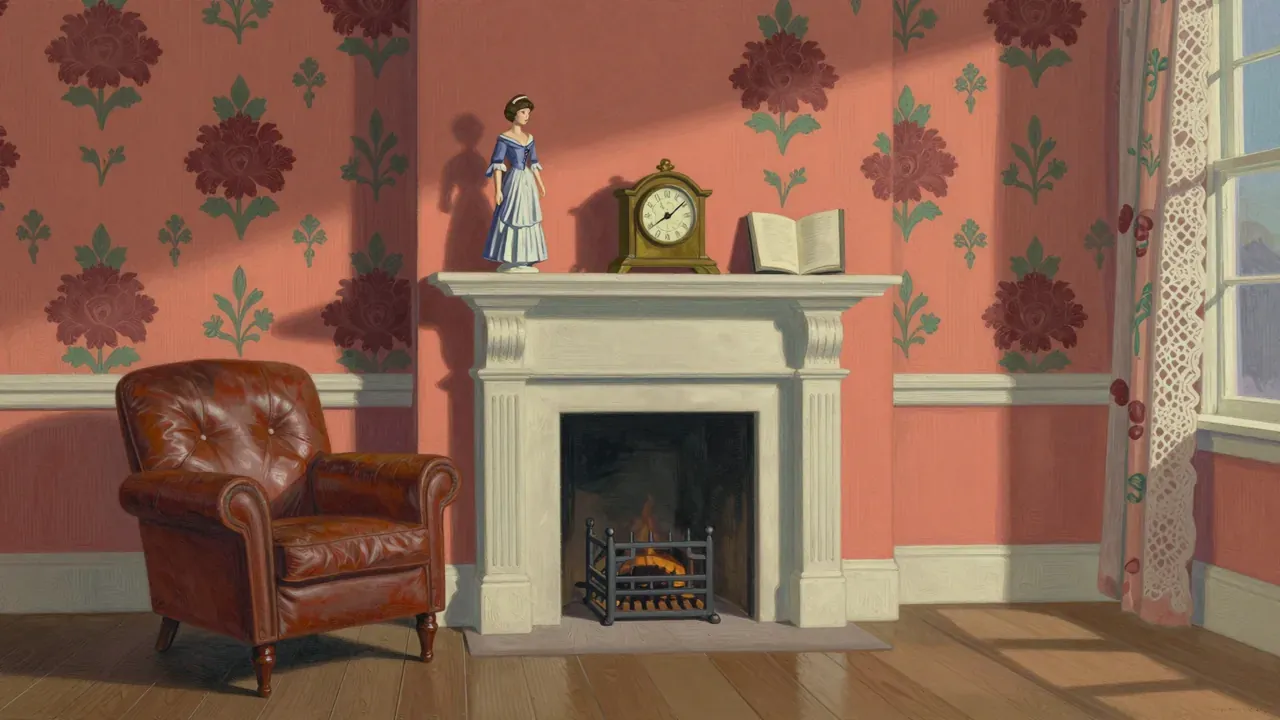
What lands most firmly is the film’s commitment to quietude. The nursing home sequences — Queenie’s warmth, Mr. Weathers’ dry humour, the creak of floorboards at dawn — ground the conceit in lived texture. Taraji P. Henson’s Queenie carries moral weight without sermonising; her care for Benjamin feels earned, unperformed. The Murmansk interlude works because it refuses to romanticise the affair: Elizabeth Abbott is briefly vivid, then gone, her absence more resonant than her presence. The war sequence avoids heroics — the sinking of the tugboat Chelsea is shot in near-darkness, sound muffled, motion disorienting, death arriving not with fanfare but with water rising past a man’s collar. Even the backwards clock motif lands not as clever device but as embodied metaphor: a memorial object whose defiance of time is itself an act of mourning. These moments succeed because they treat the premise as condition rather than punchline, allowing character to breathe within its constraints. The film earns its length by refusing to rush what cannot be rushed — breath, hesitation, the space between one heartbeat and the next. (157 words)
The cost of continuity
What does not land is the film’s structural reliance on exposition-as-narration. Daisy’s deathbed framing device, while thematically coherent, imposes a layer of distance that never fully dissolves: her voiceover often pre-empts emotional response rather than deepening it. The Thomas Button subplot — the estranged father who reappears, then recedes — remains underdeveloped, its emotional logic obscured by narrative economy. Some supporting characters function as period signposts rather than people: Julia Ormond’s Caroline exists solely to receive the diary, and Jared Harris’s Mike Clark, though vivid in early scenes, vanishes abruptly after the war sequence without closure. The final stretch — Benjamin’s infantilisation — risks undercutting the film’s own gravity: the transition from adult agency to dependency is handled with technical finesse but emotional ambiguity, leaving the ending feeling less like resolution than diminishment. There is no false note in the performances, but the script occasionally retreats into biographical summary where psychological nuance is required. (156 words)
The grammar of loss
The themes that matter are not those of time travel or scientific paradox, but of endurance, misalignment, and the quiet violence of living out of sync. Ageing here is neither blessing nor curse but a series of irreversible adjustments — to body, to relationship, to social expectation. The film treats memory not as archive but as liability: Benjamin remembers forward while his body forgets; Daisy remembers backward while hers holds fast. Their love persists not because it transcends time but because it accommodates its asymmetry — a rare depiction of romance as logistical patience rather than transcendent spark. The backwards clock is less about reversing fate than about memorialising loss: it runs counter to time not to undo death but to mark its inevitability. The film’s deepest concern is with dignity — how it accrues, erodes, and is extended to others across difference of age, capacity, and circumstance. It asks not how to cheat time, but how to inhabit it honestly when your body tells a different story than your mind. (154 words)
The terms of entry
This film is for viewers who value sustained mood over plot propulsion, who find emotional resonance in texture — the grain of wood, the tremor in a hand, the way light falls on a hospital wall at dusk. It suits those accustomed to Fincher’s pacing and willing to sit with melancholy as atmosphere rather than obstacle. It is not for viewers who require narrative momentum, clear cause-and-effect, or protagonists whose choices drive the action forward. Those who read romance as conflict-resolution or fantasy as worldbuilding may find its restraint alienating. Its appeal depends on tolerance for ambiguity: Benjamin’s final regression is neither tragic nor redemptive, simply factual. A viewer who needs moral clarity or cathartic release will leave unsatisfied. Those who prefer adaptation as reinterpretation rather than expansion may also resist its fidelity to Fitzgerald’s tone without his irony. The film assumes patience as prerequisite — not as virtue, but as condition of entry. (152 words)
The measure of time
Yes, it is worth your evening — provided you watch it as a piece of crafted, unhurried cinema rather than as puzzle or parable. Its 166 minutes unfold with the weight of lived time, not narrative obligation. The performances, editing, and production design cohere into something rare in mainstream studio filmmaking: a film that treats ageing as physical fact, love as accumulated habit, and loss as ambient condition. It earns its runtime by refusing shortcuts — no scene is purely expository, no transition purely functional. Those who disagree tend to cite its length or its emotional reserve as flaws; they would likely prefer a tighter, more ironic treatment — say, Spike Jonze’s abandoned version, or Charlie Kaufman’s draft. What would change the verdict? A sharper delineation of Benjamin’s interiority in later life, or a bolder formal risk — perhaps leaning into the absurdity Fitzgerald implied. As it stands, it is a major, flawed, deeply felt work: not perfect, but whole. (150 words)