What it shows
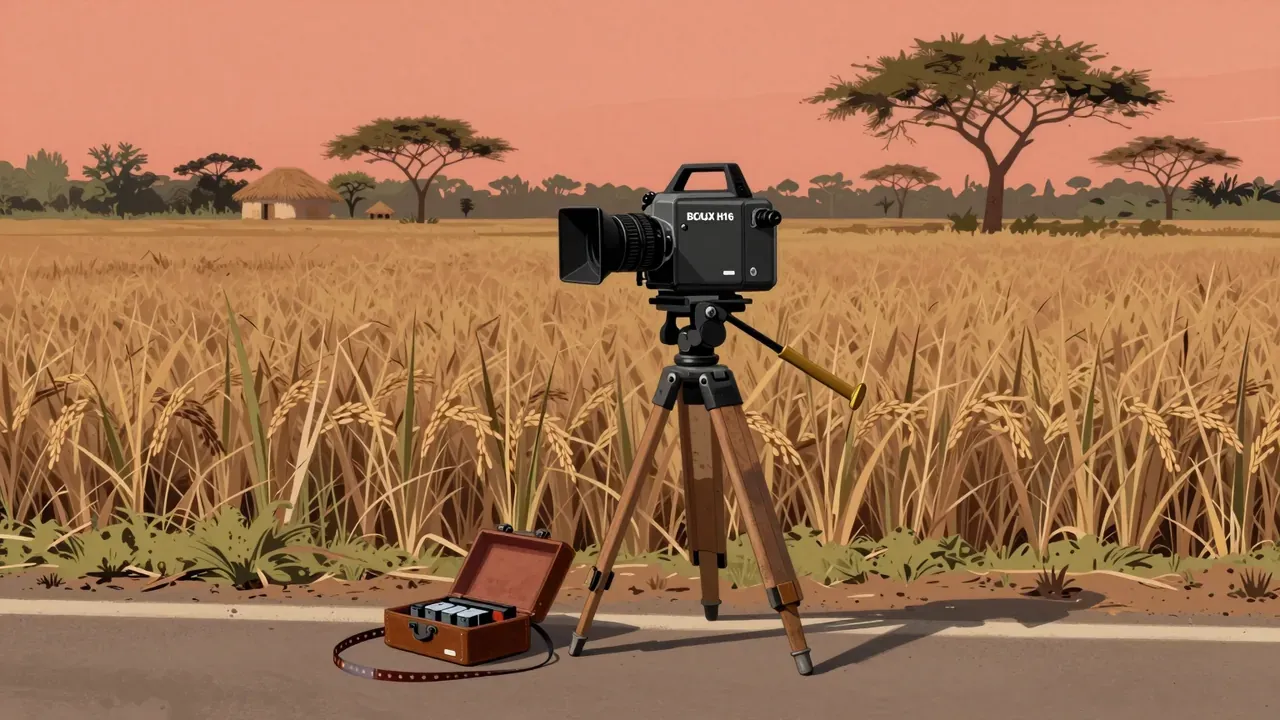
Grass is a documentary record of the Bakhtiari tribe’s annual migration across western Iran and eastern Turkey in the early 1920s. It attempts no argument, no narration beyond intertitles, and no editorial framing beyond selection: its purpose is to show the scale, rhythm, and physical cost of a seasonal journey — 50,000 people, hundreds of thousands of animals, river crossings, mountain passes — as lived by those who undertook it. The filmmakers positioned themselves not as interpreters but as witnesses who travelled with the caravan, becoming the first Westerners to complete the route alongside the tribe. Their stated aim was to document a way of life unknown outside Bakhtiari territory, one already under pressure from modernity. There is no voiceover, no expert commentary, no archival context supplied on screen. What appears is what Cooper and Schoedsack filmed: bodies moving, animals straining, terrain resisting. It treats ethnography not as analysis but as accumulation — image after image, sequence after sequence, building a portrait through duration and repetition. Word count: 148
How it moves
The film has no story in the conventional sense, only progression: departure, crossing, ascent, arrival. Performance is unmediated — the Bakhtiari are not actors but participants, filmed as they lead, carry, ford, climb, and rest. Marguerite Harrison appears as herself, though her role on screen is minor; Haidar Khan is shown as leader but not interviewed or explained. Cooper’s cinematography favours long takes and medium distances, holding shots long enough for movement to register — a herd flowing over a ridge, men hauling ropes across the Karun River, children scrambling up scree slopes. There is little camera movement; the lens stays grounded, patient, often low. Intertitles by Terry Ramsaye are sparse and functional, naming places or stating facts without embellishment. Hugo Riesenfeld’s score, composed for the 1925 release, is lost to time, but surviving accounts describe it as dramatic and illustrative, matching action rather than interpreting mood. The editing avoids montage; sequences unfold in real time, privileging endurance over emphasis. Word count: 152
What holds the eye
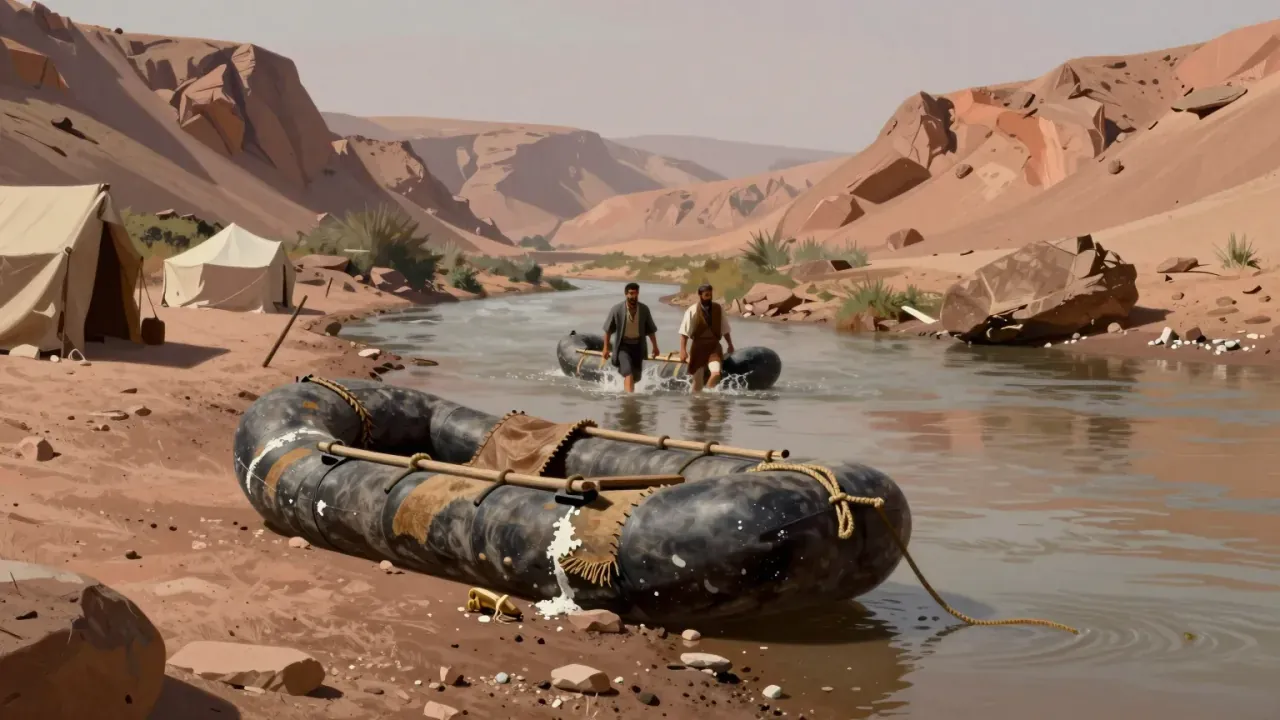
What lands is the sheer physicality of collective movement — the weight of numbers, the texture of dust and wool, the slow inevitability of ascent. The crossing of the Karun River, shot from bank and raft, conveys both chaos and coordination: animals swept sideways, men bracing, ropes snapping, then regrouping. The climb over Zard Kuh holds attention not through suspense but through cumulative effort — frame after frame of legs stepping, hooves slipping, backs bent. These sequences do not flinch from difficulty, nor do they romanticise it. The film also lands its quiet specificity: the shape of a Bakhtiari tent, the way goats are carried, how infants are strapped to mothers’ chests during climbs. There is no attempt to universalise; the focus remains local, concrete, tactile. Even the intertitles avoid abstraction, naming rivers, mountains, provinces. The effect is not emotional manipulation but steady accretion — a sense of scale built not by statistics but by sightlines, durations, repetitions. Word count: 147
What stays silent
What does not land is psychological interiority or cultural explanation. The film offers no language lessons, no ritual context, no account of kinship structure or belief systems. The Bakhtiari appear as agents of motion, not as individuals with names, histories, or contradictions. Harrison’s presence feels incidental, her contribution unexamined on screen; Schoedsack’s later dismissal of her role is not contradicted by what we see. The intertitles name Haidar Khan but say nothing of his authority, his decisions, or his relationship to the people he leads. There is no reflection on the filmmakers’ own position — their privilege, their equipment, their dependence on local guides and porters. The absence of sound means no voices, no songs, no arguments, no laughter beyond what the intertitles gesture toward. This is not a failure of craft but of scope: Grass chooses observation over interpretation, and that choice leaves gaps where meaning might otherwise gather. Word count: 149
What it depends on
The themes that matter are endurance, interdependence, and the material conditions of survival. Grass treats migration not as metaphor but as necessity — grass means pasture, pasture means fodder, fodder means life. The film insists on the bodily reality of that chain: hunger, cold, exhaustion, risk of drowning or falling, the constant recalibration of load and pace. It also foregrounds collective action: no single person crosses the river alone; no family climbs the mountain without others anchoring ropes or carrying children. There is no heroism in the singular sense — courage is distributed, repeated, shared. The film quietly undermines the myth of the solitary explorer; Cooper and Schoedsack are present but peripheral, their cameras dwarfed by the scale of the movement they follow. What emerges is not a story of conquest but of accommodation — of humans and animals adapting, season after season, to terrain that yields only grudgingly. Word count: 146
Who it meets
This film is for viewers who value direct, unadorned observation of human labour and landscape, and who accept silence and duration as expressive tools. It suits those familiar with silent-era non-fiction or early ethnographic work, and those interested in pre-industrial mobility, pastoralism, or Iranian history. It is not for viewers seeking narrative propulsion, character development, or contextual analysis — there is no exposition, no thesis, no summary. Those expecting commentary on colonialism, orientalism, or documentary ethics will find none; the film predates such frameworks and makes no claim to them. A viewer who finds Nanook of the North emotionally distant or formally austere may find Grass even more withholding. But someone who watches weather reports for the pleasure of cloud movement, or studies timelapses of glaciers, may find Grass deeply absorbing. Word count: 149
Why it lasts
Yes, it is worth your evening — not as entertainment but as encounter. Its seventy-one minutes pass with the gravity of a measured walk: slow, deliberate, occasionally arduous, ultimately cumulative in effect. It rewards patience, not anticipation. Anyone expecting a polished, explanatory documentary will leave dissatisfied; anyone open to watching people move across land — really watching, not skimming — may find it unforgettable. Its power lies in what it refuses: voiceover, music cues, moral framing, even consistent focus. That austerity is not a limitation but a discipline. A modern remake would inevitably add layers — interviews, drone shots, data overlays — and lose the very thing Grass preserves: the unmediated fact of bodies in motion across ancient routes. Word count: 149