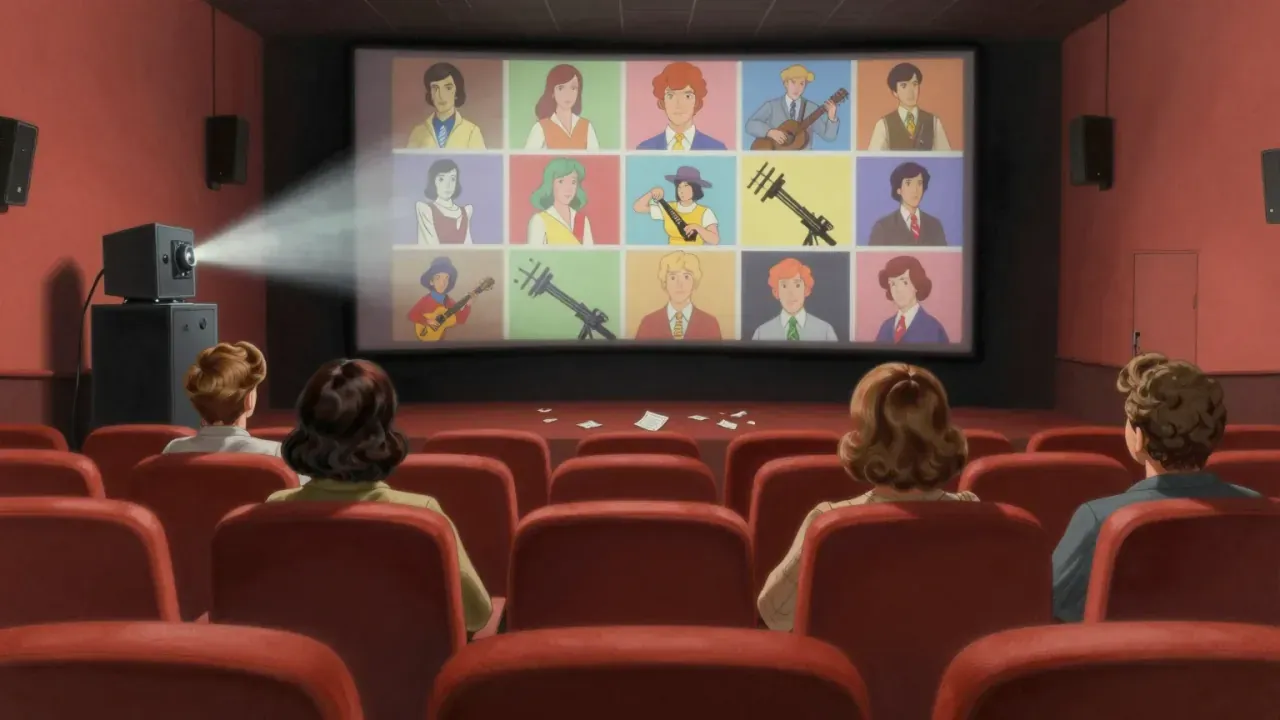
Sixteen shorts, one ticket
Fantastic Animation Festival is a package film, a theatrical program stitching together sixteen animated shorts from different filmmakers rather than a single continuous story, released in 1977 as one of the earliest examples of the format later carried on by Spike and Mike’s Festival of Animation. Directors Dean A. Berko and Christopher Padilla assembled the selection with a spoken introduction voiced by Paul Frees, framing the anthology as a tour through what animation as a medium could look like across wildly different techniques and budgets. The film’s original theatrical cut ran 107 minutes before being trimmed to 90, and later to 80 minutes for television broadcast, suggesting the format itself was treated as flexible rather than fixed.
Claymation’s first national audience
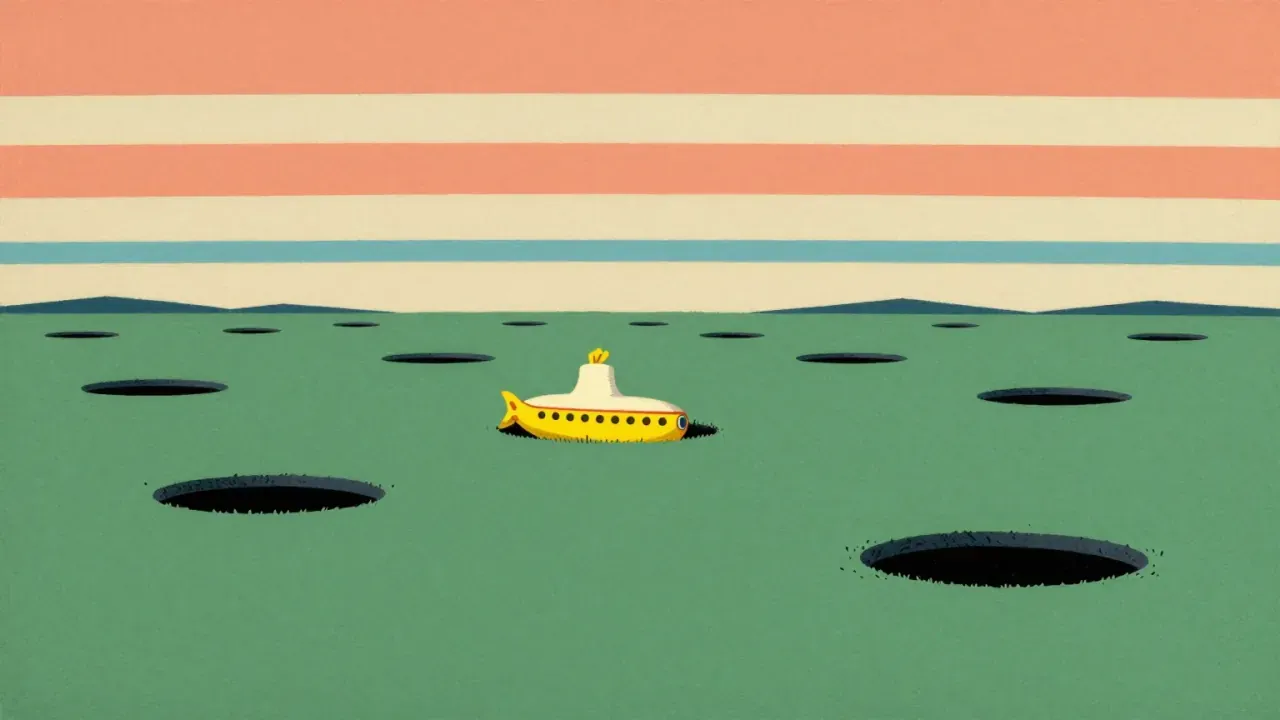
The program’s biggest historical claim is introducing Will Vinton’s Claymation technique to a national theatrical audience for the first time, through both Mountain Music, co-created with Bob Gardiner, and the earlier short Closed Mondays, which had already won the Academy Award for Best Animated Short Film. Alongside that debut sit a 1941 Max Fleischer Studios Superman cartoon, The Mechanical Monsters, already decades old and in the public domain by the time of the compilation, and Bambi Meets Godzilla, Marv Newland’s ninety-second gag short from 1969 that had already built its own cult reputation on the midnight-movie and college circuit.
Where the mix pays off
The strength of the format is entirely in the juxtaposition: watching Ian Eames’s rotoscoped animation set to Pink Floyd’s One of These Days next to Fleischer’s four-decade-old Superman serial, or a Romanian clay-animated Icarus beside a Cat Stevens-scored promo narrated by Spike Milligan, makes an argument about the medium’s range that no single film could make on its own. Kathy Rose’s Mirror People and Jordan Belson’s abstract Light sit comfortably in the same program as Robert Swarthe’s Kick Me, an Oscar-nominated short, showing festival-circuit experimentation and mainstream craft treated as equally worth an audience’s ninety minutes.
The unevenness built into the format
The unevenness that comes built into any anthology format is unavoidable here: with sixteen segments varying from under two minutes to much longer, some entries function mainly as pacing breaks between the more memorable pieces rather than as attractions in their own right. Two television commercials, for Levi’s jeans and 7 Up, are folded into the program alongside independent and festival work, a choice that flattens the distinction between commissioned advertising animation and personal filmmaking in a way some viewers will find democratic and others will find a diluting compromise.
A commercial’s place next to an art film
The film’s underlying case, made through structure rather than statement, is that animation in the mid-1970s was a genuinely plural medium rather than a single house style dominated by any one studio’s approach, spanning clay, rotoscope, cutout, cel and abstract non-narrative technique within one theatrical program. By placing a Superman cartoon from 1941 next to Claymation from 1975, the compilation treats American animation history as a continuum worth showing in one sitting rather than as discrete, unrelated eras. That framing is itself a small piece of curatorial argument, made by sequencing rather than by any narrator stating it outright.
Who should watch it
This suits animation history enthusiasts and viewers interested in how independent, festival-circuit shorts reached theatrical audiences before home video made such compilations less necessary, along with anyone curious about Claymation’s theatrical debut specifically. It also fits fans of 1970s repertory and midnight-movie culture, where Bambi Meets Godzilla in particular built its reputation. It is a poor fit for viewers who want a single sustained story, or who find watching sixteen tonally unrelated shorts back to back more tiring than illuminating. Viewers mainly chasing the cult reputation of Bambi Meets Godzilla should know that short lasts under two minutes inside a much longer, more varied program.
Worth the ninety minutes
Yes, selectively. As a historical document of a specific moment when Claymation, cult shorts and studio-commissioned commercials all shared the same theatrical bill, Fantastic Animation Festival earns its place for animation-history value more than for a consistently strong ninety minutes of viewing. The presence of an Academy Award winner in Closed Mondays and a nominee in Kick Me confirms the selection wasn’t purely novelty booking, even if the program as a whole reads more like a curated sampler than a unified work. Worth seeking out for the specific pieces it preserves rather than for the evening as a continuous experience.