The look of it
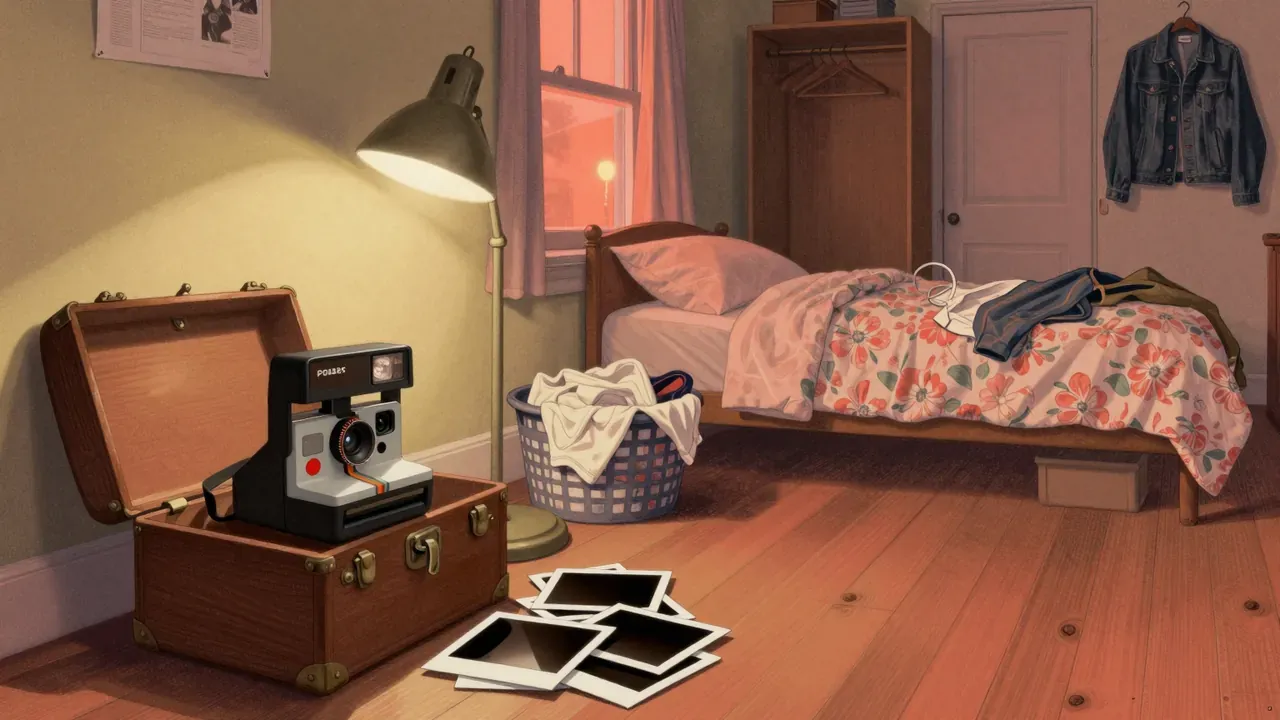
Drylongso is a 1998 independent film shot on 16mm in Oakland, California, written by Cauleen Smith and Salim Akil, and directed by Smith. It follows Pica Sullivan, a Black photography student navigating precarity at home, in class, and on her night job papering walls. The film attempts to hold space for young Black women’s interiority while refusing to isolate their vulnerability from the structural violence shaping their lives — not as victims of circumstance but as witnesses, archivists, and quiet strategists. It treats endangerment as ambient, not exceptional: the Westside Slasher appears in news reports and rumour, not close-ups; male subjects vanish from Pica’s photographs before they vanish from the street. The title — Gullah for ‘ordinary’ — is both anchor and irony: this is a film about what it means to persist in plain sight, without spectacle or salvation. Its ambition is modest in scale but exacting in focus: to render a working- and middle-class Black community with specificity, warmth, and unvarnished texture, resisting both uplift narratives and despair tropes. It does not seek to explain systemic failure but to document how people live inside its weather.
The rhythm of it
The story unfolds through accumulation rather than escalation: Pica’s Polaroid habit, her grandmother’s quiet authority, Tobi’s gendered camouflage, the rhythmic labour of wallpapering, the hum of Oakland sidewalks. Performances are low-key and grounded — Toby Smith as Tobi avoids caricature, balancing guardedness with flashes of dry wit; Lance Gross as Darnell conveys tenderness without sentimentality. Gordon Willis is not involved; cinematographer John M. Vargas uses available light and shallow depth of field to keep faces half-lit, interiors softly blurred, streets sun-dappled but never picturesque. Editing by Smith and Akil favours duration over punctuation: a long take of Pica developing photos in a darkroom, another of her walking past a mural she’s photographed before. Sound design is sparse — no score, only diegetic radio chatter, distant sirens, the crinkle of Polaroid film peeling. The craft serves restraint: nothing is heightened, nothing is underlined. Even the serial killer subplot remains peripheral, functioning less as thriller engine than as atmospheric pressure, a reminder that threat is ambient, not episodic.
The weight of it
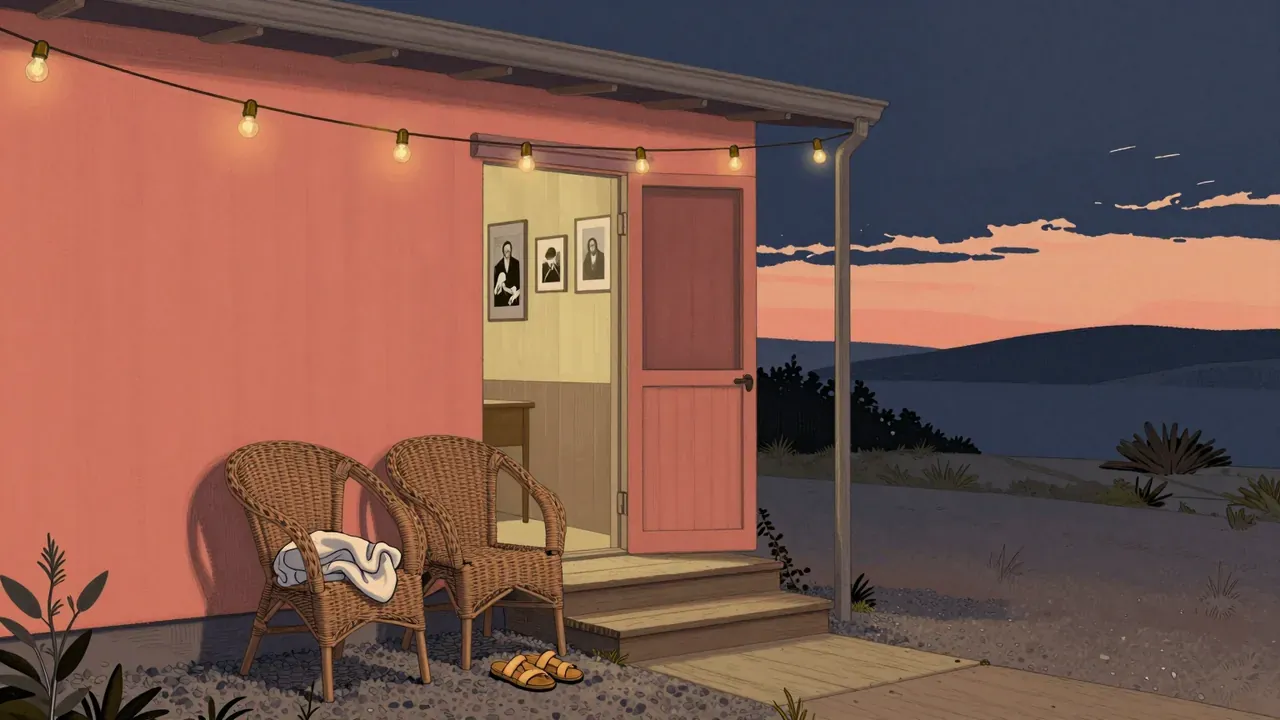
What lands is the film’s tactile fidelity to place and person. The candy-coloured houses, the echoing staircases, the Black-owned bookstore where Pica lingers — these are rendered with observational precision, not nostalgia. The bond between Pica and Tobi feels earned because it is built on shared silence more than dialogue: two people learning how to be seen without being exposed. The film’s central metaphor — photographing men as endangered species — lands not as melodrama but as quiet, sorrowful logic, rooted in the statistics Smith absorbed while working at Bay Area clinics. The restoration’s 4K clarity sharpens these textures without smoothing them: you see the grain of the original 16mm, the dust on a lens, the uneven exposure of a Polaroid. That roughness isn’t accidental; it mirrors Pica’s own practice of assembling meaning from fragments — scrap paper, found objects, imperfect exposures. The film’s emotional weight gathers slowly, like condensation on a windowpane: unobtrusive, inevitable, visible only when you pause to look.
The gaps in it
What does not land is the structural looseness around the Westside Slasher thread. It functions as mood, not plot, and risks feeling underdeveloped rather than deliberately withheld — especially for viewers expecting narrative propulsion. Some scenes in Pica’s photography class lack dramatic tension, settling into procedural realism without deepening character or theme. The Polaroid-versus-35mm conflict is introduced but not fully interrogated as a metaphor for access, documentation, or control over image-making. A few supporting characters — particularly Pica’s mother — remain emotionally opaque, less as a choice of restraint and more as a gap in exposition. The film’s resistance to exposition can read as ambiguity where clarity would serve: we infer Pica’s exhaustion, but rarely feel its physical weight. This is not a flaw in intent — Smith’s aesthetic is anti-spectacular — but a consequence of its minimalism: when every element must carry thematic and emotional freight, some moments bear more than they can hold.
The thinking in it
The themes that matter are endurance as daily practice, not heroic gesture; the gendered asymmetry of vulnerability — how Black girls are blamed while Black boys are mourned; and the ethics of witnessing. Pica photographs men not to fetishise disappearance but to assert presence — a counter-archival impulse. Her wallpapering job literalises the work of covering over cracks while keeping surfaces intact. The film treats safety as infrastructure, not individual virtue: Tobi’s cross-dressing is tactical, not performative; Pica’s camera is a shield, not a weapon. Race and identity are embedded in routine — the way hair is combed, how groceries are carried, which bus routes are avoided after dark. There is no monolithic ‘Black experience’ here, only overlapping, sometimes contradictory, lived conditions: welfare bureaucracy, family care, artistic aspiration, romantic uncertainty, neighbourhood watchfulness. These are not issues to be resolved but conditions to be navigated — with humour, caution, memory, and occasional grace.
The watching of it
This film is for viewers who value atmosphere over arc, observation over explanation, and whose idea of engagement includes sitting with quietude. It suits those familiar with Oakland’s geography or with 1990s independent Black cinema — or those willing to meet it on its own terms, without requiring exposition or resolution. It is not for viewers who need clear cause-and-effect plotting, psychological exposition, or narrative payoff. Those who expect crime elements to cohere into thriller mechanics will find the slasher thread unsatisfying. Those who read ‘coming-of-age’ as synonymous with transformation may be disappointed: Pica changes little outwardly, and that is the point. A viewer who values polished production values or tightly wound structure will likely resist its deliberate roughness. But if you accept that a film can argue through texture — the way light falls on a porch step, the sound of a bus door hissing open — then Drylongso rewards attention with cumulative force.
The time of it
Yes, it is worth your evening — not as escapism, but as recalibration. Its 86 minutes ask for patience, not surrender, and repay it with a rare kind of honesty: about how people hold themselves together when systems are fraying, and how dignity persists in the interstices. It is not ‘important’ in the sense of being didactic, but urgent in its refusal to flatten complexity. Someone who finds its pacing inert may prefer something more propulsive — but that is not a flaw in the film, only a mismatch in expectation. Its value lies precisely in its resistance to speed, to summary, to easy answers. To call it ‘prescient’, as some have, risks reducing it to prophecy; better to say it attends closely to what was already true in 1995, and remains so. If you have ninety minutes to give to a film that treats its characters as real people, not symbols, and its city as a living entity, not backdrop, then Drylongso earns that time — quietly, insistently, without asking for applause.