The first feature
The Experience is Abbas Kiarostami’s first feature-length film, made in 1973 for the Institute for the Intellectual Development of Children and Young Adults in Tehran. It is a drama grounded in social observation rather than narrative propulsion — an early articulation of Kiarostami’s abiding interest in the quiet friction between aspiration and circumstance. The film does not seek to resolve Mamad’s situation but to hold it in view: a boy navigating adult responsibilities without adult recognition, living in the margins of a photographic studio that frames others while leaving him unframed. Its aim is neither exposé nor uplift, but fidelity — to the rhythms of street life in early-1970s Tehran, to the weight of unspoken class barriers, and to the vulnerability of adolescent longing when it meets indifference. It treats its subject with restraint, avoiding moral framing or psychological exposition. This is not a film about becoming, but about being — specifically, being seen only as function, never as person. It sets out to register that condition, not to correct it. (158 words)
The boy in the studio
The story follows Mamad, an orphaned teenage messenger who sleeps in a photographic studio and spits into the water glasses of employers who treat him with contempt. His infatuation with a girl from a wealthier background leads him to her home, where he asks to be taken on as a servant — and is turned away without explanation. Mostafa Tari’s performance is uninflected, neither pleading nor defiant; his face registers shifts in mood through micro-adjustments of gaze and posture, not dialogue. Kiarostami and Amir Naderi’s script avoids exposition, trusting the viewer to infer Mamad’s isolation from what is withheld: no backstory, no voiceover, no reaction shots from the girl. Cinematography is functional, often static, favouring medium shots that keep Mamad at a slight remove — not distanced, but situated. Editing is unhurried, with pauses that accumulate weight rather than signal significance. Sound design is sparse: ambient city noise, footsteps, shutter clicks — no score. The craft serves the subject without embellishment, refusing to aestheticise poverty or romanticise yearning. (159 words)
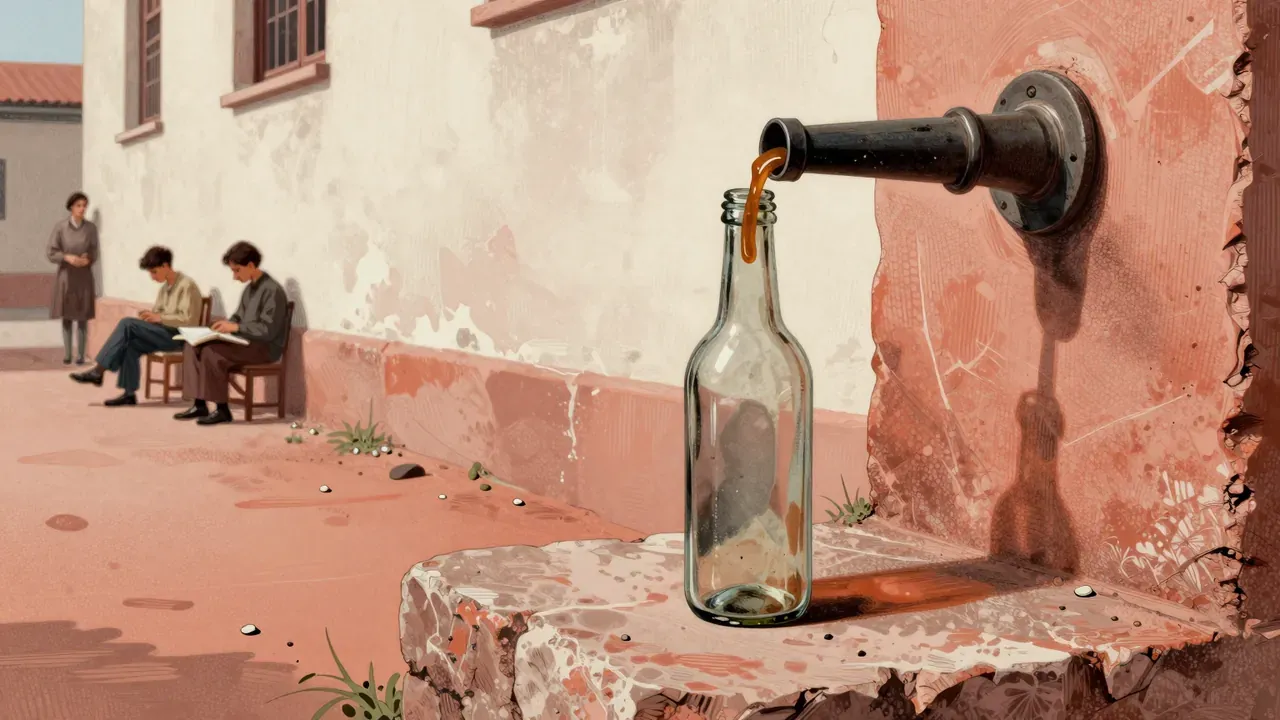
The spit in the glass
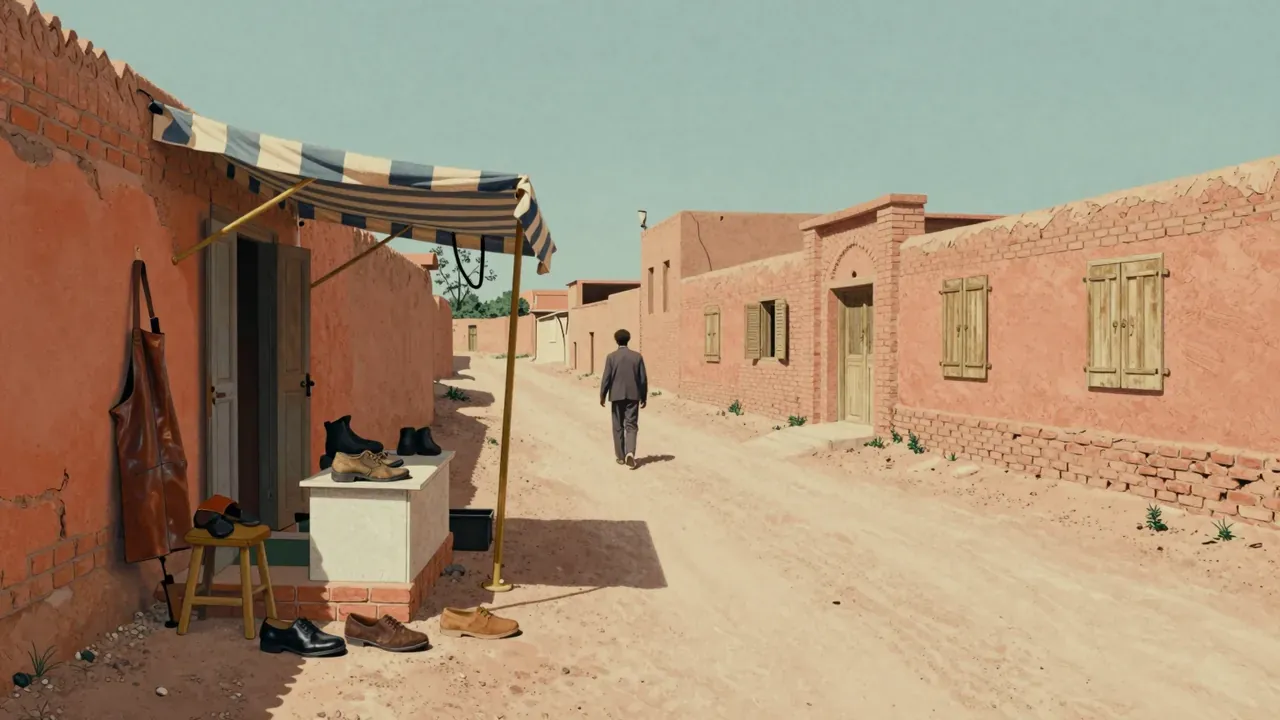
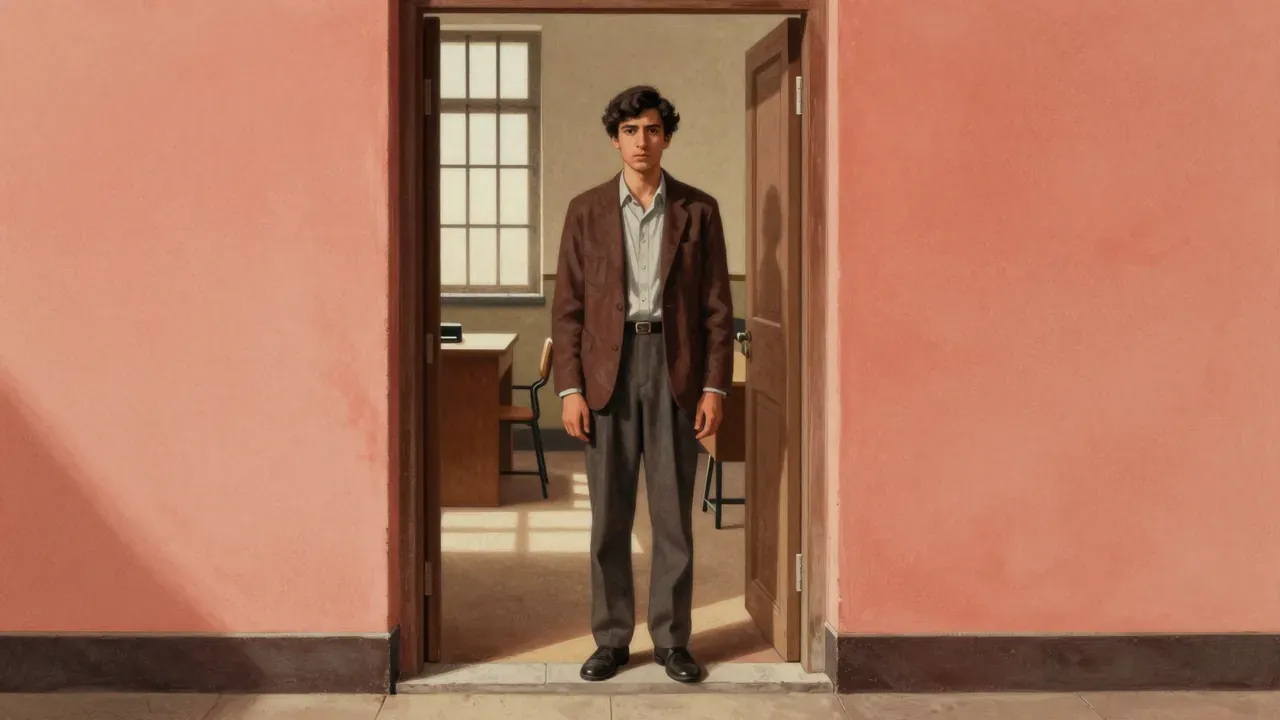
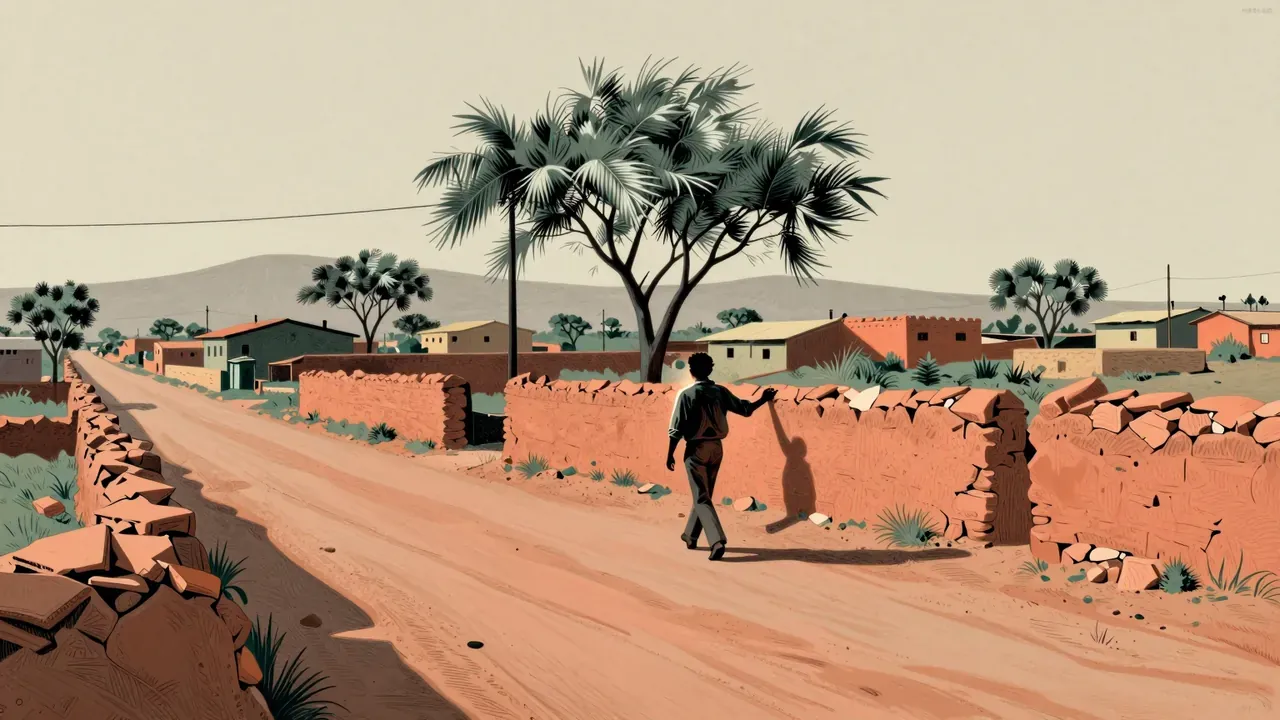
What lands is the cumulative pressure of small exclusions. Mamad’s spit in the water glass is not a gesture of rebellion but of exhausted boundary-making — and it lands because it is specific, unexplained, and never repeated. The refusal at the girl’s house lands not as melodrama but as structural fact: the door closes, the camera holds on the empty doorway, then cuts to Mamad walking away without turning back. There is no music, no close-up on tears — just the rhythm of his steps slowing, then resuming. The film’s realism is not documentary-style verisimilitude but ethical precision: it refuses to grant Mamad either heroic status or pathos. His dignity lies in his persistence, not his triumph. The studio setting — where images are made but he remains unseen — works as quiet metaphor without needing to be named. These elements cohere because they are all calibrated to the same low frequency: observation over interpretation, duration over emphasis, silence over speech. The film earns its gravity by withholding emphasis, not by applying it. (157 words)
The walk to the gate
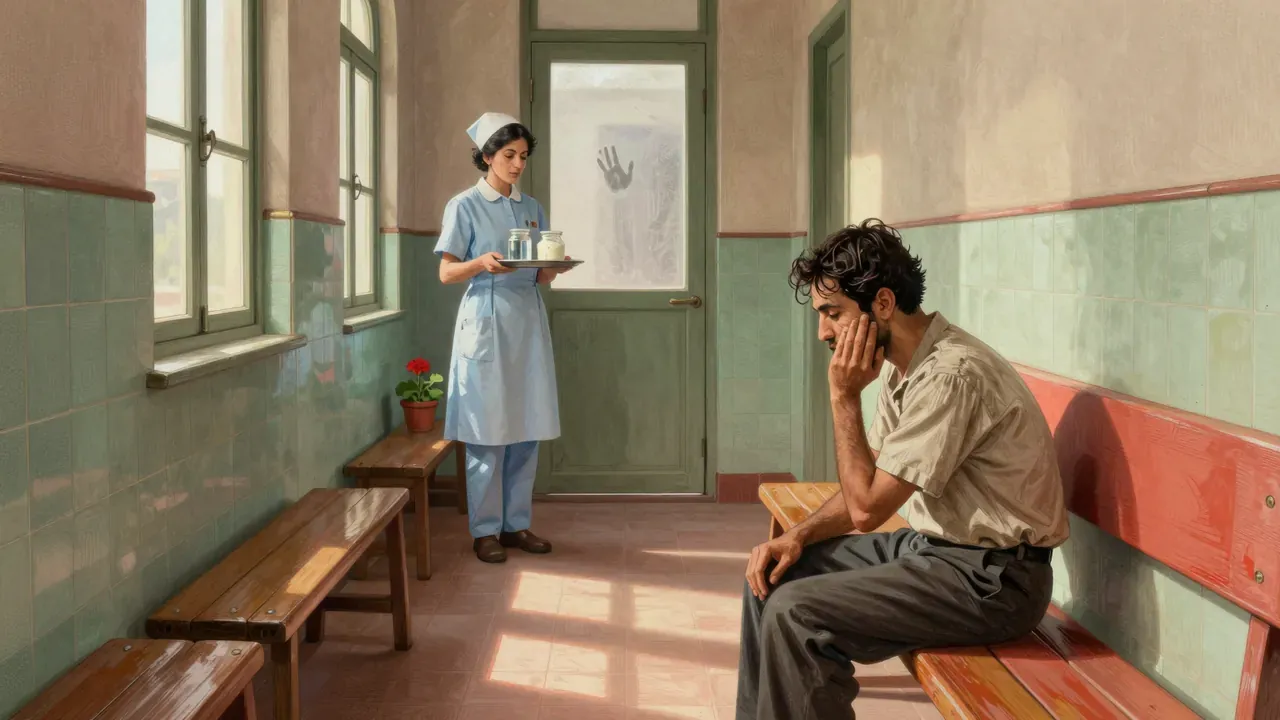
What does not land is the structural ambiguity around Mamad’s interiority — not as a flaw in itself, but as a limit on emotional access for viewers accustomed to psychological scaffolding. Without internal monologue, flashbacks, or even sustained eye contact with other characters, some may read Mamad as passive rather than constrained. The film assumes familiarity with the social grammar of class in pre-revolutionary Iran — a context it does not supply, so viewers unfamiliar with that hierarchy may misread indifference as apathy, or reserve as emptiness. The pacing, deliberate by design, risks feeling inert rather than patient if the viewer expects narrative escalation. There is no third-act pivot, no revelation, no symbolic object to anchor meaning — only repetition, minor variation, and withdrawal. Some will find this austerity clarifying; others will find it withholding. The film makes no concession to those who require motivation to be stated, consequence to be dramatised, or emotion to be legible on demand. It offers no handrail — and that is its choice, not its failure. (159 words)
The grammar of exclusion
The themes that matter are not abstract but embedded in daily transaction: the invisibility conferred by labour without status, the asymmetry of attention across class lines, and the quiet violence of polite refusal. The photographic studio functions as both literal workplace and structural motif — a place where people are composed, lit, and preserved, while Mamad exists outside the frame, sleeping beneath the enlarger, delivering prints he cannot see developed. His love for the girl is not romantic fantasy but spatial yearning: proximity as possibility, closeness as agency. The film treats adolescence not as a stage but as a condition of provisional belonging — one constantly revoked. Class is not discussed but enacted: in who opens doors, who waits, who speaks first, who is addressed by name. There is no critique of the system, only its unvarnished operation — which makes the film’s political dimension all the more precise. It does not ask why things are unequal; it shows how inequality breathes, walks, and knocks on doors. (156 words)
The silence after no
This film is for viewers who value formal economy and trust implication over exposition — those willing to sit with uncertainty, to read silence as texture, and to accept that some endings are exits, not conclusions. It suits audiences familiar with Iranian New Wave conventions or with neorealist traditions where character emerges through action, not confession. It is not for those who require narrative momentum, psychological exposition, or emotional catharsis within a single viewing. Anyone expecting a coming-of-age arc with resolution, or a romance with reciprocity, will leave dissatisfied — not because the film misfires, but because it operates on different terms. A viewer who values clarity of motive over accumulation of detail, or who prefers thematic signposting to ambient resonance, would likely find it undernourished. What would change the verdict? A different cultural entry point — say, prior exposure to Kiarostami’s later work — might recalibrate expectations. But as a standalone, its rigour is also its barrier. (158 words)
The weight of holding
Yes, it is worth your evening — not as entertainment but as calibration. It takes fifty-three minutes to recalibrate how you watch people on screen: to notice where the camera places them, how long it holds, what it omits. Its value lies in its refusal to flatter attention — no dramatic spikes, no musical cues, no editorial guidance. That demands something of the viewer, but repays it with a rare kind of attentiveness: to gesture, to threshold, to the weight of an unanswered knock. It is not for casual viewing, nor for those seeking diversion. But for anyone interested in how cinema can register social reality without interpreting it — how form itself can carry politics — this is foundational. Those who dismiss it as ‘slow’ or ‘thin’ mistake austerity for absence. Its substance is in the space between shots, not within them. To skip it is to miss the first articulation of a sensibility that would reshape Iranian and world cinema. (159 words)